column (e.g. in newspaper)
2020.05.10
Comparing Double Buried Suture Methods! How Do Downtime and Longevity Differ Between 2-Point, 4-Point, Cross-Link, and MT Methods? [Doctor-Supervised]

As a board-certified plastic surgeon by the Japanese Society of Plastic and Reconstructive Surgery, he has been engaged in a wide variety of periocular surgeries at university hospitals. Based on his solid anatomical knowledge and suturing skills, he is in charge of a wide range of surgeries around the eyes including sub-brow incisions and blepharoplasty incisions, as well as hyaluronic acid injections, Botox injections, and thread lifts. We also accept insurance coverage for droopy eyelids and inner eyelashes. We value natural and elegant results, and are known for our attentive counseling that attends to the patient's feelings.
Hello.
I am Yumi Hattori of BIANCA CLINIC.
Among double eyelid procedures, the "buried suture method" is highly popular.
Even within the same “buried suture method,” there are actually several variations, and the way the thread is applied affects the final appearance and how long the results last.
This time, we'll explain the differences in structure between single-layer and double-layer techniques, comparing two-point fixation, four-point fixation, cross-linking, and the MT method, along with their features and differences in downtime.
What's the difference between single-lidded and double-lidded eyes?
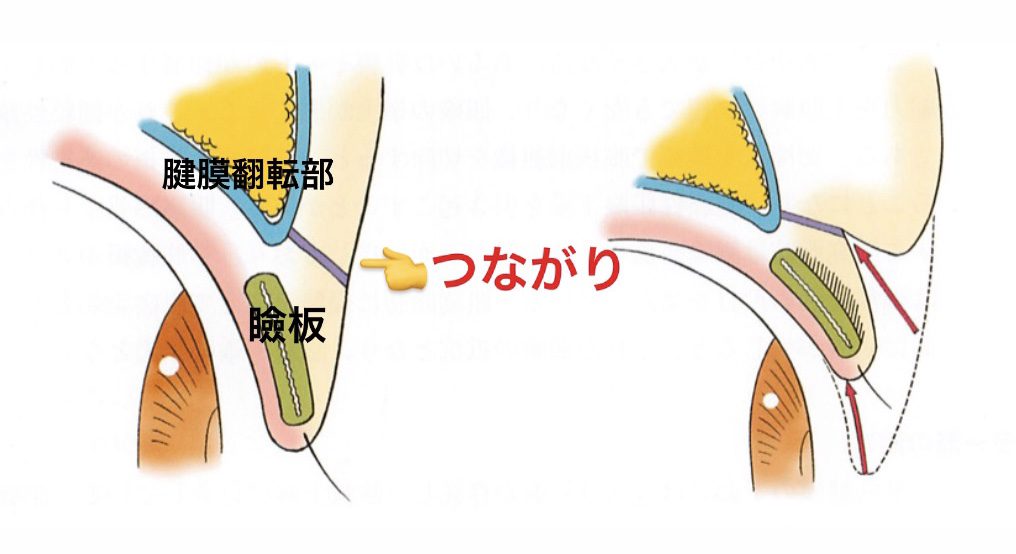
What exactly is the difference between single eyelids and double eyelids?
The human eyelid contains a cartilage-like structure called the tarsal plate and a muscular membrane called the tenon's capsule.
People with double eyelids are born with this tendon membrane and skin connected, so when they open their eyes, the skin in that area folds over to create the double eyelid line.
On the other hand, those with monolids lack this connection, and since the skin simply overlaps the eyelashes, it cannot fold over.
In other words,"Double = A state where the skin and internal structures are connected and folded together."What is it?
The buried suture method recreates this “connection” using medical-grade thread, creating a natural fold by forming a loop inside the eyelid.
The Basic Mechanism of the Double Buried Method
The buried suture method is a technique that creates double eyelids without incisions.
A fine thread is passed through the inner eyelid and secured to connect the skin and muscle.
This procedure involves no incisions, resulting in minimal swelling and allowing for an easy return to daily life.
However, since it is supported by a thin thread, the thread may loosen or come loose due to stimulation or friction on the eyelid.
Avoiding friction and irritation is key to maintaining your double eyelid line for longer.
Types and Differences of Double Eyelid Suture Methods
At Bianca Clinic, we tailor eyelid thickness and desired design to each individual,We utilize various surgical techniques such as two-point fixation, four-point fixation, cross-linking, and the MT method.
Let's take a look at each feature.
① Two-point fastening
Using the simplest method, secure the thread at two points to create a double line.
With fewer threads, the result is less burdensome and achieves a natural impression.
This procedure is ideal for those who wish to enhance their faint double eyelids or for first-time double eyelid surgery patients.
②4-point fastening
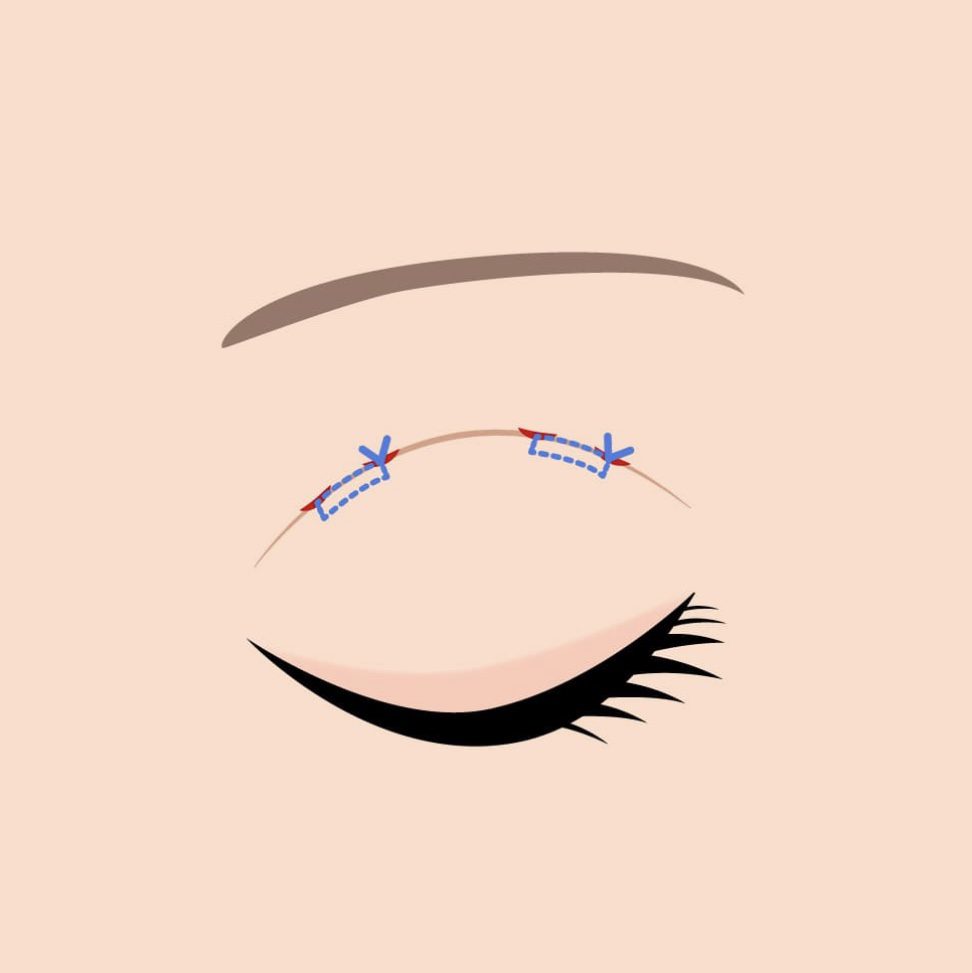
Four-point fastening image
Securing the thread at more than two points makes the line more stable.
This method is often chosen by those who want to take a broad approach or maintain their line over the long term.
Swelling subsides within 2 to 3 days, and the area will settle into its natural state in about one month.
③ Crosslinking Method
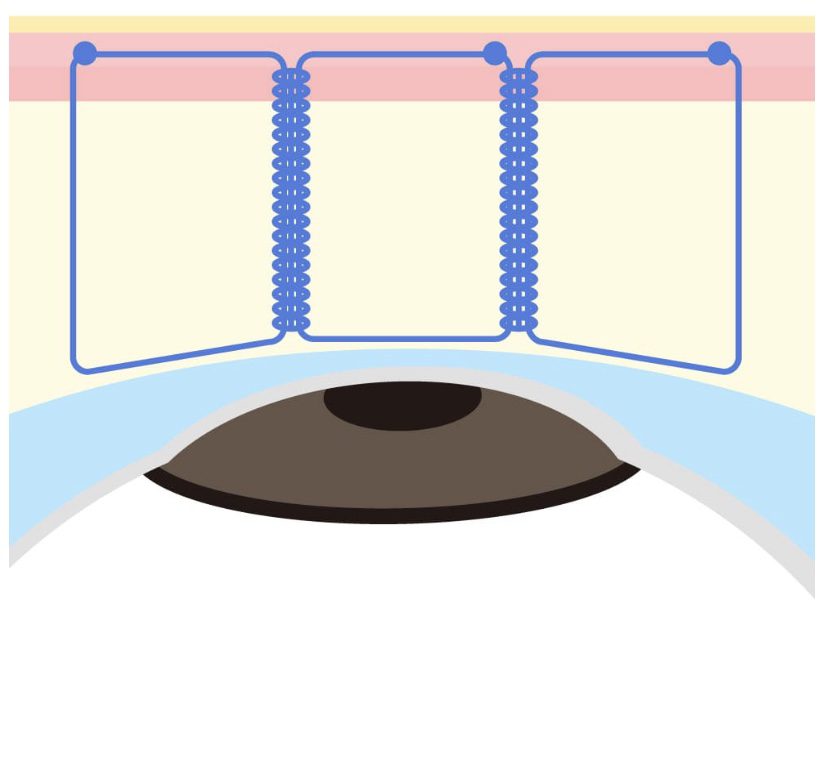
Crosslink image
By crossing and securing the threads, this structure maintains uniform tension across the entire eyelid.
It forms a stable, long-lasting line and is suitable for those with thicker eyelids or who desire a wider double eyelid.
Swelling is moderate and typically subsides within about a week.
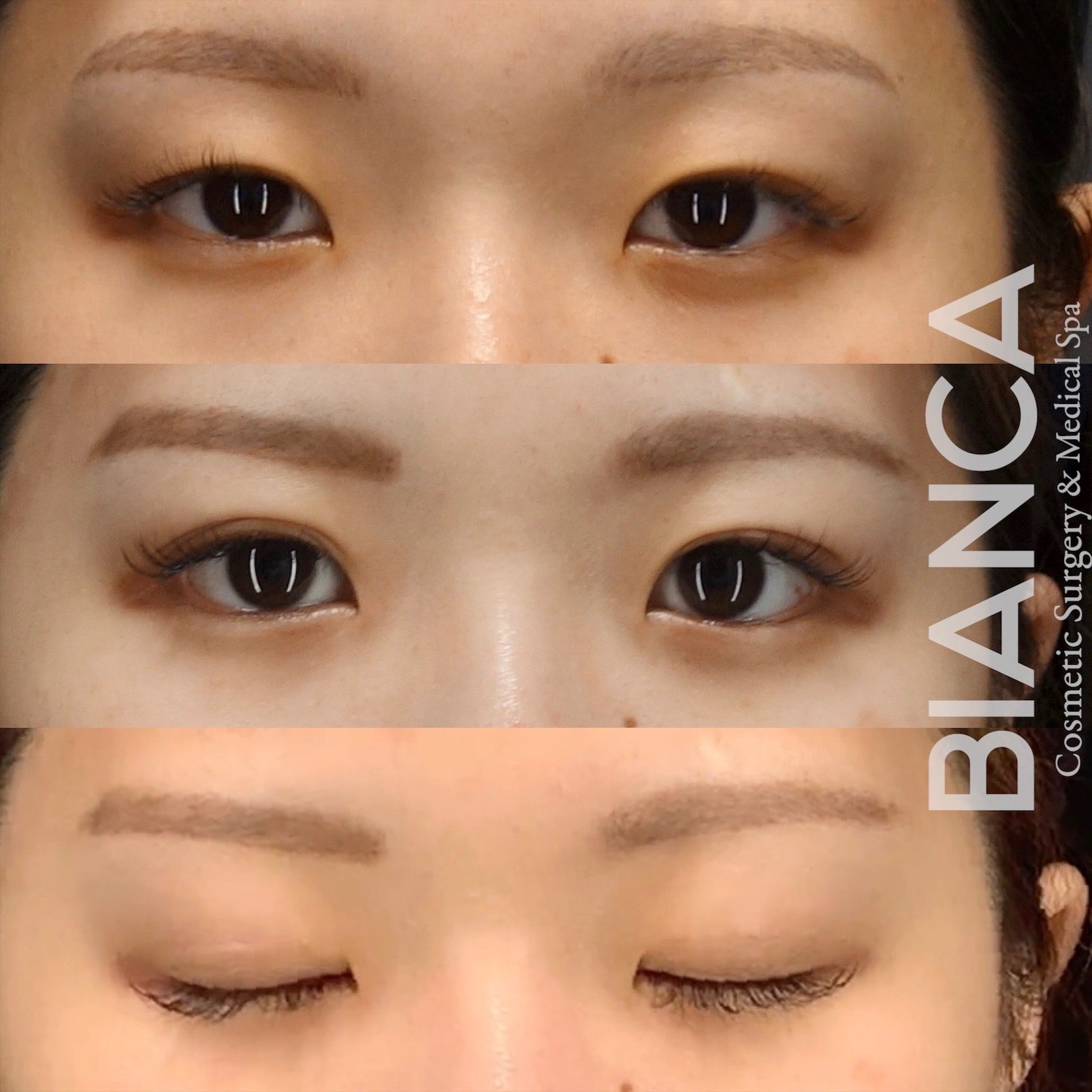
Top: Pre-operative, Center: 1 month post-operative, Bottom: 1 month post-operative (eyelids closed)
Crosslink Method ¥300,080
DT: Swelling (several days)・Bruising (about 10 days)
This monitor originally desired a double eyelid line with some width, as she had naturally deep-set double eyelids. We created the double eyelid using cross-linking.
Considering the thickness of your eyelids, we've achieved a natural and bright-looking eye area.
Additionally, in this case, glamorous line formation (droopy eye formation) was also performed simultaneously.
A key feature of the cross-linking method is its ability to minimize downtime even with complex procedures.
④ MT Method (Non-Invasive Ptosis Correction)
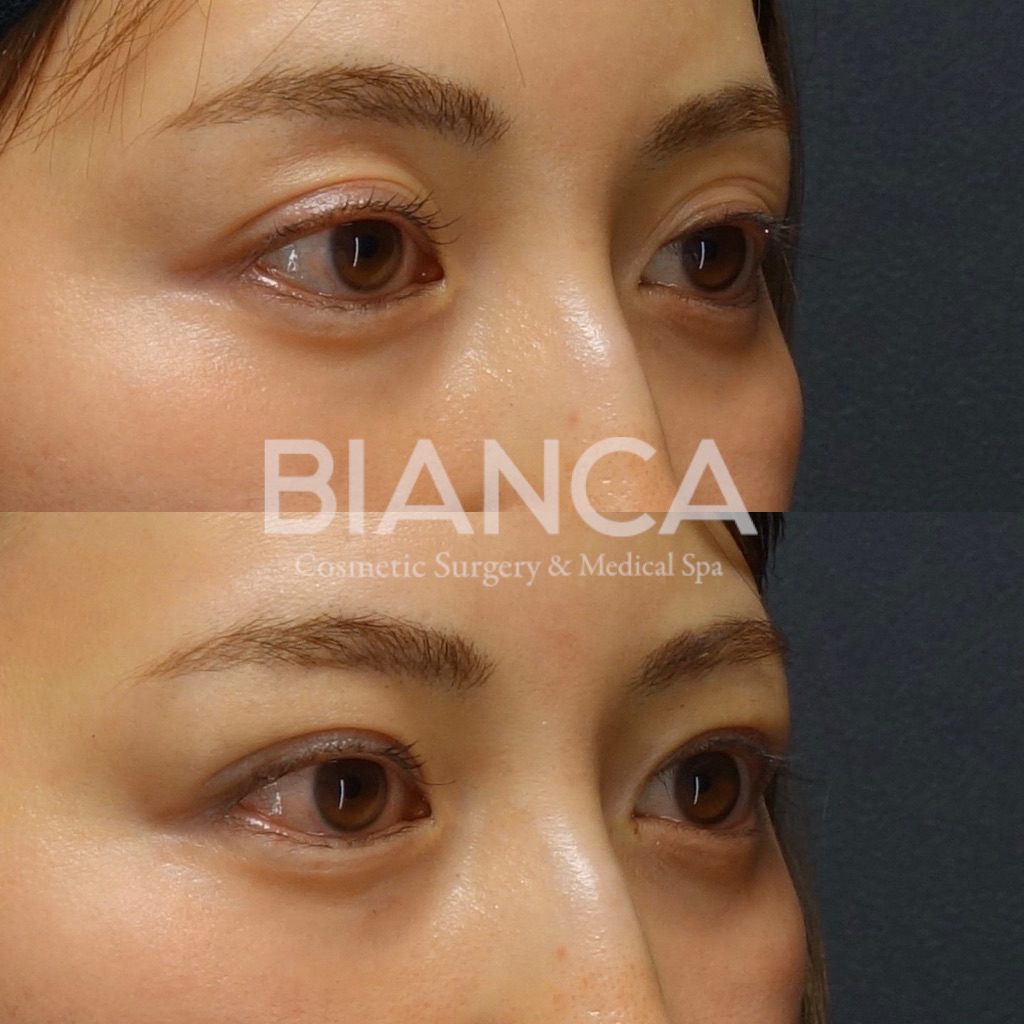
Top: Before treatment / Bottom: Immediately after treatment
💴Non-Invasive Ptosis Correction (MT Method) ¥298,000
😷DT: Swelling and bruising for a few days
⚠️Risks: Lumps, exposed sutures, asymmetry, infection, etc.
The MT method is a buried suture technique that uses thread to support the levator muscle (the muscle that lifts the eyelid).
Suitable for those whose dark pupils appear droopy or who strain their forehead muscles to keep their eyes open.
By supporting the strength needed to open the eyelids, it naturally improves eye opening and leads to a refreshed appearance.
The degree of swelling is comparable to other methods, and the downtime is also nearly the same.
Double Buried Suture Method: Differences in Downtime and Recovery by Procedure
The buried suture method causes minimal swelling regardless of the technique used, making it a procedure that allows for an easy return to daily life.
The characteristics and differences in progression for each method are summarized in the table below.
| Treatment Name | Features | Swelling and bruising | Resuming makeup | The direction you're facing |
|---|---|---|---|---|
| Two-point fastening | Simple and low-effort | Less | The next day~ | For those seeking a natural look, or first-time clients |
| Four-point fastening | Sturdy fastening ensures line stability | Moderate | 2 to 3 days later | For those who want to build broad shoulders, and those who prioritize endurance |
| Crosslink | The threads are crossed, making it difficult to remove. | average | 2 to 3 days later | For those desiring thicker eyelids or a wider line |
| MT Method | Supports the levator palpebrae muscle to assist natural eyelid opening | average | 2 to 3 days later | Those with dark-colored eyes or who appear sleepy |
The peak of the swelling lasts about 2 to 3 days, and more than half of it subsides within about a week.
After about a month, the swelling will subside, and things will settle into a more natural state.
What causes double eyelid sutures to come undone? Can the procedure be redone?
The buried suture method is not a surgery that alters the structure of the eyelid; it is a technique that creates a "connection" using thread.
Therefore, rubbing your eyelids due to conditions like hay fever or atopic dermatitis, or subjecting them to persistent strong stimulation, can cause the sutures to loosen more easily.
Additionally, if buried sutures from previous procedures remain, they may interfere with the new sutures and cause them to become disorganized.
If you're concerned that "I had buried suture double eyelid surgery before, but the crease has become blurred...", we can discuss removing the old sutures and considering re-treatment. Please consult with us.
Summary|Learn the differences between double eyelid suture techniques to find the method that's right for you.
The buried suture method is a popular procedure that creates a natural double eyelid line without cutting the eyelid.
Eyelid thickness, fat content, opening style, and ideal designThe optimal method varies depending on the situation.
-
Want to naturally reinforce the line → Two-point fastening
-
Want to maintain a stable width → 4-point fastening
-
Thick eyelids and long-lasting wear → Crosslink
-
I want to improve my eye opening → MT Method
At Bianca Clinic, we design each procedure to complement the unique eye area of every patient, aiming for a natural, seamless result.
We will carefully discuss your eyelid condition and ideal image to propose the optimal approach. If you are interested in double eyelid surgery, please feel free to consult with us.
We look forward to seeing you for counseling.
Double Buried Suture vs. Full Incision: Which Double Eyelid Surgery Is Right for You?