Sagging and lifting

Sagging cheeks, drooping around the mouth, and a loose jawline not only make you look older but can even alter your facial shape. Particularly from your 30s onward, sagging is caused by a loss of volume due to declining muscle strength and reduced collagen and elastin. Self-care has its limits for lifting, and many people try aesthetic medicine for the first time specifically for lifting treatments. We offer a comprehensive range of lifting procedures, including non-invasive lifts using lasers or radiofrequency, thread lifts, and surgical options like fat removal or facelifts. We will recommend the most suitable treatment method based on your consultation.
Case Presentation
CASES
thread lift
- Treatment Period and Number of Sessions
- Top: Pre-operative Bottom: 1 month post-operative
- Side Effects and Risks
- Infection, left-right difference, unevenness, twitching, etc.
- Cost
- 10 pieces 300,000 yen

Hyaluronic acid injection (nasal wing base, chin), BIANCA lift
- Treatment Period and Number of Sessions
- Left: Before treatment / Right: Immediately after treatment
- Side Effects and Risks
- Swelling and internal bleeding: several days to a week, infection, impaired blood flow, unevenness, etc.
- Cost
-
BIANCA lift 10 pcs. 330,000 yen
Hyaluronic acid (base of nasal wing) NEAUVIA intenseLV 165,000 yen
Hyaluronic acid (chin) Restylane lift 77,000 yen
Treatment fee 22,000 yen

Thread Lift
- Treatment Period and Number of Sessions
- Top: Before treatment / Bottom: Immediately after treatment
- Side Effects and Risks
- Infection, unevenness, hematoma, etc.
- Cost
-
Artemis Lift 10 pcs ¥550,000
Bianca Lift W 1 piece ¥60,500
*Anesthesia fee is not included.

Embrace RF (cheek + submental), Mofius 8 (cheek + submental), liposuction
- Treatment Period and Number of Sessions
- Upper: before surgery, lower: 3 months after surgery
- Side Effects and Risks
- Swelling and internal bleeding: about 1~2 weeks, face band fixation: 72 hours, left-right difference, infection, hematoma, unevenness, etc.
- Cost
-
Embrace RF (2 face tightening areas) 396,000 yen
Simultaneous Addition
Liposuction combined 1 site (under the chin) 110,000 yen
Mofius 8 (cheek + lower jaw) 66,000 yen

Embrace RF (cheek + submental), Mofius 8 (cheek + submental), liposuction
- Treatment Period and Number of Sessions
- Left: before surgery, right: 1 month after surgery
- Side Effects and Risks
- Swelling and internal bleeding: about 1~2 weeks, face band fixation: 72 hours, left-right difference, infection, hematoma, unevenness, etc.
- Cost
-
Embrace RF (2 face tightening areas) 396,000 yen
Simultaneous Addition
Liposuction combined 1 site (under the chin) 110,000 yen
Mofius 8 (cheek + lower jaw) 66,000 yen

Removal of dark circles and sagging under the eyes + condense rich face (under the eyes to golgolines), blepharoplasty incision (MT method), hyaluronic acid (tip of nose to bridge of nose)
- Treatment Period and Number of Sessions
- Top: Before treatment / Bottom: After treatment
- Side Effects and Risks
- Swelling, internal bleeding for around 10 days, lumps, left-right difference, hematoma, unevenness, thread exposure, infection, allergy, blood flow disorder, etc.
- Cost
-
Dark circles and sagging under eyes + Condense Rich Face (under eyes to golgolines) set: ¥602,580
Non-ablative Blepharoplasty MT (tucking) method: ¥360,580
Hyaluronic acid (tip of the nose to bridge)
Juvederm/Restylane 118,580 yen
NEUVIA 165,000 yen
Additional treatment fee: ¥24,200

Hyaluronic acid injection (elbow)
- Treatment Period and Number of Sessions
- Top: Before treatment / Bottom: Immediately after treatment
- Side Effects and Risks
- Swelling, internal bleeding, a few days, infection, allergy, blood flow disorder, unevenness, etc.
- Cost
-
Juvederm/Restylane 84,700 yen/1cc
NEAUVIA 165,000 yen/1cc
Additional treatment fee: ¥24,200

frontal lift
- Treatment Period and Number of Sessions
- Left: Before surgery Right: 3 months after surgery
- Side Effects and Risks
- Swelling, internal bleeding, pain, numbness, dullness, tingling, pigmentation, etc.
- Cost
- Frontal lift: 880,000 yen

Hyaluronic acid injection (elbow)
- Treatment Period and Number of Sessions
- Top: Before treatment / Bottom: After treatment
- Side Effects and Risks
-
Swelling and bruising
- Cost
- 84,700 yen/1cc

Hyaluronic acid injection (elbow)
- Treatment Period and Number of Sessions
- Top: Before treatment / Bottom: One month after treatment
- Side Effects and Risks
- Internal bleeding, swelling, impaired blood flow, redness
- Cost
-
84,700 yen/1cc
GOURI 110,000 yen/1cc
Additional treatment fee: ¥24,200

Suction Lift, Embrace RF (Face Tight + Mofius 8 )
- Treatment Period and Number of Sessions
- Upper: before treatment Lower: 1 month after treatment
- Side Effects and Risks
- Infection, hematoma, left-right difference, unevenness, twitching, redness, pain, edema, blister, burn, pigmentation, numbness, bleeding, hematoma, scar, worsening of melasma, nerve damage, deep tissue damage, allergic reaction due to local anesthetic, delayed onset of treatment effect
- Cost
-
Suction Lift: ¥704,000, Embrace RF (Face Tight ¥247,500 + Mofius 8 ¥66,000),

BIANCA LIFT
- Treatment Period and Number of Sessions
-
Left: Before treatment Right: One month after treatment
1 time - Side Effects and Risks
-
Swelling and internal bleeding 1-2 weeks, infection, left-right difference, unevenness, tightness, etc.
- Cost
- BIANCA LIFT 10 pcs. 330,000 yen

Artemis Lift, Baby Derm.
- Treatment Period and Number of Sessions
- Left: Before treatment Right: Immediately after treatment
- Side Effects and Risks
- Swelling, pain, internal bleeding, swelling, twitching, foreign body sensation, partial skin indentation, redness, infection, vascular embolization, etc. at the treatment site
- Cost
- Artemis Lift: 8 units: 447,216 yen, Baby Collagen: 118,580 yen, Separate treatment fee: 24,200 yen, Cannula fee: 2,420 yen per site

BIANCA LIFT
- Treatment Period and Number of Sessions
- Upper: before treatment Lower: 1 week after treatment
- Side Effects and Risks
- Swelling, pain, bruising, swelling, tightness, foreign body sensation, localized skin indentation, infection, etc.
- Cost
- BIANCALIFT (10 vials): 330,000 yen

Fat injection (forehead, cheek moss) and suction lift (cheek + submental liposuction + 6 BIANCA LIFT)
- Treatment Period and Number of Sessions
- Left: Before treatment / Right: 3 months after treatment
- Side Effects and Risks
- Swelling, tightness, bruising, infection, hematoma, asymmetry, unevenness, impaired blood flow, etc.
- Cost
-
Fat Transfer to Forehead: ¥302,500
Fat Transfer for Sunken Cheeks: ¥242,000
Suction Lift (Cheek + Submental Fat Removal + BIANCA LIFT 6 Units) ¥704,000

Deep Plane Facelift / Temporal Lift
- Treatment Period and Number of Sessions
- Left: Before treatment Right: 12 months after treatment
- Side Effects and Risks
- Bruising, swelling, infection, hematoma, wound dehiscence, facial nerve paralysis, etc.
- Cost
-
Deep Plane Facelift: ¥1,650,000
Temple Lift: ¥550,000
Case Presentation
CASES
Blepharoplasty MT, craniotomy, removal of dark circles and sagging under the eyes, condense rich face (forehead, comedo, under the eyes, gorgon line)
- Treatment Period and Number of Sessions
- Top: Pre-operative / Bottom: 3 months post-operative
- Side Effects and Risks
- Swelling, bruising, scarring, asymmetry, infection, etc.
- Cost
-
Ptosis Correction MT Method ¥360,580
Inner Canthus Surgery: ¥300,080
Under-Eye Dark Circles and Sagging Removal: ¥360,580
Condense Rich Face Treatment ¥302,500
Condense Rich Face Temple ¥242,000
Condense Rich Face Under Eyes ¥121,000
Condense Rich Face ¥181,500
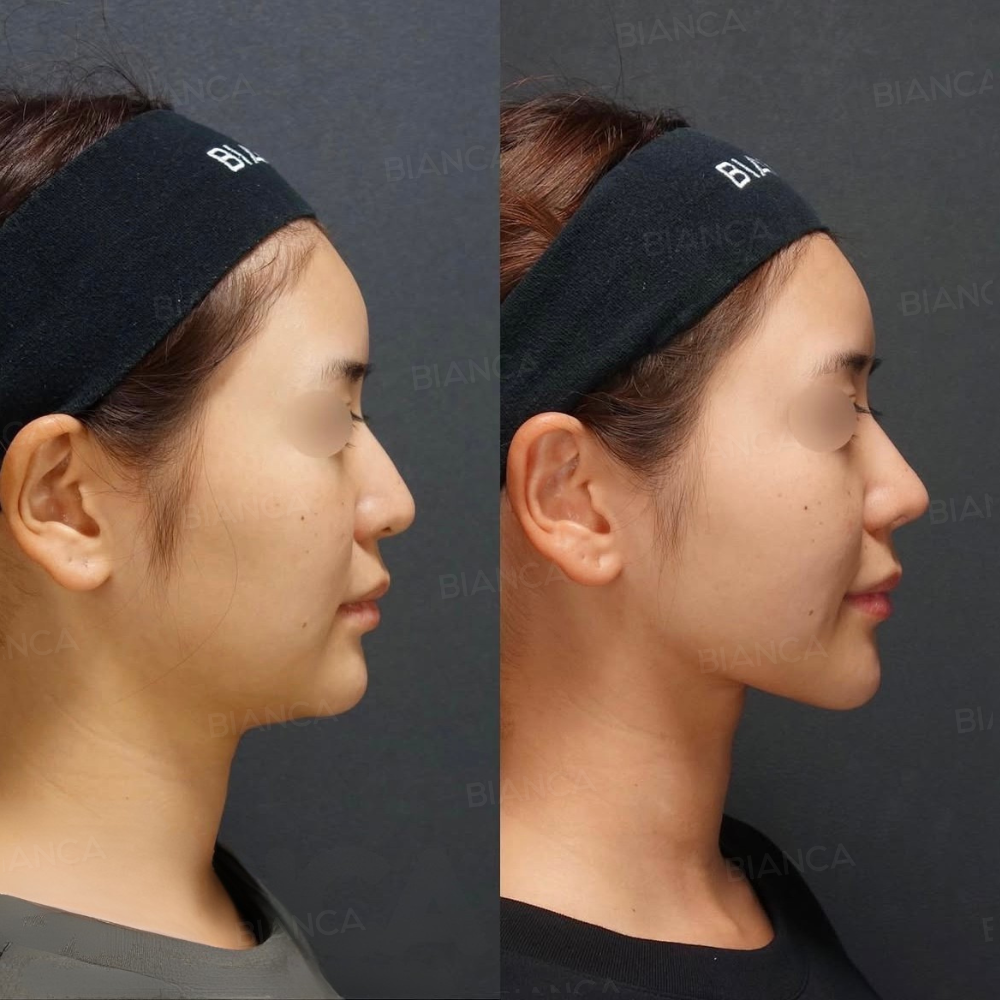
Septoplasty with Nasal Tip Augmentation Nasal Bone Osteotomy with Width Reduction Hump Reduction Facial Contouring Liposuction BIANCA LIFT MINT LIFT
- Treatment Period and Number of Sessions
- Top: Pre-operative / Bottom: 3 months post-operative
- Side Effects and Risks
- Swelling, bruising, infection, pain, scarring, reversal of results, asymmetry, swelling, pain, bruising, edema, tightness, sensation of a foreign body, localized skin indentations, infections, etc.
- Cost
-
Nasal Septum Extension: ¥770,000
Nose Tip Reshaping: ¥330,000
Hump Removal: ¥330,000
Nasal Bone Osteotomy (Narrowing) 660,000 yen
Facial Contouring Liposuction: 400,000 yen
BIANCA LIFT (10 vials) 300,000 yen
2 bottles of MINT LIFT: 120,000 yen
Sagging & Lift-Up Popular Treatment Rankings
RANKING
Private: ディーププレーンフェイスリフト
DEEP PLANE FACELIFT
Evolved lift system that lifts from the structure
Naturally, to a youthful appearance

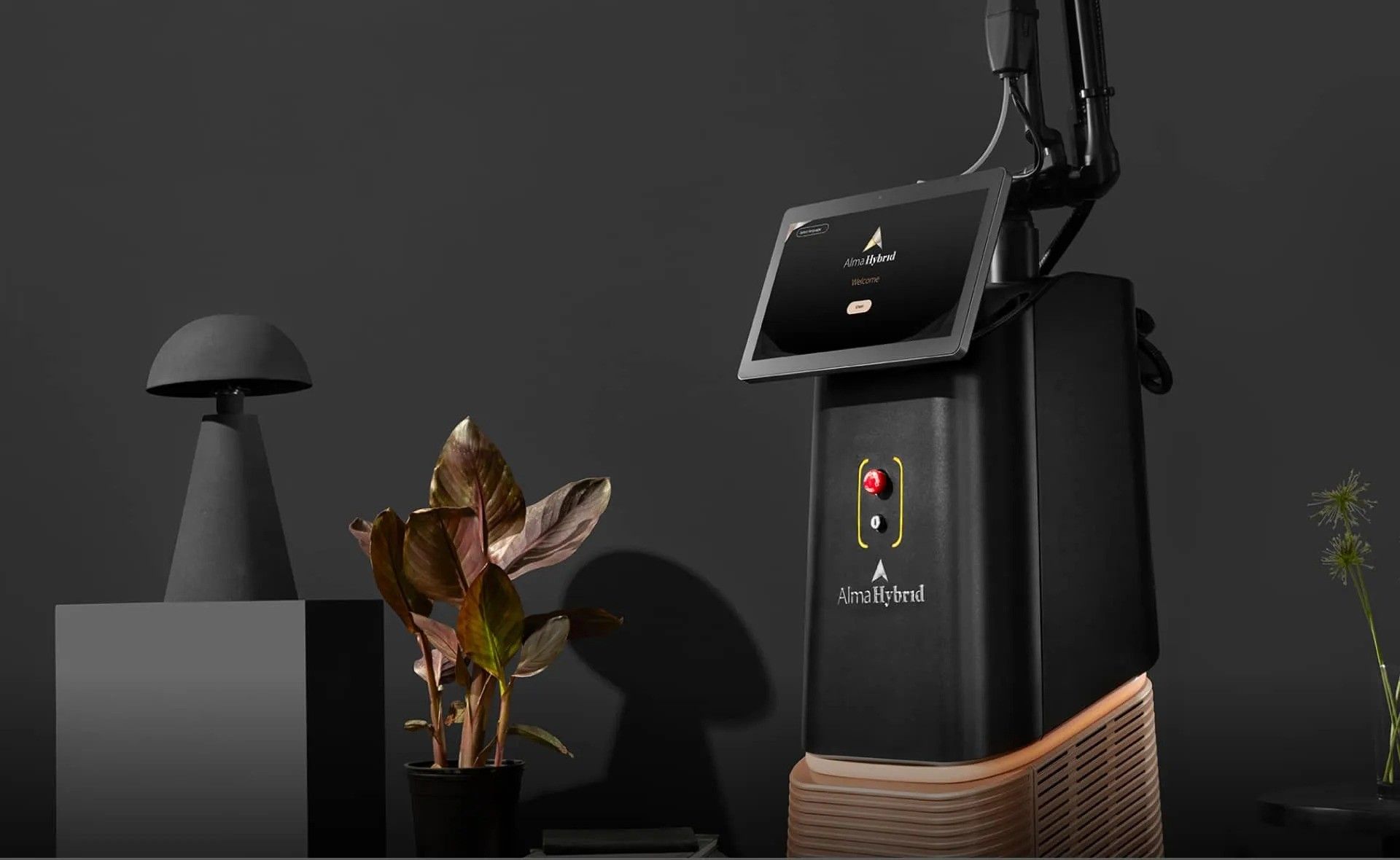
Mofius 8 burst
MORPHEUS8 BURSTReduce aging signs and sagging of the face and body by tightening skin without cutting.

Hyf/Ultra Cell Zi
HIFU
Targets sagging skin and fat!
Lift and firm from deep within the skin without surgery


Frequently Asked Questions About Sagging and Lifting
Q&AWhat is the most effective cosmetic procedure for sagging skin on the face?
The most effective treatment varies depending on the cause and severity of sagging. Options include HIFU and Volnuma for mild sagging, thread lifts for tissue sagging, and facelifts for severe sagging.
What types of treatments are available for sagging skin?
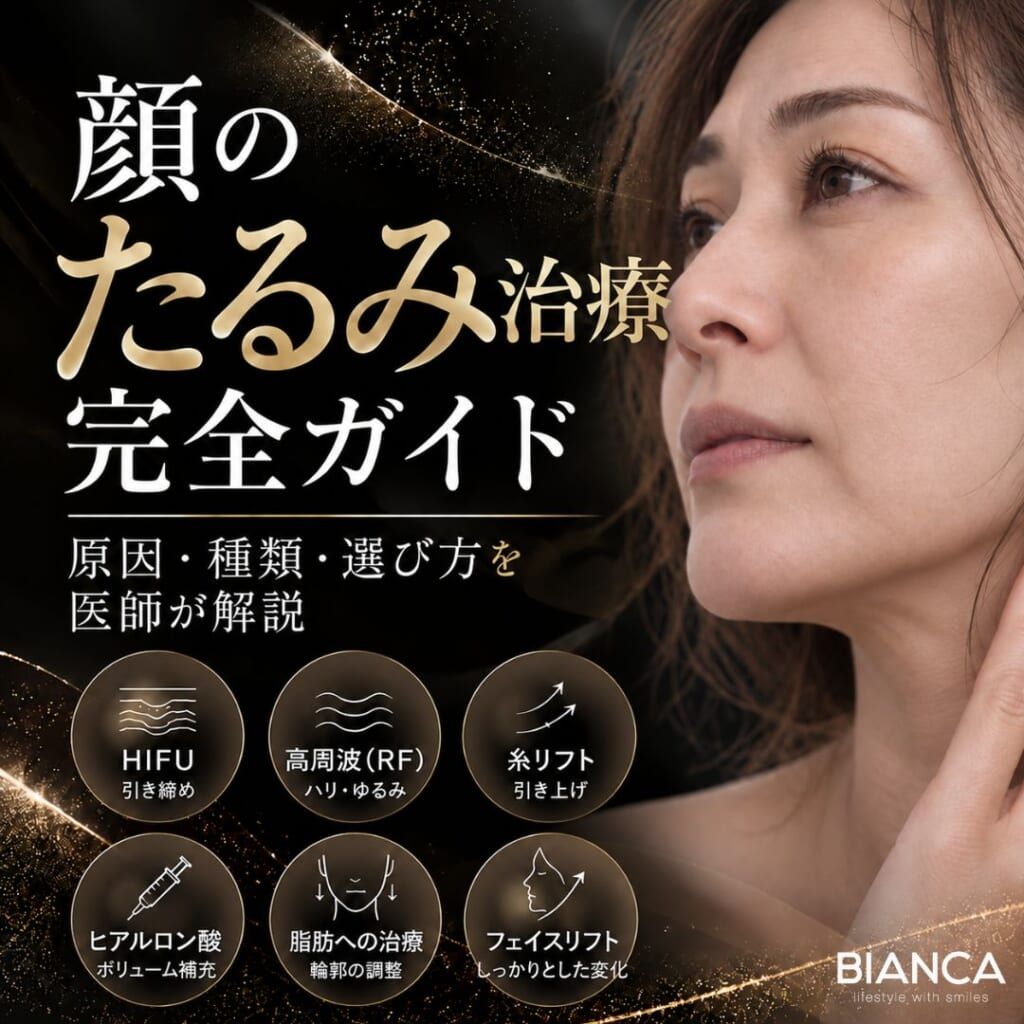
Our main treatments include HIFU, radiofrequency (RF), thread lifts, injectable treatments, and facelifts. We select the appropriate treatment based on the cause of sagging—such as thermal tightening, tissue lifting, or volume restoration.
What treatments are recommended for sagging skin on the face?
HIFU and Volnuma are options for treating sagging skin, while thread lifts are recommended for tissue ptosis. If you have sunken cheeks or a lack of volume, hyaluronic acid injections may be appropriate.
How Should I Choose a Treatment for Sagging Skin?
The choice of treatment for sagging skin depends on the cause, the degree of sagging, and the desired outcome. Options include RF for loss of skin firmness, HIFU for deep tissue tightening, and thread lifts for tissue sagging. The decision should also take into account downtime and risks.
What causes facial sagging?
The main causes include a loss of skin elasticity, a reduction in cheek volume, and sagging of the tissues that support the face. In some cases, sagging becomes more noticeable when multiple of these changes occur simultaneously.
Why Does the Face Sag as We Age?
The main causes are a loss of skin elasticity due to aging, sagging fat, and changes in the skeletal structure and supporting tissues. Combined with factors such as a decrease in collagen and bone atrophy, sagging becomes more noticeable in the cheeks, around the mouth, and along the jawline.
Is sagging the reason my face looks older?
Sagging skin on the face is one of the causes of looking older. When combined with sunken cheeks, loss of skin elasticity, and wrinkles, it can change your overall appearance.
Can sagging skin be improved with facial beauty devices, massage, or facial exercises?
While massages and other treatments can temporarily make your face look more defined, it can be difficult to improve sagging caused by loose skin or tissue drooping through self-care alone. If this is a concern for you, we’ll examine you to determine the cause and extent of the sagging and recommend the most appropriate treatment.
Will losing weight fix sagging skin on my face?
Since facial sagging is related to factors such as loose skin and changes in volume, losing weight alone does not necessarily improve the condition. In some cases, weight loss can make sunken cheeks more noticeable, which can actually make the face appear saggier.
Should I Start Sagging Skin Treatments in My 30s?
If you start to notice sagging in your 30s, it’s time to consider treatment. For early signs of loss of firmness or mild sagging, options include HIFU and Volnuma. However, you don’t need to start treatment just because of your age.
What works best for sagging skin in your 40s?
For sagging skin in your 40s, options include HIFU, Volnuma, and thread lifts. The choice depends on the cause of the sagging—for example, light-based treatments for loss of skin firmness, and thread lifts for sagging cheeks or jawline.
What kind of cosmetic procedures are best for sagging skin in your 50s?
For sagging skin in your 50s, options include HIFU, radiofrequency treatment, thread lifts, and facelifts. Depending on the degree of skin laxity, sagging cheeks, and excess skin, we will consider treatments ranging from non-invasive procedures to surgical options.
Do the methods for treating facial sagging in people in their 40s, 50s, and older vary depending on age?
The appropriate treatment isn't determined by age alone. It's chosen after assessing skin firmness, cheek fullness, and the degree of sagging in the tissues that support the face, while also taking into account whether multiple changes are occurring simultaneously.
How can I lift my face without surgery?
Treatment options include procedures using devices such as Hyfu and Volnuma, as well as thread lifts. We will consider the most suitable method based on the level of change you are hoping to achieve.
What are the differences between HIFU, RF, thread lifts, and dermal fillers?
HIFU and RF tighten the skin using heat, thread lifts lift the tissue, and injectable treatments restore volume. Since each method works differently, the appropriate treatment is selected based on the specific condition—such as skin laxity, tissue sagging, or loss of volume.
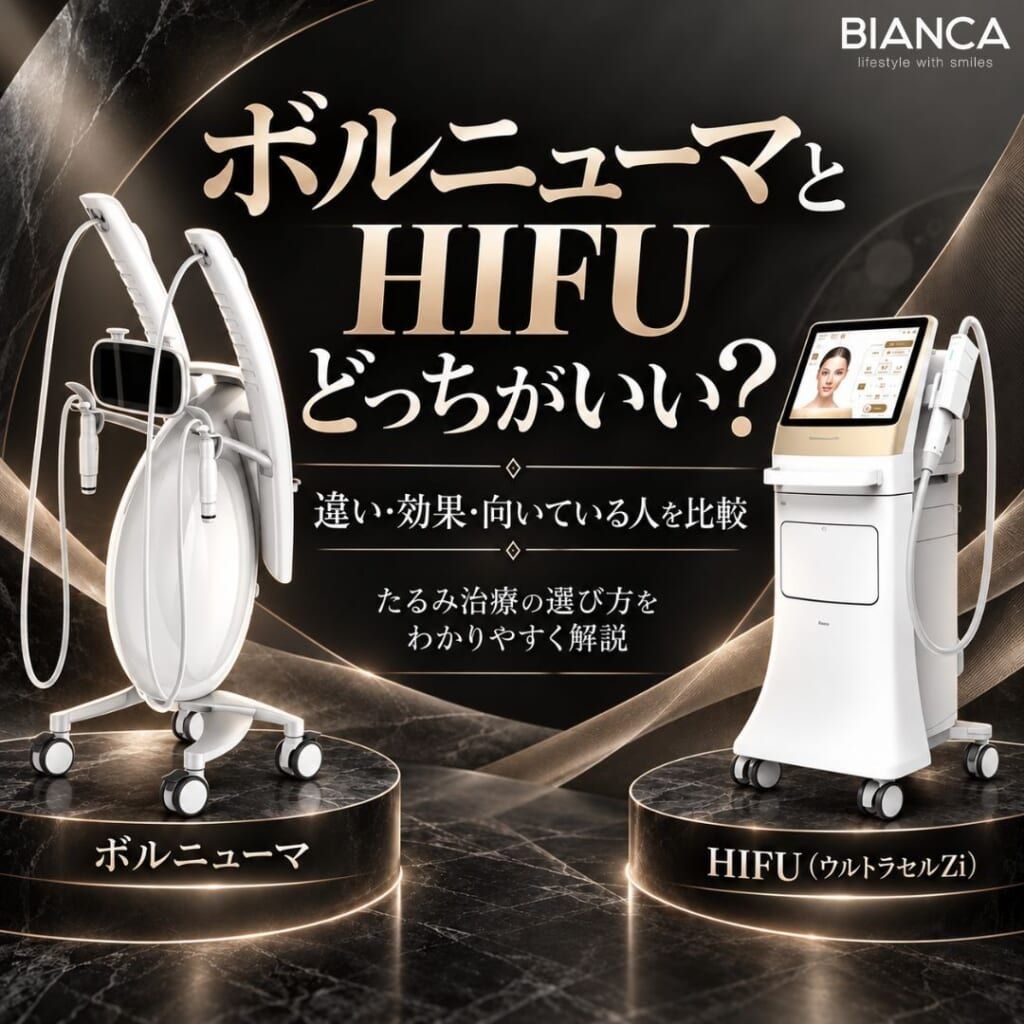
Which is better, Volnuma or HIFU?
For skin firmness and sagging, Volnuma is an option, while HIFU is recommended for deep tissue tightening. Volnuma uses radiofrequency, and HIFU uses ultrasound. They target different layers of the skin, and are sometimes used in combination.
What types of sagging does Volnuma treat?
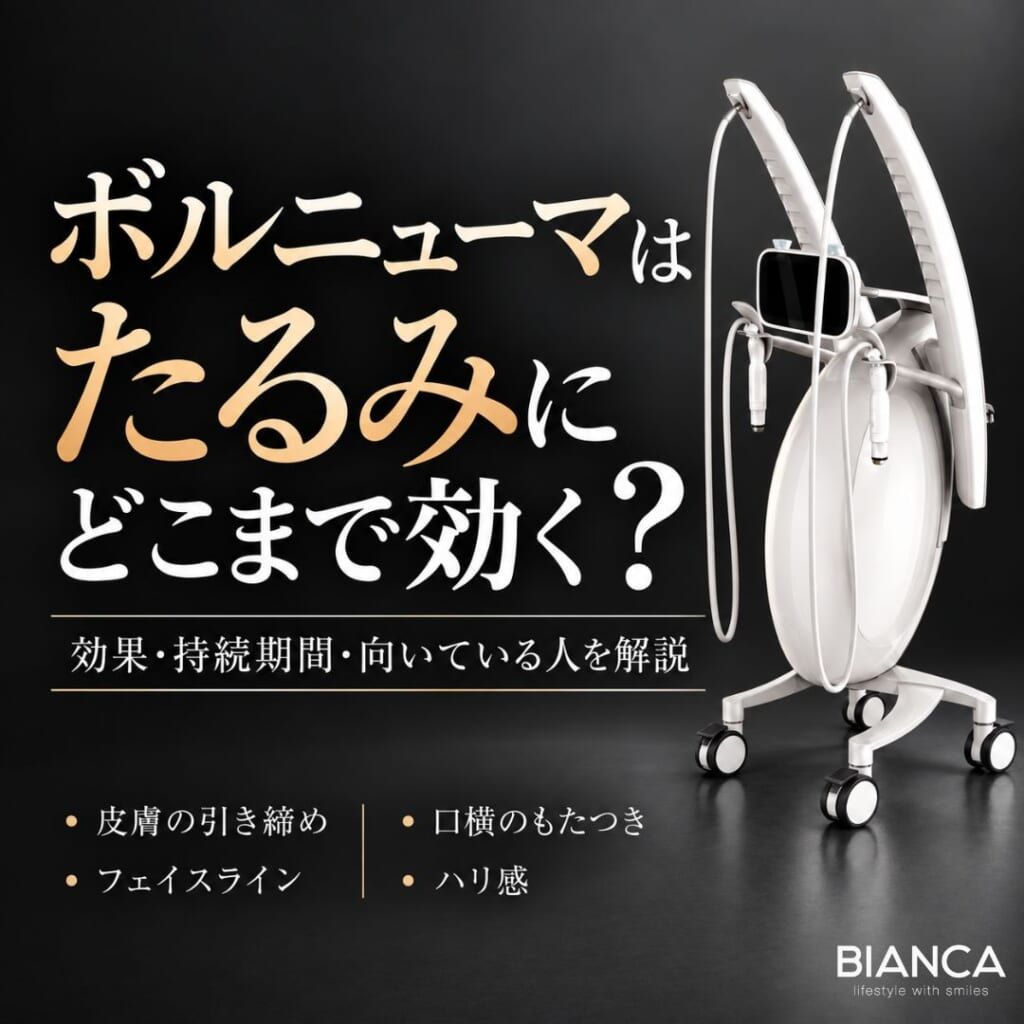
Volnuma is a radiofrequency treatment suitable for loss of skin firmness and mild to moderate sagging. It delivers heat from the dermis to the subcutaneous tissue, aiming to tighten the cheeks and jawline. In cases of severe sagging, a different treatment may be necessary.
What types of sagging skin is HIFU suitable for?
HIFU is a treatment suitable for mild to moderate sagging of the cheeks and jawline. It uses ultrasound to deliver heat to deep tissues, with the goal of tightening the skin. For patients with little fat in the cheeks, careful treatment planning is necessary to prevent a gaunt appearance.
What are the different types of RF treatments for sagging skin?
RF (radiofrequency) treatments include Volnuma and Mofius 8 Burst. There are types that deliver energy from the skin’s surface and types that use needles; the choice depends on skin type, the degree of sagging, and downtime.
If I have severe facial sagging, do I need a facelift?
Even if you have significant sagging, a facelift isn’t always necessary. We’ll examine the excess skin and the degree of tissue sagging to determine whether a non-surgical treatment might be an option.
In addition to facial sagging, can I also consult about sunken cheeks, nasolabial folds, and loss of skin firmness?
Yes, you can discuss multiple concerns at the same time. We’ll assess the volume of your cheeks and the condition of your skin, and then determine the most appropriate treatment options from among fat grafting, skin-rejuvenating injections, and lifting procedures.
When you get a facelift to treat sagging skin, doesn't it make your face look unnaturally tight?
The final results vary depending on the treatment method and the technique used for lifting. During your consultation, we will discuss the changes you'd like to see and aim for a natural-looking result.
Is it possible to undergo a facial sagging treatment with minimal downtime?
If you want to minimize downtime, treatments using devices such as Hyfu or Volnuma are good options. However, the most suitable treatment will vary depending on the degree of sagging and the results you’re hoping to achieve.
Related Articles
BLOG