column (e.g. in newspaper)
2025.07.09
Acne is a disease of the pores! The Basics of Acne Treatment (Insurance-Covered Treatment)

As an Assistant Professor, Associate Ward Director, and Chief of Dermatopathology at the university hospital dermatology department, I deepened my expertise through academic presentations and paper publications both domestically and internationally. I have handled a wide range of treatments, from birthmark therapy in children to adult pigmentation concerns, utilizing various lasers and injection therapies, while also contributing to community healthcare. Through encountering numerous cases, I strongly felt the potential and necessity of aesthetic medicine, resolving to pursue further expertise. Building upon my solid dermatological knowledge and meticulous diagnostic skills, I value treatments that gently support each individual's skin while bringing out its inherent beauty.
- Good evening. With so much information out there about acne treatment these days, are any of you feeling lost?
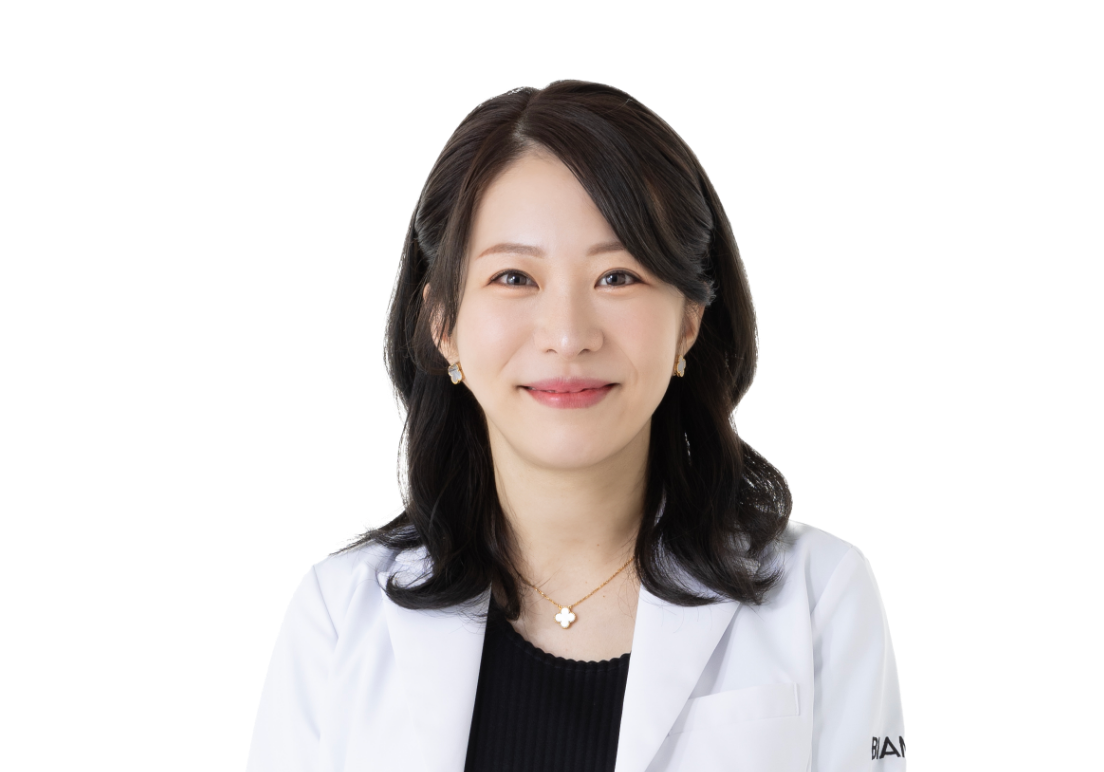
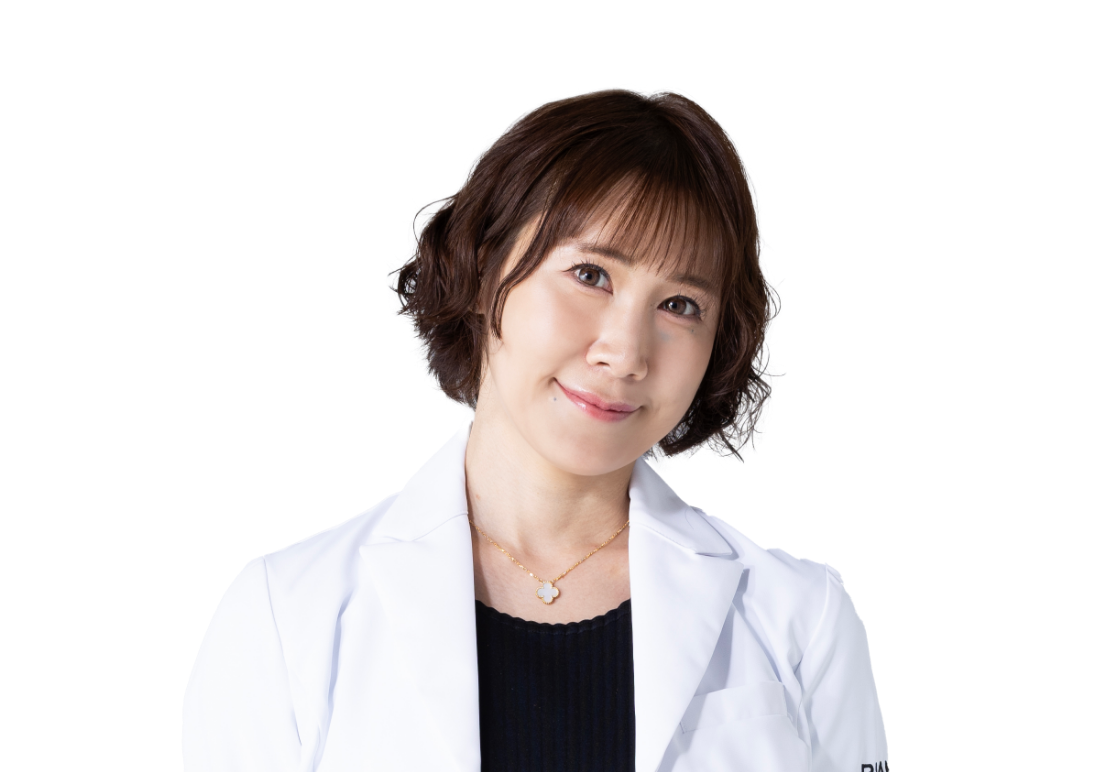
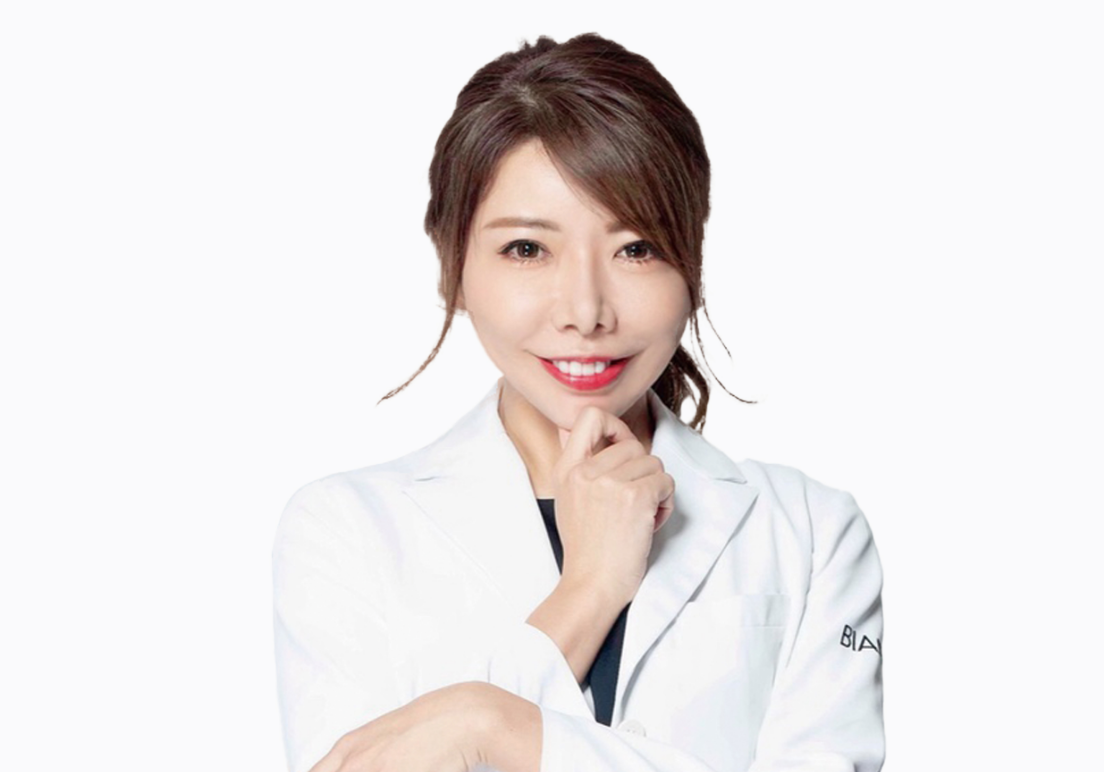
I am Dr. Aya Hayama, a dermatologist who has held numerous lectures with Maruho Co., Ltd., renowned for its acne treatments, and has been raising awareness about acne treatment for many years.

You might wonder why awareness campaigns? But actually, back when I was a student...There was no medication for acne.。
Have your parents ever told you that?
"Don't touch it, don't crush it, don't put makeup on it, keep your bangs up..." and so on.
I also visited a dermatologist during my college years.
I was told, "You're young, so it can't be helped," and was only given antibiotics as a symptomatic treatment.
Advances in Acne Treatment
CurrentAcne Guidelines(Treatment procedures established by the Japanese Dermatological Association)is stated.
■Acne Vulgaris and Rosacea Treatment Guidelines 2023, Excerpts https://www.dermatol.or.jp/uploads/uploads/files/guideline/zasou2023.pdf
■Until 2008, acne was considered a symbol of youth and dismissed as a physiological phenomenon. The rate of seeking medical treatment was low at 10%.
Data suggests that even mild cases can leave scars, potentially leading to reduced quality of life and becoming a cause of bullying among middle and high school students. This underscores the need for early, proactive treatment and maintenance therapy.
■Since 2008, treatment centered on oral or topical antibiotics has been supplemented by the introduction of adapalene, establishing maintenance therapy for persistent microcomedones. Furthermore, the introduction of benzoyl peroxide in 2014 made it possible to avoid an increase in drug-resistant Propionibacterium acnes.
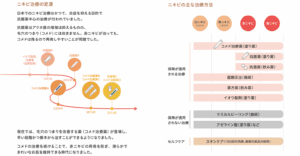
Thus, since 2008, the formulation adapalene (Differin) has finally been approved in Japan, enabling the removal of excess keratin and the prevention of acne. Furthermore, in 2014, benzoyl peroxide (Bepio) was finally manufactured and released by Maruho Co., Ltd.
Causes of acne
So, why does acne form in the first place? One factor is that during adolescence and young adulthood (ages 10-20), sex hormones activate the sebaceous glands, leading to excess sebum production. Of course, for women in their 30s and 40s, hormonal imbalances due to pregnancy, breastfeeding, and menopause can also be a cause. Additionally, for both men and women, fatigue and stress can disrupt hormonal balance.
Additionally, trying to conceal acne with concealer, using overly oily moisturizers based on the mistaken belief that acne stems from dryness, rubbing the skin, or shaving can all cause keratin buildup, potentially triggering or worsening acne.
Pathology of Acne
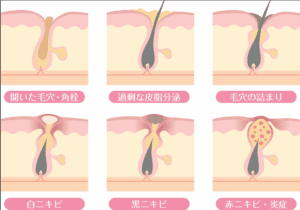
Sebum secreted from sebaceous glands attached to pores can be observed under an electron microscope, revealing clogged pores even when no symptoms are apparent.
As sebum accumulates further in the pores, it forms comedones, also known as whiteheads. When this mixture of sebum and dead skin cells oxidizes, it turns black, becoming more noticeable as blackheads.
If left untreated, resident bacteria—primarily Propionibacterium acnes—will proliferate. This leads to inflammation as a foreign body reaction to the increased bacteria and sebum, resulting in what are commonly called red or yellow pimples. The more severe the inflammation, the greater the likelihood of post-inflammatory erythema (redness after acne) and acne scars (tightening scars) remaining as acne marks.
Furthermore, it is regrettable that even without causing inflammation, simply leaving acne lesions untreated carries the risk of leaving acne scars.
Acne Treatment
Currently available options include adapalene, bepio, and their combination product epiduo. All of these medications are designed to care for the skin's keratin layer and prevent acne from forming. They are not only applied to areas where acne is present, but also to prevent future breakouts.Apply over the extensive areas prone to acne for at least three months.By doing so, we have been able to stop the rebirth.
Side effects of acne treatment
A common drawback is that they tend to cause irritation, which typically occurs around one month after starting use and usually subsides as the skin adjusts.
※Benzoyl peroxide may cause allergic contact dermatitis. If you experience redness, swelling, or a stinging sensation in areas other than the application site, discontinue use and consult your doctor.
Based on the above, the medication's effects on skin metabolism require three months to prevent new acne from forming. To avoid irritation side effects, topical application starting with a small amount is recommended. Consequently, it is often applied only to existing acne lesions. Many people mistakenly conclude the treatment is ineffective and discontinue it prematurely.
Therefore, non-comedogenic moisturizers with low oil content are now used in combination, along with formulations that have a low rate of water evaporation (Bepiro Lotion). Recently, products like Bepiro Wash, which are applied for short contact therapy lasting 5-10 minutes before rinsing off, have also been released.
The redness from acne will fade over about six months, but the scars will never completely disappear.
Here's a personal musing from me, a dermatologist...
Once acne has formed, we can perform facial pressure therapy at the clinic to thoroughly extract the contents. Antibiotics and Chinese herbal medicine can be administered orally or topically. For cystic acne that has formed a sac-like structure, local Kenacort injections are also effective.
While it's necessary for you to review your own lifestyle habits, if I had to mention a few things: washing your face twice daily with a cleanser, taking oral vitamin B2 and B6 to help regulate sebum production, living a life that avoids accumulating stress (though this is difficult for most people, both mentally and physically), and avoiding excessive consumption of foods that clearly trigger flare-ups—even if there's no scientific evidence or proven causal relationship.
First and foremost, we recommend visiting a clinic with a dermatologist to receive insurance-covered treatment whenever possible.
※In cases of particularly stubborn conditions, oral isotretinoin may be prescribed for a period of six months.
Caution is needed regarding one-month contraception, dryness, liver dysfunction, and lipid abnormalities. However, I believe this medication is generally safe for young individuals without underlying conditions to take orally. Please discuss this with us as well.