column (e.g. in newspaper)
2025.11.04
The Difference Between the Double Buried Suture Method and the Double Incision Method
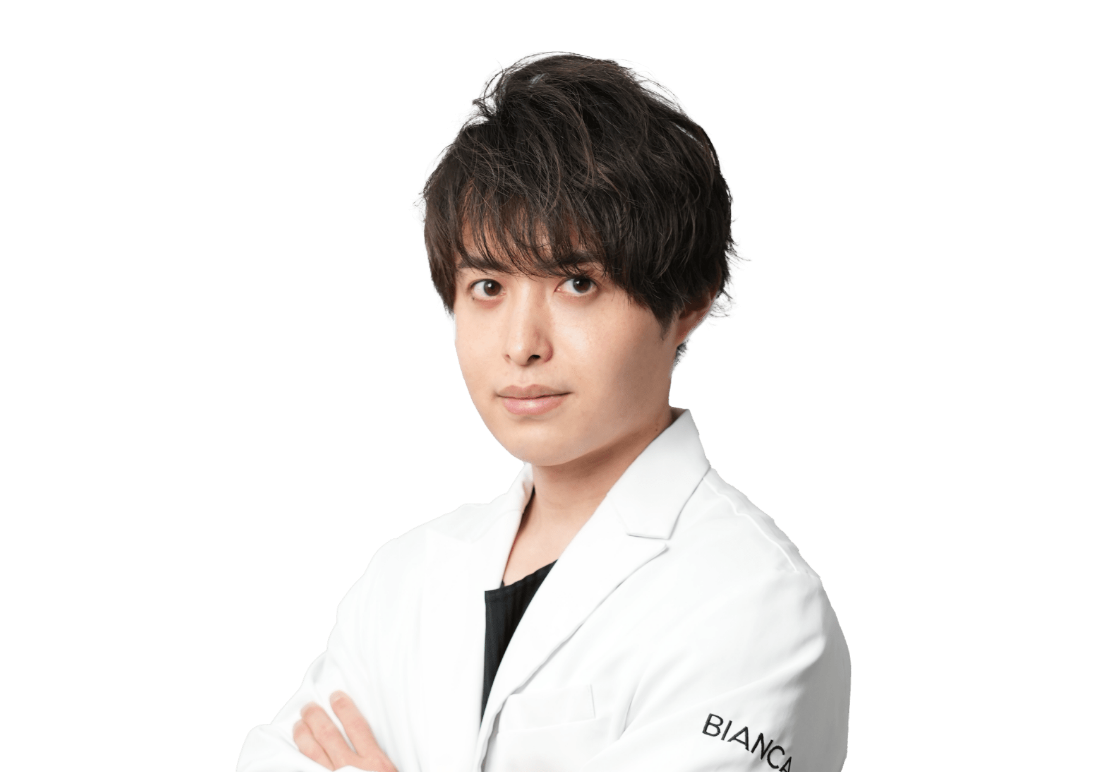
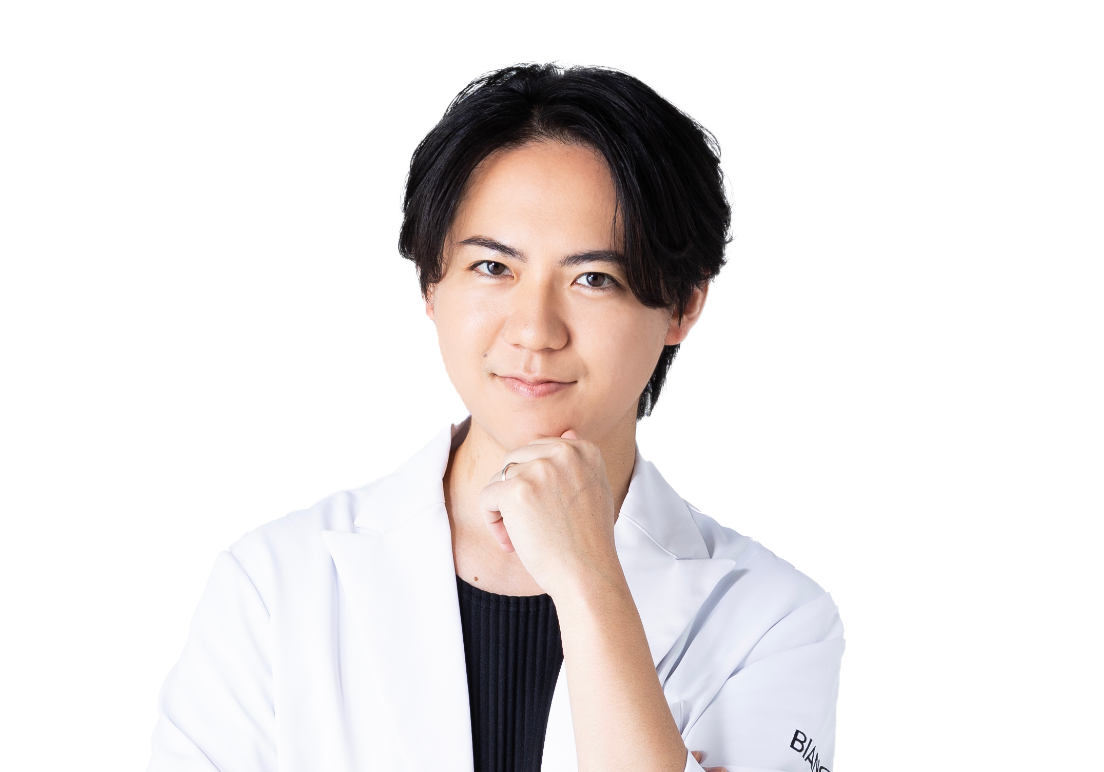
As a plastic surgeon certified by the Japanese Society of Plastic and Reconstructive Surgery, I have been involved in many cases of trauma, reconstruction, and congenital diseases, and have cultivated precise techniques and a deep understanding of anatomy. He entered the field of cosmetic surgery out of a desire to bring the power of cosmetics to his patients, as a change in one's appearance can also make one's mind more positive. Her specialties include general treatment of the eye area, injections, and sagging skin. I provide treatments that focus on beauty with the medical stance of "sincerely addressing the ideals of the patient.
Hello!
Designing natural beauty with trust.
I am Masataka Fujihashi, a board-certified plastic surgeon.
"I want wide-open eyes..."
"I want to graduate from my daily eyelid tape routine!"
I want to eliminate the asymmetry in my double eyelid width that has developed with age.
I imagine everyone has their own reasons for wanting double eyelids.
"So which surgery should I get to create double eyelids?"
There are two main surgical methods for double eyelid surgery: the suture method and the incision method. Each has its own advantages and disadvantages, and each is suited to different individuals.
In this article, I will explain the differences between the suture method and the incision method in a clear and professional manner, drawing on my experience as a plastic surgeon and cosmetic surgeon who has treated numerous eye cases across all ages and genders.
⸻
What is the double-stitch method?
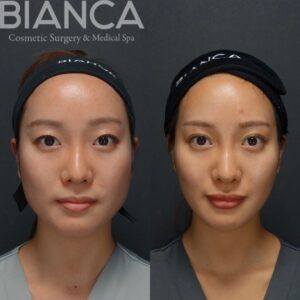
The buried suture method creates a double eyelid line by making tiny needle-hole-like punctures in the skin or conjunctiva (the inner eyelid surface) and securing the eyelid at several points with fine medical thread. With a short procedure time of 10 to 20 minutes and relatively minimal swelling or bruising, it is widely recognized as a "casual cosmetic procedure."
Benefits
• Short downtime (recovery in about 1 to 3 days)
• Leaves almost no scar or, if any remains, it is completely unnoticeable
• Natural finish
• You can undo it by removing the thread.
• Lower cost compared to incision
Disadvantages
• The double eyelid line becomes less pronounced as the thread loosens.
• Not suitable for people with thick eyelids, as it may result in an unnatural finish
• Limited design flexibility
"I'd like to try double eyelids casually." "I might want to change the shape of my double eyelids in the future." "I'm not sure if double eyelids suit me yet..."For those who...buried methodIt can be said that this is suitable.
⸻
What is the double eyelid incision method?
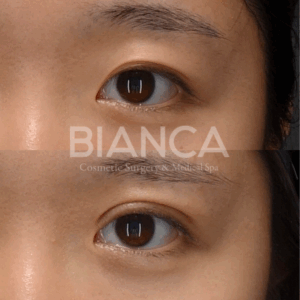
The incision method creates a double eyelid line by surgically reshaping the internal structures after making an incision in the eyelid skin with a scalpel. During the procedure, excess skin and fat can also be removed, making it a highly versatile technique that allows for significant changes and offers considerable design flexibility.
Compared to the buried method, downtime is slightly longer, but it excels in terms of stability and design quality.
Some clinics may list procedures as "Double Eyelid Full Incision" or "Upper Eyelid Sagging Removal."
Benefits
• The double eyelid does not become loose
• Can reduce skin sagging and decrease fat
• Offers considerable design flexibility
• Easily reproduces lines close to the ideal
• Capable of bringing about significant change
Disadvantages
• Long downtime (approximately 1 to 2 weeks)
• Risk of scarring (becomes less noticeable over time)
• The fix is difficult
• It cannot be restored to its original state.
• The price is higher than the buried method
Those with thick eyelid skinやThose with a higher body fat percentage、Those who have had their buried eyelashes come out multiple timesis, basicallyDouble incisionI often recommend.
⸻
Buried or incision—which should I choose?
Actually, patients rarely ask me, "Which is better, buried sutures or incision?"
The reason is simple: if you can achieve your ideal with a procedure that has minimal downtime, you'd choose that method, wouldn't you?
In other words,Most patients come to our clinic requesting the buried suture method.
Among them, some patients who thoroughly research before visiting the clinic come in with concerns like, "Maybe I'm better suited for incision surgery."
Which one should I choose? The answer is simple:Current Condition of the Eyelidsと"The Ideal Double Eyelid"According to.
The following criteria may serve as a reference:
|
|
buried methodPeople who are suited for |
Incision methodPeople who are suited for |
|
eyelid thickness |
Thin~Normal |
Thick / High in fat |
|
Double Eyelids of Hope |
Nature / Natural |
Vivid and vibrant |
|
Downtime |
Prefer shorter |
Someone who can handle things well |
|
Cost estimate |
約10〜20ten thousand yen |
約30〜50ten thousand yen |
|
Ease of modification |
It can often be returned. |
Basically irreversible |
It is important to make a comprehensive decision, considering not only the condition of your eyelids but also factors such as "what kind of impression you want your eyes to make," "the impact on your work and daily life," "downtime," and "price."
⸻
The Pitfalls of Choosing: A Doctor's Perspective
A common scenario in counseling is,Choosing the buried suture method solely because "I want to keep costs as low as possible" or "I want to do it with almost zero downtime"Case.
Of course, cost and convenience are important, butIf the final result differs significantly from your ideal, revision surgery may be necessary.There is. As a result,It may actually end up costing more time and money.。
Furthermore, the buried suture method is fundamentally a procedure that "creates a fold in the eyelid," and it cannot address underlying structural issues such as skin laxity or excess fat. It is best to avoid choosing it simply because it "seems easy."
⸻
When is caution needed? Cases where incision methods are suitable
Individuals with the following characteristics may not be satisfied with the buried suture method:
• My eyelids feel heavy, and the line disappears quickly.
• The buried part keeps coming loose (more than once a year)
• Symptoms of ptosis (difficulty opening the eyelids)
• Significant skin laxity
• Significant asymmetry around the eyes
If these conditions apply, the incision method is well worth considering. It tends to provide long-term stability and higher satisfaction with the final result.
⸻
Buried Method +Option α
Recently, procedures such as "buried suture method + micro-liposuction (fat removal)" and "buried suture method + ptosis surgery" have become popular.Hybrid TreatmentIt is also selected.
By combining the necessary procedures tailored to each individual's eyelid condition and desired line, a more natural and satisfying result can be expected.
⸻
Finally|“It's not just about ”creating double eyelids"—the essence of eye area plastic surgery
The purpose of double eyelid surgery is not merely to create a double eyelid line.buildnot that,With an emphasis on harmony with the entire faceDesigning beautiful eyesthingis.
What matters is,Not merely creating form,“Create” to bring them closer to their ideal face”from the perspective ofis.
The distance between the eyes and eyebrows, the thickness of the eyelids, the way the eyes open, and the overall facial bone structure—considering all these elements creates beauty that feels natural.
That's precisely why, rather than choosing between "buried or incised," it's crucial to focus on the perspective of "how can we create an eye area that's uniquely attractive to that individual?"
⸻
Summary|Buried sutures and incisions—each has its own merits
• The double-stitch method is simple and has minimal downtime, making it ideal for first-time double eyelid surgery.
• Double eyelid surgery is suitable for individuals with thick eyelids or those who wish to maintain a distinct line long-term.
• Clearly defining your current eyelid condition and your ideal image is the first step toward achieving a satisfying result.
First, consult a trusted doctor and choose a method that suits you without overdoing it.
⸻
Reservations can be made here.
Complete your reservation in 60 seconds ▼
https://reservation.medical-force.com/b/d7bb811e-ebd5-4b93-93f8-588864b24f15
⸻
【Profile】
Masataka Fujihashi, MD, Plastic Surgeon
Leveraging expertise as a board-certified plastic surgeon, I offer comprehensive facial cosmetic procedures including eyelid and nose surgery, facial liposuction, thread lifts, and hyaluronic acid injections. From incisional surgeries and revision procedures requiring delicate design to minimally invasive injections and lifts with minimal downtime, I strive to provide treatments tailored to each patient's ideal outcome.
We are dedicated to achieving natural results and minimizing downtime, pursuing medical care that leaves you feeling confident in your choice through sincere consultations.
Designing natural beauty with trust.
We cherish that sentiment and apply it to our daily practice.
Read other blog posts ▼
https://biancaclinic.jp/author_cat/fujihashi/
【SNS】
Instagram ▶︎ https://www.instagram.com/dr_fujihashi?igsh=MTEzOW1sc3p3bGFibA%3D%3D&utm_source=qr
X ▶︎ https://x.com/dr_fujihashi?s=21
【Career】
March 2015: Graduated from the School of Medicine, Showa University
April 2015 Showa University Yokohama Northern Hospital Initial Clinical Training
April 2017 Showa University Hospital Department of Plastic Surgery
October 2017 Maebashi Red Cross Hospital Plastic Surgery / Cosmetic Surgery
April 2019 Nishio Municipal Hospital Plastic Surgery Department
April 2020 Showa University Fujigaoka Hospital Plastic Surgery Department
November 2020 Ota Nishinouchi Hospital Plastic Surgery / Cosmetic Surgery
July 2022 Tokyo Rosai Hospital Plastic Surgery / Cosmetic Surgery Department Head
July 2022: R.O.clinic (Part-time), Kusano Taro Clinic (Part-time)
April 2024 Deputy Director, Ginza TA Clinic
November 2025 BIANCA CLINIC
【Professional Affiliations and Qualifications】
Japanese Society of Plastic and Reconstructive Surgery Board-Certified Plastic Surgeon
Member of the Japanese Society of Aesthetic Plastic Surgery (JSAPS)
Member of the Japanese Society of Aesthetic Surgery (JSAS)