column (e.g. in newspaper)
2025.11.12
The Mechanism of Eyelid Opening and the Causes of Ptosis
As a plastic surgeon certified by the Japanese Society of Plastic and Reconstructive Surgery, I have been involved in many cases of trauma, reconstruction, and congenital diseases, and have cultivated precise techniques and a deep understanding of anatomy. He entered the field of cosmetic surgery out of a desire to bring the power of cosmetics to his patients, as a change in one's appearance can also make one's mind more positive. Her specialties include general treatment of the eye area, injections, and sagging skin. I provide treatments that focus on beauty with the medical stance of "sincerely addressing the ideals of the patient.
Hello!
Designing natural beauty with trust.
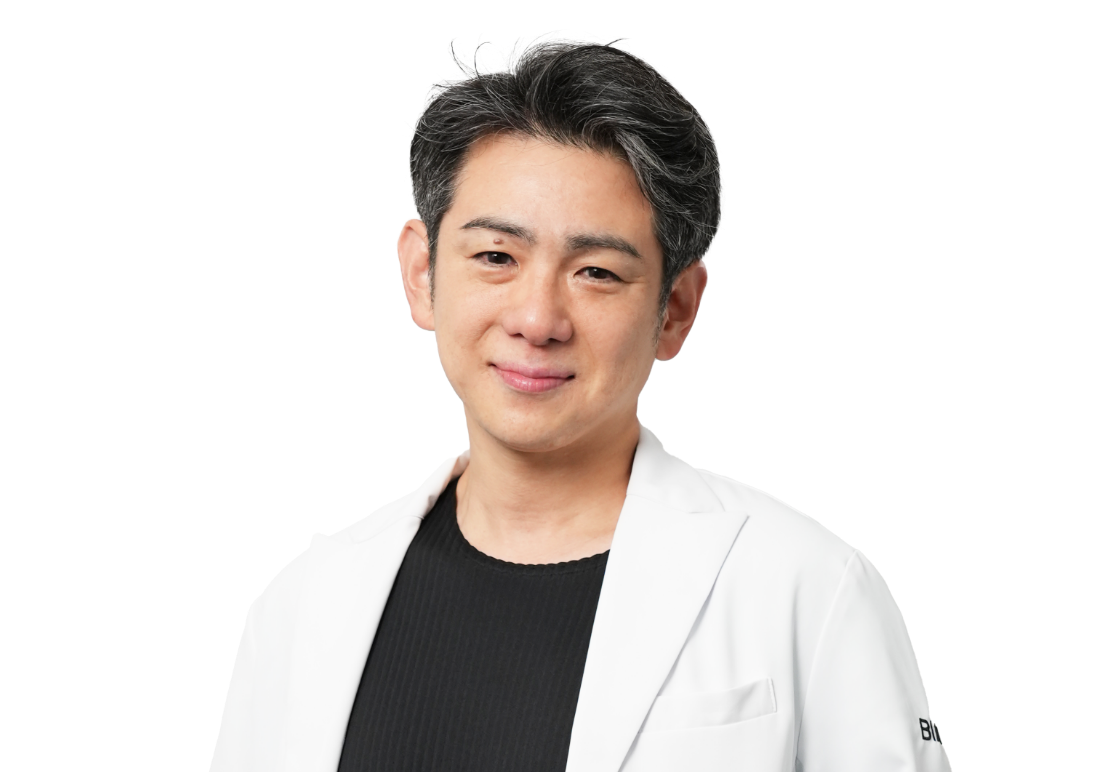
I am Masataka Fujihashi, a board-certified plastic surgeon.
"My eyes feel heavy," "People tell me I look sleepy," "My field of vision feels narrow."
Behind such symptoms lies,Ptosisthat,Decreased function of the muscles that lift the eyelidsmay be involved.
And one of the most common requests we hear during cosmetic surgery consultations is, "I want to make my sleepy-looking eyes more wide-open."
To open your eyes wide, it's important to first understand the mechanism of how your eyelids open.
⸻
■ The Mechanism of Eyelid Openingズム
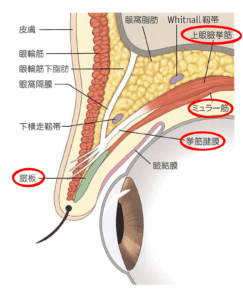
Source: 'Facial Plastic Surgery, 1st Edition' (Nihon Iji Shinposha, 2021), p.57, Figure 1, modified and reproduced
Inside the eyelid is the "Tarsal plate(kenban)"—a hard tissue resembling cartilage. This is lifted upward by the "levator palpebrae superioris muscle(The trapezius muscle).
At the tip of this muscle is "Levator aponeurosisA thin, tendon-like membrane called the "tarsal membrane" attaches to the tarsal plate and transmits force. In other words,When the levator muscle contracts, the tarsal plate is lifted via the aponeurosis, causing the eyelid to open.This is the structure.
Below that is "Müller muscleThere is another muscle called the "sphincter," which is controlled by the autonomic nervous system (sympathetic nerves).The Müller muscle plays a supporting role in fine-tuning the opening of the eye.This muscle also plays a role in making your eyes feel slightly more open when you're tense or in a state where the sympathetic nervous system is dominant.
In this way, the opening and closing of the eyelids is accomplished by a precise mechanism involving the coordinated action of multiple structures: the levator palpebrae superioris muscle, the levator aponeurosis, the Müller muscle, and the tarsal plate.
⸻
■ What is Ptosis?
Ptosis is a condition in which the eyelid droops.A condition where the eyelid fails to lift sufficiently due to a disruption in the mechanism responsible for raising the eyelid.refers to.
Not only does it make you look sleepy, but it can also cause your upper field of vision to narrow. Constantly straining your forehead muscles to keep your eyes open can lead to headaches and stiff shoulders.
This condition is treated not only for cosmetic reasons but also for functional issues such as visual impairment and chronic fatigue.
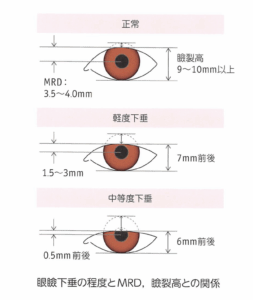
Source: 'Facial Plastic Surgery, 1st Edition' (Nihon Iji Shinposha, 2021) p.58, Figure 3, modified and reproduced
⸻
■ Primary Causes of Ptosis
① Age-related ptosis
This is the most common type. With age,にThe levator aponeurosis stretches、detached from the tarsal plateand,Muscle power in the eyeliddidn't get across wellwill become.
Not only aging, but also years of makeup removal and the irritation from eyelid tape can be factors.
② Habitual (due to external stimuli)
Long-term use of hard contact lensesWell,The habit of frequently rubbing one's eyesThese factors also cause the tendon sheath to gradually stretch.
People who chronically rub their eyes, especially due to conditions like allergic conjunctivitis, may experience drooping in just one eye.
③ Congenital ptosis
This is a type where the levator palpebrae muscle is underdeveloped from birth. Since childhood, they have strained to open their eyes using the forehead muscles, which can lead to forehead wrinkles and the habitual posture of tilting the chin upward to see things.
Early diagnosis and treatment are crucial because vision development can be affected as children grow.
④ Due to injury or disease
Adhesions caused by scar tissue following surgery or trauma, or by neurological or muscular disorders (such as myasthenia gravis or muscular dystrophy), can also occur.
These are cases requiring identification of the cause and a full-body examination.
⸻
■ Treatment of Ptosis in Cosmetic Surgery
Common topics in cosmetic surgery consultations include:I want to make those sleepy eyes wide open.This is the matter we are consulting about.
This is not necessarily pathological ptosis; in some cases, a similar appearance may result from sagging eyelid skin or weak eyelid opening strength.
However, simply widening the double eyelid crease without understanding the structure of ptosis can worsen the opening of the eye or cause asymmetry, indentation, or discomfort.
Even for cosmetic procedures aimed at achieving a "cute and glamorous" look, selecting the right surgical technique based on a thorough understanding of the fundamental "mechanism of eyelid opening" is essential.
⸻
■Summary
Ptosis is not only a cosmetic issue but also a functional problem caused by an imbalance in the mechanism that opens the eyelid.
When pursuing aesthetic design, understanding the function and selecting the appropriate surgical technique leads to a beautiful, natural, and long-lasting result.
⸻
Reservations can be made here.
Complete your reservation in 60 seconds ▼
https://reservation.medical-force.com/b/d7bb811e-ebd5-4b93-93f8-588864b24f15
⸻
【Profile】
Masataka Fujihashi, MD, Plastic Surgeon
Leveraging expertise as a board-certified plastic surgeon, I offer comprehensive facial cosmetic procedures including eyelid and nose surgery, facial liposuction, thread lifts, and hyaluronic acid injections. From incisional surgeries and revision procedures requiring delicate design to minimally invasive injections and lifts with minimal downtime, I strive to provide treatments tailored to each patient's ideal outcome.
We are dedicated to achieving natural results and minimizing downtime, pursuing medical care that leaves you feeling confident in your choice through sincere consultations.
Designing natural beauty with trust.
We cherish that sentiment and apply it to our daily practice.
Read other blog posts ▼
https://biancaclinic.jp/author_cat/fujihashi/
【SNS】
Instagram ▶︎ https://www.instagram.com/dr_fujihashi?igsh=MTEzOW1sc3p3bGFibA%3D%3D&utm_source=qr
X ▶︎ https://x.com/dr_fujihashi?s=21
【Career】
March 2015: Graduated from the School of Medicine, Showa University
April 2015 Showa University Yokohama Northern Hospital Initial Clinical Training
April 2017 Showa University Hospital Department of Plastic Surgery
October 2017 Maebashi Red Cross Hospital Plastic Surgery / Cosmetic Surgery
April 2019 Nishio Municipal Hospital Plastic Surgery Department
April 2020 Showa University Fujigaoka Hospital Plastic Surgery Department
November 2020 Ota Nishinouchi Hospital Plastic Surgery / Cosmetic Surgery
July 2022 Tokyo Rosai Hospital Plastic Surgery / Cosmetic Surgery Department Head
July 2022: R.O.clinic (Part-time), Kusano Taro Clinic (Part-time)
April 2024 Deputy Director, Ginza TA Clinic
November 2025 BIANCA CLINIC
【Professional Affiliations and Qualifications】
Japanese Society of Plastic and Reconstructive Surgery Board-Certified Plastic Surgeon
Member of the Japanese Society of Aesthetic Plastic Surgery (JSAPS)
Member of the Japanese Society of Aesthetic Surgery (JSAS)