column (e.g. in newspaper)
2025.12.12
Implants vs. Autologous Tissue: Which Should You Choose for Rhinoplasty? | A Comprehensive Comparison of Features and Suitable Candidates
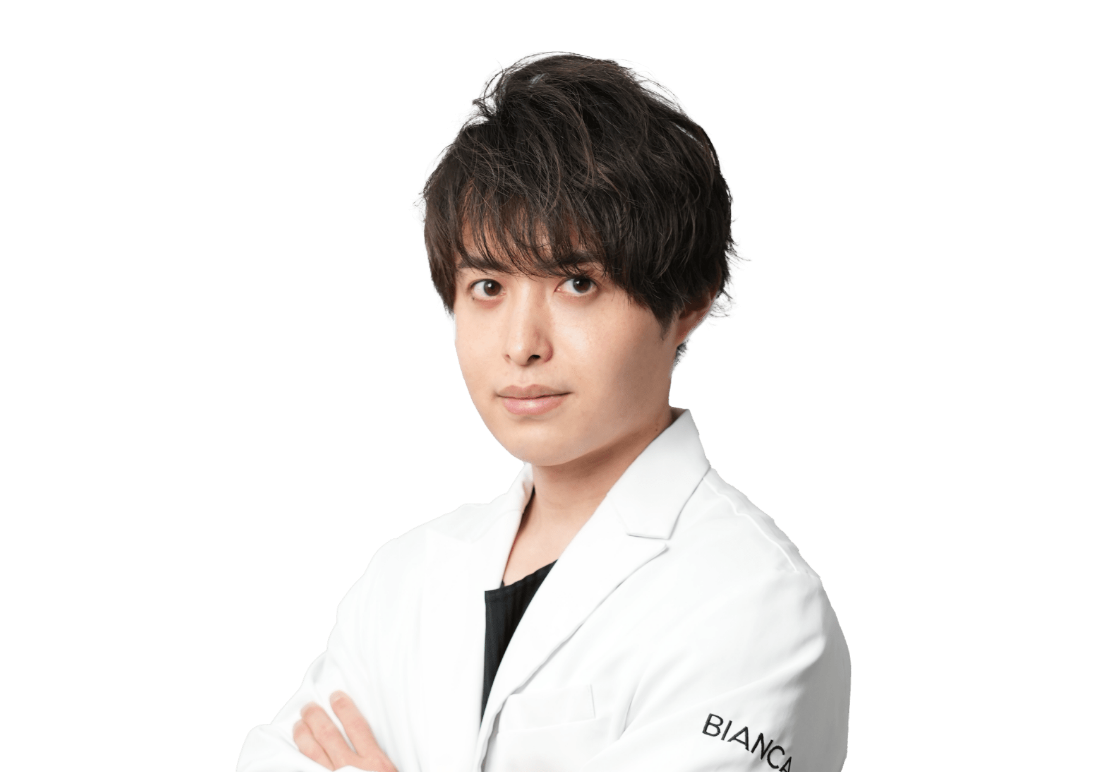
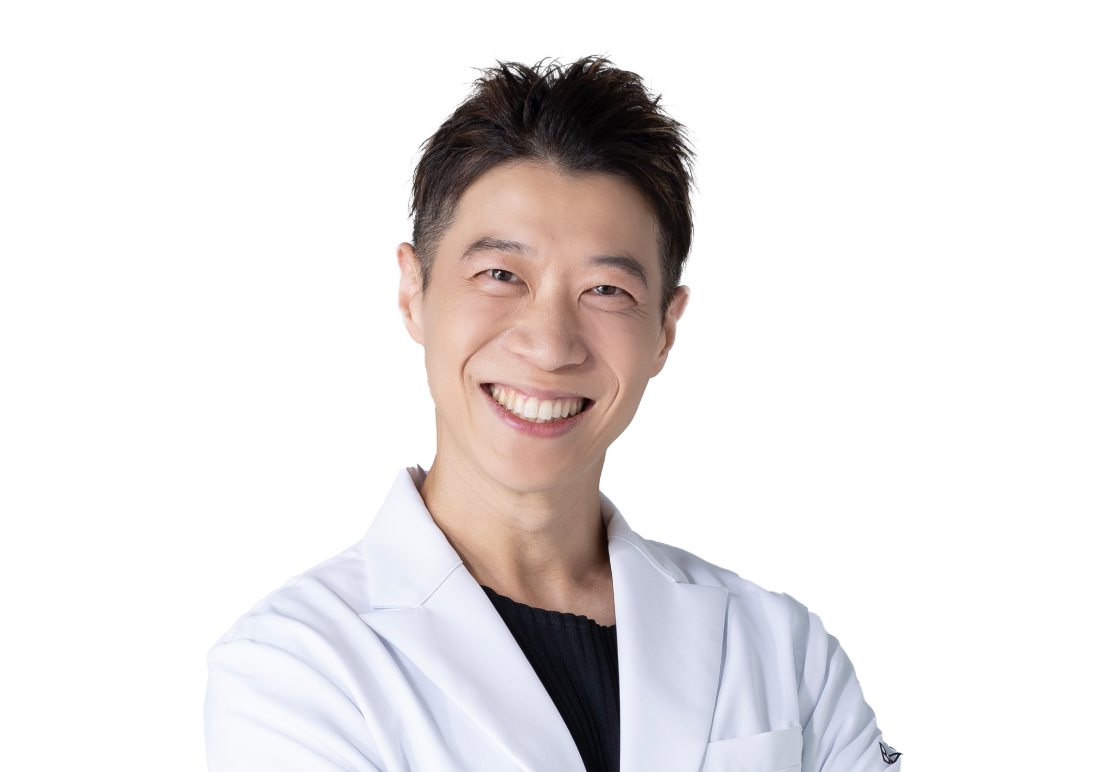
As a plastic surgeon certified by the Japanese Society of Plastic and Reconstructive Surgery, I have been involved in many cases of trauma, reconstruction, and congenital diseases, and have cultivated precise techniques and a deep understanding of anatomy. He entered the field of cosmetic surgery out of a desire to bring the power of cosmetics to his patients, as a change in one's appearance can also make one's mind more positive. Her specialties include general treatment of the eye area, injections, and sagging skin. I provide treatments that focus on beauty with the medical stance of "sincerely addressing the ideals of the patient.
Hello!
Designing natural beauty with trust.
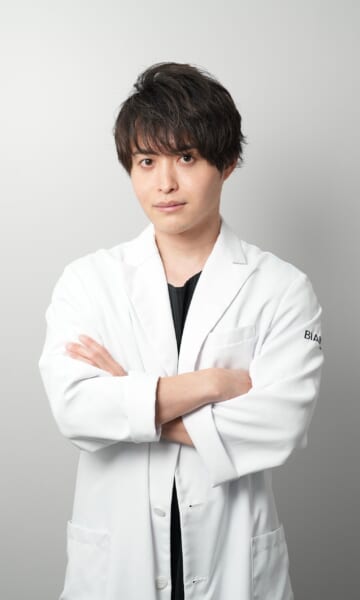
I am Masataka Fujihashi, a board-certified plastic surgeon.

Rhinoplasty procedures are broadly categorized into two main methods: "inserting a silicone prosthesis" and "transplanting autologous tissue."
Even among procedures to “raise the bridge of the nose,” their characteristics and benefits vary significantly.
Here, we will compare key points for selection, focusing on factors such as finish, safety, and ease of modification.
⸻
■ For significant height enhancement, consider prostheses.
The most obvious difference is "how much height can be achieved."
Prostheses are adept at achieving significant changes in height by inserting medical-grade silicone beneath the periosteum of the nasal bone.
The design offers high flexibility, allowing for millimeter-by-millimeter adjustments to thickness and width by shaving the prosthesis during the procedure. This makes it easy to create a slender nasal bridge and straight lines.
Another important point is the reality that the less envelope (skin and soft tissue) available, the more difficult it is to achieve height using autologous tissue.
For skin types that are hard, thin, or inflexible, even when autologous tissue is grafted, it may not lift sufficiently to achieve the desired height.
In such cases, a prosthesis with a stable shape and strong lifting force is suitable.
⸻
■ Natural texture and long-term peace of mind come from your own tissue
When comparing the texture to the touch, the autologous tissue feels very natural.
Both the costal cartilage and the dermal fat are the patient's own tissue, so they harmonize well with the skin's thickness and softness, offering the major advantage of being less likely to cause a foreign body sensation.
Additionally, the minimal risk of allergies, rejection, and long-term infection is another reason why autologous tissue is chosen.
In contrast, since prostheses are artificial objects, the risk of a foreign body reaction cannot be eliminated entirely.
While safety is high when placed correctly, it remains a foreign object in the body indefinitely. Some individuals transition to autologous tissue due to long-term concerns.
⸻
■ Prostheses are easy to modify; autologous tissue is difficult to modify.
The major difference lies in the ease of performing revision surgery.
The prosthesis is a solid foreign body, enclosed within a capsule.
Therefore, it is very easy to remove, and it has the advantage of being easy to handle even when modifications or redesigns become necessary.
On the other hand, autologous tissue adheres to surrounding tissues early after transplantation, establishing itself as “part of the body” while gaining blood flow.
Therefore, revisions tend to be difficult, and even when removing the graft, skin irregularities or scarring may remain.
For those who think "I'll likely want to change the design in the future" or "I just want to try it out for now," prosthetics offer significant advantages. For those who prefer "I want it finished in one go" or "I don't plan to remove it later," autologous tissue is more suitable.
⸻
■ The Risk of “Skin Issues” with Prostheses
Of particular importance are long-term complications with prostheses.
Because prostheses are rigid artificial objects, if inserted too shallowly, they can compress the skin from within, potentially causing the skin to thin over time (thinning). If this progresses, it may lead not only to redness and deformation but ultimately to the skin rupturing and exposing the prosthesis.
This is a common problem in L-type cases where the tip of the nose was forcibly raised with a prosthesis, and it is also the reason why this method is now rarely used.
In contrast, autologous tissue is soft and blends well with the skin, so issues like skin perforation generally do not occur.
The growing number of people choosing self-organized groups to avoid long-term risks stems from this difference in safety.
However, such skin complications are generally quite rare when the Type I prosthesis is inserted into the appropriate layer.
⸻
■ Summary
There is no absolute superiority between prostheses and autologous tissue.
The optimal solution changes depending on the desired priority.
People Suitable for Prostheses
• I want to achieve a solid height
• I want to create lines down to the millimeter
• Your taste in noses may change in the future
• Emphasizing “change”
People Suited for Autologous Tissue
• Prioritize natural texture and softness
• I don't want to leave foreign objects inside my body
• Prioritizing long-term safety
• Had issues with prostheses in the past
It is most important to understand both methods correctly and choose based on what you value most.
Let's find the optimal rhinoplasty procedure while considering the ideal height, safety, and future revisions.
⸻
Reservations can be made here.
Complete your reservation in 60 seconds ▼
https://reservation.medical-force.com/b/d7bb811e-ebd5-4b93-93f8-588864b24f15
⸻
【Profile】
Masataka Fujihashi, MD, Plastic Surgeon
Leveraging expertise as a board-certified plastic surgeon, I offer comprehensive facial cosmetic procedures including eyelid and nose surgery, facial liposuction, thread lifts, and hyaluronic acid injections. From incisional surgeries and revision procedures requiring delicate design to minimally invasive injections and lifts with minimal downtime, I strive to provide treatments tailored to each patient's ideal outcome.
We are dedicated to achieving natural results and minimizing downtime, pursuing medical care that leaves you feeling confident in your choice through sincere consultations.
Designing natural beauty with trust.
We cherish that sentiment and apply it to our daily practice.
Read other blog posts ▼
https://biancaclinic.jp/author_cat/fujihashi/
【SNS】
Instagram ▶︎ https://www.instagram.com/dr_fujihashi?igsh=MTEzOW1sc3p3bGFibA%3D%3D&utm_source=qr
X ▶︎ https://x.com/dr_fujihashi?s=21
【Career】
March 2015: Graduated from the School of Medicine, Showa University
April 2015 Showa University Yokohama Northern Hospital Initial Clinical Training
April 2017 Showa University Hospital Department of Plastic Surgery
October 2017 Maebashi Red Cross Hospital Plastic Surgery / Cosmetic Surgery
April 2019 Nishio Municipal Hospital Plastic Surgery Department
April 2020 Showa University Fujigaoka Hospital Plastic Surgery Department
November 2020 Ota Nishinouchi Hospital Plastic Surgery / Cosmetic Surgery
July 2022 Tokyo Rosai Hospital Plastic Surgery / Cosmetic Surgery Department Head
July 2022: R.O.clinic (Part-time), Kusano Taro Clinic (Part-time)
April 2024 Deputy Director, Ginza TA Clinic
November 2025 BIANCA CLINIC
【Professional Affiliations and Qualifications】
Japanese Society of Plastic and Reconstructive Surgery Board-Certified Plastic Surgeon
Member of the Japanese Society of Aesthetic Plastic Surgery (JSAPS)
Member of the Japanese Society of Aesthetic Surgery (JSAS)