column (e.g. in newspaper)
2026.01.05
What Causes the Commonly Seen Sunken Midface in Japanese People? | The Skeletal Reason Why Noses Appear Buried
As a plastic surgeon certified by the Japanese Society of Plastic and Reconstructive Surgery, I have been involved in many cases of trauma, reconstruction, and congenital diseases, and have cultivated precise techniques and a deep understanding of anatomy. He entered the field of cosmetic surgery out of a desire to bring the power of cosmetics to his patients, as a change in one's appearance can also make one's mind more positive. Her specialties include general treatment of the eye area, injections, and sagging skin. I provide treatments that focus on beauty with the medical stance of "sincerely addressing the ideals of the patient.
Hello!
Designing natural beauty with trust.
I am Masataka Fujihashi, a board-certified plastic surgeon.
Common concerns during revision rhinoplasty consultations include: "My nose tip is higher, but it feels like it's floating," and "My profile looks flat."
This discrepancy is often caused not by the design itself, but rather by the position of the “foundation of the nose” rather than the nose itself.
The foundation refers to the skeletal structure of the midface (from below the eyes to the mouth) and the positioning of the nasal alar base and columella base that sit atop it.
⸻
■ Midface hollows are a separate issue from a low nose
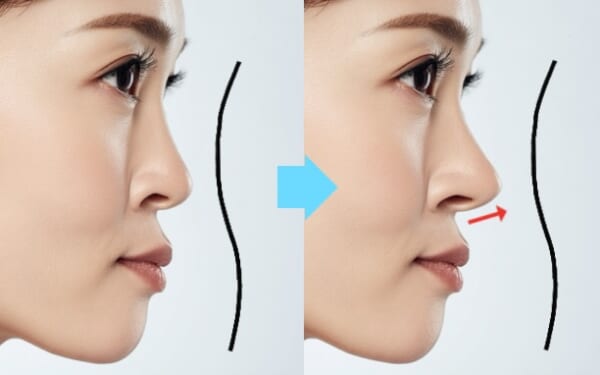
Even if the bridge and tip of the nose are sufficiently prominent,If the midface foundation is set back, the nose appears buried in the cheeks.。
In other words, not “the height of one's nose,”“The Problem of the ”Nose-Raising Scaffolding"is.
When this scaffolding is positioned at the back, it may appear neat from the front, but can look out of place when viewed from an angle or sideways.
⸻
■ Common skeletal characteristics among Japanese people
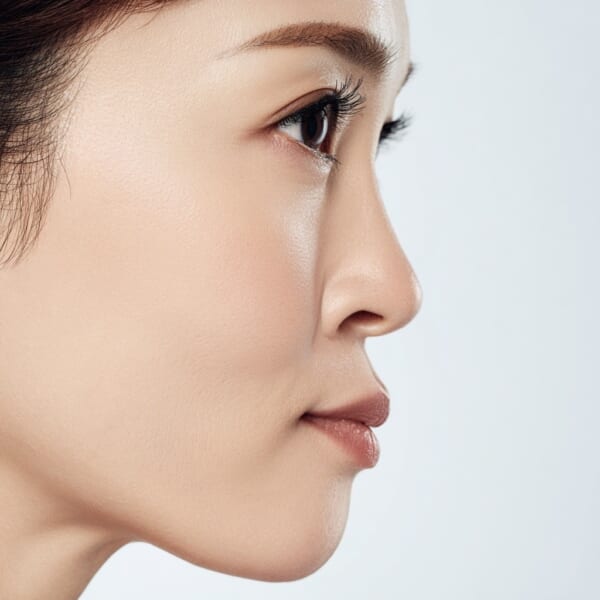
East Asians have a philtrum extending from the philtral border to the base of the nasal alar.A tendency for the skeletal structure to be positioned relatively posteriorlyThere is.
It's a problem that can't be explained by the shape of the nose alone—essentially, the issue of the “coordinates of the nasal foundation.”
If these coordinates remain backward, the more you push your nose forward, the more it appears to stand out alone, which can sometimes feel unnatural.
⸻
■ Three Common Appearances When the Base is Set Deep
① The nostrils dig into the cheeks.The nostrils appear pinched, making the nose look buried.
② The mouth area is relatively prominent.Even if there are no issues with tooth alignment, the mouth can easily appear to protrude.
③ The nasolabial folds appear deep.The shadow created by the difference in height between the base of the nostrils and the cheeks accentuates the line.
In each case, it's less a matter of “skin sagging” and more a problem of shadows created by the contours of the bone structure.
⸻
■ Why Adjusting Only the Tip Makes Your Nose Look Floating
If the foundation remains set back while only the tip of the nose is pushed forward, the nose appears to protrude ahead of the rest of the face.
As a result, this creates the impression that "the nose is beautiful, but the overall balance is off" or "the tip of the nose is overly emphasized."
This is not a problem with the shape of the nose, but a sign that the positional relationship with the foundation is not aligned.
⸻
■ Key Points Covered in Counseling
Depressions in the midface can appear different depending on the angle of the photograph, so we do not judge them based solely on a frontal view.
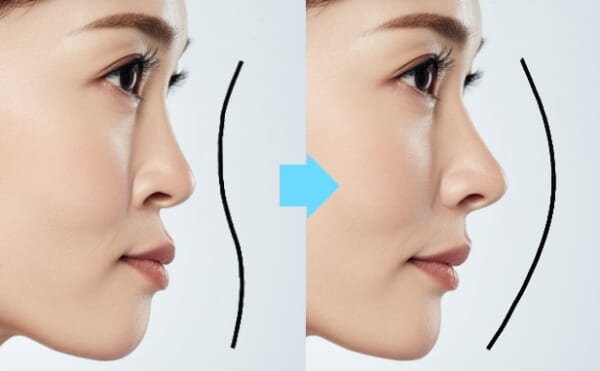
At a 45-degree angle and from the side, observe: ① The step at the base of the nostrils, ② The recess at the base of the columella, ③ The shadows from the cheeks to the mouth area.
When the shape of the tip of the nose is good but the E-line appears distorted, the cause often lies in the foundation.
Conversely, if the base is sufficiently forward, adjusting the tip alone can easily bring the entire structure together.
In other words, even for the same nose surgery, the required design will vary.
⸻
■ Relationship with Nasolabial Folds
Nasolabial folds are sometimes perceived less as skin wrinkles and more as “shadows” created by the receding base of the nostrils.
In such cases, even if only the surface is filled, the underlying step remains, and depending on how the light hits it, the nasolabial folds may appear more prominent.
It is important to consider whether the cause of nasolabial folds is skeletal structure, fat, or skin laxity.
⸻
■ Summary
The concavity of the midface is a crucial element that affects the overall three-dimensional appearance of the face, even before considering the height or design of the nose.
If discomfort persists even after adjusting only the tip of the nose, the cause lies not in the nose itself, but in the midface skeletal structure, including the base of the nostrils and the base of the columella.
The success of rhinoplasty is determined not by the shape of the individual nose component, but by its positional relationship within the overall facial structure.
By accurately assessing the midface as the foundation, we can plan rhinoplasty that considers the overall facial balance.
⸻
Reservations can be made here.
Complete your reservation in 60 seconds ▼
https://reservation.medical-force.com/b/d7bb811e-ebd5-4b93-93f8-588864b24f15
⸻
【Profile】
Masataka Fujihashi, MD, Plastic Surgeon
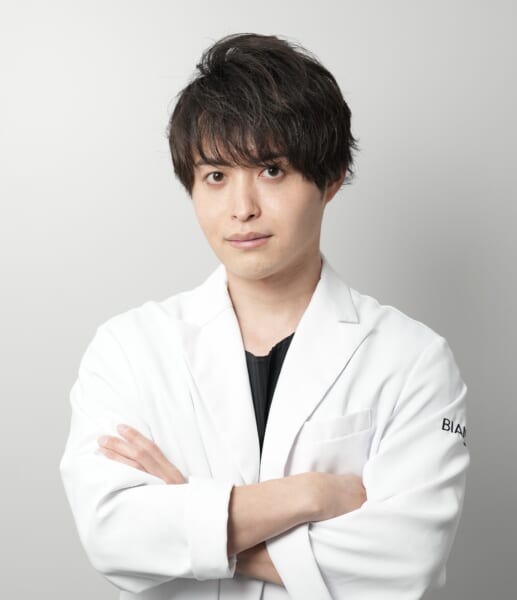
Leveraging expertise as a board-certified plastic surgeon, I offer comprehensive facial cosmetic procedures including eyelid and nose surgery, facial liposuction, thread lifts, and hyaluronic acid injections. From incisional surgeries and revision procedures requiring delicate design to minimally invasive injections and lifts with minimal downtime, I strive to provide treatments tailored to each patient's ideal outcome.
We are dedicated to achieving natural results and minimizing downtime, pursuing medical care that leaves you feeling confident in your choice through sincere consultations.
Designing natural beauty with trust.
We cherish that sentiment and apply it to our daily practice.
Read other blog posts ▼
https://biancaclinic.jp/author_cat/fujihashi/
【SNS】
Instagram ▶︎ https://www.instagram.com/dr_fujihashi?igsh=MTEzOW1sc3p3bGFibA%3D%3D&utm_source=qr
X ▶︎ https://x.com/dr_fujihashi?s=21
【Career】
March 2015: Graduated from the School of Medicine, Showa University
April 2015 Showa University Yokohama Northern Hospital Initial Clinical Training
April 2017 Showa University Hospital Department of Plastic Surgery
October 2017 Maebashi Red Cross Hospital Plastic Surgery / Cosmetic Surgery
April 2019 Nishio Municipal Hospital Plastic Surgery Department
April 2020 Showa University Fujigaoka Hospital Plastic Surgery Department
November 2020 Ota Nishinouchi Hospital Plastic Surgery / Cosmetic Surgery
July 2022 Tokyo Rosai Hospital Plastic Surgery / Cosmetic Surgery Department Head
July 2022: R.O.clinic (Part-time), Kusano Taro Clinic (Part-time)
April 2024 Deputy Director, Ginza TA Clinic
November 2025 BIANCA CLINIC
【Professional Affiliations and Qualifications】
Japanese Society of Plastic and Reconstructive Surgery Board-Certified Plastic Surgeon
Member of the Japanese Society of Aesthetic Plastic Surgery (JSAPS)
Member of the Japanese Society of Aesthetic Surgery (JSAS)