column (e.g. in newspaper)
2026.01.13
What is polybeak deformity|The nature of the beak-like bulge that occurs after rhinoplasty
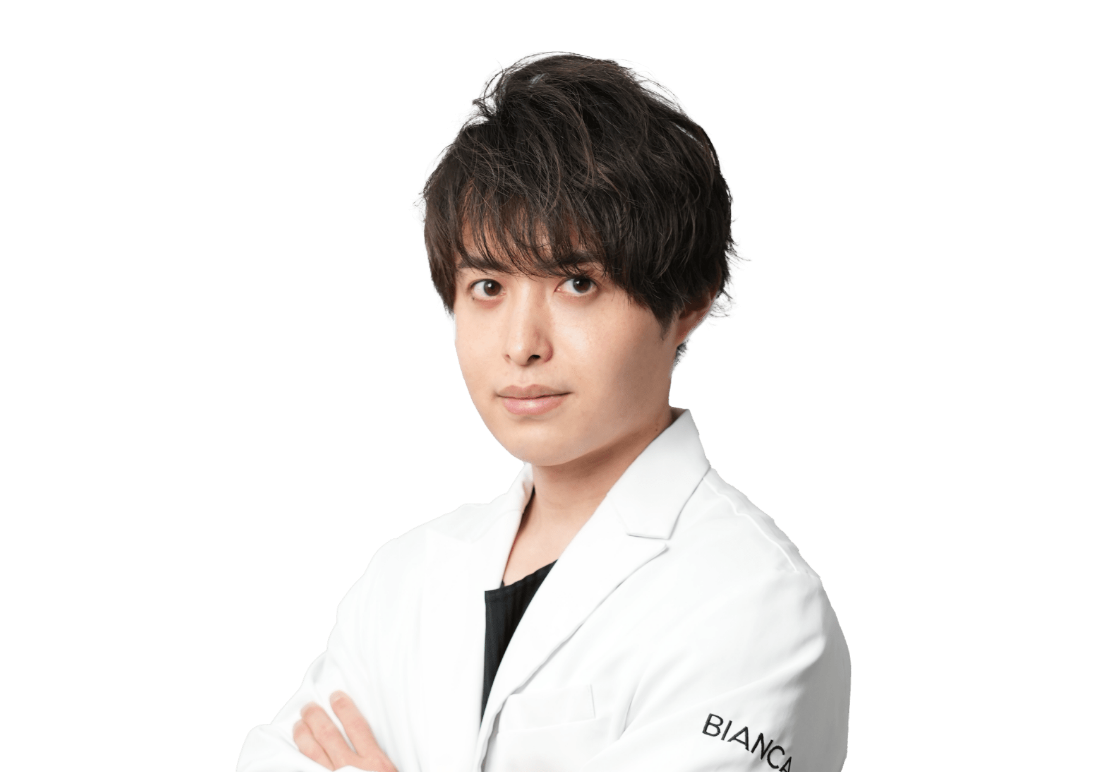
As a plastic surgeon certified by the Japanese Society of Plastic and Reconstructive Surgery, I have been involved in many cases of trauma, reconstruction, and congenital diseases, and have cultivated precise techniques and a deep understanding of anatomy. He entered the field of cosmetic surgery out of a desire to bring the power of cosmetics to his patients, as a change in one's appearance can also make one's mind more positive. Her specialties include general treatment of the eye area, injections, and sagging skin. I provide treatments that focus on beauty with the medical stance of "sincerely addressing the ideals of the patient.
Hello!
Designing natural beauty with trust.
I am Masataka Fujihashi, a board-certified plastic surgeon.
After rhinoplasty,
It looks eagle-nosed, even though my nose is now taller."
From the side, the tip of the nose is slightly elevated."
A typical example of such discomfort consulted is polly beak deformity.
As the name suggests, it refers to a condition in which the nose is visible like a parrot's beak.
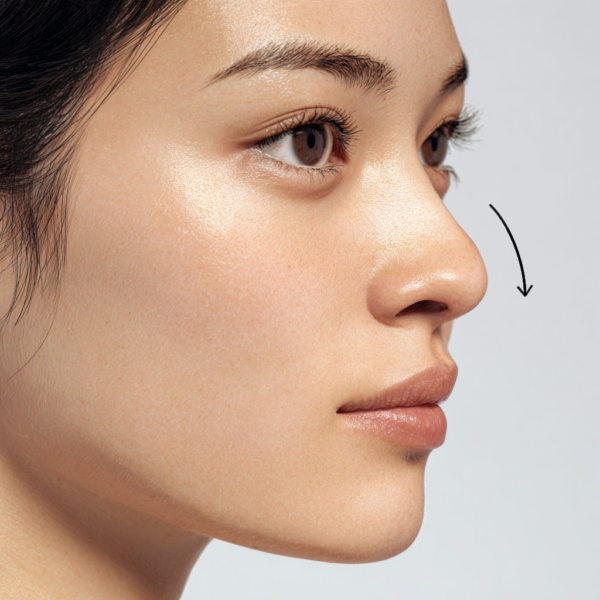
At first glance, it is easy to feel that the tip of the nose has dropped or that the design has been compromised,In realityThe nasal apex itself is not the cause, but the structure directly above itThat's mostly the case.
⸻
Where is the polybeak deformation bulging?
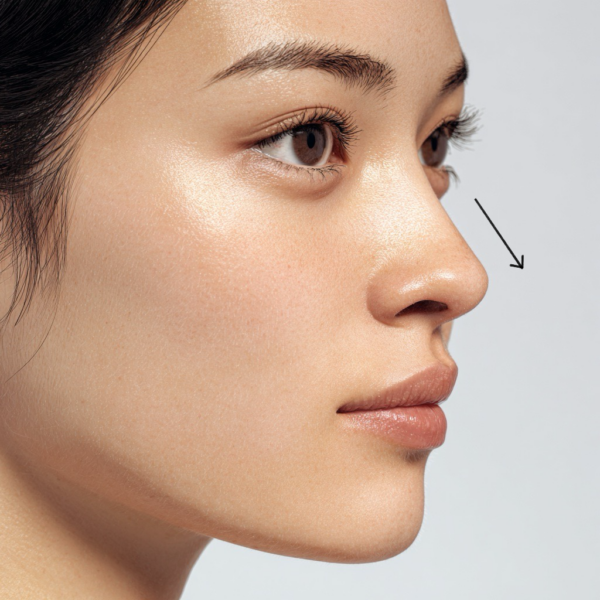
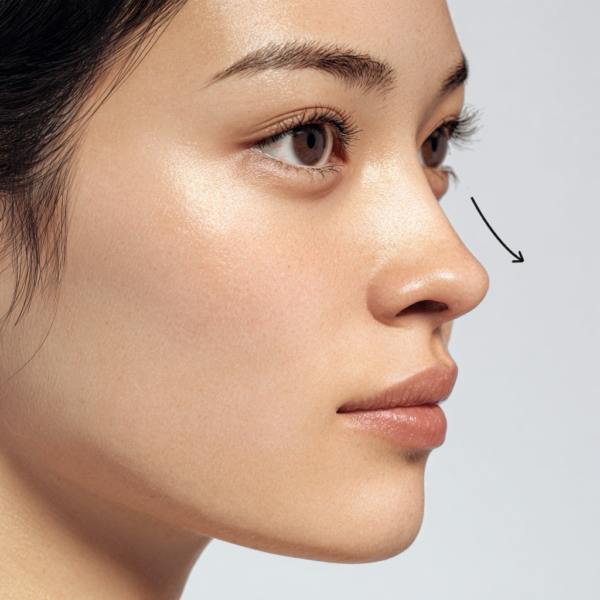
The problem with the polybeak deformity is that just above the nasal apexsupratipThis is the part of the body called the
Essentially this area is,From the dorsum of the nose to the apex of the nose,Straight or slightly concave curvedraws.
But if for some reason the volume remains here,Noticeable above the tip of the nose,The result is a "nose tip down" and "heavy" impression.
⸻
Reasons why nasal tip reduction is more likely to occur
Polybeak deformity is especially common after nasal apex reduction.
Rhinoplasty is a delicate surgery that deals simultaneously with fat, cartilage, and supporting structures,The slightest deviation in balance affects the form.
The three most common causes are
① Lack of control over the amount of fat and cartilage removed
Neither insufficient resection nor, conversely, going too far,Somewhere relative volume remains.
As a result, the supratip may appear raised.
② Large nasal wing cartilage too centered.
When the nasal wing cartilage is pulled in tightly for the purpose of thinning the nasal apex,The bottom is thinner and thinner,The overlying skin and soft tissues come forward to cover it.
This is a typical example where the front side may look fine, but the sides tend to look unnatural.
③ Thread manipulation without design
Without consideration of nasal skin thickness or cartilage morphology,In a procedure that simply draws them in with threads,Three-dimensional collapse is more likely to occur.
⸻
Structural Factors and Organizational Responses
Background of Polybeek Transformation,Lack of cartilage supportand tissue reactions (scarring and edema) are both involved.
If support is weak, the overlying skin/soft tissue is covered anteriorly, accentuating the supratip.
In addition, in surgeries with thicker skin or larger areas of exfoliation, fibrous tissue tends to collect and the healing process itself may affect the shape.
⸻
Difference between immediate postoperative bulge and polybeak
Supratip swelling seen in the early postoperative period is often simply edema or inflammation.
The problem as a polybeak deformation is,If the bulge remains fixed past the time when the swelling goes downis.
Approximate time is 3 to 6 months after surgery.。
There is no need to judge it as a failure at an early stage.
⸻
■ Approach to Correction and Prevention
The correction policy depends on the cause.
If scarring or edema is the main cause, it may improve with observation.
On the other hand, if structural problems are the cause, reconstruction of the nasal apex support and volume adjustment of the supratip may be necessary.
What's important is,To determine whether it should be cut or supported.is.
⸻
■ Summary
Polybeak deformity is one of the most common morphologic problems that can occur after rhinoplasty, but it is not always a simple design error.
It is the result of a combination of multiple factors, including nasal apex support, skin thickness, and healing response.
When you feel that something is wrong with the shape of the tip of your nose, you should check not only the tip of your nose but also the structure above it.It is important to look at the
With accurate evaluation and appropriate response, polybeak deformation can be a well-controlled deformation.
⸻
Reservations can be made here.
Complete your reservation in 60 seconds ▼
https://reservation.medical-force.com/b/d7bb811e-ebd5-4b93-93f8-588864b24f15
⸻
【Profile】
Masataka Fujihashi, MD, Plastic Surgeon
Leveraging expertise as a board-certified plastic surgeon, I offer comprehensive facial cosmetic procedures including eyelid and nose surgery, facial liposuction, thread lifts, and hyaluronic acid injections. From incisional surgeries and revision procedures requiring delicate design to minimally invasive injections and lifts with minimal downtime, I strive to provide treatments tailored to each patient's ideal outcome.
We are dedicated to achieving natural results and minimizing downtime, pursuing medical care that leaves you feeling confident in your choice through sincere consultations.
Designing natural beauty with trust.
We cherish that sentiment and apply it to our daily practice.
Read other blog posts ▼
https://biancaclinic.jp/author_cat/fujihashi/
【SNS】
Instagram ▶︎ https://www.instagram.com/dr_fujihashi?igsh=MTEzOW1sc3p3bGFibA%3D%3D&utm_source=qr
X ▶︎ https://x.com/dr_fujihashi?s=21
【Career】
March 2015: Graduated from the School of Medicine, Showa University
April 2015 Showa University Yokohama Northern Hospital Initial Clinical Training
April 2017 Showa University Hospital Department of Plastic Surgery
October 2017 Maebashi Red Cross Hospital Plastic Surgery / Cosmetic Surgery
April 2019 Nishio Municipal Hospital Plastic Surgery Department
April 2020 Showa University Fujigaoka Hospital Plastic Surgery Department
November 2020 Ota Nishinouchi Hospital Plastic Surgery / Cosmetic Surgery
July 2022 Tokyo Rosai Hospital Plastic Surgery / Cosmetic Surgery Department Head
July 2022: R.O.clinic (Part-time), Kusano Taro Clinic (Part-time)
April 2024 Deputy Director, Ginza TA Clinic
November 2025 BIANCA CLINIC
【Professional Affiliations and Qualifications】
Japanese Society of Plastic and Reconstructive Surgery Board-Certified Plastic Surgeon
Member of the Japanese Society of Aesthetic Plastic Surgery (JSAPS)
Member of the Japanese Society of Aesthetic Surgery (JSAS)