column (e.g. in newspaper)
2024.02.23
Aesthetic Medicine Doctor Explains Additives in High-Concentration Vitamin C IV Drips!

To maximize your beauty, care for both the inside and outside is essential. We aim to bring advanced anti-aging treatments, such as peptide therapy common overseas, to our Japanese patients. While aesthetic medical approaches may offer more gradual results, they are crucial for building the foundation that supports beauty and youth. We combine nutritional therapy and lifestyle improvements with hormone replacement, peptide therapy, and regenerative medicine to propose personalized treatment plans. We provide long-term support for health and beauty from within.

Before receiving a high-concentration vitamin C IV drip, it's important to know about the additives contained in the medication.
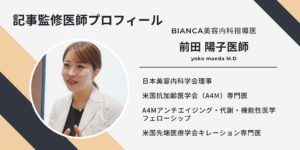
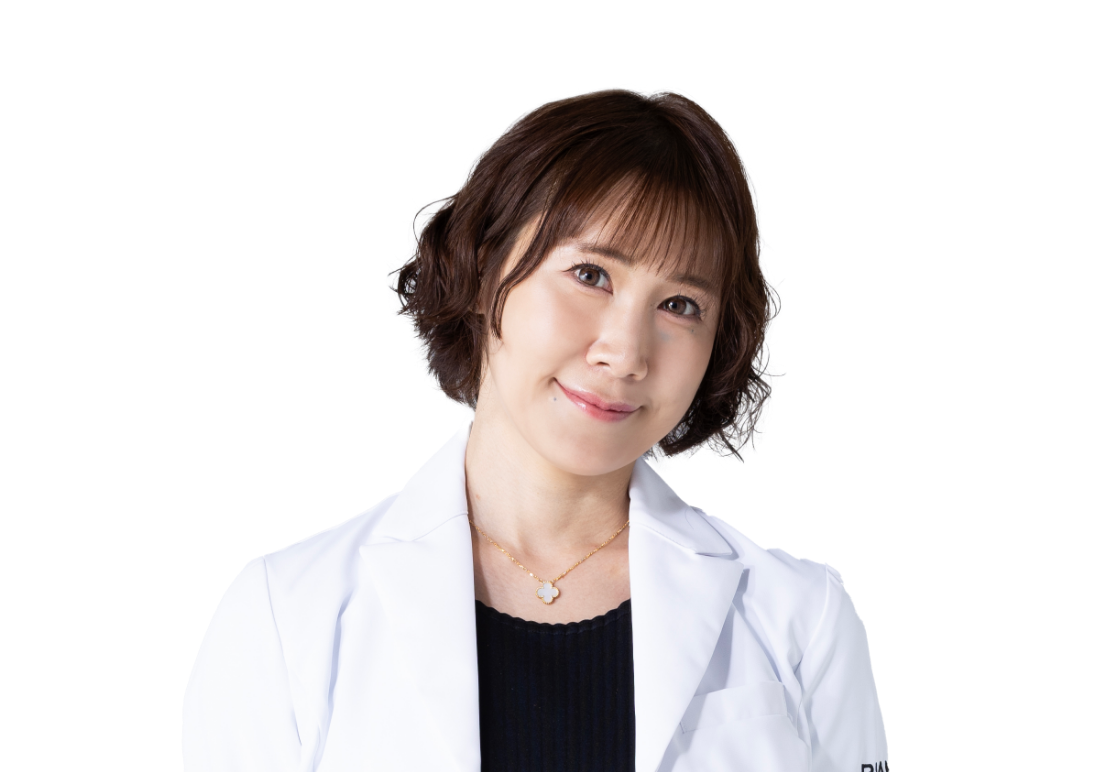
This time, Dr. Yoko Maeda, Director of Aesthetic Medicine at BIANCA CLINIC, explains the types of additives found in representative Japanese-made vitamin C injection solutions and their recommended usage amounts.
What You Should Know Before Getting a High-Concentration Vitamin C IV Drip! Additives Contained in Domestic Vitamin C Injection Solutions
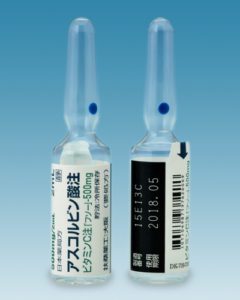
The Fuso Vitamin C Injection is intended for use at a maximum dosage of 2 grams.
In other words, it was never designed to be administered intravenously in quantities exceeding 10g or 20g.
Fuso's Vitamin C Injection contains additives such as sodium pyrosulfite and sodium thioglycolate.
Let me tell you what ingredients are included and in what amounts.
Additive ① Sodium pyrosulfite 10 mg
Sodium pyrosulfite is added as an antioxidant and discoloration inhibitor. When administered in large quantities, it may cause allergic symptoms such as asthma.
It is also contraindicated for individuals who experience asthma symptoms when consuming wine, as it is similar to wine additives.
Patients with severe allergies are also at risk of anaphylaxis, so high-dose administration, especially repeated administration, is not advisable.
This sodium pyrosulfite has a maximum allowable admixture level of 40 mg for intravenous administration as specified by the Japan Pharmaceutical Additives Association. Therefore, exceeding 4A would surpass this standard.
Additive ② Sodium thioglycolate 10 mg
Sodium thioglycolate is added as a stabilizer and antioxidant, and excessive administration may also cause allergic reactions.
A well-known chemical with similar properties is ammonium thioglycolate, found in perm solutions. This substance is known to cause contact dermatitis.
The maximum usage amount specified by the Japan Pharmaceutical Additives Association is 20mg, so it exceeds the limit in 2A.
However, it is known that acute toxicity, repeated-dose toxicity, and other effects in animal studies do not occur unless administered at considerably high doses, such as 5 g.
Choosing with a focus on "peace of mind" over "low cost"
Of course, exceeding 6 grams doesn't necessarily guarantee side effects or pose a danger, so some may choose domestic products while acknowledging the risk of side effects.
However, I don't think it's very reasonable to take the risk of not using vitamin C supplements that are free of additives and highly safe to use when they are readily available.
Furthermore, if there are clinics that prioritize affordability over patient safety by using domestically produced vitamin C IV solutions without informing patients of these risks, please exercise extreme caution.
We hope you will gain knowledge about aesthetic medicine and develop the discernment to prioritize safety over cost when choosing treatments.
Summary|High-Concentration Vitamin C IV Drips: Check Even the Additives!
High-concentration vitamin C IV drips are a useful option for beauty and health, but their safety varies significantly depending on what is used.
Especially for Japanese-made formulations, the risk of additives increases proportionally with the dosage. Therefore, it is advisable to choose formulations with fewer additives as needed.
If you're interested in safely incorporating high-concentration vitamin C, please feel free to consult with us.
HerePlease also see ▼
※This article is intended to provide general information based on medical professionals' opinions and is not intended for diagnosis or treatment. If medical judgment is required, please consult a physician.