column (e.g. in newspaper)
2025.07.08
Would you like to have that wart removed with a carbon dioxide laser?

As an Assistant Professor, Associate Ward Director, and Chief of Dermatopathology at the university hospital dermatology department, I deepened my expertise through academic presentations and paper publications both domestically and internationally. I have handled a wide range of treatments, from birthmark therapy in children to adult pigmentation concerns, utilizing various lasers and injection therapies, while also contributing to community healthcare. Through encountering numerous cases, I strongly felt the potential and necessity of aesthetic medicine, resolving to pursue further expertise. Building upon my solid dermatological knowledge and meticulous diagnostic skills, I value treatments that gently support each individual's skin while bringing out its inherent beauty.
The days of strong sunlight continue, but sun damage can cause spots, freckles, melasma, and warts.
Are you taking proper precautions against summer UV rays?
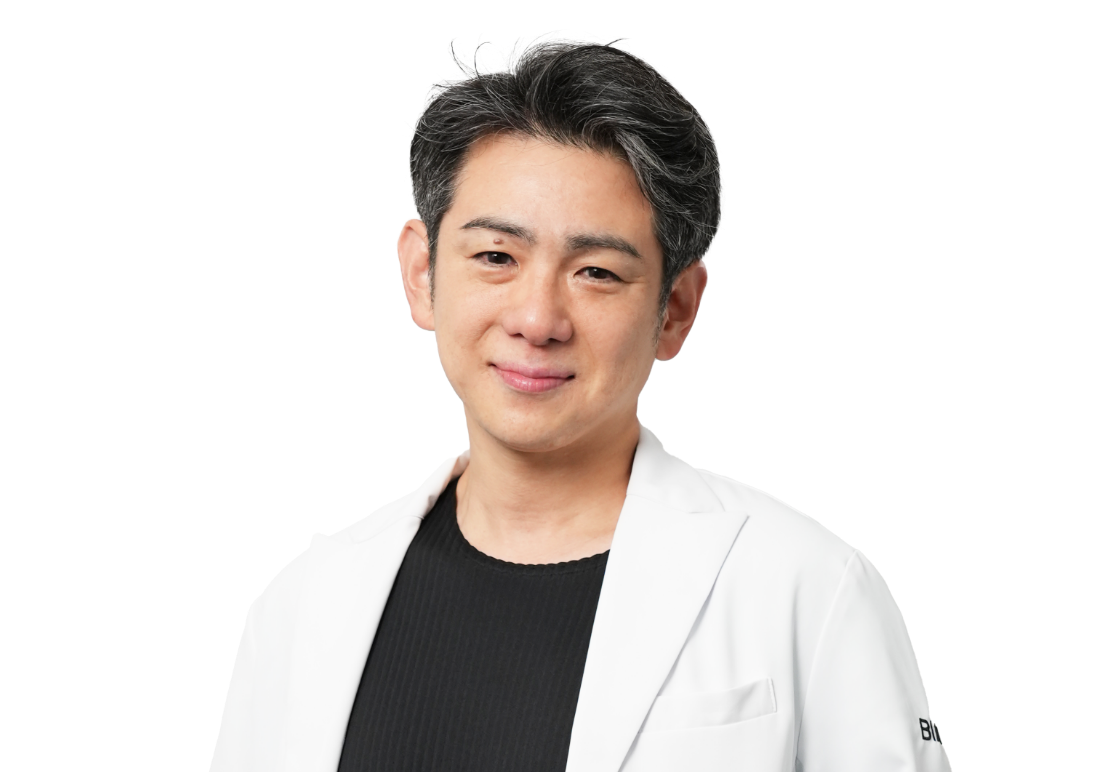
I am Dr. Aya Hayama, a board-certified dermatologist.

I've also posted on Instagram, but make sure to use plenty of sunscreen!!
It's important to reapply every three hours!!
When it comes to topical treatments, dermatologists are the experts.
※Some items are also available for purchase at the Doctor's Cosmetics Online Shop. Please refer to it.
After all, for over 15 years, I have provided guidance on applying sufficient amounts of medication and have actually applied it as part of treatment for numerous patients. Therefore, I would be delighted if you could use my application method and dosage as a reference.
"Don't skimp on sunscreen."
https://www.instagram.com/dr_manami/reels/
I believe photoaging from UV rays accelerates aging due to aging itself, and the difference between those who take preventive measures and those who don't, or the level of care they provide, is significant.
Now, today's topic is the CO2 laser (carbon dioxide laser).
This treatment has been around and used for quite some time. So, here are some treatments that are well-suited for therapy!!
Seborrheic keratosis
commonly known asSenile warts…I have reservations about the name, but the formal term is seborrheic keratosis.
This is known to be caused by photoaging, or accumulated ultraviolet radiation. These UV-induced warts have also been suggested to be associated with the development of malignant tumors, which similarly arise from excessive UV exposure. Therefore, we recommend removal whenever possible, not just for cosmetic reasons.
Soft fibroma, Skin tag, Acrochordon
All are included under the same category of disease.
These are said to appear due to genetic predisposition or friction, such as the so-called pedunculated lesions (protruding bumps with a stalk-like base) that appear on the neck or underarms, or dome-shaped lesions that are skin-colored to brown and soft.wartis.
Viral warts (flat warts, common warts)
These are caused by the human papillomavirus.wartAnd it increases because of the virus!!
Since the body may try to expel it, causing itching, remove it promptly.
These are sometimes grouped together as warts, but their causes are actually varied.
What they have in common is that they are superficial lesions affecting the epidermis and the superficial layer of the dermis!
Such warts can be removed quite cleanly using a carbon dioxide laser, though it involves about a week of wound healing and 1-2 months of redness as downtime.
For deeper growths such as moles, sebaceous hyperplasia, or fibromas, the recovery period will be slightly longer. However, on the face, where blood flow is abundant and the skin is thin, these can generally be removed quite cleanly.
For deep moles, we may intentionally divide the treatment into two sessions to prevent indentation.
Scars may take about two weeks to heal, while redness can persist for 3 to 6 months or longer depending on the depth of the wound and skin metabolism.
Furthermore, since malignant tumors such as basal cell carcinoma and malignant melanoma can sometimes be present, dermatological diagnosis is crucial. We strongly recommend consulting a dermatologist.
CO2 laser (carbon dioxide laser)
This procedure uses a CO2 laser (carbon dioxide laser) to remove moles and warts through laser irradiation.

The CO2 laser reacts with the water content in cells at the treatment site, generating thermal energy. This principle is utilized for removing moles and warts. By precisely targeting raised moles or warts with high water content, the internal moisture is vaporized, eliminating the tissue forming the mole or wart. New skin forms at the site through metabolism, blending with the surrounding skin to become less noticeable.
Additionally, it enables pinpoint irradiation of moles and warts. By narrowing the pulse width, the effects of heat accumulation are minimized, allowing treatment that reduces damage to the surrounding healthy skin tissue. The laser's vaporization effect only affects the skin's surface and does not penetrate deeper. Furthermore, the blood vessels around the irradiated area coagulate due to thermal coagulation, resulting in less bleeding compared to incision surgery using a scalpel.
Additionally, while CO2 laser treatment uses local anesthesia, some patients choose to forgo it for small moles or warts (1-2 in number) since the procedure takes only a few seconds. Post-treatment pain is minimal, making this treatment recommended even for first-time mole or wart removal.
Another advantage is that it leaves minimal scarring. However, as mentioned earlier, the length and severity of downtime will vary somewhat depending on the nature of the mole or wart.
https://biancaclinic.jp/treatment_category/skin-care/mole_removal/co2/
Here's a personal musing from me, a dermatologist...
Regarding warts and moles, I have been removing them almost daily for the past few years.
I've been to all-you-can-eat buffets many times, and it's actually one of my specialties.
Please be sure to discuss this with us during your examination.