column (e.g. in newspaper)
2025.07.11
For acne treatment and acne scars (redness), please try peeling.

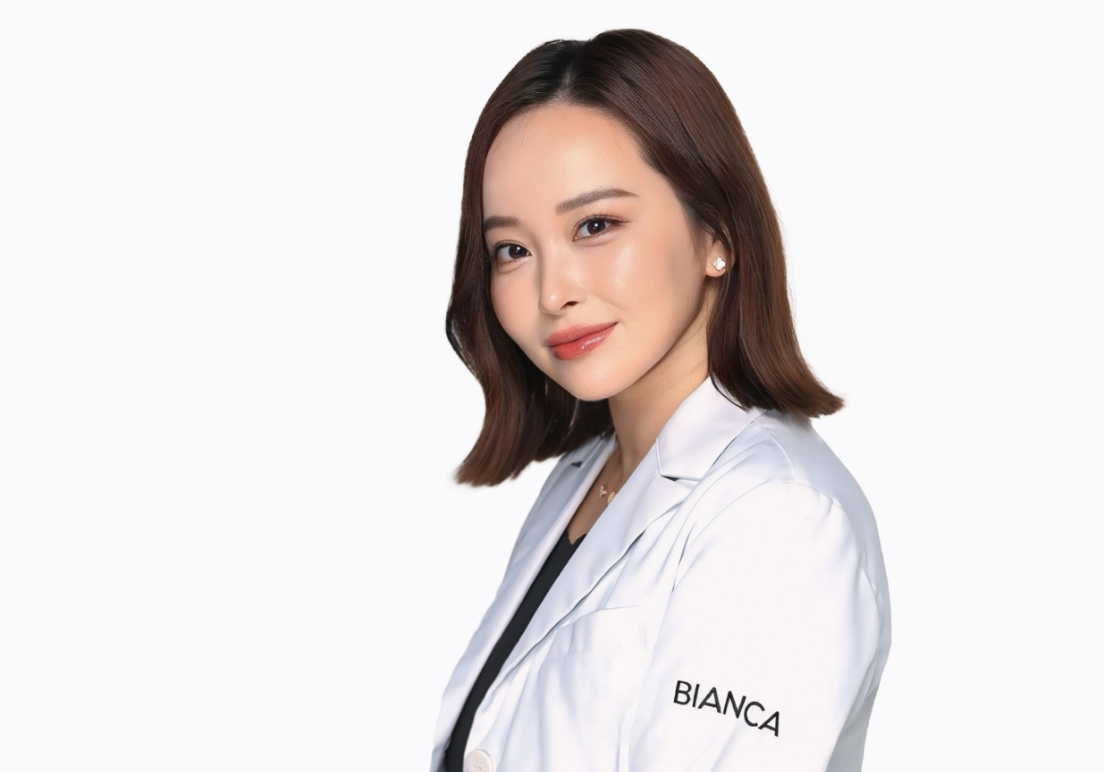
As an Assistant Professor, Associate Ward Director, and Chief of Dermatopathology at the university hospital dermatology department, I deepened my expertise through academic presentations and paper publications both domestically and internationally. I have handled a wide range of treatments, from birthmark therapy in children to adult pigmentation concerns, utilizing various lasers and injection therapies, while also contributing to community healthcare. Through encountering numerous cases, I strongly felt the potential and necessity of aesthetic medicine, resolving to pursue further expertise. Building upon my solid dermatological knowledge and meticulous diagnostic skills, I value treatments that gently support each individual's skin while bringing out its inherent beauty.
Good evening. Peeling is essential for treating acne, acne scars, and other skin concerns like dullness.
Today, I'd like to introduce a treatment I value highly in skincare: exfoliation.
I am Dr. Aya Hayama, a board-certified dermatologist.

Peeling is a treatment method that uses chemicals to remove old keratin from the skin's surface and promote skin turnover.
Peeling has been a treatment performed for a long time, but it has evolved over time into safer and more effective methods.
manuka peel
lactic acid、Glycolic acid、Salicylic acidにManuka honeyThis is a peeling agent containing [ingredient].
As you may know, Manuka honey, harvested from the flowers of the Manuka tree native to Australia and New Zealand, containsMethoxyglioxalIt has strong antibacterial and antimicrobial properties, and its moisturizing effect from honey helps maintain healthy skin.
Characteristics of the blended acids
・lactic acid...With large molecules, it primarily acts on the skin's superficial layers. By promoting ceramide production in the stratum corneum, it enhances the skin's barrier function and offers whitening effects. It also strengthens cellular cohesion, improves skin texture, and refines the skin's grain. Ceramide is also a crucial component for moisturizing the epidermis.
・glycolic acidFruit acids extracted from sugarcane and grapes have small molecules that penetrate deep into the skin, promoting tissue activation. This refines skin texture, enhances firmness and radiance, and effectively improves fine lines. Additionally, moisturizing effects can be expected.
・Salicylic acid...It enhances skin hydration through keratolytic action and inhibits pore keratinization. It also removes unwanted skin tissue and promotes the penetration of lactic acid and glycolic acid. It also provides strong exfoliating effects.
・Manuka honeyAs mentioned earlier, it possesses antibacterial properties due to the characteristics of the methylglyoxal it contains.
https://biancaclinic.jp/treatment/skin-care/skin/manukapeel/
professional appeal
The latest chemical peel developed by France's PROFESSIONAL SKIN SOLUTIONS, Professional Peel, similarlyGlycolic acid, lactic acid, salicylic acidWe blend them in the optimal ratio.
This maximizes the unique characteristics and effects of each acid, delivering a level of effectiveness that was difficult to achieve with conventional single-agent treatments.
Additionally, it maintains high effectiveness while minimizing risks and features minimal downtime after treatment.
Professional Peel recommends one treatment every four weeks, with five treatments per course.
https://biancaclinic.jp/treatment/skin-care/skin/professionalpeel/
lala peel
Lalapeel is an ingredient developed by L'Oréal, a cosmetics company.LHA (Capryloic Salicylic Acid)This Korean-developed peel that combines with alkaline is quite popular lately, isn't it?
Rather than exfoliating dead skin cells, this method promotes skin turnover by allowing LHA to penetrate the skin. It dissolves unwanted proteins and removes excess dead skin cells, making it gentle on the skin.
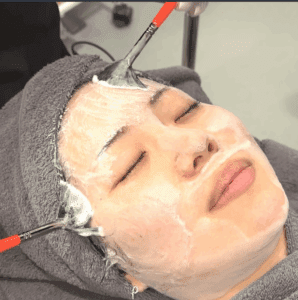
Traditional peeling focused primarily on "peeling" (removing), but Lala Peel, a new concept in peeling, also focuses on "filling," leading to plump skin from within.
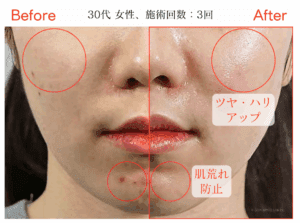
Fourth-Generation Peeling to Nurture Your Skin
- First Generation: AHA (alpha hydroxy acids such as lactic acid and glycolic acid)
- Second Generation BHA (Beta Hydroxy Acid, also known as Salicylic Acid)
- Third Generation PHA (Polyhydroxy Acid derived from AHA)
- Fourth Generation LHA (Capryloic Salicylic Acid)
The first and second generations were chemical peels that gradually exfoliated the skin through chemical reactions triggered by applying AHAs or BHAs.
The third generation is a non-peeling peel where the peeling agent remains on the skin, increasing moisture levels while delivering exfoliating effects. However, it still has drawbacks such as causing some tingling sensation, post-treatment redness, and increased likelihood of peeling.
Lalapeel, a fourth-generation peel, is a treatment that uses LHA to dissolve accumulated dead skin cells and melanin while delivering active ingredients deep into the skin.
This process gently removes dead skin cells through a method that closely mimics natural exfoliation, making it gentler on the skin and less irritating compared to conventional peels.
It promotes thicker skin rather than thinner skin, leading to plump, supple skin.
Lalapearl removes dead skin cells.LHAcontaining alkaline componentsP-solTMlipid componentsLipidsIt consists of three components. The effects and roles of each component are as follows.
Formulation Characteristics
・LHA (Capryloic Salicylic Acid)...a new ingredient developed by L'Oréal, a cosmetics company. Unlike the acids used in chemical peels, it is lipophilic, gentle on the skin, and slowly and evenly removes dead skin cells.
・P-solTM...Korean patent: Alkaline derived from natural oils. It generates components that enhance skin firmness—such as collagen, elastin, and hyaluronic acid—to give skin a plump, resilient appearance.
・LipidsA natural skin structure material similar to the stratum corneum. It takes on the role of the skin while damaged skin recovers, strengthening the skin's barrier function.
LHA (Capryoyl Salicylic Acid), the main ingredient in Lalapiel, has a mildly acidic pH of 5.5, matching the skin's natural pH. This minimizes irritation upon application, making it suitable for sensitive skin.
https://biancaclinic.jp/treatment/skin-care/skin/lhalhapeel/
bubble peel
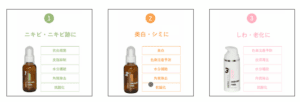
Bubble Peel offers anti-aging benefits such as antioxidant effects and sebum secretion control, and can be performed on various skin types.Fruit Acid Peel & Enzyme TherapyThis is a vitamin C program peel.
Additionally, tailored to your skin concernsChoose from three courses: acne treatment, brightening/dark spot reduction, and anti-aging/skin regeneration.。
Low-molecular-weight polyglutamic acid (γ-PGA)、ArginineThe formulation enhances acid permeability while minimizing irritation. Its moisture-retaining properties provide hydrating effects that reduce irritation and prevent post-peel skin dryness, making this another low-irritation peel.
While conventional chemical peels target the skin's middle layer, bubble peels target the superficial layer and are also known as soft peels.
https://biancaclinic.jp/treatment_category/skin-care/skin/bubblepeel/
Here's a personal musing from me, a dermatologist...
So, while there are various types of exfoliating treatments for dead skin cells, they all help renew skin metabolism. This not only aids in acne treatment but also helps reduce the redness of acne scars more quickly.
Isotretinoin https://biancaclinic.jp/blog/42995/
HydraFacial https://biancaclinic.jp/blog/42714/
Mesona J https://biancaclinic.jp/blog/42882/
If you're interested, please give it a try.