column (e.g. in newspaper)
2026.07.02
[Reducing a Hooked Nose] A Plastic Surgeon Explains How to Achieve a Natural Nose Bridge Through Hump Removal and What to Watch Out For

Specialist in rhinoplasty. He is a board certified plastic surgeon by the Japanese Society of Plastic and Reconstructive Surgery. Based on the principle of “maximum effect with minimum treatment,” I propose the best surgical techniques and plans for my patients from various angles. He specializes in designs that beautifully accentuate the "individuality" of the patient while taking into account the golden ratio of the face. In particular, we create full-custom-made prostheses by combining CT and Vectra data to create full-scale blueprints, which are then precisely finished based on clay prototypes handmade from scratch on a skull model. The shape of the prosthesis can be reproduced with high precision as per the presented simulation, so that even the most detailed wishes can be met and stable results can be achieved.

Hello. I’m Yu Yagasugi from BIANCA CLINIC.
Among those researching nose reduction surgery, many are likely wondering, “Won’t nose reduction surgery make my nose look unnatural?” or “I want to refine the bridge of my nose, but I don’t want it to look like I’ve gone too far.”
An eagle nose—characterized by a slightly protruding bridge in the center of the nose—can make facial features appear sharper, but it can also create a strong impression. For this reason, some people consider eagle nose correction or hump removal surgery because they are concerned about appearing “harsh” or giving off a “masculine” impression.
In this article, we’ll explain the principles and precautions behind hump removal—a cosmetic procedure known for reducing a hooked nose. We’ll also provide an easy-to-understand overview, from a plastic surgeon’s perspective, of the key points for achieving a natural-looking result.
What Is Rhinoplasty to Reduce a Hooked Nose? The Basics You Should Know First
If you’ve ever searched online or on social media for terms like “eagle nose reduction” or “eagle nose bone reduction,” you’ve probably been overwhelmed by the variety of procedure names that come up. First, let’s clarify what an “eagle nose” actually is and explain the concept behind a hump removal procedure.
What are the characteristics of an eagle nose? Why does it stand out?
An “eagle nose” refers to a condition in which the central part of the nasal bridge appears to protrude forward. This is often caused by the development of the nasal bone and cartilage, and it tends to significantly affect the appearance of the face when viewed from the side. During consultations, patients often express concerns such as, “My nasal bridge looks too prominent,” “My profile looks harsh,” or “I feel like I have a masculine appearance.”
On the other hand, an aquiline nose isn’t necessarily a bad thing. It can give a sharp, distinctive appearance, similar to that of foreign celebrities and models, and in some cases, it can be seen as an attractive, unique feature.
As a result, I get the impression that, rather than wanting to eliminate it completely, there has been a recent increase in requests to “slightly soften the appearance of a hooked nose” or “refine it naturally.”
Hump reduction surgery, which involves shaving down a prominent nasal bridge, is a procedure designed to create a natural nasal bridge line.
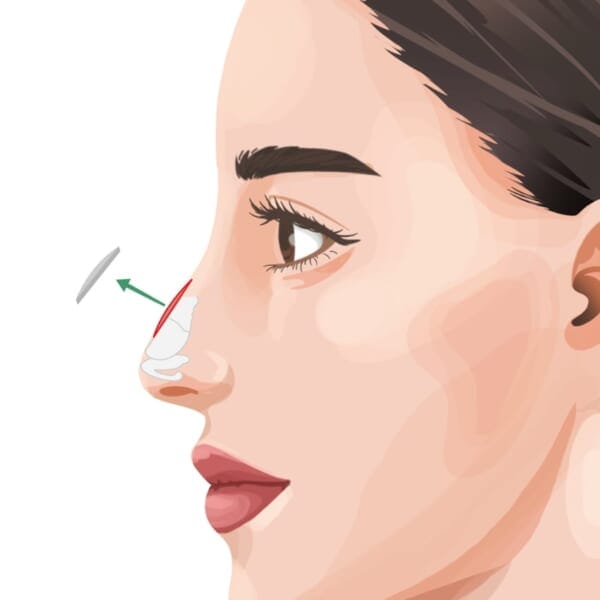
A hump reduction is a procedure that reshapes the protruding portion of the nasal bridge (the hump) to smooth out the line of the nose. Although it is sometimes referred to as “bone shaving,” the procedure does not simply involve shaving away bone. Since the protrusion is caused not only by bone but also by cartilage, the actual surgery involves adjusting both the bone and cartilage depending on the patient’s condition.
In addition, the appearance of the bridge of the nose varies depending on the amount and extent of the reduction. If too much is removed, the bridge may appear too low, or the overall impression of the nose may change too drastically; therefore, it is important to make adjustments that complement the patient’s facial features.
▶Check out BIANCA CLINIC's page on eagle nose correction and hump removal
Are there cases where the nose is reshaped using only a hawk-nose reduction?
When people hear “eagle nose correction” or “hump removal,” they often imagine a major change in the shape of the nose, but there are cases where hump removal alone is sufficient. For mild cases of an eagle nose, where there are no significant issues with the shape of the tip or the width of the nasal bridge, hump removal alone may be enough to refine the nasal bridge.
However, depending on the severity of the hump, the width of the nasal bone, the presence or absence of a deviated nose, and the balance of the nasal tip, combining procedures such as nasal bone osteotomy to narrow the bridge, rhinoplasty, and septal extension may sometimes result in a more natural-looking outcome.
It's important to make your decision while keeping in mind whether it looks natural from any angle—whether it's from the front, at an angle, or in profile.
What Are the Disadvantages and Precautions of a Hook Nose Reduction?
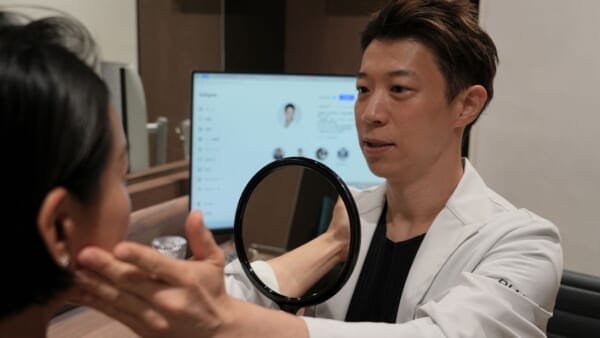
Since eagle-nose surgery involves the central line of the nose, there are some important points you should be aware of beforehand.
If you shave too much, it can look unnatural.
When correcting a hooked nose or removing a nasal hump, the key factor is how much tissue to remove. If the bridge of the nose is made too straight, it may appear out of place on the face or look overly artificial. In particular, for people with naturally prominent facial features, leaving a slight trace of the hooked nose can sometimes result in a more natural appearance.
That is why at Bianca Clinic, rather than simply removing the protruding portion, we create a design that takes into account the overall look and feel you wish to achieve.
Plan Your Treatment with Downtime in Mind
For eagle nose correction and hump removal, although results vary from person to person, postoperative swelling typically peaks after 2 to 3 days and subsides within about 1 to 2 weeks. A cast is worn for one week after surgery. Once the tape cast is removed, you may resume wearing makeup.
Even if bruising occurs, it generally subsides gradually over a period of about 2 to 3 weeks. For a while after the procedure, you may need to be careful about wearing glasses or exposing your nose to irritation. It’s important to consider the timing of the procedure, including how you’ll manage the downtime.
Lately, we’ve been receiving inquiries from people who say, “I’m considering getting a hawk-nose rhinoplasty in South Korea,” but it’s not just the procedure itself that matters—the post-operative follow-up system and the ease of monitoring your recovery are also key factors. We believe it’s important to consider the entire process, including post-operative care, no matter where you decide to have the procedure done.
A procedure to reduce the height of an aquiline nose is different from a procedure to increase its height.
A hawk-nose correction is based on a slightly different approach than procedures designed to make the nose appear taller. A hump reduction is a procedure that adjusts the prominence of the nasal bridge and refines its contour. Therefore, if your goals include “making your nose appear taller,” “making the tip of your nose appear narrower,” or “making your entire nose appear smaller,” it may be best to combine this procedure with other treatments.
The key is to share not only “what kind of nose you want” during the consultation, but also the overall impression you’re aiming for.
If you want to achieve a natural-looking aquiline nose, the amount of bone removed is crucial
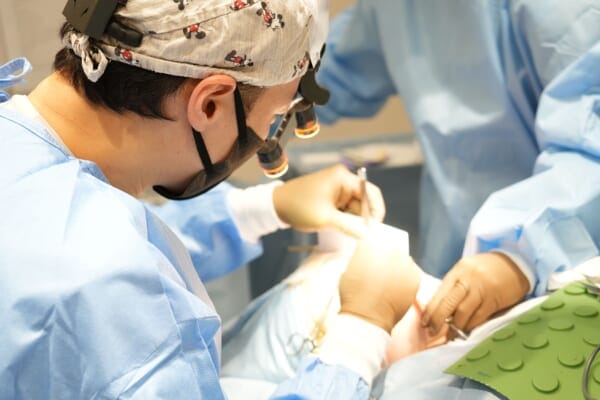
When it comes to eagle-nose correction, an increasing number of patients are prioritizing a natural-looking result over dramatic changes. That is precisely why the amount of tissue removed and the design approach are so important.
There are also designs that enhance the appearance of an aquiline nose while refining its shape.
Recently, we’ve been seeing an increase in consultations from clients who want to soften the appearance of their aquiline nose slightly rather than eliminating it entirely. This approach is particularly well-suited for those who wish to achieve a softer, more feminine look, naturally refine their profile, or desire a subtle, natural change—as it allows us to create a design that intentionally preserves some of the nose’s distinctive features while refining its shape.
In addition, many people place great importance on the balance with the “E-line” of the profile, so it’s important to consider how the nose harmonizes not just on its own, but with the mouth and facial contours as well. In this age of social media, I get the impression that more and more people are prioritizing a look that doesn’t appear too obviously enhanced by plastic surgery.
What BIANCA CLINIC Keeps in Mind When Performing Procedures to Reduce a Hooked Nose
At Bianca Clinic, we place importance not only on the front view but also on how the nose appears from the side and at an angle. Furthermore, rather than focusing solely on the nose, we design the procedure to harmonize with the overall appearance of your face. Since the impression created by a hawk-nose correction changes depending on the amount of tissue removed, it’s important not to remove too much.
During the consultation, we’ll work with you to develop a design while aligning our visions—including “what kind of impression you want to make” and “how much of a change you’re hoping for.”
A Case Study Aiming for a Natural Nasal Bridge While Softening a Hawk-Like Nose
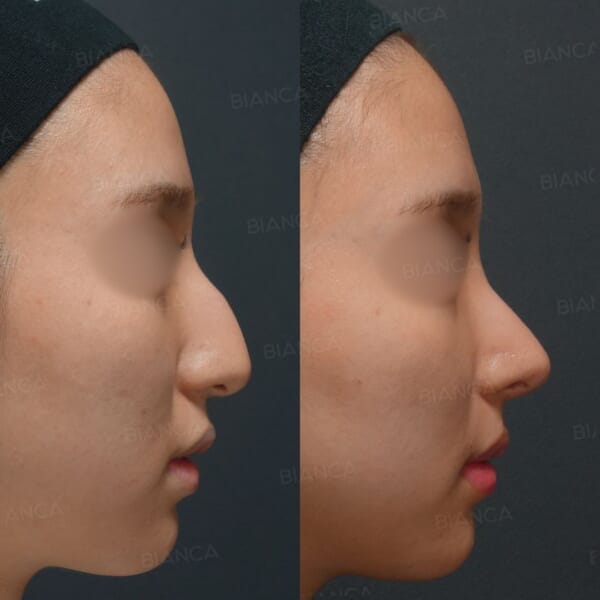
[Procedure Name] Hump Resection + Nasal Bone Osteotomy for Narrowing and Septum Extension (Using Septal Cartilage, Auricular Cartilage, and Autologous Cartilage)
[Photo Caption] Left: Before treatment; Right: 3 months after treatment
[Cost] Hump Resection + Nasal Bone Osteotomy (Narrowing): 880,000 yen; Septum Lengthening Surgery (using septal cartilage, auricular cartilage, or autologous cartilage): 770,000 yen
[Side Effects, Risks, etc.] Crooked bridge or tip of the nose, scarring, relapse, infection, etc.
This is a case that combines a hump reduction with a septal extension. The patient expressed a desire to “slightly soften the appearance of a hooked nose” and “achieve a natural profile,” so we designed the procedure while ensuring harmony with the rest of the face. In this case as well, our focus was on making natural adjustments to the appearance rather than creating a dramatic change.
▶Check out BIANCA CLINIC's Rhinoplasty Case Studies Page
Frequently Asked Questions About Eagle Nose Surgery
Many people considering an eagle-nose correction procedure likely have various concerns and questions before undergoing the procedure. Here, we provide easy-to-understand answers to the questions we are most frequently asked during consultations.
Can you achieve a natural-looking result with just a hawk-nose reduction?
This varies depending on the bone structure and the degree of protrusion. If you are only concerned about the prominence of the bridge of your nose, in some cases, a hump reduction alone may be sufficient to achieve a natural-looking result. On the other hand, depending on the shape of the tip of your nose and the overall appearance of your nose, combining this procedure with other treatments may result in a more natural look, so please discuss this with us during your consultation.
Who is a good candidate for an eagle-nose correction?
We often receive inquiries from people who are concerned about the contours of their profile, want to soften the prominence of their nasal bridge, or wish to slightly soften a strong facial impression. However, since suitability varies depending on bone structure and the overall balance of the face, it’s important to have a consultation to assess your specific case first.
Is the downtime long for plastic surgery to reduce a hooked nose?
While the extent of swelling and bruising varies from person to person, severe swelling often subsides within about a week, and bruising generally improves gradually over 2 to 3 weeks. Since the recovery process varies depending on the specific treatment, please discuss your lifestyle with us during your consultation.
Is it possible to create a design that doesn't completely eliminate the hooked nose?
Yes, it is possible. Recently, more and more people have been requesting natural-looking changes that only slightly soften the appearance of a hooked nose. We’ll determine the extent of the correction by consulting with you and considering the overall balance of your face.
How much does it cost to correct a hooked nose or have a nasal hump removed?
This varies depending on the scope of the procedure and whether it is performed in combination with other procedures. It also depends on whether the procedure involves only hump reduction or is combined with procedures such as septal extension; we will provide detailed information during your consultation.
Are there any differences between hawk-nose plastic surgery in South Korea and in Japan?
The approach to procedures and design trends vary depending on the clinic and the doctor. Therefore, rather than making a decision based solely on the country, it is important to consider factors such as the results you hope to achieve and whether the clinic has a robust post-operative follow-up system in place.
When it comes to plastic surgery to reduce an eagle-like nose, it’s important to strike a balance and avoid removing too much tissue.
When it comes to eagle-nose correction, it’s not simply a matter of “just shaving it down.” Since an eagle nose involves multiple factors—such as bone, cartilage, and the tip of the nose—the overall appearance can change significantly depending on the amount of tissue removed and the design chosen.
Recently, we’ve been receiving an increasing number of requests from clients who say, “I want the results to look as natural as possible” or “I’d prefer changes that aren’t too obvious.” As a result, it’s become important to avoid over-correcting the bridge of the nose and to preserve the patient’s unique features. It’s also important to consider not only the profile but also how the nose looks from the front and at an angle, as well as how it harmonizes with the face as a whole.
At Bianca Clinic, we propose designs that aim to create a natural nasal bridge while taking into account each individual’s facial structure and ideal appearance.
▶Schedule a consultation at Bianca Clinic
▶Read other blog posts by Yu Yagasugi