column (e.g. in newspaper)
2026.07.18
Rituo's Ingredients | A Cosmetic Surgeon's In-Depth Explanation: What Are hADM and ECM? How Do They Differ from Other Skin Care Formulations?

Engaged in both aspects of cosmetic dermatology and cosmetic surgery, he is an all-rounder doctor who pursues natural and elegant beauty with "the best interest of the patient" as his first priority. He is also a board-certified cosmetic surgeon by the Japanese Society of Aesthetic Plastic Surgery (JSAS). He specializes in hyaluronic acid injections, thread lifts, and facial surgery, and is a competent KOL (Key Opinion Leader) for ARTEMISLIFT and Hydro Rejuran. He is always sensitive to the latest trends and is always exploring knowledge and techniques.
 Doctors' Point
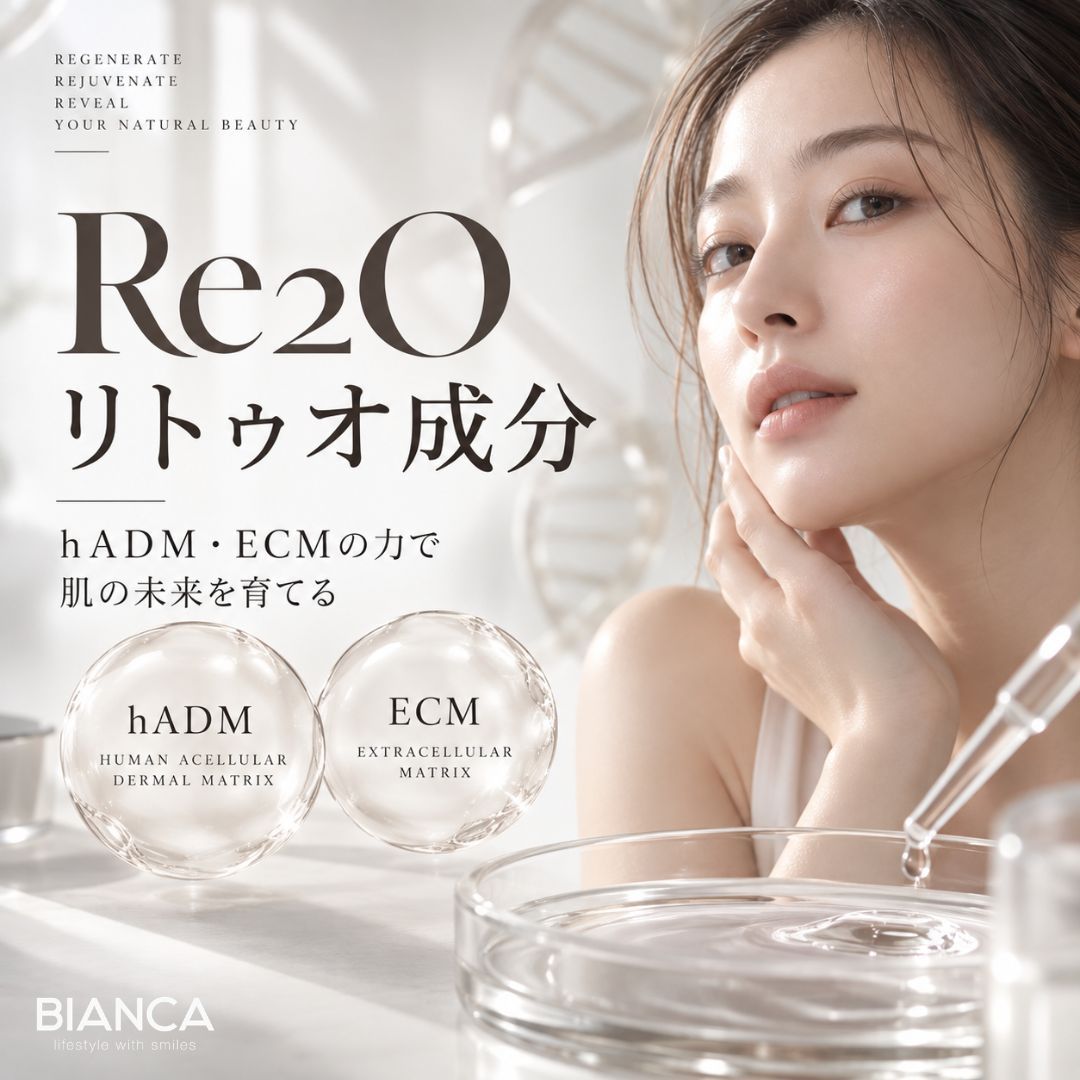
The most distinctive feature of Rituo’s formulation is that it uses human-derived acellular dermal matrix (hADM) as its main ingredient and focuses on the extracellular matrix (ECM), which serves as the skin’s “foundation.” “Rather than strongly stimulating collagen production, it is easier to understand if you think of it as an approach that aims to improve the skin’s texture by creating an environment where fibroblasts can more easily perform their natural functions.”
Therefore, their mechanisms of action differ from those of Rejuran, Jubelook, and Profhilo, and each product has its own areas of expertise. What matters is not which product is “the best,” but rather choosing the one that best suits your skin condition and goals. Developing an appropriate treatment plan following a thorough examination and consultation is key to achieving satisfaction.
In recent years, the skin booster “RITUO (Re2O)” has garnered attention in the South Korean aesthetic medicine field and is increasingly being adopted by cosmetic surgery clinics in Japan. On social media, comments such as “My skin feels thicker,” “It’s become firmer,” and “I prefer it to Rejuran” are on the rise, but the most frequently asked question is likely, “What are the ingredients in RITUO?”
In this article, we will organize the scientific background of the Rituo ingredient from a clinical cosmetic surgery perspective and provide a systematic explanation covering everything from the fundamentals of hADM and ECM to the differences between Rituo, Jubeluck, and Profhilo, as well as safety, indications, and how to choose the right treatment.
The Significance of the Rituo Ingredient from a Cosmetic Surgery Perspective
In the field of cosmetic surgery, a key point of discussion is not merely the approach of “increasing collagen,” but rather how to optimize the skin’s foundation—the ECM (extracellular matrix). Unlike conventional stimulatory formulations, Rituo employs a “foundation-replenishing” approach that supplements the dermis with materials closely resembling its natural structural components, thereby creating an environment conducive to fibroblast activity.
It is precisely this shift in thinking that has drawn attention in the field of cosmetic surgery, where practitioners seek to balance a wide range of symptoms with downtime.
What Is hADM (Human-Derived Acellular Dermal Matrix), the Main Ingredient in Rituo?
The most distinctive feature of Rituo is that it uses hADM (human acellular dermal matrix) as its main ingredient.
This is a medical material created by thoroughly removing elements that trigger immune responses—such as cells, DNA, and lipids—from human skin tissue, leaving only the structure of the dermis, or ECM. This technology has long been used in plastic surgery for wound treatment and breast reconstruction, and Lituo applies it to the field of aesthetic medicine.
When people hear the term “human-derived,” they often imagine that “cells are injected,” but in reality, it does not contain any living cells. What remains is the structural framework—the scaffold—that supports the skin.
The Role of the ECM (Extracellular Matrix)
Our skin is composed not only of cells but also of the extracellular matrix (ECM), which serves as the scaffold upon which those cells function. Think of it as the pillars and foundation of a house; if it becomes damaged or its volume decreases, no matter how skilled the craftsmen—the fibroblasts—are, they won’t be able to build a good “house.”
Deterioration of the ECM manifests itself through the following signs:
-
Loss of firmness and an increase in fine lines
-
Thinning skin and noticeable enlarged pores
-
Loss of elasticity and worsening of fine lines
Rituo sets itself apart from conventional stimulating skin boosters in that it supports the ECM itself from the outside and helps create a microenvironment that promotes optimal cellular function.
An Overview of Lituo Ingredients and Quality Control
The core component of Rituo is hADM, and its key feature is that it retains the components naturally present in the dermis. During the manufacturing process, cells, DNA, and lipids are removed, and the product undergoes repeated sterilization to minimize the risk of an immune reaction.
However, since specific processing procedures and residual concentration limits may vary by manufacturer and lot, product selection and dosing protocols should be carefully evaluated within the context of a cosmetic surgery practice.
Main Components and Functions of hADM
Collagen
The primary component responsible for the volume and strength of the dermis. Product descriptions sometimes state that “approximately 90% is collagen,” but this figure is primarily based on manufacturer data and is not necessarily a universally accepted value established by peer-reviewed research.
The key point is that, since hADM is a collagen-based ECM, it can serve to reinforce the skin’s “scaffold.”
Elastin
A protein that provides rubber-like elasticity. While collagen alone tends to result in a stiff texture, the presence of elastin creates resilience and suppleness, supporting the flexibility needed to keep up with facial expressions.
GAG (Glycosaminoglycan)
A general term for polysaccharides that provide moisture retention and cushioning. A prime example is hyaluronic acid, which supports moisture and elasticity by binding large amounts of water.
GAGs in the ECM fill the gaps in the cellular and protein networks and also serve as a scaffold for物质 exchange and cell signaling.
ECM proteins (fibronectin, laminin, etc.)
A group of proteins that facilitate cell adhesion and migration. They provide a surface to which fibroblasts can “easily attach,” thereby supporting collagen synthesis and the wound remodeling process.
An approach that “supplements the foundation” rather than providing stimulation
Conventional skin care products have primarily followed the approach of “stimulating fibroblasts to produce collagen.” In contrast, Rituo is a “supplemental” type that “optimizes the environment for collagen production.” Rather than targeting excessive inflammation, it increases the extracellular matrix (ECM) to enhance skin density and restore firmness and elasticity.
When prioritizing the balance between downtime and results in cosmetic surgery, this “foundation enhancement” can be a sensible strategy.
Indications for Cosmetic Surgery and Expected Results
Rituo is generally considered suitable for the following concerns. In cosmetic surgery, patients are evaluated comprehensively, taking into account their background, medical history, and any concurrent treatments.
-
My skin has become thinner / I want to increase my skin density
-
I want to improve my skin's firmness and elasticity
-
Visible pores, fine lines, and crepe-like wrinkles
-
I want to achieve a natural, rejuvenated look while minimizing swelling and redness.
-
The next step for those who found Rejuran alone insufficient
On the other hand, in cosmetic surgery, it is common to combine other treatments—such as hyaluronic acid fillers, thread lifts, and energy-based devices—to achieve immediate volume enhancement or improve deep wrinkles.
Choosing the best combination for your needs is key to your satisfaction.
Differences from Other Skin Rejuvenation Treatments (Rejuran, Jubelook, Profhilo)
Differences from Rejuran (PDRN/PN)
Rejuran is a “cell-activating” treatment that uses DNA fragments (PDRN/PN) to stimulate cellular repair signals, targeting inflammation regulation, wound healing, and fibroblast activity. In contrast, Lituo is designed to replenish the ECM (extracellular matrix)—the structural framework—rather than DNA, and focuses primarily on “creating a foundation that facilitates cellular activity.”
The basic strategy in cosmetic surgery is not to determine which is superior, but to choose between them based on their different mechanisms of action.
Differences from Jubelook (PDLLA)
Jubeluck is a “stimulating collagen booster” that promotes collagen production through PDLLA-induced foreign body stimulation. Rituo, on the other hand, is not primarily designed to stimulate the skin; instead, it aims to improve skin texture by creating an optimal environment through ECM replenishment, while minimizing redness and inflammation as much as possible.
The key factor in choosing a cosmetic surgery procedure is striking the right balance between the degree of inflammation induced and the amount of downtime.
Differences from Profhilo (Hyaluronic Acid)
Profilor is a formulation that stabilizes high- and low-molecular-weight hyaluronic acid, and is expected to provide powerful moisture retention and some cellular stimulation. Lituo is not a hyaluronic acid formulation; its main component is the ECM.
It is appropriate to distinguish between Profhilo, which is hyaluronic acid-based, and Litou, which is ECM-based.
Safety, Risks, and Product Selection in Cosmetic Surgery
hADM is designed to minimize the risk of an immune response through processes such as the removal of cells, DNA, and lipids, as well as sterilization. However, as with any medical procedure, there is still a risk of infection, inflammation, swelling, bruising, and hardening of the tissue.
Since the source tissue, processing methods, particle characteristics, additives, and viscosity of a preparation may vary by manufacturer, it is important in cosmetic surgery practice to compare and evaluate indications, contraindications, and alternative treatments based on informed consent.
An Example of a Treatment Protocol and Downtime (From the Cosmetic Surgery Clinic)
Generally, we aim to improve skin density and texture through several sessions spaced a few weeks apart, and then extend the maintenance intervals depending on the skin’s condition. The treatment depth (just beneath the epidermis to the superficial to mid-dermis), dosage, and point density are adjusted based on skin thickness, risk of inflammation, and the presence of existing scars. Local anesthetic cream and cannulas are used to minimize pain and bruising, and after the procedure, thorough cooling, moisturizing, and UV protection are ensured.
During the recovery period, mild redness, swelling, and pinpoint bleeding may occur for a few days; whether you can resume wearing makeup will depend on the policies of your cosmetic surgery clinic.
How to Interpret "Before & After" Images and Evaluation Criteria
When evaluating “Before & After” images, ensure that lighting, angle of view, and camera settings are consistent. Then, examine the appearance of skin thickness, the size of pores, the uniformity of reflected light (focusing on “smoothness of the skin’s surface” rather than shine), fine lines around the mouth and eyes, and skin density along the jawline. To avoid post-treatment swelling, photos should be taken 2 to 8 weeks after the procedure. By comparing these images side by side, it becomes easier to discern the “foundation-replenishing effect” of the Retuo ingredients.
Another key point to check is whether the "Before & After" photos presented on cosmetic surgery clinics' official websites or during consultations include an explanation of the photography conditions.
Q&A: Frequently Asked Questions (Cosmetic Surgery)
Q. How is this different from collagen injections?
A. Lituo is designed to supplement hADM-derived ECM and create a scaffold that facilitates cellular activity. Unlike single-component fillers, it aims to complement the complex structure of the dermis.
Q. How many sessions does it take to notice a difference?
A. While results vary from person to person, you’ll typically begin to notice changes in skin density and texture after several sessions, and the differences tend to become visible in photos after 2 to 8 weeks. The specific number of sessions will be determined during your consultation at the cosmetic surgery clinic.
Q. Can this be used in combination with lasers, RF, Rejuran, etc.?
A. Combining treatments can enhance their effectiveness, but the timing and sequence must be adjusted to avoid overlapping inflammatory responses. Consult with a cosmetic surgeon to develop a comprehensive treatment plan.
Q. I'm worried about allergies.
A. Although hADM has been processed to remove cells, DNA, and other substances, it does not eliminate all risks. Please be sure to inform the cosmetic surgery clinic of your medical history, any drug allergies, and whether you have any autoimmune diseases.
Q. How long is the downtime?
A. Mild redness, swelling, tenderness, and pinpoint bleeding typically last for a few days and can usually be covered with makeup, though this varies depending on the procedure. Please check with your cosmetic surgeon for details.
Checklist for Choosing a Cosmetic Surgery Clinic
-
It includes an explanation of the origin, processing steps, and quality control of hADM.
-
Comparison of Indications, Contraindications, and Alternative Treatments (Rejuran, PDLLA, Hyaluronic Acid, etc.)
-
Avoid pushing for an unrealistic number of treatments on the same day and propose a phased plan instead.
-
Clear guidelines for sanitation procedures, emergency response systems, and infection control measures
-
Present "Before & After" images taken under consistent shooting conditions and establish shared evaluation criteria
-
Transparency regarding the breakdown of fees and additional charges (such as anesthesia and extra medications)
-
Thorough explanations of aftercare (moisturizing, sun protection, and follow-up appointments)
Summary
Rituo is a next-generation skin booster formulated primarily with hADM (human-derived acellular dermal matrix) that improves the skin’s condition by replenishing the ECM (extracellular matrix). This treatment is suitable for those who wish to naturally improve their overall skin condition—including firmness, elasticity, texture, pores, and fine lines—but it is not intended for immediate volume enhancement or the correction of deep sagging.
Furthermore, since their mechanisms of action differ from those of skin-rejuvenating treatments such as Rejuran, JuvéLook, and Profhilo, it is important to choose the appropriate treatment based on your specific skin concerns, lifestyle, and tolerance for downtime. The results are significantly influenced not only by the characteristics of the treatment but also by the doctor’s diagnosis, injection technique, and safety management protocols.
Properly understanding the features of Lituo and choosing the treatment that’s right for you is the fastest way to achieve natural, satisfying skin improvements.