column (e.g. in newspaper)
2026.07.14
Everything You Need to Know About Droopy-Eye Surgery | How to Choose the Right Cosmetic Surgeon: Design, Downtime, and Before & After Photos

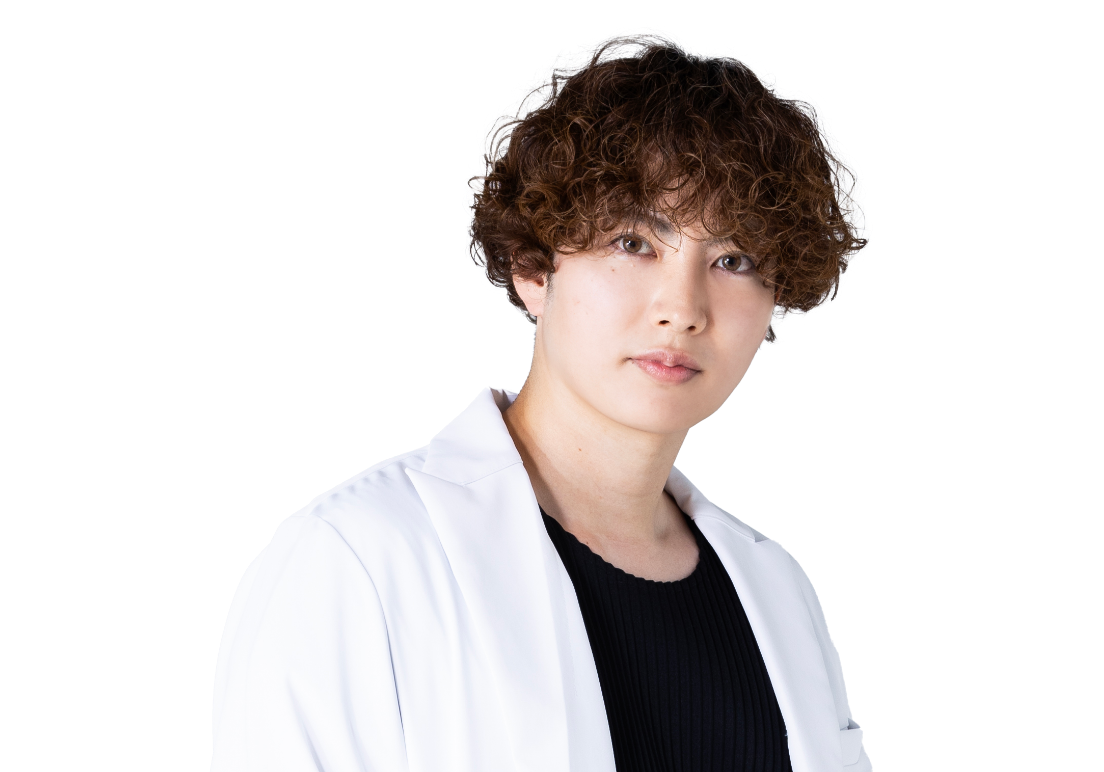
Engaged in both aspects of cosmetic dermatology and cosmetic surgery, he is an all-rounder doctor who pursues natural and elegant beauty with "the best interest of the patient" as his first priority. He is also a board-certified cosmetic surgeon by the Japanese Society of Aesthetic Plastic Surgery (JSAS). He specializes in hyaluronic acid injections, thread lifts, and facial surgery, and is a competent KOL (Key Opinion Leader) for ARTEMISLIFT and Hydro Rejuran. He is always sensitive to the latest trends and is always exploring knowledge and techniques.

The “droopy-eye incision”—a procedure that gives the eyes a soft, approachable look—is one of the cosmetic trends in recent years for which the number of consultations has been on the rise.
That said, since droopy-eyelid surgery involves delicate anatomical structures such as the eyelids, the inner corners of the eyes, and ligaments, the surgeon’s design skills and suturing precision greatly influence the outcome.
Therefore, in this article, we will systematically explain—from the perspective of cosmetic surgery—the basic mechanisms of droopy-eyelid surgery, design considerations, downtime, the risk of complications, and even how to correctly interpret “before and after” photos.
First, let’s get a clear picture of the big picture and lay the groundwork for your consultation at a cosmetic surgery clinic.
[Doctor’s Point]
A droopy-eye blepharoplasty is not simply a procedure to lower the outer corners of the eyes; it is important to design the procedure with consideration for the supporting tissues of the outer canthus and the balance of the lower eyelid.
Since excessive lower eyelid lowering can lead to risks such as ectropion and dry eye, it is important to develop a treatment plan that balances safety with a natural-looking result after evaluating each patient’s skeletal structure, eye shape, and eyelid support.
What Is a Droopy-Eyed Blepharoplasty?
A droopy-eye blepharoplasty is a cosmetic surgery procedure that involves working on the tissue at the outer canthus (the outer corner of the eye) to slightly lower the outer edge of the lower eyelid, thereby adjusting the visibility of the sclera and the angle of the outer corner of the eye.
By combining techniques such as adjusting or reattaching the lateral canthal ligament, making minor incisions in the skin and mucous membranes, and adjusting the lower eyelid supporting tissues, we can control the angle of the outer corner of the eye in increments of a few degrees.
The goal is to convey a “gentle impression” and “subtle drooping eyes” within a safe range, and the design is created with consideration for the balance between the facial contours and the eyebrows, nose, and cheekbones.
Key Points on Anatomy and Mechanisms
The key to a droopy-eye blepharoplasty lies in the positional relationship between the supporting structures of the lateral canthus (the lateral canthal tendon complex) and the lower eyelid.
Since excessive lower eyelid lowering can lead to ectropion (the eyelid turning outward) or conjunctival exposure, cosmetic surgeons conduct a comprehensive evaluation of factors such as the tendency for corneal exposure, tear production (tendency toward dry eye), lower eyelid tension, and the thickness of orbital fat and skin.
The key is to reattach the tissue with the appropriate tension, minimize the amount of skin removed, and ensure that the postoperative scar is as inconspicuous as possible.
The Concept of Adaptation and Maladaptation
This procedure is particularly suitable for people who want to lower the angle of the outer corners of their eyes by a few degrees, those who want to soften shadows or hollows near the outer corners of their eyes, and those with slightly upturned eyes who want to add a softer look.
On the other hand, careful consideration is required in cases such as severe dry eye, significantly weakened eyelid support, or active allergic conjunctivitis.
At cosmetic surgery clinics, during the initial consultation, we assess tear production, contact lens use, and any history of eye conditions to determine the balance between risks and potential benefits.
Design and Counseling (From a Cosmetic Surgery Perspective)
The design is developed by working backward from the desired overall facial impression, using the pupil diameter, scleral exposure, outer corner angle, and the curve of the lower eyelid margin (the so-called “smile line”) as reference points.
During consultations at our cosmetic surgery clinic, we use mirrors to check angles, draw lines on photographs, and share the simulation process with you to clearly outline what is achievable.
In addition, if you take note of any differences between the left and right eyelids, skeletal asymmetry, and changes in facial shape when smiling, you’ll be able to achieve a result with fewer noticeable discrepancies.
The Golden Ratio and Facial Balance
Rather than focusing solely on making “just the eyes” look ideal, prioritizing “the overall balance of the face” tends to lead to greater satisfaction.
We take multiple factors into consideration, such as how the outer corner of the eye interacts with the prominence of the cheekbones and the line of the corners of the mouth when lowered, and whether there are any inconsistencies with the angle of the outer ends of the eyebrows or the eyebrow shape.
When planning cosmetic surgery, we evaluate the design from three angles: straight-on, oblique, and side views.
Simulation and Before-and-After Review
Preoperative imaging simulations are effective for sharing goals and limitations. However, the images are merely conceptual diagrams and do not correspond to the actual dynamics of the soft tissues.
In cosmetic surgery settings, we use past “before and after” photos to explain the typical results for patients with similar facial contours, skin thickness, and eyelid support, thereby helping patients set realistic expectations.
When comparing "Before" and "After" photos, be sure to check that the angle, lighting conditions, and facial expressions are consistent.
Procedure Flow (Basics of Cosmetic Surgery)
Generally, the process follows this sequence: consultation → design marking → anesthesia → incision and procedure → fixation and suturing → recovery.
Local anesthesia is the standard approach, but nitrous oxide or intravenous sedation may also be used in combination, depending on the patient’s preferences and safety considerations.
In cosmetic surgery, we thoroughly manage even the slightest bleeding and ensure gentle manipulation of the tissues—from the moment the anesthesia takes effect until we confirm that bleeding has stopped after suturing—to minimize swelling and bruising.
Anesthesia and Pain Management
Pain during the injection can be reduced with cooling or by using ultra-fine needles. You may experience a dull ache or a feeling of tightness after the procedure, but these symptoms usually subside within a few days.
At our cosmetic surgery clinic, we provide guidance on the proper use of pain relievers and eye drops, and we follow up with a follow-up visit to monitor your progress as needed.
Variations in Incision and Fixation
In a droopy-eyelid blepharoplasty, it is not only important to determine “how much to lower the outer canthus,” but also “how to reconstruct the supporting structures.”
There are several techniques, including isolated inferior transposition of the lateral canthus, combined with minimal excision of skin and mucosa, and methods that involve fine-tuning the reattachment position of the lateral canthal ligament.
In cosmetic surgery, we prioritize making fine adjustments tailored to each patient’s anatomy to avoid overcorrection.
Lowering the Outer Canthus + Transposition of the Outer Canthus
Move the outer canthus downward and slightly outward to soften the outer curve of the lower eyelid. Since excessive lateral displacement can accentuate the “three-white eyes” appearance, it is necessary to set an appropriate upper limit.
In combination with skin excision
We create a smooth, continuous contour by making very minor adjustments to the excess skin. We keep excisions to a minimum and design the incision so that the scar is less noticeable.
Combined Lower Eyelid Support Strengthening and Lifting
When support is weak, tension is distributed in a cantilever-like manner to prevent eversion and conjunctival exposure.
Downtime and Aftercare (The Reality of Cosmetic Surgery)
Swelling peaks 48 to 72 hours after surgery and then subsides over the course of about a week.
While the extent of bruising varies from person to person, it generally improves within 1 to 2 weeks. Stitches are typically removed after a few days to about a week, and you can generally resume wearing makeup around the same time.
At our cosmetic surgery clinic, we provide guidance on easy-to-follow daily care practices, such as when to alternate between ice and heat therapy, maintaining good hygiene, proper head positioning while sleeping, and adjusting screen time.
Complications and Risk Management
Common risks include asymmetry, overcorrection, ectropion, conjunctival exposure, worsening of dry eye, scarring, infection, hematoma, and lateral rounding.
While the initial stiffness or discomfort often subsides over time, structural issues may require correction.
In cosmetic surgery, risks are minimized through preoperative assessment of skin dryness, alleviation of allergic inflammation, minimally invasive surgical planning, tension-relieving sutures, and proper postoperative care instructions.
Tips for Avoiding Mistakes
-
Avoid excessive downward and lateral displacement, and adopt a design with sufficient margin to accommodate future tissue changes.
-
Assess the condition of the tear film and cornea prior to surgery and take measures to prevent dry eye.
-
Based on the assumption of differences in tension and skeletal structure between the left and right sides, we establish a shared tolerance range for asymmetry.
-
During a cosmetic surgery consultation, review the procedure for handling complications.
Average Costs and Choosing a Clinic (Cosmetic Surgery Checklist)
The cost varies depending on the technique, type of anesthesia, the method of reattachment, and whether other procedures are performed concurrently.
Rather than simply comparing prices, it is wiser to prioritize the thoroughness of the preoperative evaluation, the precision of suturing and fixation, and the quality of follow-up care.
When considering cosmetic surgery, be sure to clarify what is included in the listed price (anesthesia, medication, follow-up visits, and revision policies).
Questions to Ask During Counseling
-
The attending physician’s years of experience performing droopy-eyelid surgery, the number of procedures performed annually, and the specific complication rate (including definitions and sample size).
-
Upper and lower design limits (safety margins) and criteria for avoiding overcorrection.
-
How to present "Before & After" images and standardize shooting conditions (front view, oblique view, side view, facial expressions, lighting).
-
Frequency of postoperative follow-up, contact information for consultations, and emergency contact procedures.
-
Revision Policy for Cosmetic Surgery (Timeframe, Costs, Eligibility Criteria).
How to Interpret "Before & After"
When viewing "Before & After" photos, first check to see if the shooting distance, focal length, angle of the face, facial expression, and lighting are consistent.
Even a difference of just a few degrees in the angle of the outer corner of the eye can change your appearance, so use the enlarged image to compare any differences between the left and right eyes and the amount of white of the eye visible.
Additionally, keep in mind that the degree of residual swelling varies depending on the stage of recovery (immediately after suture removal, 3 months, and 6 months). When it comes to “Before & After” photos provided by cosmetic surgery clinics, those that show the progress at multiple points in time are the most reliable.
Common Oversights
When the angle of the outer corner of the eye is accentuated by makeup or eyeliner, it becomes difficult to distinguish this from actual tissue changes.
In addition, comparing only photos of smiling faces can lead to misidentification due to differences in the movement of the lower eyelids. Be sure to check both still and smiling faces, as well as both full-face and side views.
Comparison with Other Treatments and Strategies for Combination Therapy
The appearance of droopy eyes is closely related not only to lower eyelid incision surgery alone, but also to lower eyelid lowering (retractor adjustment), lateral canthoplasty, volume adjustment of the lower eyelid (such as fat repositioning or fat grafting), and even optimization of the double eyelid width.
In cosmetic surgery, we determine whether the patient’s primary concern is “upward-slanted eyes” or “eyes that appear small,” and then combine the minimum necessary procedures.
The Difference Between Double Eyelid Surgery and Lateral Canthoplasty
The primary purpose of double eyelid surgery is to reshape the upper eyelid, while the primary purpose of lateral canthoplasty is to expose the skin at the outer corner of the eye.
The key to a droopy-eye blepharoplasty is lowering and reattaching the outer canthus, which directly affects the appearance of the sclera and the angle of the outer corner of the eye.
Because the objectives are different, there is no easy substitute. In cosmetic surgery, we work backward from the goal to choose the shortest path.
Combination with Lower Eyelid Lowering (Traction Surgery)
In cases where lowering the lateral canthus alone is insufficient, one strategy is to combine it with a minimal amount of lower eyelid retraction to achieve a balanced exposure.
However, since traction increases the risk of varus deformity, it should be considered in conjunction with reinforcement of the supporting structure.
Frequently Asked Questions (FAQ)
Q. What are some tips for minimizing downtime?
A. The basics include cooling, rest, maintaining good hygiene, and adjusting your head position while sleeping. Follow the care guidelines provided by the cosmetic surgery clinic, and avoid smoking, excessive alcohol consumption, and prolonged screen time for the first few days.
Q. Will things ever go back to the way they were?
A. Soft tissues adapt over time, and in some cases, a slight tendency toward regression may occur. In cosmetic surgery, we avoid overcorrection and design procedures to achieve results that look natural over the long term.
Q. I'm worried about failing.
A. Rather than focusing on “how much can be reduced,” prioritize “how safely it can be reduced,” and be sure to confirm the pre- and post-procedure conditions, the protocol for handling complications, and the revision plan in advance.
A droopy-eye blepharoplasty is a delicate procedure that brings out a softer facial expression through subtle adjustments to the outer canthus, while requiring a thorough understanding of anatomy and precise fixation.
The key to success lies in making accurate adaptation decisions, realistic design, thorough follow-up care, and verifying the "Before & After" results once all conditions are in place.
During a cosmetic surgery consultation, be sure to discuss in detail your expectations, the procedure’s limitations, safety guidelines, how complications will be handled, and the policy regarding revision surgery.
Focusing not only on price but also on preoperative evaluation, the precision of suturing and fixation, and the follow-up care system leads to a balance between patient satisfaction and safety.
Ultimately, to achieve a “gentle eye area” within your natural facial contours, we recommend utilizing the specialized expertise of plastic surgeons to develop a step-by-step, gradual plan.
Summary
While a droopy-eyelid correction can be expected to give the eyes a gentle, soft appearance, it is a procedure that requires detailed anatomical knowledge and advanced surgical skills.
To achieve highly satisfactory results, it is important to make a comprehensive assessment that takes into account not only the design but also the evaluation of suitability, risk management, and postoperative care.
During your consultation, be sure to thoroughly discuss not only the "before and after" results but also the surgical procedure, recovery time, and how complications are managed, so you can choose the treatment that’s right for you.