Yoko Maeda
2025.09.17
Shocking! The Dangerous Side of Vitamin A Supplements

To maximize your beauty, care for both the inside and outside is essential. We aim to bring advanced anti-aging treatments, such as peptide therapy common overseas, to our Japanese patients. While aesthetic medical approaches may offer more gradual results, they are crucial for building the foundation that supports beauty and youth. We combine nutritional therapy and lifestyle improvements with hormone replacement, peptide therapy, and regenerative medicine to propose personalized treatment plans. We provide long-term support for health and beauty from within.
Hello, everyone.
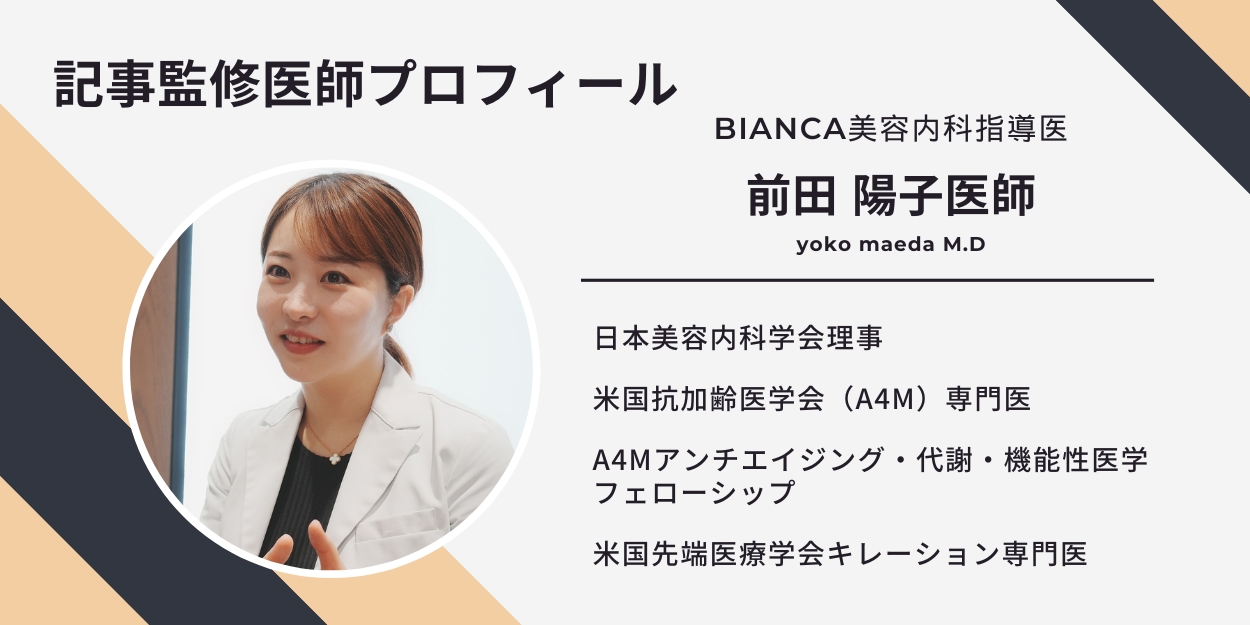
I am Yoko Maeda, Director of Aesthetic Medicine at BIANCA Clinic.
Today's shocking topic: The supplements you take for your health might actually carry the risk of harming your health instead!?
The beta-carotene found in carrots is a highly popular nutrient known for its antioxidant properties. However, it turns out that this beta-carotene can actually cause issues for certain individuals, particularly...smokerDid you know that it can pose a risk to your health?
This article provides a detailed explanation of the often-overlooked dangers of beta-carotene supplements and their scientific background.
What's the "Quality Difference" Between Vegetables and Supplements for Beta-Carotene?
Beta-carotene, abundant in carrots and pumpkins, is not only converted into vitamin A within the body but is also known as a powerful antioxidant that protects cells from free radicals (reactive oxygen species). Due to this function, it is believed to help prevent lifestyle-related diseases such as cancer and heart disease, and is used in many health foods and supplements.
However, the "quality" of beta-carotene obtained from natural foods differs entirely from that obtained through supplements. Beta-carotene found in vegetables and fruits coexists with a wide variety of other nutrients—vitamins, minerals, dietary fiber—and they all work together synergistically.
On the other hand, supplements are made by concentrating beta-carotene alone at high concentrations. This "high-dose intake of a single component" poses unexpected risks, particularly for smokers.
Shocking Research Findings Revealed by Science
The alarm was sounded by large-scale clinical trials conducted in the past. Particularly well-known is the ATBC study (Alpha-Tocopherol, Beta-Carotene Prevention Study) conducted in Finland. This study compared the incidence of lung cancer between a group of men with a history of smoking who took vitamin E and beta-carotene supplements and a group who took a placebo (dummy pill).
As a result, the group that took a beta-carotene supplement (20 mg) daily showed a greater reduction in cholesterol levels compared to the group that took a placebo.The risk of developing lung cancer was 181% higher, and the mortality rate also increased by 81%.It has been confirmed that the risk increased significantly. Due to the clear evidence of increased risk, this study was terminated earlier than planned.
Additionally, a similar CARET study (Beta-Carotene and Retinol Efficacy Trial) was conducted in the United States. It also reported that among high-risk groups such as smokers and those exposed to asbestos, the incidence of lung cancer increased by 281% in the group taking beta-carotene (30mg) and vitamin A supplements.
These results are not mere coincidence,Taking beta-carotene supplements significantly increases the risk of lung cancer in smokers.This suggests that...
Why does beta-carotene become the villain?
The mechanism behind this phenomenon has not yet been fully elucidated, but several plausible theories exist.
Tobacco smoke contains harmful chemicals that damage cellular DNA and large amounts of reactive oxygen species. While beta-carotene typically functions as an antioxidant that eliminates reactive oxygen species, it is thought that when consumed in high concentrations, this role may be reversed, potentially acting as a "pro-oxidant" that generates reactive oxygen species.
In particular, this detrimental effect is thought to be especially pronounced in lung tissue chronically exposed to oxidative stress from tobacco, potentially promoting cellular DNA damage and the proliferation of cancer cells.
Conclusion: Rather than relying solely on supplements, take a comprehensive approach by reviewing your overall lifestyle.
If smokers are considering lung cancer prevention, they should avoid taking beta-carotene supplements. The most effective preventive measure is, needless to say,No Smokingis.
On top of that, it is important to maintain a healthy diet and consume a balanced amount of vegetables and fruits containing beta-carotene.
The beta-carotene found in natural foods maximizes its effectiveness through synergistic effects with other antioxidants and nutrients.
Remember that supplements are merely supplementary, and taking high doses based on careless self-judgment carries the risk of actually harming your health. Your health is built not by supplements, but by your daily choices.