BLOG

column (e.g. in newspaper)

2026.07.09

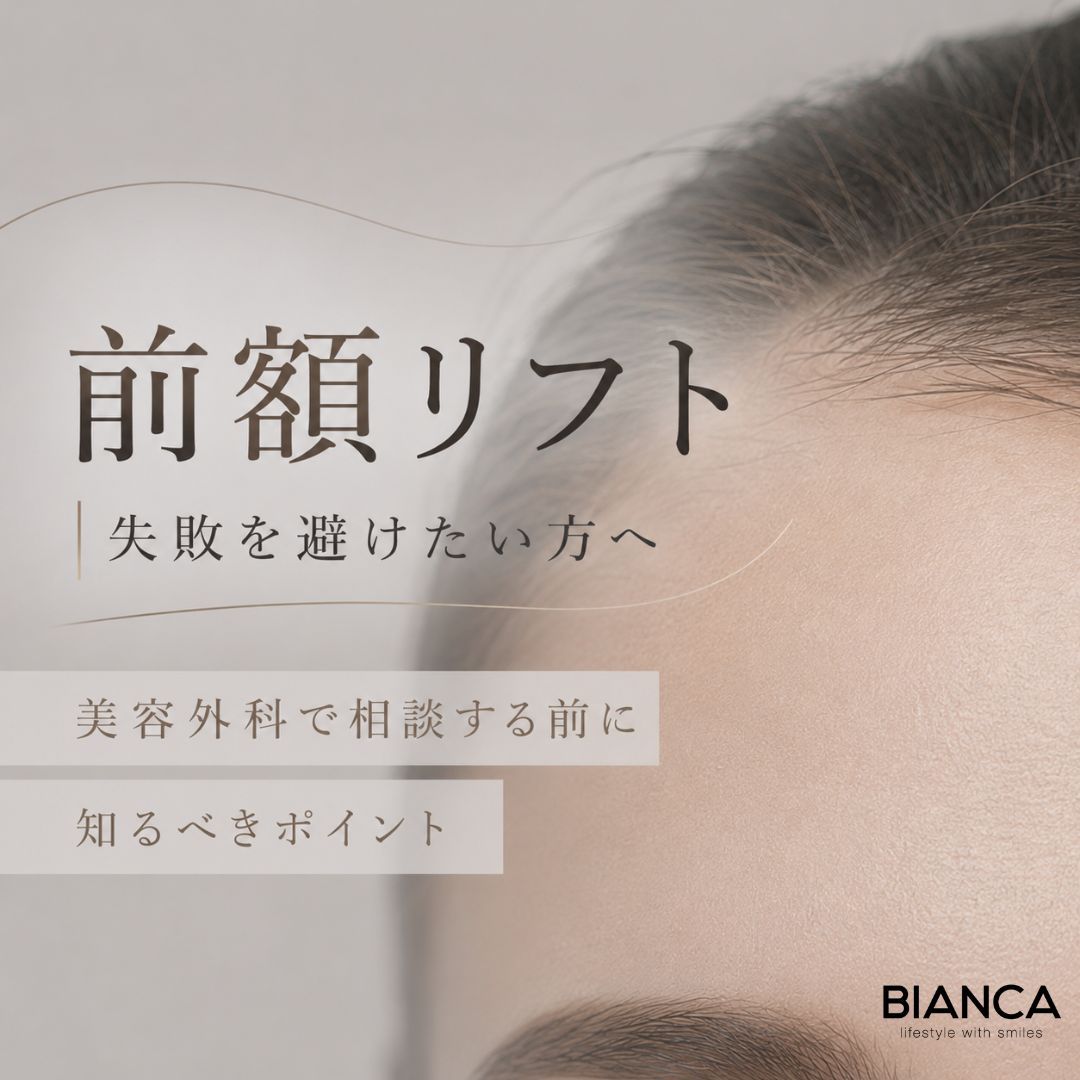
Forehead Lift: For Those Who Want to Avoid Complications | Key Points to Know Before Consulting a Cosmetic Surgery Clinic in Ginza, Tokyo

南 寿美
Supervising Physician
Board Certified Cosmetic Surgeon, Japanese Society of Aesthetic Plastic Surgery (JSAS) Sumi Minami

Engaged in both aspects of cosmetic dermatology and cosmetic surgery, he is an all-rounder doctor who pursues natural and elegant beauty with "the best interest of the patient" as his first priority. He is also a board-certified cosmetic surgeon by the Japanese Society of Aesthetic Plastic Surgery (JSAS). He specializes in hyaluronic acid injections, thread lifts, and facial surgery, and is a competent KOL (Key Opinion Leader) for ARTEMISLIFT and Hydro Rejuran. He is always sensitive to the latest trends and is always exploring knowledge and techniques.

前額リフト 失敗を避けたい方へ|東京・銀座の美容外科で相談する前に知るべきポイント

 

Every time I see the phrase “failed forehead lift,” thoughts of eyebrow position, unnatural facial expressions, and scars cross my mind—I want to start by acknowledging that sense of anxiety. To put it simply, the more carefully you prepare and establish your criteria, the higher the likelihood of avoiding undesirable results. While the field of cosmetic surgery offers many options, it’s also an environment where information can easily become overwhelming. In this article, I’ll outline what to look for and how to evaluate it in order to alleviate your anxiety about a “forehead lift failure.”


It’s important to make your decision based not just on the “forehead,” but on the overall balance of the eyebrows, eyelids, and the entire eye area. A forehead lift is a procedure that lifts the skin on the forehead, but the final result is greatly influenced by the position of the eyebrows, the openness of the eyelids, and the balance with the entire eye area. If you choose a treatment based solely on the appearance of your forehead, you may end up feeling that “the result is different from what I expected.” During your consultation, it is important to have your entire face examined to confirm whether the treatment is right for you.


Please note that this article is a general guide to medical information and does not present the results of specific clinics or individual “before and after” examples. Recognizing that pain, downtime, duration of results, and risks vary from person to person, we avoid making overly definitive statements or guaranteeing specific outcomes.


Defining the Condition Often Referred to as a “Failed Forehead Lift”

First, if you clearly define what you consider a “failed forehead lift,” it will be easier to make a consistent judgment. Generally, the following conditions are a cause for concern:


  • Asymmetry between the left and right eyebrows or a feeling that their position is off (which is easily influenced by facial habits and muscle balance)

  • Insufficient or excessive increase (discrepancy from expectations)

  • Scars are more noticeable than expected (due to factors such as individual constitution, aftercare, and UV exposure)

  • Numbness or changes in sensation (these symptoms usually subside over time, though the extent varies from person to person)

  • Changes in my hairline or forehead shape don't suit my taste

  •  

The impression these procedures leave is influenced not only by the techniques themselves but also by preoperative goal-setting, how well they align with a patient’s lifestyle, and the methods of postoperative care. The more you are exposed to a variety of proposals at cosmetic surgery clinics in Tokyo and Ginza, the more important it becomes to establish clear definitions of the terms used.


1. Write down the "priorities" of your concerns

Summarize your top three priorities—such as “smooth out the forehead,” “raise the eyebrows just a few millimeters for a natural look,” or “maintain a soft, natural expression”—in a few short sentences.


2. Compatibility with Daily Life (Downtime, Schedules, and Public Events)

Downtime and the timing of your return to work are just as important as your satisfaction with the results. While a location with good access, such as Ginza, makes it convenient to visit the clinic, don’t base your decision solely on accessibility—be sure to also check the frequency of follow-up visits, whether online consultations are available, and the post-operative follow-up system. Since the extent of pain and swelling varies from person to person, it’s helpful to be open to seeking multiple opinions.


3. Approach to Postoperative Follow-Up

Follow-up care varies from one cosmetic surgery clinic to another. Make a note of the items you’d like to ask about in advance, such as the timing of follow-up visits, consultation hours, whether there are any fees, and information on aftercare products. Similarly, whether the clinic provides guidance on daily skincare and UV protection is a factor that can significantly affect your satisfaction.


4. How to Interpret “Before & After” Images and Simulations

"Before & After" photos are merely indicative. Be sure to check the shooting conditions (lighting, facial expressions, angles) and the specific point in time after surgery when the photos were taken. Cosmetic surgery clinics may present digital simulations, but these may not fully replicate skin elasticity or muscle movement. By articulating not only your ideal outcome but also your “acceptable range of change,” you’ll be better equipped to achieve a result that is less likely to be perceived as a “forehead lift failure.”


Preparations to Reduce the Risk of Failure

Key Points to Convey During Counseling

  • Photos of everyday eyebrow movements (unconscious habits) and facial expressions

  • Work-related constraints (mask requirements, frequency of online meetings)

  • Medical History, Current Medications, Allergies, and Scar Tendencies

  • Selfies by Angle (Front, Angled, Side)

  •  

The more accurate the information is, the more precise the plan will be, which can reduce the perceived risk of a “forehead lift failure.”


Pre-Contract Self-Checklist

  • Guidelines for the Magnitude of Change (Even if you're not comfortable discussing specifics in millimeters, there's agreement on the general direction)

  • We coordinated our vacation plans with the peak periods of downtime.

  • Develop a Specific Plan for Postoperative Cooling, Facial Cleansing, UV Protection, and Follow-up Appointments

  • Know who to contact and where to seek advice if you experience unexpected discomfort

  • Understand how to interpret "Before & After" images and check the shooting conditions

  •  

When comparing multiple clinics, using the same checklist at each one helps ensure that your assessment is objective.


Alternatives to a Forehead Lift and "Who It's Best Suited For"

Rather than focusing on which is better or worse, it’s important to consider what’s best suited to your lifestyle and preferences.


People for Whom a Forehead Lift Is a Good Fit

  • There is a clear sagging of the skin and soft tissues on the forehead, and I would like to prioritize long-lasting results.

  • I want to balance my eyebrows and forehead starting from the foundation

  • Can ensure a certain amount of downtime

  •  

People Who Are Good Candidates for Injections or Thread Lifts

  • It's hard to take time off, so it's best to keep changes to a minimum.

  • I want to start small and keep my options open for the future.

  • I want to make repeated fine adjustments while observing my facial expressions.

  •  

People who want to consider this carefully

  • There is a suspicion that the individual has a tendency to develop dark scars

  • Patients with a history of frequent episodes around the eyes or on the forehead, or who are prone to neurological symptoms

  • It is anticipated that work or family circumstances may make it unexpectedly difficult to attend medical appointments

  •  

All of these issues can be clarified through counseling. The final decision comes down to whether it fits with your daily life and values.


About Downtime, Pain, Duration, and Risks

The course of downtime varies greatly from person to person, and the perception of pain can also differ depending on one’s physical constitution and psychological stress. The duration of downtime is also influenced by lifestyle factors (such as UV exposure, skincare routines, and facial expressions) and the effects of aging. While complications and issues cannot be completely eliminated, establishing a system that allows for early consultation often helps steer the situation toward a more favorable outcome.


Frequently Asked Questions (FAQ)

Q1. How often do "forehead lift failures" occur?

It is difficult to quantify, and results vary depending on individual differences, surgical techniques, and postoperative care. It is important to choose a cosmetic surgery clinic where you can discuss any concerns early on and establish a clear schedule for follow-up visits.


Q2. Why are there such large differences in costs among cosmetic surgery clinics in Tokyo and Ginza?

These differences stem from factors such as staffing, facilities, the level of support provided, location costs, and the quality of explanations and photography services. Please compare not only prices but also how easy it is to consult with them and how thoroughly they explain the risks.


Q3. What should I do if I'm concerned about asymmetry in my eyebrows?

In the early stages, swelling and muscle tension may also be factors. Avoid massaging the area on your own; consult your doctor instead. Even at cosmetic surgery clinics in Ginza, Tokyo, you may be offered care tailored to your progress and suggestions for minor adjustments as needed.


Q4. I'm worried about scarring. What can I do to care for the area?

The basics include protecting against UV rays, avoiding friction, and continuing the prescribed protective care. While individual results may vary depending on one’s constitution, it’s important to seek advice early on. When you visit a clinic in Ginza or Tokyo, reviewing your progress together using photos allows for an objective assessment.


Q5. To what extent can I use the "Before & After" photos as a reference?

This assumes that you have confirmed the shooting conditions and timing. Consider your natural facial expressions and daily routine, and adjust your expectations accordingly.


The Stance of This Article and Important Information

This article summarizes approaches for avoiding "forehead lift failures" based on general knowledge, rather than relying on published literature or data from specific clinics. We recommend consulting with several clinics to compare the consistency of their explanations and see if you feel a good fit with them. If you’d like to find out if this procedure is right for you, please feel free to schedule a consultation.


Summary

The surest way to avoid a “failed forehead lift” is to plan the entire process—not just the quality of the procedure itself, but also preoperative communication and postoperative follow-up. An environment with diverse approaches and numerous options can be a significant advantage. Let’s articulate your priorities, establish a clear perspective on “before and after” results, prioritize compatibility with your lifestyle, and proceed with preparations one step at a time. Please don’t bear your anxieties alone; we hope you’ll view the consultation process itself as an opportunity to discover “the beauty that feels right for you.”


To avoid a “failed forehead lift,” it is important to make a comprehensive decision that takes into account not only the surgery itself but also thorough preoperative counseling, sharing a vision of the desired outcome, and postoperative follow-up care. Rather than comparing clinics based solely on cost or before-and-after photos, make sure to verify whether the clinic provides an environment where you can clearly communicate your concerns and expectations, whether risks and downtime are thoroughly explained, and whether there is a system in place that makes it easy to consult with the clinic after surgery. Choosing a treatment only after you are fully satisfied is a crucial step in reducing anxiety about a “failed forehead lift” and achieving a natural result that reflects your true self.


▷ Forehead Lift Procedure Page

▷ Counseling Appointment Page

WEB Reservation
RESERVATION
24-hour reception
Click here for web reservation