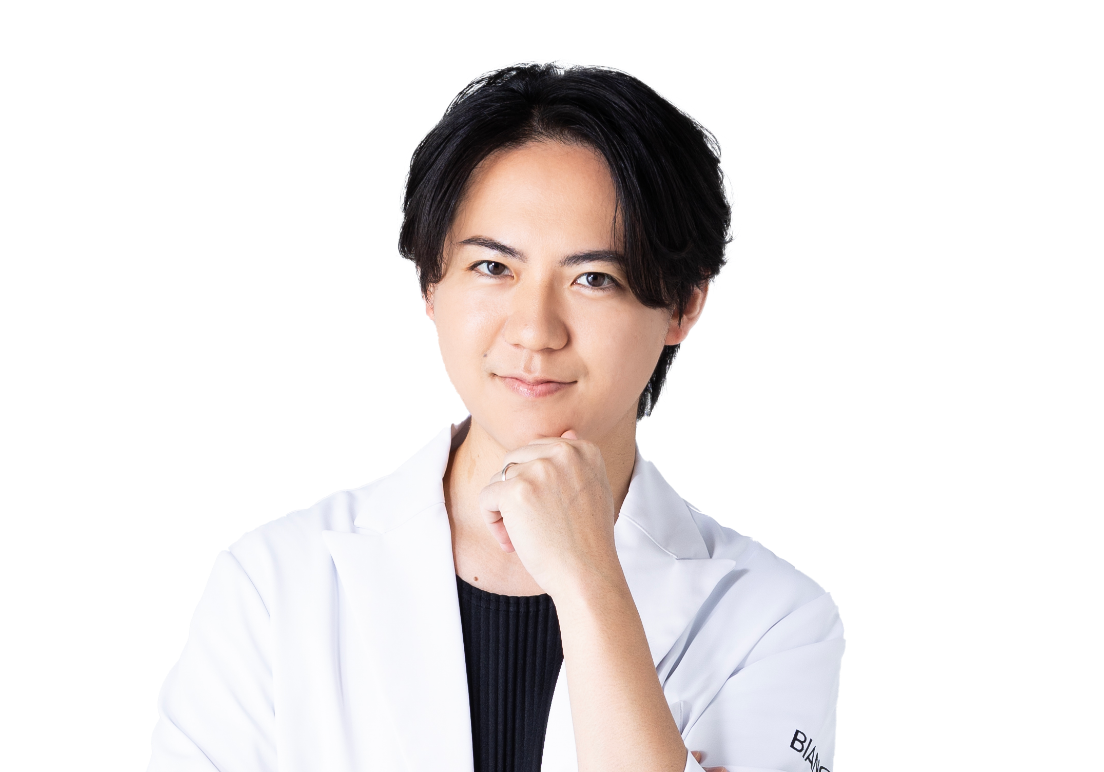
Hatate, Ariko
2026.11.05
Is sagging skin caused solely by the skin itself?

As a plastic surgeon, he has experienced many cases and has developed precise techniques and a deep anatomical understanding. Currently, combining his knowledge of plastic surgery with the latest technology, he provides a wide range of cosmetic treatments for skin, contouring, sagging, and other concerns of aging. He has also shared the responsibility of writing Japan's first textbook on gynecological cosmetic surgery, "Basic Techniques of Gynecological Cosmetic and Plastic Surgery. From her experience as an idol during medical school, she realized that "natural beauty" goes beyond the will to choose how you want to be, and she focuses on supporting her patients to "love yourself more every day". We are English-speaking and value counseling that is easy to talk to.

"I'm concerned about my skin's firmness, but my cheeks look sunken." "My weight hasn't changed, but the shape of my face looks different." These changes aren't necessarily all due to sagging skin. In this article, we'll explain the changes occurring beneath the skin—information you should know when considering facial sagging.
Facial sagging is caused not only by changes in the skin but also by changes in fat and bone structure.
It’s not just the skin on the surface that shapes the face. Beneath it lie layers of subcutaneous fat, muscles, fascia, and bones. Changes in the thickness, position, and supportive function of each of these layers affect the face’s contours and shading.
For example, if the fullness of the cheeks decreases while the area around the mouth retains its fullness, the difference in height can make the sagging around the mouth more noticeable. In other words, even if it appears to have sagged, it doesn’t necessarily mean that the cheeks themselves have actually sagged.
When considering the causes of facial sagging, the following factors are the main ones to examine. Rather than attributing it to just one factor, we conduct an examination to determine whether multiple changes are occurring simultaneously.
| Elements to Evaluate | Possible Changes | Examples Related to Appearance |
|---|---|---|
| Skin | Loss of firmness and elasticity; sagging | Fine wrinkles, excess skin |
| Location and Support of Subcutaneous Tissue | Changes in the relative positions of tissues and in their supporting structures | Changes in the contours of the cheeks and lower face |
| Decrease in Volume | Reduction of localized fat, etc. | Hollows and shadows on the cheeks and temples |
| Amount and Distribution of Fat | Differences in body fat and thickness by body region | Puffiness around the mouth and under the chin |
| skeleton | Changes in Bone Shape Associated with Aging | Changes in the Foundation Supporting Soft Tissue |
5 Reasons Why Your Face Looks Saggy
A loss of skin elasticity isn’t the only cause of facial sagging. Here, we’ll explain five causes—including sagging cheeks, fat distribution, and changes in bone structure—and how they affect the appearance of the face.
The skin's firmness and elasticity decrease, causing it to sag
Collagen, elastin, and other components in the dermis are responsible for maintaining the skin’s firmness and elasticity. As these components change due to aging and UV exposure, the skin’s firmness and elasticity decline, leading to sagging and wrinkles. Research has shown that collagen fragmentation occurs in skin exposed to UV rays, which is one of the changes reported in studies.[1]。
However, it is important to distinguish between fine lines caused by dryness and sagging caused by excess skin or changes beneath the skin. Even if moisturizing improves the skin’s appearance, it does not necessarily mean that the shape of the cheeks or jawline will change in the same way.
Fat in the cheeks and other areas sags, changing the appearance of the mouth and facial contours
The skin and fat of the cheeks are supported by fascia, ligaments, and other structures. Ligaments serve to anchor the tissues beneath the skin to the bones and deeper structures. As we age, these supporting structures and the condition of the surrounding skin and fat change, which can lead to sagging cheeks and a drooping mouth.
However, facial fat does not sag uniformly as we age. During the examination, we assess whether the cheeks have sagged, whether fat loss has caused hollows, or whether the skin has become loose.
The fullness of the cheeks and temples diminishes, creating hollows and shadows
Facial fat is not a single, continuous mass; rather, it is divided into distinct regions, such as the cheeks and temples. Consequently, age-related changes are not uniform, and the face does not shrink evenly across its entire surface. Anatomical studies have also shown that fat is divided into multiple compartments.[2]。
When fat in the cheeks and temples decreases, hollows and shadows may become more noticeable. For example, if the cheeks become sunken while the area around the mouth remains full, the contrast can sometimes make the mouth area appear saggier than before.
In such cases, reducing fat does not necessarily resolve the problem. If fat is removed from areas that are already sunken, it may actually make the face appear even more gaunt. During the consultation, it is important to identify both the areas with excess fat and the areas where you want to preserve volume.
Fat around the mouth and under the chin contributes to a sagging facial contour.
Bulges around the mouth and under the chin may sometimes be due to naturally high fat levels in those areas. When this is combined with sagging skin, it can cause the jawline to appear blurred.
However, just because the face appears puffy doesn’t necessarily mean there is excess fat. In some cases, sagging cheeks or loose skin can make the face appear puffy. During the consultation, we’ll determine the underlying cause and assess whether fat reduction is the appropriate approach or if a lift or tightening procedure is needed.
As we age, the skeletal structure that supports the face also changes.
The facial skeleton provides internal support for the skin and fat. The shape of the facial bones also changes with age, and studies comparing CT scans of the same person taken at different times have reported changes in bone angles and other features.[3]。
These changes also affect the fullness of the cheeks, facial contours, and the support provided by the overlying skin and fat. However, bone loss does not occur evenly throughout the entire face; the specific areas affected and the extent of the changes vary from person to person. When considering the causes of sagging, it is necessary to examine not only the skeletal structure but also the condition of the skin and fat.
The appropriate treatment for facial sagging depends on the cause.
Even if the face appears saggy in the same way, the appropriate treatment varies depending on whether the skin is loose, the cheeks have drooped, or there has been a loss of volume. First, it is important to determine what is causing the visible changes.
For example, we consider treatments to tighten sagging skin, lift drooping cheeks, and restore volume to sunken areas. While multiple causes may overlap, this does not necessarily mean that treatments must be combined.
At BIANCA CLINIC, we assess the overall condition of your face, including skin laxity, sagging cheeks, fat distribution, and hollows. Based on this assessment, we propose a treatment plan while taking into account your desired results, any previous procedures you’ve undergone, and your post-treatment plans.
When choosing a treatment, it is important to understand not only the expected results but also the limitations and risks. Radiation therapy carries a risk of burns; injections can cause circulatory problems; and thread lifts and surgery carry risks such as infection and asymmetry. Not every method is suitable for everyone.
Information on the details, costs, and side effects of common treatments for sagging skin is available on the following page.
▶BIANCA LIFT (Various Thread Lift Procedures)
The time when you first started noticing sagging, as well as changes in your weight, can serve as clues during the examination.
When considering the causes of facial sagging, it’s important to look not only at your current appearance but also at how it has changed over time. Information such as when you first started noticing the issue, whether you’ve gained or lost weight, and whether you’ve undergone any cosmetic procedures in the past can all be helpful during your consultation.
When you come in for a consultation at Bianca Clinic, please tell us as much as you can about these changes. It’s enough to simply mention what you’ve noticed—for example, “I’ve been concerned about the hollows in my cheeks since I lost weight.”
You don’t need to figure out the cause on your own before coming in for a consultation. We’ll listen to your concerns and wishes, and work with you to identify the cause by comparing the current condition of your face with your medical history.
Frequently Asked Questions About the Causes of Facial Sagging
The causes of facial sagging cannot be determined based solely on body type or the appearance of a single area. We’ll address common questions about the causes, such as sagging in slender individuals and its relationship to muscle strength and nasolabial folds.
Q. Can your face sag even if you're thin?
A. Even people who are thin may experience noticeable sagging due to a loss of skin elasticity, changes in tissue position, or a lack of volume in certain areas. Body type alone is not enough to determine the cause.
Q. Is a loss of muscle tone the only reason why my face looks saggy?
A. Facial sagging isn’t caused solely by a loss of muscle strength. It’s also related to skin laxity, the downward shift of cheek fat, localized loss of volume, and changes in bone structure. Since multiple causes may overlap, facial exercises alone may not be enough to fully correct the problem.
Q. Is sagging the cause of noticeable nasolabial folds?
A. Nasolabial folds can be noticeable for reasons other than sagging. In addition to sagging cheeks, factors such as hollows on either side of the nostrils, natural bone structure, and changes in the fullness of the cheeks can also play a role. During the examination, we assess not only the depth of the lines but also the condition of the surrounding cheeks and hollows.
Q. Can you identify the causes of sagging from a photo?
A. While photographs can serve as a reference for tracking changes, shadows and highlights vary depending on lighting, angle, and facial expressions. It is difficult to accurately discern skin laxity, fat volume, and deep tissue changes based on photographs alone; an in-person examination is necessary for evaluation.
Q. If I'm concerned about sagging skin, do I need to get treatment?
A. Treatment isn’t always necessary. Depending on the severity of your concerns, your preferences, and the results of your examination, you may choose to monitor the condition for now. First, identify the cause and your treatment options, and consider your options only after you fully understand the potential changes and burdens associated with treatment.
When it comes to facial sagging, it’s important to choose a treatment that addresses the underlying cause.
Even if a face appears saggy in the same way, the underlying causes—such as skin laxity, sagging cheeks, hollows, and fat thickness—vary from person to person. The first step in choosing the right treatment is to assess the condition of the entire face, not just the areas of concern.
We also provide information on the types of treatments for facial sagging and their respective characteristics on our "Sagging and Lifts" page.
▶ Learn more about treatments for sagging skin and facial lifting