column (e.g. in newspaper)
2026.09.04
What Is the Downtime for a Methylene Blue IV? A Doctor Explains Side Effects, Risks, and Post-Treatment Precautions

To maximize your beauty, care for both the inside and outside is essential. We aim to bring advanced anti-aging treatments, such as peptide therapy common overseas, to our Japanese patients. While aesthetic medical approaches may offer more gradual results, they are crucial for building the foundation that supports beauty and youth. We combine nutritional therapy and lifestyle improvements with hormone replacement, peptide therapy, and regenerative medicine to propose personalized treatment plans. We provide long-term support for health and beauty from within.
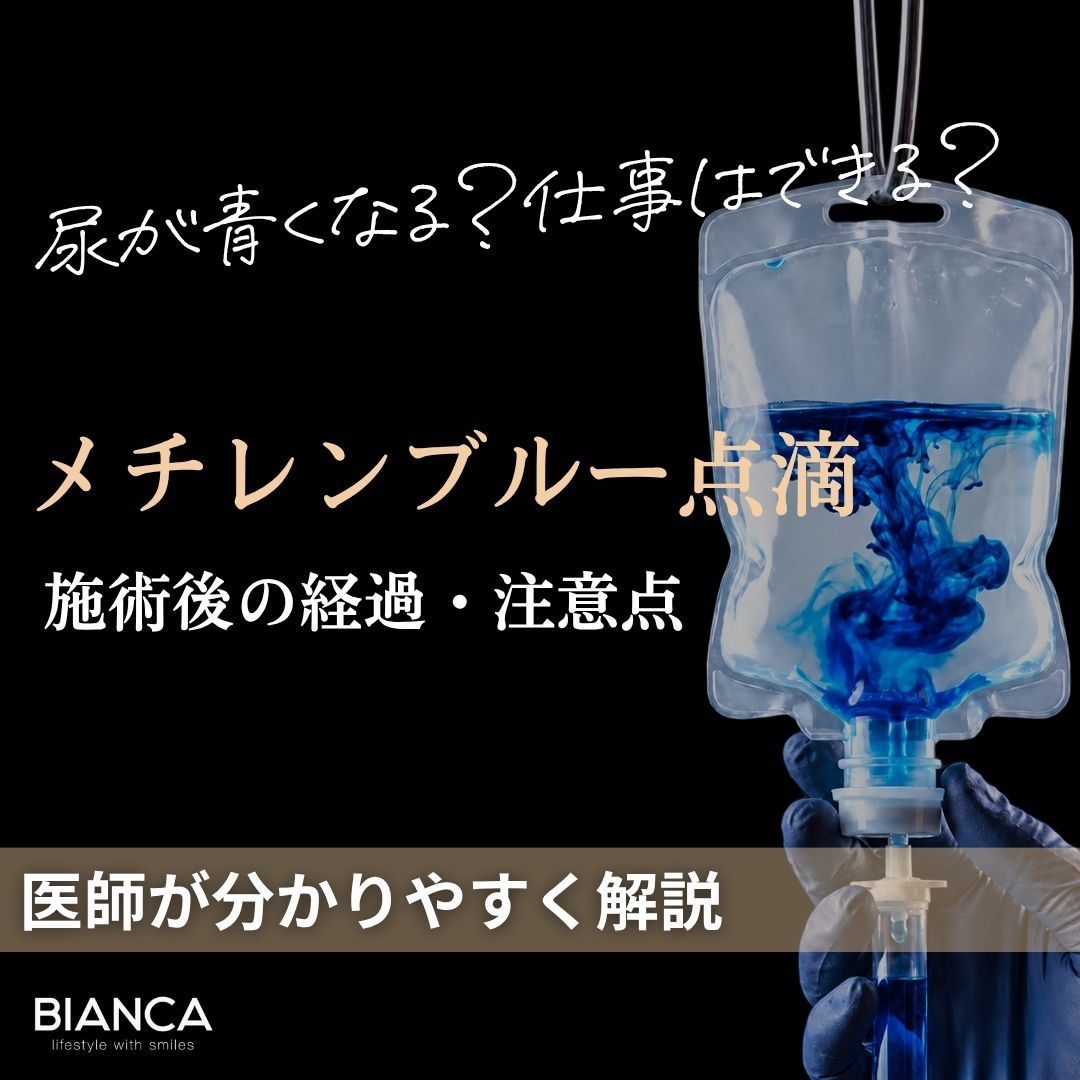
A methylene blue IV treatment is a procedure that involves virtually no significant downtime. However, depending on your physical condition and current medications, there are potential side effects and risks to be aware of.
The methylene blue IV drip is an IV therapy that imposes few major restrictions on daily life after treatment and has relatively little impact on daily activities.
Some of you may be wondering, “Can I make plans after the treatment?” “Is it true that my urine will turn blue?” or “Are there any side effects to worry about?”
While it involves minimal downtime, there are precautions to take with methylene blue depending on your physical condition and any medications you are currently taking.
At BIANCA CLINIC, we determine whether a procedure is appropriate not only based on visible downtime but also by conducting a G6PD test and verifying medication history.
In this article, we’ll cover everything from the post-treatment recovery process to side effects and contraindications, as well as key points you should know before undergoing the procedure.
How long is the downtime after a methylene blue IV drip?
Methylene blue IV treatments involve virtually no significant downtime, and there are generally no restrictions on daily activities after the procedure. Bruising may occur at the injection site.
The methylene blue infusion takes about 30 minutes. Once the infusion is complete, if you confirm that you are feeling well, you may go home right away.
We are sometimes asked, “Can I go to work after receiving an IV treatment?” However, we generally do not impose any special lifestyle restrictions after the procedure. It’s a type of IV therapy that’s easy to fit into your schedule.
However, when the IV needle is inserted, you’ll feel a slight prick, similar to getting a blood draw.
Some people may experience bruising at the injection site or feel pain along the vein while receiving an IV.
If you're experiencing pain in your veins, you don't need to endure it and continue the IV drip.
Adjusting the infusion rate may help alleviate any discomfort, so please let a staff member know immediately if you experience any discomfort.
In addition, after the procedure, your urine, stool, and sweat may turn blue or green.
This is a temporary change caused by the fact that methylene blue itself is a deep blue substance.
If you would like to learn more about how the treatment works and its features,"What Is a Methylene Blue IV Drip? A Simple Explanation of Its Expected Effects, Benefits, and Drawbacks"Please see the following as well.
Possible Symptoms and Course of Recovery Following a Methylene Blue Infusion
After the procedure, you may notice discoloration of your urine, stool, or sweat, or bruising at the IV site.
You should also be mindful of temporary symptoms such as nausea and headaches.
While there is generally very little downtime, knowing in advance what changes may occur after the procedure will help you avoid unnecessary anxiety.
Here, we will focus on explaining the symptoms that patients most commonly ask about.
Urine, stool, and sweat may sometimes turn blue or green.
After receiving a methylene blue infusion, your urine, stool, and sweat may turn blue or green.
You might be surprised when you first see it, but this is a temporary change caused by the methylene blue dye. It may be visible for a few days after the procedure.
Some of you may be concerned, thinking, “The color looks different than usual—is that okay?” While discoloration itself is one of the possible reactions that can occur after the treatment, if it is accompanied by other symptoms—such as severe physical discomfort—please do not try to diagnose the issue on your own; please consult us instead.
Pain or bruising at the IV site
You may feel some pain when the IV needle is inserted. Afterward, you may develop a bruise at the injection site.
Some patients may also experience pain in their veins during an IV infusion. If you experience severe pain or discomfort, please do not hesitate to let the staff know.
We also monitor our patients’ condition as we administer IV fluids. Since adjusting the infusion rate can sometimes alleviate vascular pain, there’s no need to push yourself—you don’t have to think, “Maybe I should just put up with this much.”
Nausea, abdominal pain, headaches, and other symptoms may occur.
With methylene blue intravenous infusions, in addition to gastrointestinal symptoms such as nausea and abdominal pain, transient side effects such as headaches, dizziness, and elevated blood pressure may rarely occur.
In clinical trials using a drug approved in the United States, cases of urine discoloration, taste disturbances, and dizziness have been reported.
However, since this study differs from our hospital’s methylene blue infusion in terms of dosage and intended use, the incidence rates cannot be directly applied to our hospital’s treatment.
Given its blue color, some people may worry, "Isn't methylene blue toxic?"
The methylene blue infusion is a procedure with virtually no downtime.
However, methylene blue is a substance used as a medication. It must be administered only after confirming not only the dosage but also the patient’s physical condition and any other medications they are currently taking.
Side Effects and Risks of Methylene Blue Infusions
When administering a methylene blue infusion, it is important to be aware of potential risks such as hemolytic anemia and serotonin syndrome. We will assess your physical condition and current medications before the procedure.
Downtime, side effects, and risks must be considered separately.
For example, being able to “return to work immediately after treatment” is not the same as “anyone being able to receive the treatment without any issues.” With methylene blue infusions, treatment may need to be postponed depending on the patient’s physical condition and current medications.
In G6PD deficiency, caution is needed regarding hemolytic anemia
I’m sure there are many of you who are hearing the term “G6PD” for the first time.
G6PD is an enzyme involved in protecting red blood cells from oxidative stress. A condition in which the activity of this enzyme is congenitally low is called G6PD deficiency.
Some people with G6PD deficiency do not experience any noticeable symptoms in their daily lives. However, caution is necessary because certain medications or infections can trigger “hemolysis”—the breakdown of red blood cells—which can lead to hemolytic anemia.
The package inserts for domestic methylene blue preparations state that administration is contraindicated in patients diagnosed with G6PD deficiency. This is because it may exacerbate methemoglobinemia or cause hemolysis.*
For this reason, at Bianca Clinic, we use a test kit to check for G6PD deficiency before administering the first methylene blue infusion.
The test results are available in about 2 minutes, and we use that information to determine whether to proceed with the treatment.
A separate fee is required for the G6PD pre-treatment screening, in addition to the treatment fee.
However, if you have previously undergone a G6PD test at another clinic and have photographs or documentation showing the test results, we may be able to skip the in-house test after reviewing the information. If this applies to you, please present your test results during your consultation.
Be cautious of serotonin syndrome when using this medication in combination with antidepressants.
During your appointment, please let us know about any medications you are currently taking.
This is because methylene blue may cause serotonin syndrome when used in combination with certain serotonergic drugs.
Serotonin syndrome is a condition in which excessive serotonin activity in the body causes symptoms such as fever, sweating, palpitations, tremors, agitation, and nausea. Because it can become severe, caution must be exercised when combining medications.
The package inserts for domestic methylene blue preparations state that serotonin syndrome may occur when the drug is used in combination with serotonergic agents such as SSRIs and SNRIs, and therefore caution is advised regarding such combinations*.
At Bianca Clinic, we ask that patients taking antidepressants such as SSRIs or SNRIs refrain from receiving methylene blue IV infusions.
Please be careful not to skip or stop taking any medications on your own initiative in order to receive an IV drip. Do not assume that “this medication might not be relevant”; please be sure to inform your doctor of any medications you are currently taking during your consultation.
Other Side Effects and Risks
In addition to the symptoms described so far, there are other important precautions to be aware of regarding methylene blue infusions, such as hypersensitivity reactions and effects on medical testing equipment.
The FDA’s PROVAYBLUE package insert* reports cases of serious hypersensitivity reactions, including anaphylaxis. If you experience any unusual symptoms during the infusion—such as shortness of breath or hives—please do not hesitate to notify the staff immediately.
In addition, because methylene blue is a blue dye, the SpO2 (blood oxygen saturation) reading on a pulse oximeter may appear lower than the actual value. This is primarily a point that healthcare professionals should be aware of.
If you feel unwell after receiving a methylene blue infusion and visit another medical facility, please inform the doctor that you were administered methylene blue. This information may help the doctor make an informed decision during your visit.
Cases in Which Methylene Blue Infusions Should Be Avoided
We ask that individuals with G6PD deficiency, those currently taking antidepressants such as SSRIs or SNRIs, pregnant or breastfeeding women, and those with severe kidney dysfunction refrain from receiving this treatment.
"Is it safe for me to receive a methylene blue infusion?" is a question you should definitely ask during your consultation.

At Bianca Clinic, we do not provide treatments to individuals who fall into the following categories.
- People with G6PD deficiency
- People currently taking antidepressants (such as SSRIs and SNRIs)
- Women Who Are Pregnant or Breastfeeding
- People with severe kidney impairment
In cases of G6PD deficiency, patients are at risk for hemolytic anemia, and when taking certain antidepressants, they are at risk for serotonin syndrome. It is important to be aware of both of these conditions before treatment.
Bianca Clinic does not administer methylene blue IV infusions to pregnant or breastfeeding women. Information on approved medications in the United States also warns of risks to the fetus associated with administration during pregnancy.
We also ask that individuals with severe kidney dysfunction refrain from receiving this treatment. If you are currently receiving medical treatment for a pre-existing condition or have concerns about your health, please do not assume that “since this is a cosmetic IV treatment, it doesn’t apply to me”; instead, please inform us of your medical history and any conditions you are currently being treated for during your consultation.
Also, if you have any concerns about whether the supplements or other substances you regularly take might affect your treatment, please don’t hesitate to ask us. We believe that an important part of the consultation is not only “performing the treatment” but also determining whether “it is appropriate to treat the patient in their current condition.”
If you'd like to know whether a methylene blue IV drip is right for your concerns or goals,"Who Is a Good Candidate for Methylene Blue Infusions? A Doctor Explains the Indications and Key Considerations When Deciding on Treatment"Please see the following as well.
What to Do and What to Watch Out for Before and After a Methylene Blue IV Treatment
There are generally no major lifestyle restrictions after the procedure. However, it is important to confirm any medications you are taking before the procedure and to be vigilant for any changes in your physical condition during the IV infusion or after the procedure.
People sometimes ask, “Can I go right back to work after the IV treatment?” There are no special lifestyle restrictions following a methylene blue IV treatment.
After the IV treatment is complete, we’ll check how you’re feeling, and if there are no issues, you’ll be free to go home. If you have important plans, it’s a good idea to schedule your appointment while taking your health into consideration.
What we prioritize even more than how you spend your time after the treatment is the pre-treatment assessment.
Please provide as much detail as possible during your appointment regarding any medications or supplements you are currently taking, as well as any medical conditions you are being treated for. In particular, antidepressants can sometimes interact with methylene blue, which may cause problems.
Avoid making your own judgments, such as “I only drank a small amount” or “I don’t take this medicine every day.” It is important to tell your doctor about everything you are taking, not just prescription medications.
If you experience any unusual sensations during your IV treatment—such as pain in your veins, dizziness, or nausea—please do not hesitate to let our staff know. We believe that monitoring the patient’s condition as we proceed with the treatment is a key aspect of IV therapy.
Frequently Asked Questions About Downtime After a Methylene Blue IV Treatment
We sometimes receive questions about methylene blue IV therapy regarding its impact on work, urine discoloration, blood pressure, anaphylaxis, and G6PD testing.

Q. Can I go to work or go out after receiving a methylene blue infusion?
A. There is virtually no significant downtime, and we generally do not impose any restrictions on daily activities after the procedure. Once the IV drip is complete, we will check your condition, and if there are no issues, you may go home. If you experience any discomfort, please do not push yourself and consult your doctor.
Q. Is it abnormal for urine to turn blue after a methylene blue infusion?
A. The dye methylene blue may cause urine, stool, or sweat to turn blue or green. This is a temporary change that may last for several days. If you experience other symptoms, such as severe illness, do not attempt to self-diagnose; consult a doctor.
Q. Can a methylene blue infusion cause a rise in blood pressure?
A. A transient increase in blood pressure may occur as a temporary side effect of a methylene blue infusion. If you feel unwell or experience any unusual sensations during the infusion, please notify the staff immediately. We will monitor your condition and take appropriate action.
Q. Can a methylene blue infusion cause anaphylaxis?
A. According to the package inserts* for methylene blue injections sold overseas, serious hypersensitivity reactions, including anaphylaxis, have been reported. If you experience any unusual symptoms, such as shortness of breath or hives, immediate action is required.
Q. Can I receive a methylene blue infusion even if I don’t know whether I have G6PD deficiency?
A. At Bianca Clinic, we use a test kit to check for G6PD deficiency before your first treatment. Results are available in about 2 minutes, and there is a separate fee for the test. If you have already been tested at another clinic, we may be able to waive the in-house test if you can provide us with a photo or documentation of your results.
When considering a methylene blue infusion, be sure to check not only the downtime but also the side effects and contraindications.
The methylene blue IV treatment is an IV therapy that involves virtually no significant downtime and, for the most part, no post-treatment lifestyle restrictions. While it’s easy to fit into your schedule, “minimal downtime” does not necessarily mean “anyone can easily undergo the treatment.”
In addition to discoloration of urine, stool, and sweat, as well as temporary physical discomfort, there are side effects and risks to be aware of depending on your physical condition and any medications you are taking. In particular, if you have G6PD deficiency or are taking antidepressants such as SSRIs or SNRIs, it is essential to confirm this information before the procedure.
What we value is not simply offering IV therapy to everyone who requests it, but rather making an appropriate decision after assessing each individual’s health condition and treatment goals.
Please feel free to bring up any questions you may have during your consultation, such as, “Is it okay to take my medication?” “I’m worried about side effects,” or “Can I use the results from a G6PD test I took before?”
▶Detailed Information on Methylene Blue Infusions (for Brain Function Activation)
▶Bianca Clinic Counseling Reservation Form