column (e.g. in newspaper)
2026.06.18
Are Scars from Nostril Reduction Noticeable? Do They Fade? An Explanation of the Healing Process, Corrective Treatments, and Tips to Avoid Regrets

Specialist in rhinoplasty. He is a board certified plastic surgeon by the Japanese Society of Plastic and Reconstructive Surgery. Based on the principle of “maximum effect with minimum treatment,” I propose the best surgical techniques and plans for my patients from various angles. He specializes in designs that beautifully accentuate the "individuality" of the patient while taking into account the golden ratio of the face. In particular, we create full-custom-made prostheses by combining CT and Vectra data to create full-scale blueprints, which are then precisely finished based on clay prototypes handmade from scratch on a skull model. The shape of the prosthesis can be reproduced with high precision as per the presented simulation, so that even the most detailed wishes can be met and stable results can be achieved.

Nasal wing reduction is a popular rhinoplasty procedure that refines the width and projection of the nose, creating a more balanced and refined appearance for the entire face. However, because the procedure involves an incision, many people worry about things like, “Will the scar be noticeable?” or “Will I regret it?”
In reality, scars from alar reduction surgery often fade over time, and it is possible to make them less noticeable depending on the surgical technique chosen, the surgeon’s skill, and how you care for yourself after the procedure. Additionally, in some cases, scars that are a concern can be addressed through scar revision (surgery) or other methods.
In this article, we’ll provide a detailed explanation of everything from the healing process of alar reduction scars and the characteristics of people whose scars tend to be more noticeable, to the options for corrective treatment and tips for avoiding regret.
When Do Scars from Nostril Reduction Become Less Noticeable? An Explanation of the Downtime Process

In most cases of alar reduction surgery, the sutures are removed about one week after the procedure. Postoperative symptoms such as swelling, redness, pain, and bruising are common, and these typically subside gradually over the course of one to two weeks.
However, it will take additional time for the scar to fade and become less noticeable. The redness and stiffness of the scar will gradually subside, and it typically takes about 3 to 6 months for it to approach a natural appearance.
In addition, the healing process varies from person to person, and the outcome depends on individual constitution, the surgical technique used, and postoperative care. First, let’s take a closer look at what to expect after alar reduction surgery.
Immediately After Surgery to 3 Days Later | Peak of Redness, Swelling, and Pain
After a nose tip reduction, redness, swelling, and pain tend to peak 2 to 3 days after surgery. Redness is particularly noticeable around the incision site, and because sutures are still in place, this is a time when it’s easy to tell that you’ve had nose surgery.
You may also experience a throbbing pain around the scar, but in most cases, this can be managed with prescribed pain medication.
Since redness and swelling tend to be more noticeable during the recovery period, it’s best to schedule your treatment well in advance of any events.
One Week Post-Surgery | Redness May Temporarily Worsen After Stitch Removal
For alar reduction surgery, sutures are generally removed about one week after the procedure. After the sutures are removed, the incision site may appear temporarily more red due to irritation. Since swelling may still be present, this is a time when patients may feel anxious, thinking, “The results aren’t what I expected.”
However, most of these are normal reactions that occur as the wound heals, and they will gradually subside over time. It is important to avoid touching or rubbing the area unnecessarily and to continue caring for it according to your doctor’s instructions.
In addition, once the stitches are removed, there is less strain on the wound, making it easier to cover with makeup; this is also the time when you can gradually resume your daily routine.
1 Month Post-Surgery | It Becomes Easier to Cover with Makeup
About a month after the procedure, the swelling and bruising will have subsided considerably, and you’ll likely find it less noticeable in your daily life. While a faint redness may still remain on the scar, in most cases it can be easily covered with makeup, such as concealer.
On the other hand, this is a time when the results are not yet fully established—for example, puffiness and mild swelling tend to occur in the morning. Additionally, scars at this stage are more delicate than they appear. Frequently touching the incision site or sleeping on your stomach and putting pressure on your nose could affect the healing process.
In addition, since there is a risk of hyperpigmentation caused by UV rays, it is important to take precautions against UV exposure by using sunscreen and wearing a hat.
3–6 months after surgery | Redness subsides, and scars become less noticeable
About 3 to 6 months after surgery, the swelling and puffiness will have mostly subsided, and the results will begin to approach their final form. By this time, the redness and firmness of the scars will gradually improve, and in many cases, they will blend in with the nasal creases and the contour of the nose. Although results vary from person to person, it is not uncommon for the scars to become less noticeable—to the point where they are barely visible unless viewed up close.
However, depending on your skin type, redness may persist or appear as hyperpigmentation. If you notice any concerning changes, avoid making your own judgment and consult the clinic where you received the treatment.
Characteristics of People Whose Scars from Alar Reduction Are Pronounced
The visibility of scars from alar reduction surgery depends not only on the surgical technique and the surgeon’s skill but also, to a large extent, on an individual’s physical constitution and lifestyle habits. For example, people with the following characteristics tend to experience prolonged redness or scarring:
- Prone to keloids (wounds tend to become raised, and redness tends to persist)
- Thick skin / Oily skin
- Smokes
- Has a pre-existing condition, such as diabetes, that affects wound healing
- Inadequate postoperative aftercare
Smoking, in particular, can impair blood flow, which may affect wound healing and lead to prolonged downtime. In addition, insufficient protection from UV rays and irritation—such as frequently touching the wound—can lead to hyperpigmentation and worsen scarring.
However, even if these conditions apply, the scars may not necessarily be noticeable. It is important to understand the risks in advance, choose a surgical procedure that suits your physical constitution and the condition of your nose, and continue to follow the appropriate post-operative care regimen.
What Is Nostril Reduction? Differences in Surgical Techniques That Minimize Visible Scarring
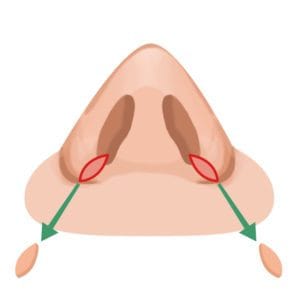
There are several surgical techniques for alar reduction, and the appearance of the scar and the final result vary depending on where the incision is made. While many people want to choose a method that leaves a less noticeable scar, the most important thing is to “choose the surgical technique that best suits your nose.”
Internal Approach | Less Visible Scars
The internal approach is a method of reducing the size of the nostrils by making an incision inside the nostrils. A major advantage of this method is that the incision is hidden inside the nostrils, making the scar virtually invisible from the outside. It also tends to involve relatively little downtime and often produces natural-looking results. On the other hand, it may be difficult to achieve significant changes in cases where the nostrils are particularly protruding or thick.
Lateral Approach | Results in significant changes but leaves a scar on the outside
The external approach involves removing tissue from the outer part of the nostrils to reduce their width and projection. It tends to produce more noticeable results than the internal approach and is suitable for those concerned about the roundness or protrusion of their nostrils. However, because the incision is made on the outside, it’s important to note that the scar may be more noticeable for a while after surgery. An experienced surgeon will perform the procedure with a focus on minimizing the visibility of scars, such as by making the incision along the natural crease of the nostrils.
Internal and External Approaches | Addressing a Wide Range of Concerns
The combined internal-external approach is a nasal alar reduction procedure that combines the internal and external techniques. Because it simultaneously addresses not only the width of the nostrils but also their outward projection, this procedure is often chosen by patients who have multiple concerns, such as “my nostrils look large” or “my nostrils appear to spread out to the sides.” It is characterized by the ability to achieve more pronounced results than single-technique methods and to more easily balance the overall appearance of the nose.
On the other hand, as the incision area becomes larger, the burden of scarring and downtime tends to increase. Since it may take some time for redness and swelling to subside, it is important to understand the advantages and disadvantages of each surgical procedure before making a decision.
When choosing a surgical procedure, “suitability” is more important than “scarring.”
Among those considering alar reduction surgery, many believe that the internal approach is best because the scars are less noticeable. However, choosing a surgical technique based solely on the visibility of the scars does not necessarily lead to the best results.
For example, in cases where the nostrils protrude significantly and only the internal approach is used, the results may seem insufficient, or the nose may tend to revert to its original shape over time. Conversely, making an incision that is larger than necessary may lead to unnatural-looking results or an increased risk of scarring.
What matters most is not “which surgical technique is popular,” but choosing the method that best suits the shape of your nose, the thickness of your skin, the width of your nostrils, and your ideal outcome. It’s important to choose a doctor who doesn’t focus solely on scarring but who assesses the overall balance and suitability of the procedure before recommending a specific technique.
How to Avoid Regrets About Scars from Alar Reduction Surgery | Revision Treatment and Choosing a Clinic
Many people worry, “What if the scar from my alar reduction surgery doesn’t fade?” However, depending on the condition of the scar, corrective treatment may be able to improve its appearance.
Corrective Surgery for Those Concerned About Scars from Alar Reduction Surgery
The appropriate treatment for scars resulting from alar reduction surgery—such as redness, raised areas, or indentations—varies depending on the condition of the scar. While “Scarless” permanent makeup for scar correction may be considered for mild redness or discoloration, cases involving hard, raised scars or uneven skin texture may require correction through surgical scar revision.
At BIANCA CLINIC, we take a plastic surgery approach to propose corrective methods that consider not only the scar but also the overall balance of the nose. If you are concerned about tightness, asymmetry, or an unnatural roundness, we will consider treatments such as re-suturing based on your specific condition.
Key Points for Choosing a Clinic to Avoid Regrets
To avoid regretting scars after a nose wing reduction, it’s not just about which surgical technique you choose—it’s also crucial to decide which clinic and doctor to entrust with your care. There are four key points you should be sure to check:
- Do they have a large number of cases involving alar reduction?
- Does it support multiple surgical techniques, such as the medial and lateral approaches?
- Is the design created with consideration for the location of the scar and the overall balance of the nose?
- Is there a well-established system in place for postoperative follow-up visits, consultations, and other forms of aftercare?
Alar reduction is not simply a “procedure to make the nose smaller.” Since the most appropriate method varies depending on the shape of the nose, the thickness of the skin, and how wide the nostrils are, it is crucial to be able to offer a personalized recommendation for each individual.
Furthermore, if you choose a clinic based solely on low cost, you may end up regretting your decision—for example, because “the results looked unnatural” or “you’re concerned about the scars.” Rather than basing your decision solely on price, it’s important to prioritize clinics that carefully recommend surgical techniques suited to your nose and thoroughly explain the risks involved.
Nose Wing Reduction at BIANCA CLINIC
At BIANCA CLINIC, our alar reduction procedure goes beyond simply making the nostrils smaller; we place great emphasis on a design that takes into account the overall balance of the nose, its harmony with the facial features, and the minimization of visible scarring.
After carefully assessing each patient’s unique nose shape, skin thickness, and the width of the nostrils, we select the most appropriate technique—whether the internal approach, external approach, or a combination of both. We strive for a natural-looking result while being mindful not to remove more tissue than necessary. Another key feature of our approach is that we perform procedures from a plastic surgery perspective, carefully considering the placement of scars and suturing techniques.
Furthermore, since our clinic employs doctors who specialize in rhinoplasty, one of our strengths is that we can propose treatment methods based on the overall balance of the nose—not just focusing on alar reduction. Depending on the patient’s condition, we may also suggest options that include non-surgical rhinoplasty.
During consultations, we utilize the 3D simulation system “VECTRA®.” While reviewing the projected post-operative appearance, we make precise adjustments down to the millimeter to carefully design a natural-looking nose that harmonizes with each patient’s facial features.
Before-and-After Photos of Nostril Reduction Surgery at BIANCA CLINIC
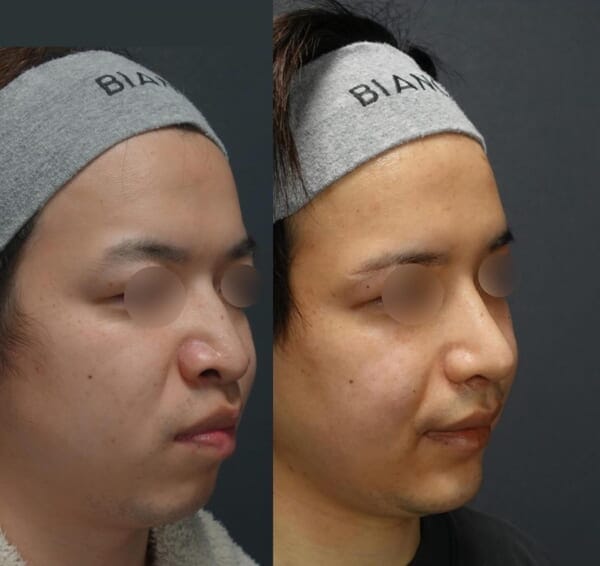
[Procedure Name] Glabella Reshaping + Rhinoplasty (Custom-Made Implant), Septal Extension (Rib Cartilage), Alar Reduction (Lateral + Medial, Flap Technique), Chin Implant Insertion
[Image Caption] Left: Before treatment; Right: 2 months after treatment
[Costs] Glabella Reshaping + Rhinoplasty (Custom Implant) 660,000 yen, Septum Extension (Rib Cartilage) 880,000 yen, Alar Reduction (Lateral + Medial, Flap Technique) 550,000 yen, Mandibular Implant 421,080 yen
[Side Effects and Risks] A crooked nasal bridge or tip, flared nostrils, discomfort, scarring, reversal of results, infection, etc.
By comprehensively refining the area from the bridge of the nose to the tip and the nostrils, the overall balance of the face takes on a more refined appearance. The width of the nostrils is naturally reduced, and the three-dimensional contours of the profile are more pronounced.
Frequently Asked Questions (FAQ) About Scars from Alar Reduction Surgery
When it comes to scars and downtime from alar reduction surgery, many people have concerns such as, “Will they really become less noticeable?” or “Will the scars never fade?” Here, we’ve compiled some of the most common questions we receive from people considering alar reduction surgery.
How long does it take for the scars from a nose tip reduction to fade?
Scars from alar reduction surgery may appear red and swollen immediately after the procedure, but they generally subside gradually over a period of about 3 to 6 months. Although results vary from person to person, in some cases the scars blend into the crease of the nostrils and become so inconspicuous that they are barely noticeable unless viewed up close.
Is it true that scars from a nose tip reduction never fade?
Since this procedure involves an incision, strictly speaking, the results will not be “completely zero.” However, while outcomes may vary depending on your body type, the surgical technique, the surgeon’s skill, and post-operative care, in most cases, the redness and firmness will subside over time and become less noticeable.
Which method—the internal or external approach—for alar reduction leaves less noticeable scars?
The “internal approach,” which involves making an incision inside the nostrils, tends to result in scars that are less visible from the outside. On the other hand, while the external approach is more effective at significantly reducing the protrusion of the nostrils, the incision made on the outside can cause noticeable redness for a while after surgery.
What are the key factors to consider when choosing a clinic to avoid regrets after a nose wing reduction?
To avoid regrets after a nose tip reduction, it’s important to choose a clinic with extensive experience in this procedure and one that offers multiple surgical techniques. You’ll also want to confirm whether the clinic designs the procedure with consideration for the location of the scar and the overall balance of the nose, and whether it has a well-established post-operative follow-up system in place.
Since the most suitable surgical technique for alar reduction varies depending on the shape of the nose and the thickness of the skin, you should focus on whether the clinic can recommend a procedure tailored to your specific nose, rather than choosing based solely on price.
For Those Concerned About Scars from Nostril Reduction Surgery | What You Need to Know to Avoid Regrets
Scars from alar reduction surgery may appear red and swollen immediately after the procedure, but in most cases, they gradually subside over a period of about 3 to 6 months. It is not uncommon for the scars to blend into the natural crease of the nostrils, becoming barely noticeable unless viewed up close.
On the other hand, the appearance of scars varies from person to person, and the final result is greatly influenced not only by an individual’s physical constitution but also by the surgical procedure chosen, the surgeon’s skill, and how the patient cares for themselves after surgery.
Therefore, to avoid regrets after alar reduction surgery, it is more important to identify the method that best suits your nose than simply choosing a “surgical technique that leaves less noticeable scars.” The key to your satisfaction lies in whether the surgeon can recommend an appropriate procedure based on the width of your nostrils, the thickness of your skin, and your ideal nose shape.
It’s also reassuring to know that, in the unlikely event you’re concerned about scarring, there are options available—such as scar revision (surgery)—depending on your specific situation.
If you’re worried about scarring from a nose tip reduction and are having trouble taking the first step, please start by scheduling a consultation to discuss which surgical technique is best suited for your nose and how noticeable the scars are likely to be.
▷View BIANCA CLINIC's Nose Wing Reduction Procedures
▷Read other blog posts by Dr. Yagasugi
[Dr. Yagasugi's Social Media]