column (e.g. in newspaper)
2026.09.28
How Do the Before-and-After Results of Ladyesse Change? What You Need to Know First
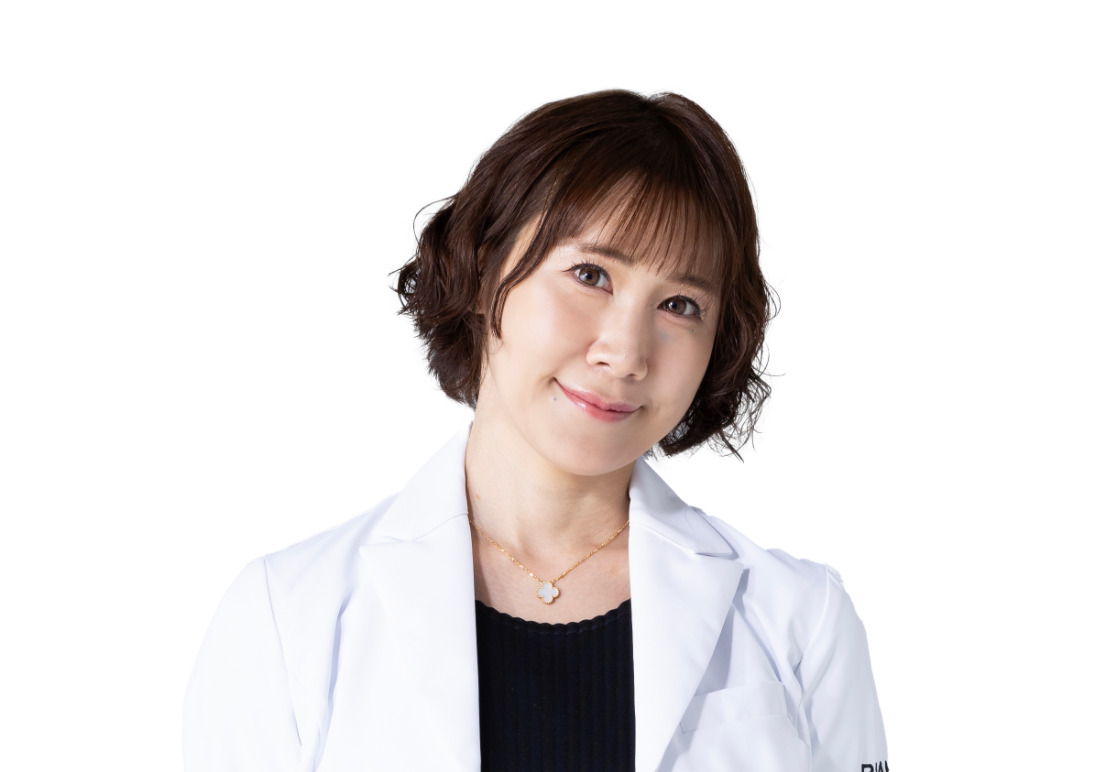
My journey into aesthetic medicine stems from a desire to help enrich and beautify lives beyond simply treating illness. My specialties include hyaluronic acid, Botox, and thread lifts. I provide treatments that enhance each individual's unique qualities and bring out an elegant, natural beauty. For concerns around the eyes that are difficult to improve with dermatology alone, I also perform surgical procedures. By integrating dermatology and surgery, I holistically balance the entire face. With three periods of overseas study, I am also able to provide consultations in English.
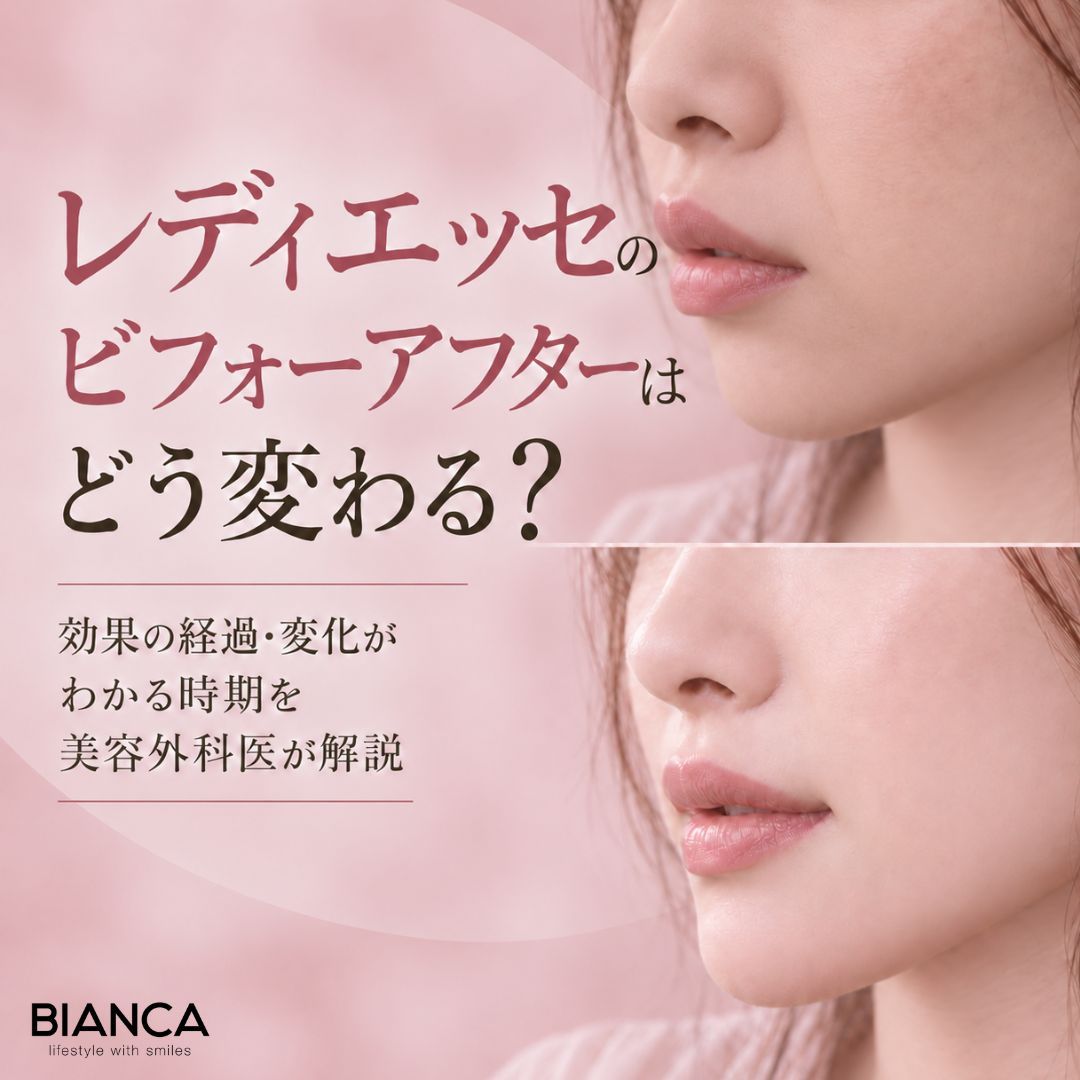
Do you ever look in the mirror and think, “I want to define my jawline a bit more” or “I want to restore a little more firmness to my skin”?
We often receive inquiries—especially from people in Tokyo and Ginza who are considering counseling—asking which photos to use as a reference while comparing Ladyesse’s before-and-after images.
One characteristic of Radiesse is that it’s difficult to assess the results immediately after injection. If you distinguish between the changes in shape and the changes in skin texture that develop over time, it becomes much easier to interpret the “Before & After” results.
From a cosmetic surgery perspective, we’ll break it down in simple terms—from when the swelling subsides to the differences in texture that are often noticeable a few months later.
[Doctor’s Point]
When looking at before-and-after photos of Radiesse® (RADIESSE®), here’s what you should know:There are "changes that occur immediately after the injection" and "changes that appear over time."That is the point.
Ladyesse is an injectable formulation whose main ingredient is CaHA (calcium hydroxyapatite).
When used as a filler, it can instantly correct the contours and volume of areas such as the jawline and facial contours immediately after injection.
On the other hand, when using the product in diluted or highly diluted form, one can take advantage of the biostimulation provided by CaHA to,By acting on the extracellular matrix—including collagen and elastin—it gradually works to improve skin firmness, elasticity, and texture.This is a treatment.
Research is being conducted on the application of highly diluted CaHA to the face, neck, décolletage, upper arms, and abdomen.
In other words, the "before and after" results of Ladyesse shouldn't be evaluated solely based on "how much it swelled immediately afterward."
For facial contouring, results are visible immediately to a few weeks later; for treatments aimed at improving skin texture, results appear within a few weeks to a few months.As you can see, it’s important to make comparisons at the right time, depending on your purpose.
In this article, we’ll explore the theme of “Ladyesse Before and After.” From a cosmetic surgeon’s perspective, we’ll provide a detailed explanation of what changes you can expect immediately after the procedure, one month later, and several months later, as well as the differences between this treatment and hyaluronic acid, changes by treatment area, and key points for avoiding complications.
What Is Ladyesse? Understanding Its Two Functions
Ladyesse is an injectable formulation in which fine particles of CaHA are dispersed in a CMC gel. Its composition differs from that of typical hyaluronic acid formulations, and it can be used in the following two ways.
-
Use as a filler: Corrects the three-dimensional appearance and contours of the jaw, lower face, and jawline.
-
Use as a biostimulator: Through dilution and high dilution, this product is designed to target the extracellular matrix—including collagen and elastin—to improve skin firmness, elasticity, and texture.
It is this duality that gives Ladyesse’s “Before & After” photos their distinct characteristics in terms of “shape” and “skin texture.”
Ladyesse: Before & After—A Chronological Overview
Immediately after the procedure: A time when it’s easy to see changes in shape
When used as a filler, the gel is present at the injection site, so changes in volume and contour are visible immediately afterward.
For the jawline, consider the alignment of the E-line, the balance of the profile, and the definition of the jawline. However, since swelling and puffiness from the injections may still be present immediately after the procedure, do not assume this is the final result; evaluate it again at the next photo session.
One month later: The swelling has subsided, allowing for an objective assessment of the facial contours
After 2 to 4 weeks, the swelling subsides, making it easier to compare the "before" and "after" photos.
If the goal is facial contouring, photos taken at this stage are particularly useful. At the same time, some people begin to notice gradual changes in their skin’s firmness with the diluted Radiesse.
2–3 months later: Don’t overlook changes in texture
With the highly diluted Radiesse treatment, some patients begin to notice “positive changes in skin texture”—such as smoother skin, improved elasticity, and a reduction in the appearance of mild sagging—after 2 to 3 months; these changes are often difficult to convey through photographs alone.
When looking at "Before & After" photos, it's a good idea to focus on how the skin itself appears, rather than just the degree of swelling.
After 6 months: Monitor skin development over a longer period
When using a highly diluted solution on the neck, décolletage, or upper arms, depending on the treatment plan and number of sessions, photos taken around 6 months later can serve as a reference for evaluating progress.
When viewing "Before & After" photos, be sure to check the date the photos were taken, the amount used, the dilution ratio, the number of treatments, and any additional treatments performed.
Ladyesse Before-and-After Photos by Body Part
Face line
As a result of the combined effects of age-related skeletal changes, shifts in fat distribution, and sagging skin, facial contours tend to become less defined.
When properly injected as a filler, it can restore continuity to the lower face, resulting in a naturally lifted appearance from both the side and front views. When used in combination with diluted Radiesse, it can also help improve skin firmness.
顎
The chin is an area where even a slight change can drastically alter one’s appearance. We design the injection plan while carefully assessing the overall balance of the face, including the E-line, the shape of the chin tip, and how it blends with the jawline. It’s not simply a matter of pushing it forward excessively.
頬
When addressing volume loss in the cheeks, it is essential to diagnose exactly where the loss is occurring. We determine whether the issue lies in the deep or superficial layers, or whether it is due to skeletal structure or skin laxity, and restore the necessary volume while maintaining a natural appearance.
Simply adding too much can make it look unnatural.
Neck and Décolletage
This is an area where research is ongoing regarding the use of highly diluted Radiesse. Since the goal is to improve fine lines, loss of firmness, and skin texture, the “Before & After” evaluations are conducted over a slightly longer period, including approximately 6 months.
Upper arms
This treatment is considered when the primary cause is “skin laxity” rather than excess fat. If there is a large amount of fat itself, using Radiesse alone will not achieve the desired results. The first step is to identify the underlying cause.
Tips for Achieving a Natural Look: Rather than a dramatic change at first glance, aim for a look that appears elegant upon closer inspection
Even a difference of just a few millimeters can change the impression your face makes. Rather than just aiming for a “dramatic” Before & After look, it’s more important to look natural when people actually meet you in person.
Depending on how it is used, Ladyesse is an option that makes it easy to achieve both facial contouring and skin texture improvement. However, the final results depend on the dosage, injection depth, and balance of the treatment.
Differences Between Hyaluronic Acid, Botox, Liposuction, and Breast Augmentation, and Their Combined Use
When it comes to treatments, it’s not a matter of which is better or worse; what’s important is choosing the option that best suits your concerns and lifestyle. Hyaluronic acid is ideal for subtle adjustments that emphasize reversibility, while Botox targets expression lines caused by muscle movement and tension in the facial contours.
Liposuction is suitable for addressing excess fat in areas such as the body and under the chin, while breast augmentation is used to add volume to the breasts.
Ladyesse is useful when you want to combine facial contouring with skin texture improvement, and it can sometimes be combined with Botox, hyaluronic acid, liposuction, or breast augmentation, depending on the specific goal.
For example, in the lower face, a combination of Botox to relax muscle tension and Radiesse to correct skeletal contours may be considered.
We categorize procedures as follows: if excess body fat is the main concern, liposuction is recommended; if you want to change the appearance of your breasts, breast augmentation is the option. In all cases, the final results, duration of the effects, and extent of downtime vary from person to person.
For Those Considering Treatment in Ginza, Tokyo: Perspectives from Cosmetic Surgery, Cosmetic Dermatology, and Cosmetic Internal Medicine
There are many cosmetic surgery clinics, cosmetic dermatology clinics, and cosmetic medicine clinics in Tokyo and the Ginza area, and even for the same concern, the approaches they suggest vary slightly.
Cosmetic surgery specializes in facial contouring and three-dimensional design, and there is a tendency for “Before & After” photography and evaluation criteria to place a strong emphasis on the consistency of three-dimensional appearance.
Cosmetic dermatology clinics often specialize in improving skin quality, tone, and texture, and are particularly skilled at developing skin care regimens that include highly diluted Radiesse.
In cosmetic internal medicine, we may recommend an approach that combines an assessment of hormones, nutrition, and lifestyle factors.
At the same time, the advice given at various clinics in Tokyo and Ginza varies depending on the issue—for example, Botox for pronounced expression lines, liposuction if excess fat is the main cause, and breast augmentation for concerns about the chest.
By hearing multiple perspectives, it becomes easier to find the path that’s right for you.
How to Give Good Advice by Keyword
-
cosmetic surgery: We reviewed the "Before & After" photos—showing side, front, and angled views—to confirm that the volume plan was balanced with a natural look.
-
Cosmetic Dermatology: Have a specific discussion about “how you’ll evaluate skin texture—including firmness, elasticity, and pore appearance—in a few months.”
-
aesthetic medicine: When you factor in background factors that can affect skin condition—such as sleep, nutrition, and stress—the treatment plan becomes more precise.
-
Botox: Start with a small amount, focusing on the effect, duration, and balance with facial expressions.
-
Liposuction and Breast Augmentation: Clearly define a timeline that accounts for downtime and life events.
How to Interpret "Before & After" Photos Effectively
-
Date of Photography: Immediately, 2 to 4 weeks later, 1 to 3 months later, or 6 months later?
-
Amount Used, Dilution Ratio, and Frequency: Even if they look the same, the processes may be different.
-
Combined Treatments: Whether or not the patient has undergone Botox, hyaluronic acid injections, liposuction, etc.
-
Shooting Conditions: Lighting, angles, facial expressions, and makeup can all make a big difference in how you’re perceived.
It’s easier to determine whether this information is included when viewing “Before & After” photos at clinics in Tokyo or Ginza.
The Difference Between Risk, Downtime, and Reversibility
Injection treatments may cause swelling, redness, bruising, pain, asymmetry, unevenness or irregular contours, hardening or lumps, and infection.
Although extremely rare, there have been reports of serious complications, such as occlusion caused by accidental injection into a blood vessel, so the risk is not zero.
Please keep in mind that results, downtime, and duration may vary from person to person.
While hyaluronic acid can be reversibly treated with a degrading enzyme as needed, Radiesse—which is a calcium-based hyaluronic acid (CaHA)—has no standard dissolving agent.
Therefore, this approach isn't suitable for the mindset of "just put it in for now, and if you don't like it, you can always melt it down." The initial design and the process of making repeated fine adjustments are extremely important.
When Should You Take Photos? The Best Times to Take “Before & After” Photos Based on Your Goal
Facial Contouring (Focus on Fillers)
It is helpful to take photos before the procedure, immediately afterward, and 2 to 4 weeks later. This allows us to assess both the immediate changes and the overall balance once the swelling has subsided.
Skin Texture Improvement (Highly Diluted Radiesse)
Records from 1 to 3 months later—and up to about 6 months, if necessary—will be helpful for reference. Evaluate factors such as firmness and smoothness based on both photographs and the sensation when touching the skin.
Frequently Asked Questions (FAQ)
Can you notice a difference with Ladyesse right away?
When using fillers for contouring, you can usually see the results right away. However, since swelling may occur, be sure to check the results again in 2 to 4 weeks.
When can I start to notice an improvement in my skin's firmness?
The effects of treatments using diluted or highly diluted formulations on skin texture often become apparent gradually over a period of several weeks to several months. Results may vary from person to person.
How many times will it take to finish?
With facial contouring, you may be able to see the results after just one session. For treatments aimed at improving skin texture, multiple sessions may be considered depending on your current condition and goals.
Can I have this procedure done at the same time as Botox, liposuction, or breast augmentation?
Because the goals differ, combined procedures are often performed. For example, Botox is used for expression lines, liposuction for excess fat, and breast augmentation for adding volume—each procedure is considered based on its specific role.
Which department should I consult in Ginza, Tokyo?
As a general guideline, cosmetic surgery specializes in facial contours and 3D design, cosmetic dermatology in skin texture, and cosmetic internal medicine in consultations regarding overall health. In practice, combining the perspectives of multiple specialties leads to more accurate results.
Why You Should Seek Counseling: Let’s Work Together to Design a Path That’s Right for You
If you interpret the "Before & After" images carefully, you'll be able to identify the "type of change" (shape or skin texture) you need and the "best time to evaluate it."
When consulting in Tokyo or Ginza, be sure to compare and evaluate your options based on your specific goals—including Botox, liposuction, and breast augmentation—while taking into account the different perspectives of cosmetic surgery, cosmetic dermatology, and cosmetic internal medicine.
Be cautious of high-pressure sales tactics and unrealistic promises. If you'd like to find out if this is right for you, feel free to contact us for a consultation.
Summary: Viewing Ladyesse's “Before and After” Photos at the "Right Time"
The key to understanding the before-and-after results of Ladyesse is to view them in two parts: the “change in shape” that’s immediately apparent, and the “change in skin texture” that becomes evident over the course of several weeks to several months.
Evaluate the contouring results immediately after the procedure through several weeks, and assess skin texture starting 1 to 3 months later (or up to 6 months, depending on the case).
When reviewing photos, be sure to check the amount used, dilution ratio, number of treatments, timing of the procedure, and any additional treatments performed concurrently. Keep in mind the differences in reversibility (between hyaluronic acid and Radiesse) as well as the associated risks; planning your treatment with a focus on natural-looking results will lead to greater satisfaction.
When consulting in Tokyo or Ginza, please take advantage of our expertise in cosmetic surgery, cosmetic dermatology, and cosmetic medicine, and carefully consider your options—such as Botox, liposuction, and breast augmentation—based on your specific goals.