column (e.g. in newspaper)
2026.09.21
What Is Sculptra? An Easy-to-Understand Explanation of Its Expected Effects, Benefits, and Drawbacks

My journey into aesthetic medicine stems from a desire to help enrich and beautify lives beyond simply treating illness. My specialties include hyaluronic acid, Botox, and thread lifts. I provide treatments that enhance each individual's unique qualities and bring out an elegant, natural beauty. For concerns around the eyes that are difficult to improve with dermatology alone, I also perform surgical procedures. By integrating dermatology and surgery, I holistically balance the entire face. With three periods of overseas study, I am also able to provide consultations in English.

Some of you may be wondering, “What kind of injection treatment is Sculptra?” or “How is it different from hyaluronic acid?”
Sculptra is characterized by the fact that it gradually stimulates the body's own collagen production over time, resulting in long-lasting effects.
At BIANCA CLINIC in Tokyo, we design injection plans while carefully assessing your facial features and skin condition.
In this article, we’ll focus on explaining the basic mechanisms, the expected effects, and the pros and cons.
What kind of treatment is Sculptra?
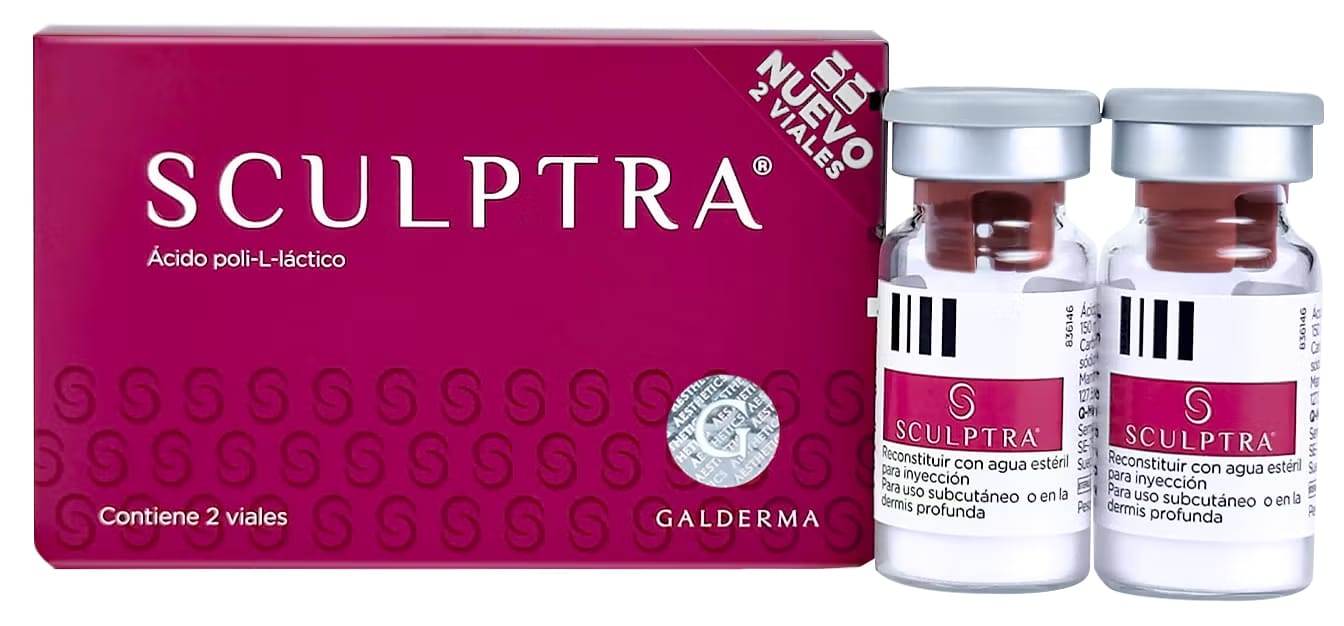
Sculptra is an injectable treatment that involves injecting PLLA under the skin to stimulate fibroblasts and promote the body’s own collagen production, with the goal of achieving gradual results.
Sculptra is an injectable treatment that uses PLLA
Sculptra is an injectable formulation whose main ingredient is poly-L-lactic acid (PLLA).
When PLLA microparticles are injected, the resulting stimulation promotes fibroblast activity and supports the production of the body’s own collagen.
This procedure differs in its mechanism of action from treatments—such as those using hyaluronic acid—that fill in depressions using the volume of the injected substance itself.
A key feature of Sculptra is that it works by harnessing the body’s natural collagen production process to restore firmness and volume from within.
For this reason, it is not a form of cosmetic medicine in which the condition immediately after treatment is considered the final result.
While the way people perceive changes varies from person to person, they tend to begin noticing gradual changes about 3 to 6 weeks after the treatment.
Determine the injection sites and volumes while examining the entire face
With Sculptra, it is important to consider not only “where to inject the product,” but also factors such as bone structure, fat distribution, skin thickness, and the degree of volume loss.
At Bianca Clinic, during your consultation, we assess your facial structure, skin condition, and areas of concern, and develop a treatment plan that takes into account the characteristics of Sculptra, which changes over time.
For example, even if you're concerned about both sagging cheeks and nasolabial folds at the same time, we don't make a judgment based solely on the lines that concern you.
We assess the overall balance of the face, determine where and to what extent treatment is needed, and aim for a natural-looking result.
Recommended Dosages for Sculptra by Injection Site
The amount of product used varies depending on the treatment area, the degree of volume loss, and the desired result.
The guidelines are as follows.
- Entire face: 1–2 strands
- Neck: 1
- Hips: 10–30
On the face, treatment areas typically include the temples, cheeks, area below the cheekbones, jawline, nasolabial folds, and forehead.
However, the information above is only a general guideline. Since the amount needed varies from person to person even for the same area, the actual injection volume and treatment site will be determined following a consultation.
At Bianca Clinic, we offer pricing plans based on the amount used rather than the treatment area. Please feel free to consult with us regarding your needs and budget.
What kind of results can I expect from Sculptra?
With Sculptra, by stimulating collagen production, you can expect it to help restore volume lost in areas such as the cheeks while improving skin firmness and elasticity.
The main changes you can expect from Sculptra include the following:
- Approaches to Addressing Volume Loss in the Cheeks and Temples
- An Approach to Addressing the Appearance of Pronounced Nasolabial Folds and Marionette Lines
- Improves skin firmness and elasticity
- Aiming for natural changes that take time
An approach that addresses volume loss from the inside out
When the cheeks and temples lose volume, shadows tend to form on the face.
As a result, your entire face may look gaunt, or you may end up giving off a somewhat tired impression.
These changes are related not only to the skin's surface but also to the face's three-dimensional contours and volume balance.
Since Sculptra stimulates collagen production through PLLA-induced stimulation, it can address issues such as sagging cheeks and sunken temples.
Rather than relying solely on the formulation itself to reshape the skin, this method harnesses the body’s natural collagen-production process, so the changes occur relatively gradually.
You might also want to consider this option if you'd rather "take your time to achieve a natural look rather than drastically changing your facial features all at once."
There is also the concept of “skin care” aimed at improving firmness and elasticity.
Sculptra is not simply an injection treatment designed solely to fill in sunken areas.
Its key feature is that by supporting collagen production, it addresses volume loss in areas such as the cheeks and temples while improving skin firmness and elasticity, helping you achieve a more youthful appearance.
For this reason, it’s not uncommon for people who are “concerned about sagging cheeks” or “want to address a lack of skin firmness at the same time” to consider this product.
A unique feature of Sculptra is that the changes appear gradually.
Since the changes occur gradually over a period of about 3 to 6 weeks after the treatment, you can aim for a transformation that blends in naturally rather than one that drastically alters your appearance.
Furthermore, although results vary from person to person, one of the appealing aspects is that the effects last for a relatively long time—about 2 to 3 years.
Depending on your concerns, we may combine treatments such as Volnuma, HIFU/UltraCell Zi, and Botox injections.
We’ll develop a treatment plan that takes into account your facial features and skin condition to help you achieve a more natural and youthful appearance.
What are the pros and cons of Sculptra?
While Sculptra aims to achieve natural, long-term results, it is not a cosmetic procedure that provides immediate results.
Benefits of Sculptra
The main benefits are as follows:
- You can aim for natural changes that take time
- It helps improve firmness and volume by promoting collagen production
- Long-term changes can be expected.
- PLLA breaks down in the body over time.
Sculptra is an injectable treatment that does not produce immediate results on the day of the procedure, but rather gradually changes as collagen is produced.
This is a good option when you want to refine the overall appearance of your face while avoiding drastic changes.
Another key feature is that, by leveraging the natural collagen production process, it addresses not only volume but also firmness.
PLLA is a biodegradable material that eventually breaks down into water and carbon dioxide.
However, this does not mean that "being broken down in the body" equals "no side effects."
Disadvantages and Risks of Sculptra
Here are some points to keep in mind:
- It takes time to notice the change.
- This treatment is not intended to produce immediate results.
- Bleeding, swelling, and erythema may occur.
- Inflammation, tenderness, and lumps may occur.
Immediately after the procedure, the area may appear plump due to swelling, but this is not an intended effect of Sculptra.
Sculptra is a treatment that promotes collagen production and produces gradual results over time.
For this reason, if you are looking for noticeable results immediately after the procedure, we may recommend injection therapy.
In addition, when using Sculptra, it is important to carefully manage the injection layer, volume, and dilution to minimize the risk of lumps (subcutaneous nodules).
At Bianca Clinic, we assess your skeletal structure and subcutaneous tissue to determine the injection sites and dosage, and we also provide guidance on post-treatment massage techniques.
After the procedure, you may experience redness or swelling, which are common side effects of injection treatments.
If you have any symptoms that concern you, please consult the medical facility where you received treatment rather than making a judgment on your own.
Frequently Asked Questions
Here are concise answers to common questions about Sculptra, including how results appear, how long they last, which areas are treated, associated risks, and treatment frequency.

Q. What is Sculptra?
A. Sculptra is an injectable formulation whose main ingredient is PLLA (poly-L-lactic acid).
It aims to stimulate the body's own collagen production by stimulating fibroblasts, thereby restoring firmness and natural volume.
Q. Please tell me about the effects of Sculptra and how long they last.
A. By stimulating collagen production in areas of concern, such as the temples, cheeks, and forehead, this treatment can help restore a natural, plump appearance and improve skin firmness and elasticity.
Changes will gradually become apparent over a period of about 3 to 6 weeks, and the results typically last for about 2 to 3 years.
The way the effects manifest and how long they last may vary from person to person.
Q. Please tell me about the side effects and risks of Sculptra.
A. Bleeding, swelling, erythema, and other symptoms may occur after the procedure.
In rare cases, inflammation, tenderness, or a lump may also be present.
Q. Which areas can be treated with Sculptra to achieve a more youthful appearance?
A. The main treatment areas include the temples, cheeks, under the cheekbones, the jawline, nasolabial folds, and the forehead.
However, it is not suitable for all areas, so we will examine the condition of your face to determine whether it is appropriate for you.
Q. How often should I get a Sculptra treatment?
A. As a general guideline, we may recommend approximately three treatments spaced 6 to 8 weeks apart.
However, since the number of sessions required varies depending on the degree of volume loss, skin condition, and the desired results, we will propose a treatment plan during your consultation.
Understand the features of Sculptra and choose the injection treatment that's right for you.
Sculptra is a treatment that gradually restores firmness and volume by stimulating the body’s own collagen production; a consultation is essential for determining the appropriate injection plan.
Sculptra is an injectable treatment that uses PLLA to stimulate collagen production, aiming to gradually restore firmness and natural volume over time.
While long-term results can be expected, it is important to understand that this is not a cosmetic procedure that focuses on immediate results.
At BIANCA CLINIC in Tokyo, we assess your skeletal structure, fat distribution, skin thickness, and specific concerns to determine the best treatment option—not limited to Sculptra alone.
If you're unsure which injectable treatment is right for you, please start by scheduling a consultation.
▶Bianca Clinic's Scalptra Treatment Page
▶Bianca Clinic Counseling Reservation Form