column (e.g. in newspaper)
2026.07.15
Everything You Need to Know About Outer Corner Eyelid Surgery and Droopy Eyelid Surgery: A Comprehensive Guide Covering Design, Risks, and Downtime

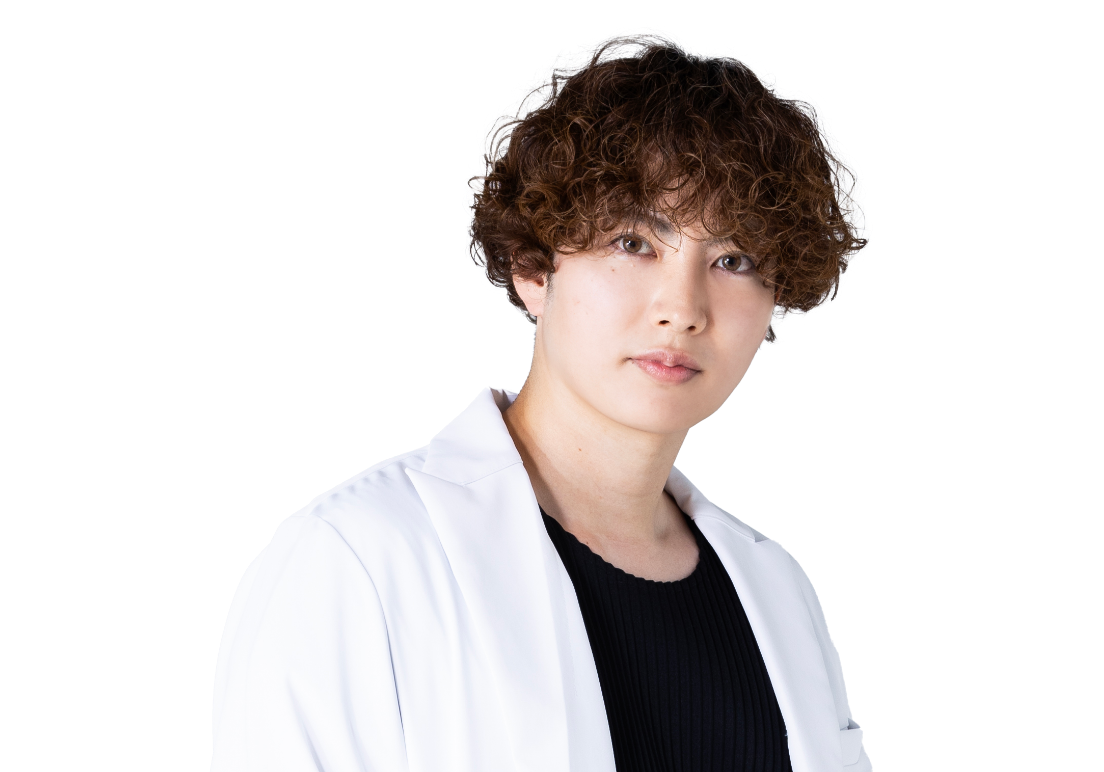
Engaged in both aspects of cosmetic dermatology and cosmetic surgery, he is an all-rounder doctor who pursues natural and elegant beauty with "the best interest of the patient" as his first priority. He is also a board-certified cosmetic surgeon by the Japanese Society of Aesthetic Plastic Surgery (JSAS). He specializes in hyaluronic acid injections, thread lifts, and facial surgery, and is a competent KOL (Key Opinion Leader) for ARTEMISLIFT and Hydro Rejuran. He is always sensitive to the latest trends and is always exploring knowledge and techniques.

Lateral canthoplasty and droopy-eyelid surgery are two of the most common procedures used to adjust the width and downward contour of the eye area, creating a softer, more mature appearance.
In the field of cosmetic surgery in particular, anatomical considerations and millimeter-precise design are crucial to the outcome.
In this article, we provide a practical overview of the design principles, treatment processes, downtime, strategies for avoiding complications, and factors to consider when choosing a clinic in the field of cosmetic surgery.
While outer canthoplasty and droopy-eye correction are suitable for a wide range of requests—such as “I want my eyes to be wider,” “I want to soften my upturned eyes,” or “I want to improve the balance around my eyes when I smile”—complications such as regression or ectropion may occur if the original eyelid structure, skin tension, and ligament support are not taken into account. Understanding the approach of cosmetic surgery and identifying the design that suits you best is the key to satisfaction.
[Doctor’s Point]
Although outer corner eyelid surgery and droopy-eye surgery are similar procedures, the primary purpose of outer corner eyelid surgery is to widen the eyes, while the primary purpose of droopy-eye surgery is to adjust the angle of the outer corners of the eyes to create a softer appearance.
To achieve the ideal result, it is important to comprehensively evaluate the patient’s facial structure, the support provided by the eyelids, and the overall balance of the eye area, and to create a design tailored to each individual. A meticulous surgical plan based on anatomy is essential to ensure both a natural appearance and safety.
The Basics of Outer Corner Eyelid Surgery and Droopy Eyelid Surgery Performed at Cosmetic Surgery Clinics
Although both procedures are techniques designed to optimize the shape of the area around the "outer canthus (outer corner of the eye)," they differ in their objectives and points of action.
In cosmetic surgery, the horizontal and vertical vectors of the palpebral fissure are evaluated separately, and a comprehensive assessment is made of skin laxity, the tension of the orbicularis oculi muscle, the strength of the lateral canthal tendon, and the condition of the lower eyelid support (tarsal plate and medial retaining structures).
What is an outer canthoplasty?
An outer canthus incision is a procedure that carefully releases adhesions and skin depressions at the outer corner of the eye to slightly widen the effective horizontal width of the palpebral fissure.
The incision is placed along a line that minimizes stress on the skin, and a natural extension is achieved through minimal skin excision and the repositioning of the mucous membrane and orbicularis oculi muscle.
Since excessive lateral extension can lead to mucosal exposure and noticeable scarring, preoperative simulation and a suture design that distributes tension are essential.
In the design of cosmetic surgery, emphasis is placed on the amount of sclera exposed, the appearance of the iris, and how well the design harmonizes with the curvature of the lateral sclera.
What Is a Droopy-Eyed Blepharoplasty?
A droopy-eye blepharoplasty is a procedure that slightly lowers the lower outer edge of the eyelid to create the appearance of gently drooping eyes.
We assess the stability near the lateral canthal tendon and, if necessary, combine ligament reattachment with skin and mucosal adjustment.
Since excessive lowering can lead to ectropion (where the lower eyelid turns outward) or dryness of the conjunctiva, cosmetic surgery typically relies on a gradual design within the “1–2 mm range.”
We always simulate the morphological changes that occur when smiling to ensure consistency between static and dynamic states.
Cosmetic Surgery Consultations and Treatment Planning
Whether the final result is satisfying is largely determined by the preoperative planning. In cosmetic surgery, we assess the overall balance of the face—including the width between the eyebrows, the distance between the inner and outer corners of the eyes, the distance between the pupils, and the prominence of the cheekbones—to clearly define the benefits and limitations of outer canthoplasty and droopy-eye correction.
From the Golden Ratio to the “You Ratio”
The golden ratio is merely a guideline. The "ideal placement" varies depending on skin type, skin elasticity, body fat, and bone structure.
We use prototype tapes and digital morphing to conduct a multifaceted evaluation of the impression made by the subject in seated, reclined, and smiling poses.
From a cosmetic surgery perspective, forced lengthening or lowering that goes against the natural structure of the foundation can lead to relapse or an unnatural appearance; therefore, adjustments are recommended only within the range that ensures stable support.
How to Properly Interpret "Before & After" Images
"Before & After" images can only be compared when the lighting, angles, and facial expressions are identical. Pay close attention to any differences between the left and right sides, the effect of eyelash curl and eyeliner, and even how much of the lower outer white of the eye is visible when smiling.
It is also important to check whether the natural curve of the outer canthus is consistently reproduced across multiple cases, and whether photos are provided not only immediately after the procedure but also once the area has settled. The quality of a plastic surgery practice is reflected in the accuracy of its “Before & After” photos and the consistency of its explanations.
The Treatment Process and Approach to Anesthesia
Anesthesia and procedural management are essential for a safe and comfortable experience. Many cosmetic surgery clinics primarily use local anesthesia, but may also combine it with intravenous anesthesia depending on the patient’s preferences and the invasiveness of the procedure.
To avoid excessive swelling, the volume and injection depth of the local anesthetic solution are carefully controlled, and hemostasis is achieved through precise, fine-tuned techniques using bipolar electrocoagulation in combination with fine sutures.
The Procedure for Outer Corner Eyelid Incision
The general procedure is as follows: marking (both in a stationary position and while smiling) → disinfection and anesthesia → release of adhesions → minimal skin excision → repositioning of the mucosa and orbicularis oculi muscle → tension-relieving sutures → wound protection. During the procedure, the patient’s sitting position is checked, and fine adjustments are made to ensure that the curve of the outer canthus does not become excessively sharp.
The Procedure for Droopy-Eyed Blepharoplasty
The basic procedure is as follows: marking → spreading the lateral canthus → evaluating lower-lateral support → fine-tuning the downward direction (including reattachment or reinforcement of the lateral canthal tendon as needed) → suturing → checking facial expressions while the patient is seated.
We will provide eye drops and ointments to help manage dry eyes and explain a protective plan to prevent dryness while sleeping during the early stages.
Safety Management in Cosmetic Surgery
We will assess your medical history, tendency toward dry eyes, allergies, keloid-prone skin, and use of oral anticoagulants in advance to minimize the risk of bleeding, infection, and scarring.
In cosmetic surgery, strict adherence to aseptic techniques, appropriate antimicrobial measures, and a postoperative follow-up system are standard practice.
Downtime, Potential Complications, and Countermeasures
The swelling usually peaks within a few days to a week, the noticeable redness subsides within 2 to 3 weeks, and it takes several months for the results to fully settle in.
Bruising can be reduced with cold compresses, and elevating the upper body while sleeping and managing salt intake are also effective. Follow the instructions from the cosmetic surgery clinic and continue using the prescribed eye drops and ointments as directed.
Potential Risks
・Asymmetry, overcorrection, or undercorrection
・Ectropion, sensation of dry eyes, mucosal exposure
・Redness, unevenness, and hyperpigmentation of scars
・Relapse (caused by insufficient tension or scar contracture)
・Infection, hematoma, or exposed sutures
To minimize risk, cosmetic surgical principles such as avoiding excessive design, ensuring adequate support structures, and suturing in fine layers are effective.
In the unlikely event of a complication, we will aim for long-term stability through early diagnosis, ongoing monitoring, and minor adjustments as needed.
Understanding Costs, Duration, and Guarantees in Cosmetic Surgery
Costs vary depending on the complexity of the design, the type of anesthesia used, whether reattachment or reinforcement is required, and the scope of follow-up care.
Prices vary by region and facility, but the cost structure differs between designs that involve simple extension and those that involve support reconstruction.
When choosing a cosmetic surgery clinic, it is advisable to ensure that the clinic discloses information regarding preoperative examinations, anesthesia, medications, follow-up visits, and its policy on corrective procedures in the event of complications (including conditions for whether they are covered or charged); it is also important to compare options based on the total cost.
Plan your downtime so that it doesn’t conflict with your work or personal schedule, and be sure to follow lifestyle guidelines—such as UV protection, quitting smoking, and moderating alcohol intake—that promote tissue healing.
Checklist for Choosing a Clinic
When choosing a cosmetic surgery clinic, you should evaluate it comprehensively based on qualifications, track record, accountability, and follow-up support. In particular, for outer canthoplasty and droopy-eyelid correction, the results depend heavily on precise design and accurately determining the safe operating range, so be sure to check the following points.
-
During the consultation, will they clarify your expectations and limitations and explain the risks, alternatives, and prognosis in clear terms? (Accountability as a cosmetic surgery clinic)
-
Several "Before & After" examples with consistent conditions are presented to assess whether the design is consistent.
-
Are safety protocols—such as those for anesthesia, hemostasis, and infection prevention—specific enough? (Standardization in Cosmetic Surgery)
-
Are the correction policies and warranty terms clearly stated and documented in advance?
-
Can you provide a comprehensive plan that combines this procedure with other treatments (such as fat grafting or lower eyelid sagging treatment)?
-
Sanitary conditions, staff responsiveness, and ease of scheduling post-operative follow-up appointments (the clinic’s operational capabilities)
While outer canthus incisions and droopy-eye incisions can create a dramatic difference in appearance with only minor changes, they are highly specialized procedures that require a thorough understanding of anatomy and precise planning.
By adhering to the principles of cosmetic surgery—a realistic design, ensuring a safety margin, meticulous suturing, and proper aftercare—you can expect natural-looking, long-lasting results.
Be sure to consult thoroughly with a reputable cosmetic surgery clinic, check the “Before & After” photos, the consistency of their explanations, and their revision policy, and then develop a surgical plan that aligns with your lifestyle.
Making a choice you're satisfied with is the quickest way to achieve an eye look that's uniquely yours.
Summary
Eyelid corner surgery and droopy-eyelid surgery are popular cosmetic procedures that can naturally change the appearance of the eyes, but patient satisfaction depends on proper assessment of suitability and design skills.
When considering a procedure, it’s important to thoroughly review not only the “before and after” results but also the downtime, risks, correction options, and post-operative follow-up.
By consulting with a trusted doctor and developing a treatment plan tailored to your facial structure and aesthetic goals, you can achieve a natural and beautiful eye area.