column (e.g. in newspaper)
2026.09.30
What Is a Tummy Tuck? A Doctor Explains the Surgery to Remove Excess Skin from the Abdomen

Specialist in rhinoplasty. He has performed many surgeries for functional restoration including nasal septal curvature at university hospitals, and has successfully performed rhinoplasty that requires advanced techniques at the level of reconstructive surgery. Currently, we offer rhinoplasty optimized for the Japanese and Asian population by incorporating advanced world-standard techniques such as preservation rhinoplasty. Our specialty is the “compact and sharp design with a tipped nose,” which is considered ideal in Europe and the United States. Combining his extensive experience as a plastic surgeon certified by the Japanese Society of Plastic and Reconstructive Surgery with the perspective of cosmetic surgery, he performs surgeries that combine functionality and beauty.
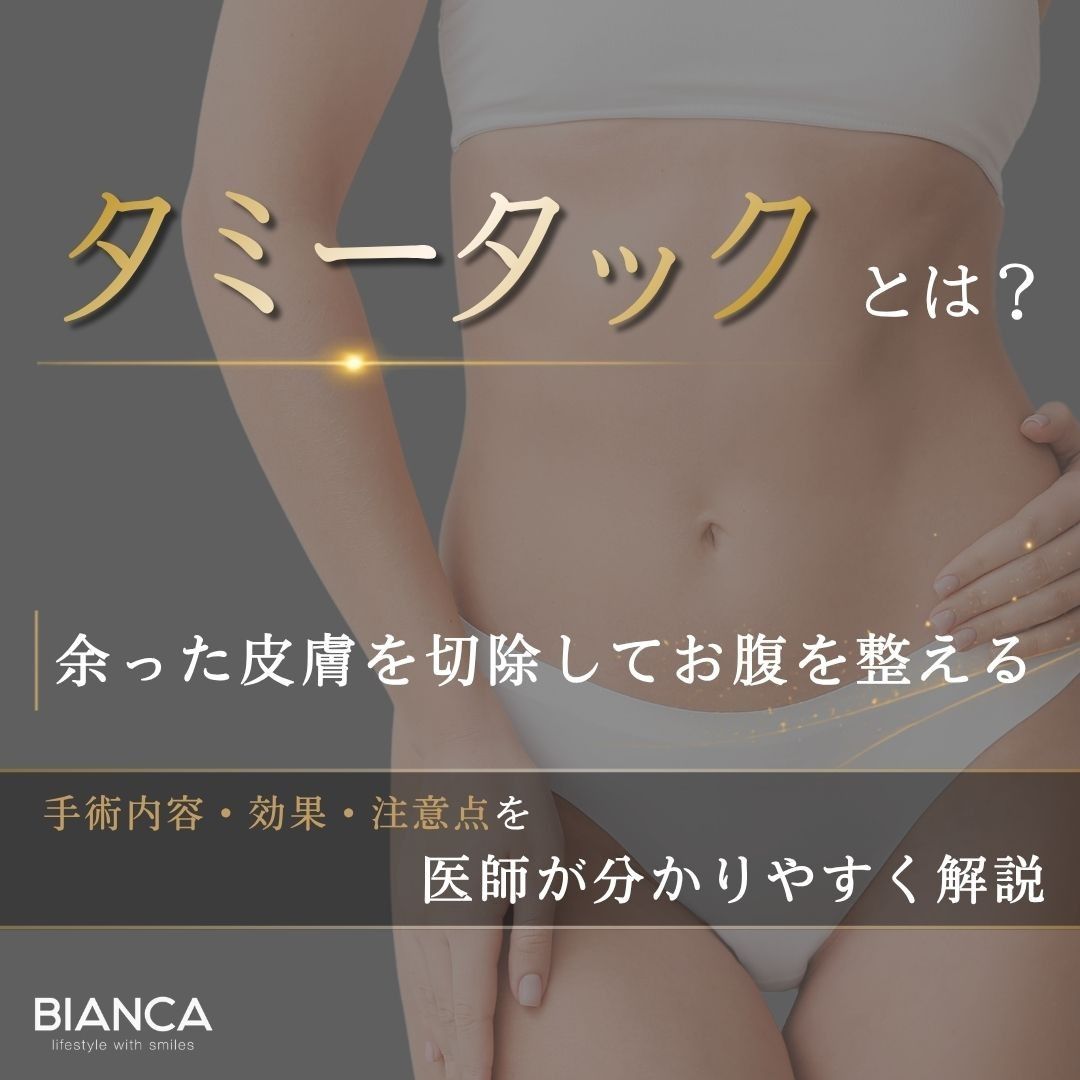
People sometimes ask me, “Is a tummy tuck a procedure to remove fat?”
In fact, this surgery involves not only the removal of excess skin and fat but also addresses the laxity of the abdominal wall and the position of the navel.
So, how do you tone your abdomen?
Based on the procedures performed at BIANCA CLINIC, we’ll explain what the TammyTuck involves and the changes you can expect.
What kind of procedure is the Tami-Tuck?
This is a cosmetic surgical procedure in which an incision is made in the lower abdomen to remove excess skin and subcutaneous fat, and adjustments are made to the rectus sheath and navel as needed based on the condition of the abdomen.

Excess skin is removed, and the remaining skin is pulled downward.
In a Tami-Tuck procedure, an incision is first made horizontally across the lower abdomen.
The length of the incision and the extent of skin removal depend on the amount of excess skin.
The basic principle of the surgery is to lift the abdominal skin, remove excess skin and subcutaneous fat, and then pull the remaining skin downward and suture it in place.
At Bianca Clinic, we design the procedure so that the incision line is positioned to be easily concealed by underwear.
The key factor here is the position of the belly button.
When a large area of skin is moved downward, simply suturing it in place may result in an unnatural appearance of the navel.
For this reason, the navel may also be reconstructed in a natural position.
"Navel reshaping," which corrects the position and shape of the navel, is also a procedure that affects the overall appearance of the abdomen.
Check for looseness on the inside of the abdomen as well
The Tami-Tuck doesn't just target the skin and fat.
In the center of the abdomen is the rectus sheath, which encloses the left and right rectus abdominis muscles.
If there is laxity in this area, a procedure called “rectus sheath plication”—in which the rectus sheath is pulled toward the center and sutured together—may be performed in conjunction with the other treatment.
This procedure does not involve cutting out the muscle itself, but rather suturing the tissue surrounding the muscle.
By doing so, you can improve the internal support of your abdomen and achieve a sleeker abdominal silhouette.
How much skin should be excised? Should the rectus sheath be sutured? How should the navel be reconstructed?
Since these factors are tailored to the condition of the abdomen, the specifics of the surgery vary even for the same “Tami-Tuck” procedure.
What kind of results can I expect from TamiTack?
When the skin stretches due to pregnancy, childbirth, or significant weight changes, excess skin may remain in the lower abdomen even after you lose weight.
In a Tami-Tuck procedure, the excess skin and the underlying subcutaneous fat are removed, and the remaining skin is pulled downward and sutured.
The goal is to smooth out the folds of skin and create a sleek abdominal contour.
When this procedure is combined with a rectus sheath plication, the laxity in the central abdomen is also treated.
By suturing the rectus abdominis muscles that have stretched during pregnancy, we strengthen support from the inside and create a sleeker abdominal contour.
The surface of the skin, the inside of the abdomen, and the navel are separate elements, but in the final result, they appear as a single abdomen.
However, there are various factors that can cause a bloated stomach.
The Tami-Tuck is not a surgery designed to remove visceral fat from the abdominal cavity, nor is it intended to promote weight loss itself.
We'll need to determine during the examination which areas are likely to show changes.
What are the pros and cons of Tami Tack?
While this procedure removes excess skin and helps sculpt the waistline, it carries risks such as scarring, requires postoperative compression, and places a physical strain on the body due to the surgery itself.
Benefits | Removes excess skin and contours the abdominal area
- It can transform a saggy, blurred midsection into a sleek, defined silhouette.
- It can remove excess skin left over after weight loss or liposuction.
The advantage of the Tami-Tuck is that it directly addresses the excess skin that remains even after fat has been removed.
If the skin in the lower abdomen appears to fold over on itself, removing that area can help improve the contour of the abdomen.
The extent to which the skin can be removed depends on how much excess skin there is, so we will determine this during your consultation.
Disadvantages | Scars may remain, and postoperative immobilization and a recovery period are required
- A scar from the incision remains on my lower abdomen
- After surgery, compression bandaging or wearing a corset will be necessary.
- There is some downtime, such as swelling, pain, and bruising
At Bianca Clinic, we ask patients to wear compression bandages for 72 hours after surgery and to wear a corset for a certain period of time.
While we choose incision sites that are easily concealed by underwear, this does not mean the scars will disappear.
In addition, there are risks associated with surgery, such as bleeding, infection, and delayed wound healing.
Frequently Asked Questions About Tami Tack
We've compiled a list of common questions about the surgery, such as the extent of the resection and what happens to the navel.
Q. Will the skin over my entire abdomen be removed?
A. The extent of the resection depends on the condition of the abdomen.
In some cases, the excision is focused on the lower abdomen, while in others, a larger area of skin is repositioned and combined with a navel reconstruction.
We will confirm this during the examination, including the length of the incision.
Q. Does a navel reshaping procedure involve removing the navel?
A. While not everyone who undergoes a Tummy Tuck has their navel reshaped, even when a large area of abdominal skin is pulled downward, the navel itself remains attached to its original location.
This procedure involves exposing the original navel so that it is not hidden by the lowered skin, and then suturing the area around it.
Q. What is rectus sheath contracture?
A. This procedure involves bringing the tissue surrounding the left and right rectus abdominis muscles toward the center of the abdomen and suturing them together.
In addition to removing skin and fat, this procedure addresses the laxity inside the abdomen.
We'll decide whether to proceed based on the condition of the abdomen.
Q. Can Tamitack help reduce visceral fat?
A. The Tami-Tuck procedure removes excess skin and the underlying subcutaneous fat.
This is not a surgery to remove visceral fat from the abdominal cavity. We will determine the cause of the abdominal bulge during the examination.
Q. Can I have surgery even if I have a C-section scar?
A. If you have a cesarean section scar, we will examine its location and condition to determine whether we can make an incision along the scar.
However, it is not always possible to make the incision in the exact same location. The surgical approach is determined based on the overall condition of the abdomen.
Q. Will the skin over my entire abdomen be removed?
A. The extent of the resection depends on the condition of the abdomen.
In some cases, the excision is focused on the lower abdomen, while in others, a larger area of skin is repositioned and combined with a navel reconstruction.
We will confirm this during the examination, including the length of the incision.
Q. Does a navel reshaping procedure involve removing the navel?
A. While not everyone who undergoes a Tummy Tuck has their navel reshaped, even when a large area of abdominal skin is pulled downward, the navel itself remains attached to its original location.
This procedure involves exposing the original navel so that it is not hidden by the lowered skin, and then suturing the area around it.
Q. What is rectus sheath contracture?
A. This procedure involves bringing the tissue surrounding the left and right rectus abdominis muscles toward the center of the abdomen and suturing them together.
In addition to removing skin and fat, this procedure addresses laxity within the abdominal wall. The decision to perform this procedure is made after examining the condition of the abdomen.
Q. Can Tamitack help reduce visceral fat?
A. The Tami-Tuck procedure removes excess skin and the underlying subcutaneous fat.
This is not a surgery to remove visceral fat from the abdominal cavity. We will determine the cause of the abdominal bulge during the examination.
Q. Can I have surgery even if I have a C-section scar?
A. If you have a cesarean section scar, we will examine its location and condition to determine whether we can make an incision along the scar.
However, it is not always possible to make the incision in the exact same location. The surgical approach is determined based on the overall condition of the abdomen.
Please confirm the details of the Tamitack procedure during your consultation.
A tummy tuck is a surgical procedure that removes sagging abdominal skin and excess subcutaneous fat, then pulls the remaining skin tight and sutures it in place.
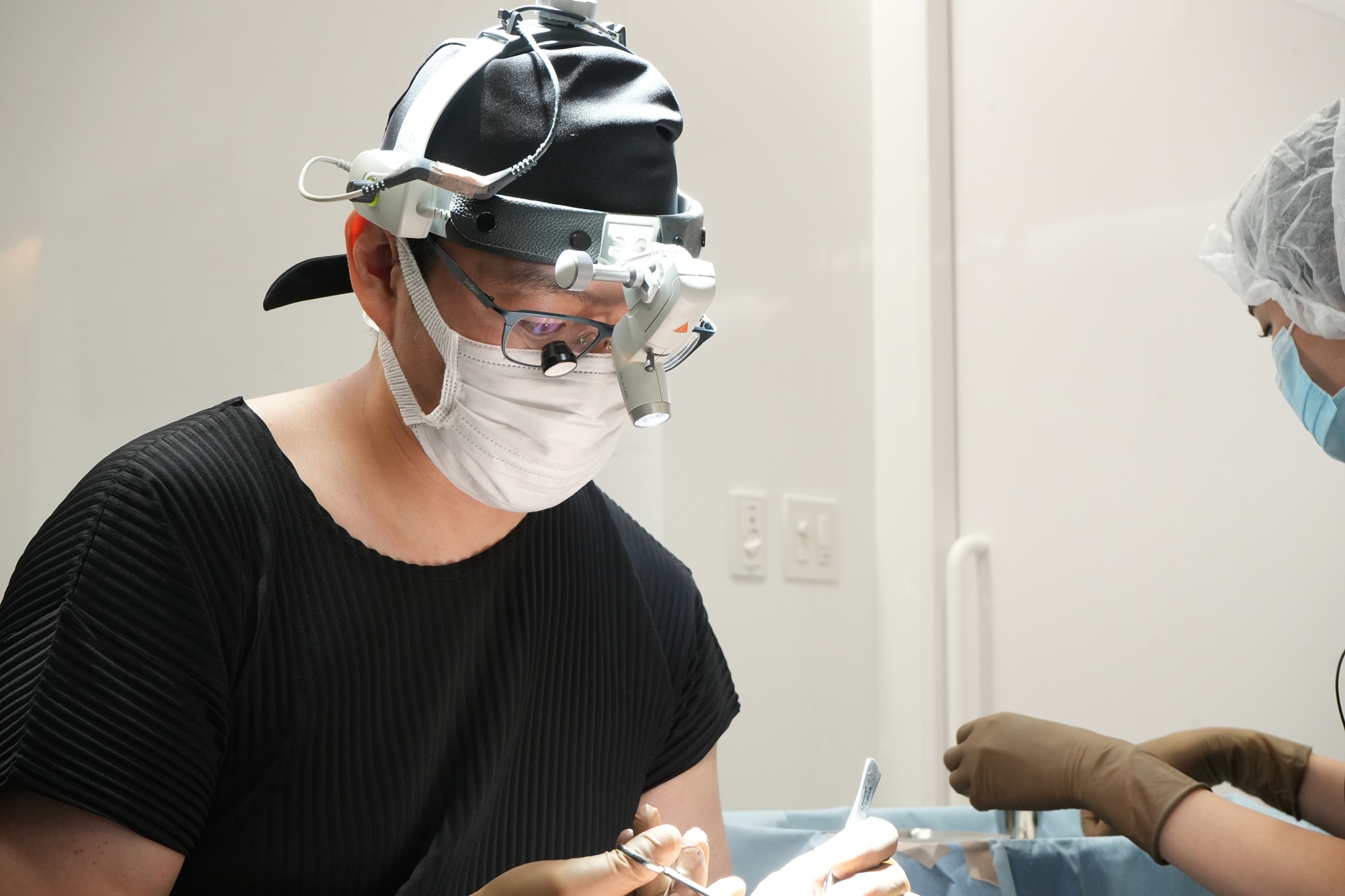
Depending on the condition of the abdomen, we may also perform rectus sheath plication and umbilical reconstruction.
Therefore, in addition to the extent of skin excision, it is important to confirm what procedures will be performed on the rectus sheath and the navel.
At BIANCA CLINIC, we assess the amount of excess skin, the laxity in the central abdomen, the position of the navel, and the locations where scars may remain to determine the details of the surgery.
If you're concerned about sagging skin around your abdomen or the condition of your skin, please feel free to contact us.
▶Bianca Clinic's Tammy Tuck Procedure Page
▶Bianca Clinic Counseling Reservation Form