auricular cartilage graft
Conchal Cartilage Graft【No Artificial Materials】Naturally creates a tall, sharp nose
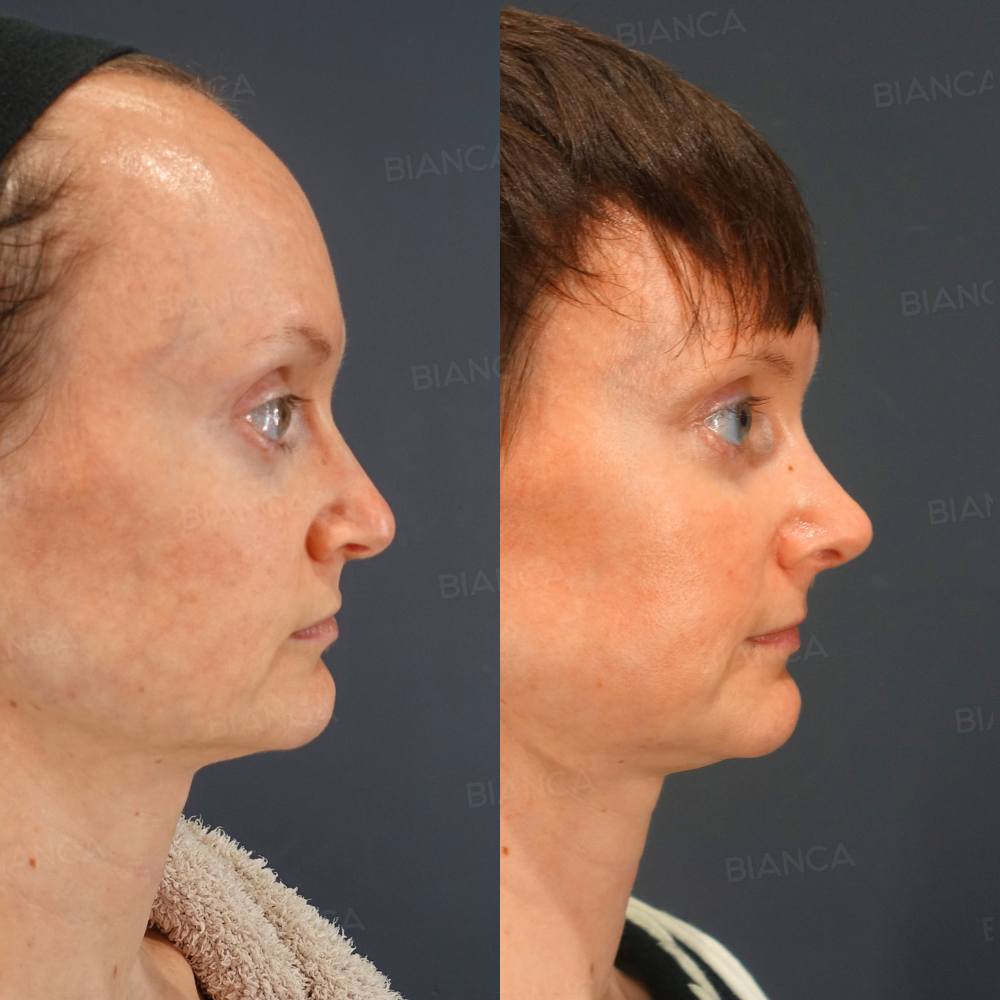
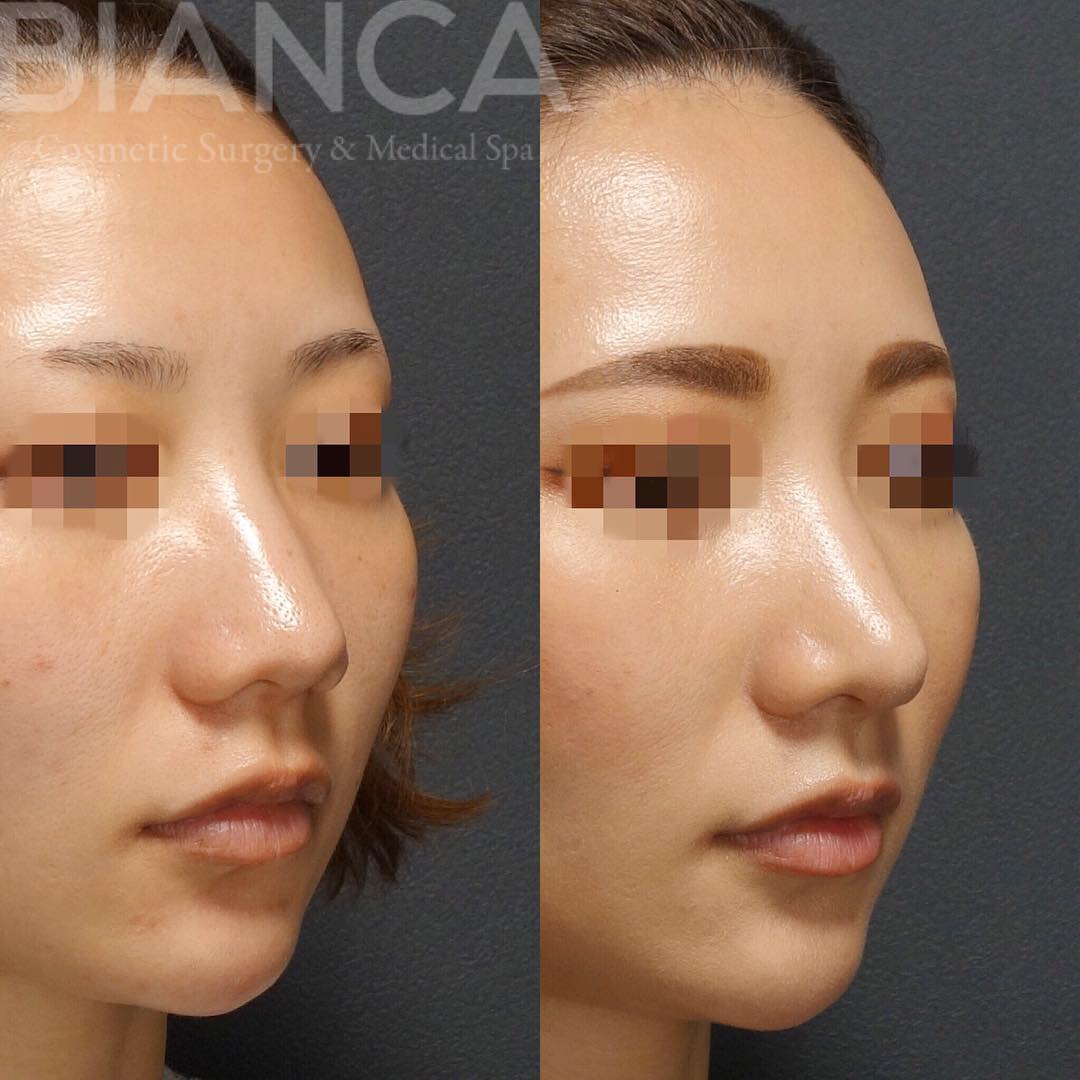
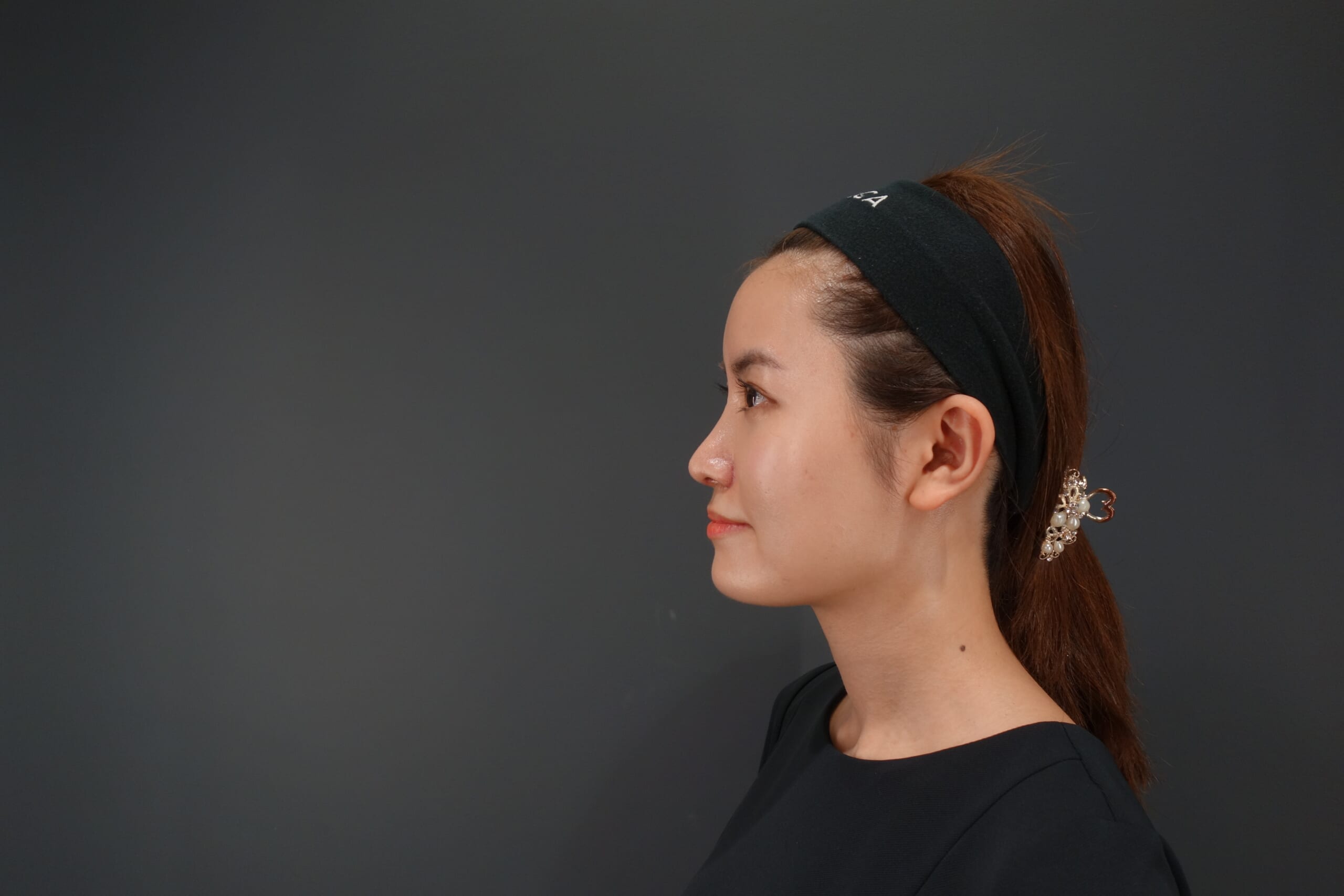
- Transplanting ear cartilage to the tip of the nose to create a high, sharp nose
- The placement and amount of cartilage can be finely adjusted, resulting in a natural-looking finish.
- Since the incision is made in inconspicuous areas, the resulting scar is less noticeable after the procedure.
Using a 3D simulation system
Achieve a high-satisfaction finish
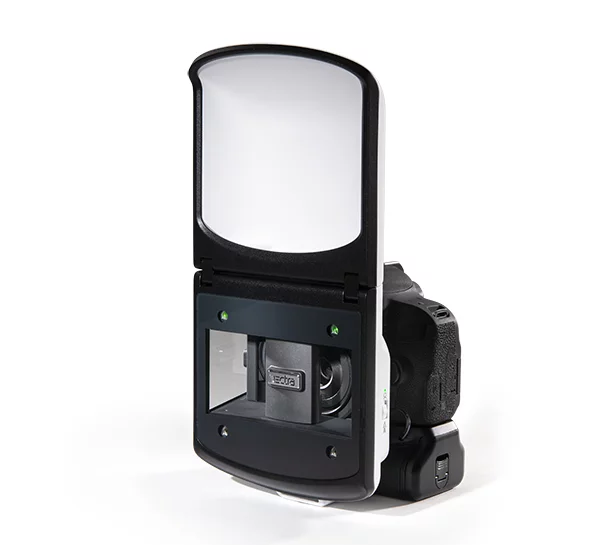
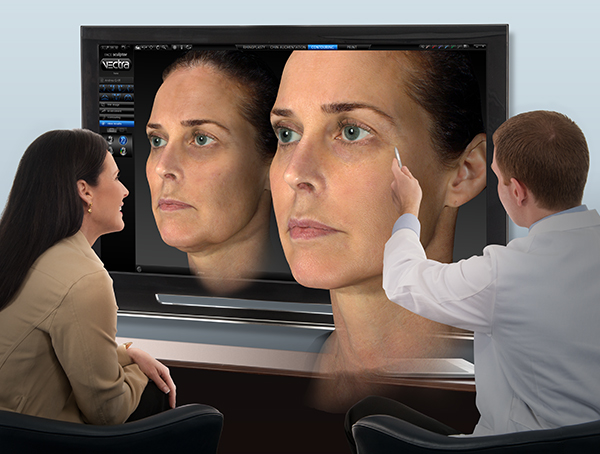
During ear cartilage graft consultations, we use the 3D simulation system "VECTRA" to simulate the post-procedure outcome. "VECTRA" is a system that captures the patient's face with a specialized camera, converts it into a 3D model, and allows it to be manipulated on a computer screen. Millimeter-level adjustments can be made while comparing pre- and post-procedure images, and the results can be viewed from every angle—not just the front, but also the side, diagonally, and more.
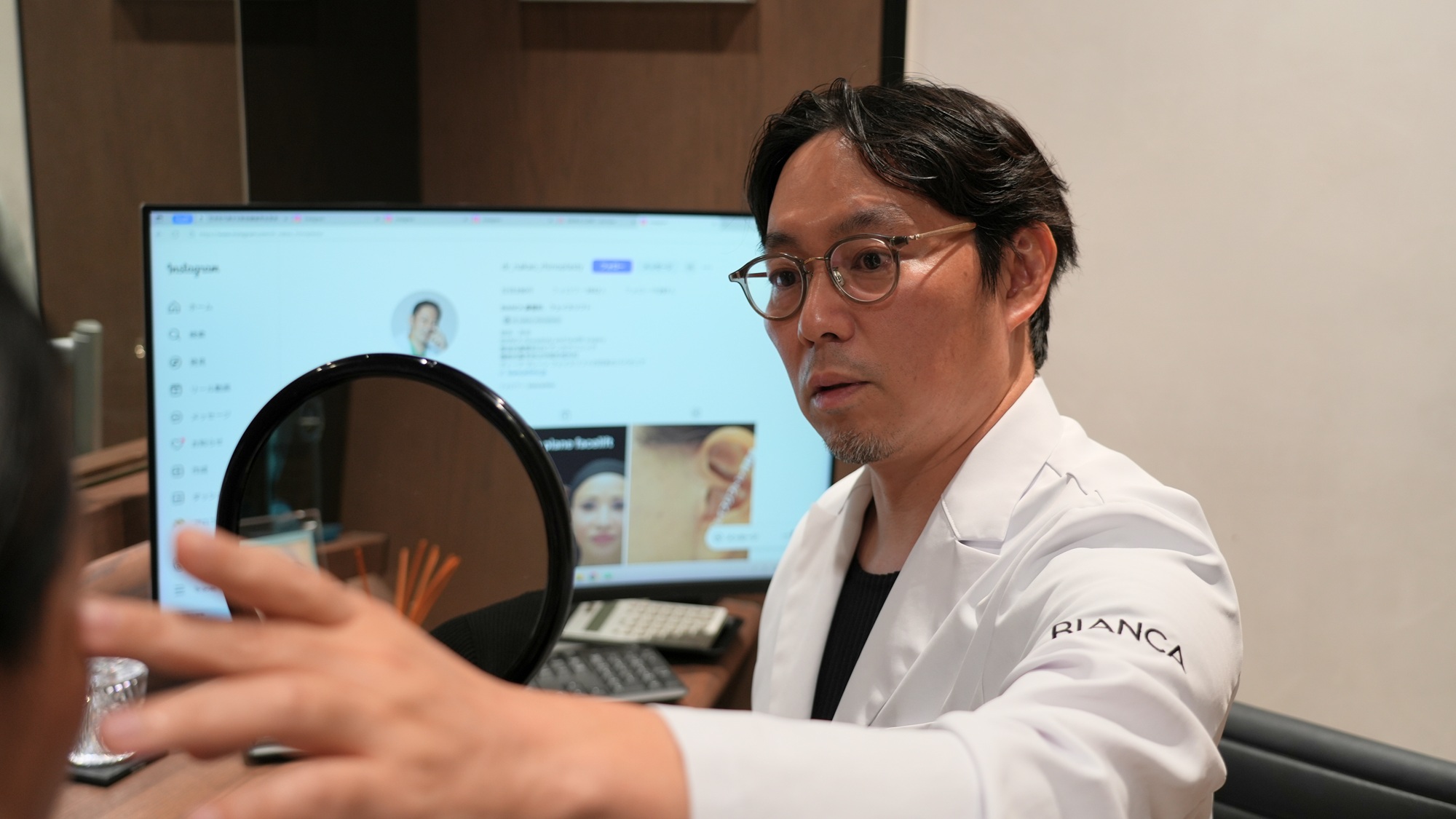
Patients often find it difficult to convey their ideal image solely through words. At Bianca Clinic, we use Vector to share patients' envisioned ideals with our doctors before treatment. This allows us to determine a treatment plan tailored to each patient's requests, ensuring highly satisfying results.
Schedule of Charges
PRICE LIST| Treatment Details | Standard rate |
|---|---|
| Nasal Bridge Lowering/Ear Cartilage Grafting | ¥330,000 |
Downtime
DOWNTIMERecommended for people like this
RECOMMENDED FOR:Features
CHARACTERISTICSEar Cartilage Grafting
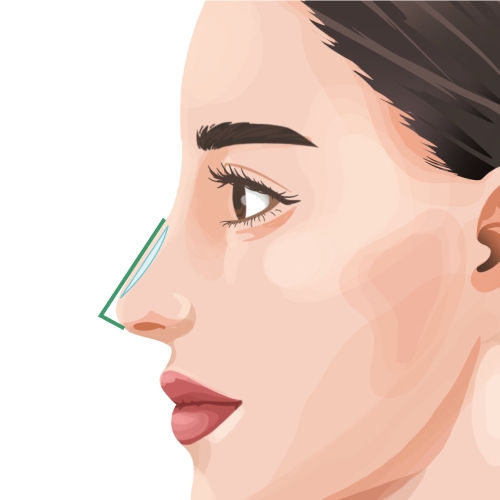
Ear cartilage grafting is a surgical procedure that involves transplanting cartilage from the ear to the tip of the nose, thereby elevating and sharpening the nasal tip. The precise placement and amount of cartilage can be finely adjusted, allowing for the creation of a natural-looking nose. The surgery is typically performed using an incision inside the nostrils (closed approach), though an incision between the nostrils (open approach) may be used depending on the individual case. When harvesting ear cartilage, the incision is made in a less visible area, such as behind the ear, so the scar is not very noticeable after surgery. Another advantage is that since the patient's own tissue (ear cartilage) is transplanted to the nose, there is less concern about foreign body reactions or allergies.
The tip can be lifted forward, a cute upturned nose can be created, or the nasal bridge can be extended downward—a wide range of designs is possible. Ear cartilage is harvested with extreme care to prevent ear deformation, so changes to the ears are unlikely after surgery. The result looks and feels natural, minimizing the risk of detection when touched.
The Difference Between Auricular Cartilage Grafting and Prosthetics
Similar to auricular cartilage grafting, another procedure for reshaping the nose involves the use of a prosthesis. A prosthesis refers to a medical-grade artificial cartilage made of silicone. While it may be strongly associated with cosmetic medical treatments, it is also a material used in artificial heart valves and artificial joints. In rhinoplasty using a prosthesis, an incision is made in an inconspicuous area of the nose, similar to auricular cartilage grafting, and the prosthesis is inserted into the nasal bridge.
The difference between auricular cartilage grafting and prostheses lies in whether the material inserted into the nose is the patient's own tissue or an artificial substance. Treatment methods also vary depending on the patient's ideal nose shape—whether they desire a higher, sharper tip or a more defined, upright profile—and may involve a combined approach. At Bianca Clinic, we confirm your requests and condition through consultation and examination. We then propose the most suitable treatment from various options, including auricular cartilage grafting and silicone prostheses (rhinoplasty).
A natural finish that lasts semi-permanently
Transplanted auricular cartilage is not absorbed by the body, making auricular cartilage grafting a procedure whose effects tend to last semi-permanently once performed. On the other hand, hyaluronic acid injections, a popular procedure for enhancing the nasal bridge, typically last between 6 months and 2 years, depending on the formulation. While hyaluronic acid injections feel less invasive as they require no incisions, there is a significant difference in the longevity of their effects.
To maintain a natural-looking result with auricular cartilage grafting, it is crucial to properly adjust the amount and position of the grafted cartilage and ensure it is securely anchored to the nasal tip. Additionally, a cast is applied post-operatively to help the natural result stabilize. Over time, scars and swelling become less noticeable, and if dissolvable sutures are used, no suture removal is required.
At our clinic, our highly skilled physicians collaborate with patients to simulate the desired post-operative results and determine the treatment plan. If you have any concerns regarding treatment or aftercare, please consult with your physician.
Benefits
MERITThe scars are less noticeable, so it's harder to tell.
This procedure involves making incisions in inconspicuous areas such as inside the nostrils, the columella (the bridge between the nostrils), and behind the ears, minimizing concerns about visible scars after surgery.
Easily achieve your desired design
You can create a variety of designs, such as making the tip of the nose point forward, creating an adorable upturned nose, or extending the columella downward.
Using the patient's own tissue reduces the risk of postoperative complications.
Since we use cartilage harvested from your own ear rather than artificial materials, there is the advantage of a lower risk of allergic reactions or foreign body reactions.
Recommended Features
RECOMMENDED POINTSAdjust the tip design at the cartilage grafting site
With auricular cartilage grafting, adjusting the position where cartilage is transplanted can alter the design of the nasal tip. For those concerned about a rounded nose or wishing to improve a bulbous nose, cartilage is transplanted toward the front of the nasal tip. If visibility of the nostrils when facing forward is a concern, cartilage is transplanted at a downward angle relative to the nasal tip to make the nostrils less visible.
To achieve your ideal nose through ear cartilage grafting, it is crucial to align your vision with your surgeon beforehand and have the procedure performed by a highly skilled surgeon with an aesthetic eye. At our clinic, we use a 3D simulation system to determine precise designs preoperatively, and our experienced surgeons faithfully recreate these designs. Please share your ideal vision with us during your initial consultation.
Two surgical procedures that minimize visible scarring
Ear cartilage grafting is a procedure where postoperative scars are less noticeable, minimizing the concern that others will notice the treatment. There are two surgical techniques for ear cartilage grafting. The doctor will determine which technique is suitable after examining the patient's nasal condition.
【Open Act】
The open rhinoplasty technique involves making an incision in the columella (the bridge between the nostrils) to graft cartilage onto the nasal tip. Since the columella is a shadowed area that is not highly visible, the scar becomes virtually unnoticeable after surgery. The advantage of the open technique is that it allows direct visualization of the alar cartilage, soft tissue, and fat during surgery, enabling a more precise procedure. On the other hand, downtime tends to be longer compared to the closed technique.
【Closure Method】
The closed technique for auricular cartilage grafting involves making an incision inside the nostril to transplant cartilage to the tip of the nose. Since the incision site is not visible externally, the advantage is that postoperative scarring is less noticeable. However, the surgical field of view is narrower compared to the open technique.
Treatment time is approximately 40 minutes. After the procedure, the area will be immobilized with a cast.
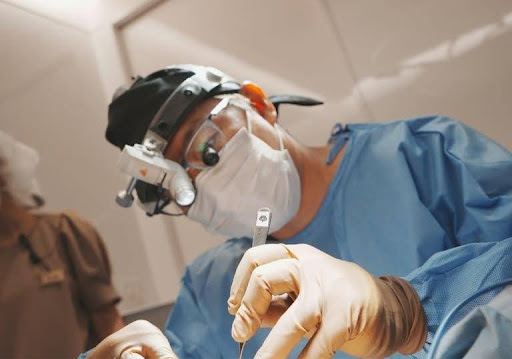
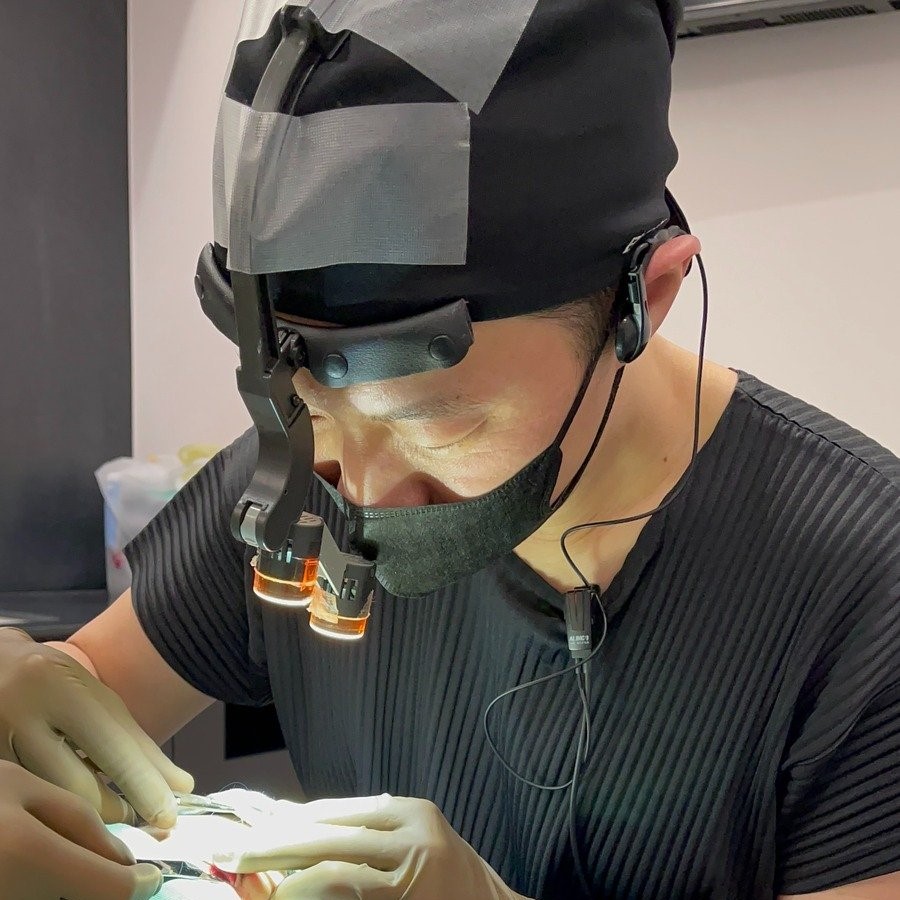
The ear cartilage transplant procedure at Bianca Clinic takes approximately 40 minutes. Anesthesia is used during surgery, so even those concerned about pain can undergo the procedure with peace of mind. During surgery, cartilage is harvested from behind the ear and positioned according to the design determined prior to surgery.
For 72 hours after surgery, the nose will be immobilized with a cast. If non-dissolving sutures are used, suture removal is required one week after surgery. Showers are permitted starting the day of surgery. Makeup application is permitted once the cast is removed. If suture removal is required, makeup application is permitted starting the day after suture removal. Significant swelling typically subsides within about one week, and bruising gradually fades within about ten days. *Individual results may vary.
Treatment area
TREATMENT AREAright under one's nose
Treatment Process
CONTENT OF TREATMENTPhysician's examination and counseling
We listen to your concerns and discuss your desired nose shape. Online appointments are available 24/7, and cancellations or rescheduling can be done online. For first-time patients, completing the medical questionnaire online beforehand ensures a smoother process. Doctor schedules and availability can be checked online.
Design
Based on the patient's preferences, we visualize the post-operative image using the 3D simulation system "VECTRA." We determine the design by comparing the current facial photo with the post-operative image.
treatment
After anesthesia, cartilage is harvested from the ear and transplanted to the nose. The surgery takes about 40 minutes.
Removal of casts and sutures
After surgery, the nose will be immobilized with a cast for 72 hours. If non-dissolving sutures are used, they will be removed one week later.
Lifestyle Beautyis
proposed.
Our goal is to move you beyond satisfaction.
Responding to the desire for greater beauty and health,
What can we do for the well-being of our patients?
Providing total beauty to make your life shine,
That is our policy.
Go to BIANCA and you'll find a smile.
That's the kind of place we're aiming for.
Procedure Details: Auricular Cartilage Grafting
Estimated treatment period and number of sessions: 1 session
Side Effects and Risks: Swelling, bruising, infection, etc.
Treatment Using Unapproved Medical Devices, Unapproved Pharmaceuticals, and Other Unapproved Products
・Treatment may involve drugs not approved in Japan or uses not approved by the pharmaceutical regulatory authorities. ・The drugs and medical devices used in treatment are introduced based on the physician's judgment.
・Except for products that have obtained pharmaceutical approval, there are no other domestically approved pharmaceuticals or medical devices with the same ingredients or performance.
・Information regarding safety and other matters in other countries
-Serious risks or side effects may not yet be fully understood.
・In the unlikely event of serious side effects, this product is not covered by the national pharmaceutical adverse reaction victim relief system.
Treatment Details: Hyaluronic Acid Injection
Estimated treatment period and number of sessions: Approximately 6 months to 2 years
※Results may vary depending on the formulation used and the area of application.
Side Effects and Risks: Infections, vascular embolism, unevenness, etc.
Regarding the formulation used:
・This treatment involves the use of drugs not approved in Japan or treatments that differ from their approved indications.
・Medicines and medical devices used for treatment are imported through personal import procedures under the judgment of our clinic's physicians. For information on medicines and other items requiring caution in personal import, please refer to the following.
https://www.yakubutsu.mhlw.go.jp/individualimport/purchase/index.html
・Except for products that have obtained pharmaceutical approval, there are no other domestically approved pharmaceuticals or medical devices with the same ingredients or performance.
・Information regarding safety and other matters in other countries
Juvederm is a product approved for manufacture and sale by the Ministry of Health, Labour and Welfare and is also recognized by the U.S. FDA.
Restylane is a product approved by the Ministry of Health, Labour and Welfare and was the first non-animal-derived stabilized hyaluronic acid filler to receive approval from the U.S. FDA.
The German Merz-manufactured Veloterro series has received approval from the U.S. FDA.
・In the unlikely event of serious side effects, this product is not covered by the national pharmaceutical adverse reaction victim relief system.
Procedure Details: Silicone Implant (Rhinoplasty)
Estimated treatment period and number of sessions: Typically 1 session
Side Effects and Risks: Swelling, bruising, infection, etc.
Treatment Using Unapproved Medical Devices, Unapproved Pharmaceuticals, and Other Unapproved Products
・May include unapproved drugs in Japan or treatments for purposes other than those approved by the pharmaceutical regulatory authorities.
・Medicines and medical devices used for treatment are introduced under the judgment of physicians.
・Except for products that have obtained pharmaceutical approval, there are no other domestically approved pharmaceuticals or medical devices with the same ingredients or performance.
・Information regarding safety and other matters in other countries
-Serious risks or side effects may not yet be fully understood.
・In the unlikely event of serious side effects, this product is not covered by the national pharmaceutical adverse reaction victim relief system.
Procedure Details: Nasal Tip Reshaping
Estimated treatment period and number of sessions: Typically 1 session
Side Effects and Risks: Swelling, bruising, infection, etc.
Treatment Using Unapproved Medical Devices, Unapproved Pharmaceuticals, and Other Unapproved Products
・May include unapproved drugs in Japan or treatments for purposes other than those approved by the pharmaceutical regulatory authorities.
There is.
・Medicines and medical devices used for treatment are introduced under the judgment of physicians.
・Except for products that have obtained pharmaceutical approval, there are no other domestically approved pharmaceuticals or medical devices with the same ingredients or performance.
・Information regarding safety and other matters in other countries
-Serious risks or side effects may not yet be fully understood.
・In the unlikely event of serious side effects, this product is not covered by the national pharmaceutical adverse reaction victim relief system.
Frequently Asked Questions About Ear Cartilage Transplantation
Q&AWill the ear deform or leave a scar after cartilage is removed?
For auricular cartilage grafting, the cartilage harvested comes from the flat portion of the cartilage behind the ear. Since the cartilage surrounding the ear remains unaffected, the risk of ear deformation is low. The incision for auricular cartilage grafting is made in a discreet area behind the ear, and the resulting scar typically becomes less noticeable over time.
Can other procedures be performed at the same time as auricular cartilage grafting?
Simultaneously with auricular cartilage grafting, the nasal alar cartilage can be reinforced using a rod-shaped cartilage formed by joining auricular cartilage (the strut method), or combined with the insertion of a nasal prosthesis. While nasal relapse is rare even with auricular cartilage grafting alone, depending on the patient's original nasal condition or if they wish to combine procedures, we may perform combined treatments with other procedures as necessary.
Does ear cartilage grafting reverse over time?
Ear cartilage grafting is a procedure whose effects are long-lasting, persisting for 10 or 20 years without regression once performed. In some cases, the thin skin of the nasal tip may stretch, causing the grafted cartilage's outline to become visible or appear raised. This can be addressed by partially trimming the cartilage or removing it entirely.
Are there any complications such as the transplanted ear cartilage shifting or necrosis of the nasal tip?
To prevent the transplanted bone from shifting, it will be immobilized with a cast after surgery. If the cartilage still shifts, it can be corrected with another cartilage transplant procedure. While the risk of necrosis with auricular cartilage grafting is low, compression fixation is applied postoperatively to prevent necrosis caused by hematoma. If redness or pain appears on the tip of the nose after auricular cartilage grafting, it may indicate an infection; please contact our clinic.
Are there any precautions to take after an auricular cartilage graft procedure?
After auricular cartilage grafting, it is crucial to secure the bone in place, so please ensure it is firmly immobilized with a cast. Additionally, while the duration varies depending on the amount of cartilage harvested, significant harvesting may require compression immobilization for about a week. During this period, it is advisable to avoid using earphones. Pain and swelling will subside over time. However, if you experience redness or severe pain at the tip of your nose, there is a possibility of infection, so please contact our clinic. If your ear hurts after auricular cartilage grafting, taking pain medication or applying cold compresses can help alleviate symptoms. However, please consult us if the pain does not improve or becomes more severe.
Is maintenance required after an auricular cartilage transplant procedure?
No special maintenance is required after auricular cartilage grafting. If you notice the grafted cartilage becoming visible or protruding, adjustments can be made. Please consult us.
What is the difference between auricular cartilage grafting and nasal tip reshaping?
Nasal tip refinement refers to procedures that sharpen the shape of the nasal tip, so auricular cartilage grafting can be considered one such technique. In addition to auricular cartilage grafting, our clinic's nasal tip refinement procedures also include suturing the cartilage at the tip (alar cartilage) to reduce its size and eliminate bulbous noses.
What are the key points to avoid failure in auricular cartilage grafting?
For auricular cartilage grafting, key points include aligning preoperative expectations, designing a personalized plan, and having the procedure performed by a surgeon experienced in auricular cartilage grafting. Our website and Instagram showcase auricular cartilage grafting cases, so please refer to them for guidance.