column (e.g. in newspaper)
2026.09.27
Can Eyelid Ptosis Be Treated with Eye Drops? — How to Tell Who Will Respond and Who Won’t, and Consultations Available at Cosmetic Surgery Clinics in Tokyo

As a board-certified plastic surgeon by the Japanese Society of Plastic and Reconstructive Surgery, he has been engaged in a wide variety of periocular surgeries at university hospitals. Based on his solid anatomical knowledge and suturing skills, he is in charge of a wide range of surgeries around the eyes including sub-brow incisions and blepharoplasty incisions, as well as hyaluronic acid injections, Botox injections, and thread lifts. We also accept insurance coverage for droopy eyelids and inner eyelashes. We value natural and elegant results, and are known for our attentive counseling that attends to the patient's feelings.
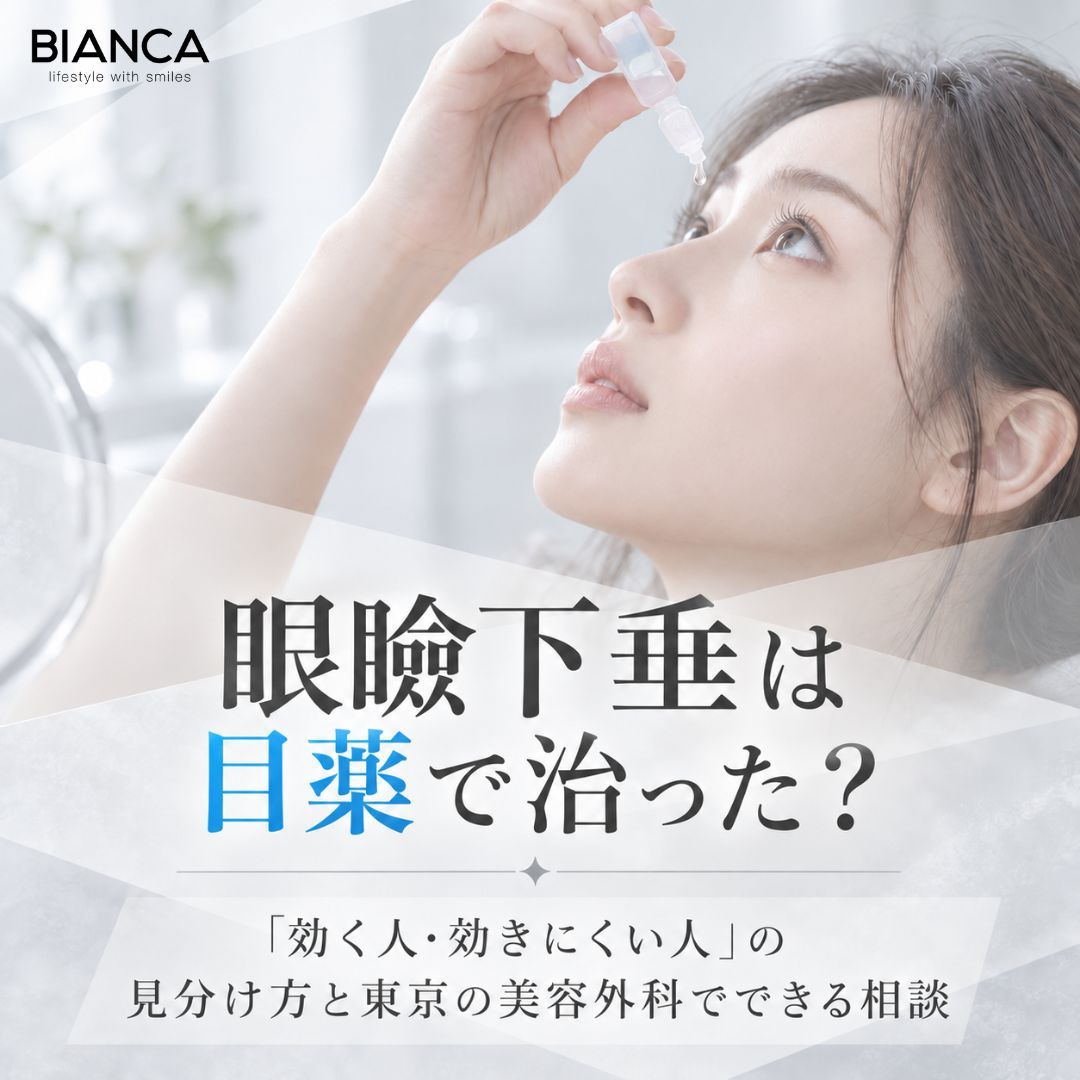
Your eyelids feel heavy, and your field of vision feels narrow. You can’t open your eyes unless you lift your eyebrows in front of a mirror—many people who struggle with this condition, known as “ptosis,” feel a mix of hope and anxiety when they read stories of others who claim to have cured it with eye drops.
First, I want to point out that while there are certainly people who experience improvement with eye drops, the reality is that, depending on the cause and severity of the condition, it may be difficult to achieve significant results.
That’s why, if you have frequent opportunities to see a doctor in Tokyo, the quickest way forward is to have an ophthalmologist or cosmetic surgeon evaluate your current condition to determine which type it falls under.
In this article, we’ll carefully outline what you can and cannot expect from eye drops, and provide a head start by covering key points to keep in mind when consulting with a cosmetic surgery clinic in Tokyo.
The availability of non-surgical treatment options for ptosis represents a major advance.
A Simple Guide to Understanding Ptosis: The Relationship Between Causes and “Responsiveness to Treatment”
Ptosis is a condition in which the mechanism responsible for lifting the upper eyelid—the coordinated action of muscles, tendons, and nerves—has weakened.
From a medical standpoint, these conditions are classified into several types, including those caused by the loosening of the tendon sheath due to aging or contact lens use, congenital types, and those related to nerve function.
It might sound like a complicated term, but basically, the effectiveness of eye drops depends on “which part is weak.”
Eye drops containing ingredients that support the function of the sympathetic nervous system may temporarily contract the thin muscle in the eyelid (the Müller muscle), lifting it a few millimeters.
Conversely, in cases where the aponeurosis is significantly stretched or the muscles themselves are weak, eye drops alone may not be sufficient to bring about significant improvement.
When do you feel like “the eye drops cured it”?
- When you want a little help opening your eyes only during specific times, such as in the morning or before starting work
- Mild to moderate cases where the heaviness of the eyelids tends to fluctuate throughout the day
- When tension in the eyebrows (compensatory tension) is reduced, tension in the temples and shoulders is relieved
- When measures to address dry eyes and allergies are taken simultaneously, and overall “visual clarity” improves
On the other hand, when it comes to needs such as “I want to open my eyes fully” or “I want to consistently correct asymmetry between my eyes,” eye drops alone may not be enough.
Since results vary from person to person, getting an initial evaluation at a cosmetic surgery clinic or an ophthalmic plastic surgery clinic in Tokyo will help you stay on track.
The Benefits, Limitations, and Risks of Eye Drops
Benefits
-
Try it without cutting: There is virtually no downtime, making it easy to incorporate into your daily routine.
-
You can choose the time: It's easy to adapt to different situations (such as meetings or photo shoots).
-
Reversible: Since stopping the treatment will reverse the effects, this approach is well-suited for those who want to see how their body reacts first.
Limit
-
The effect is temporary: The effects typically last from a few hours to about half a day, though this varies from person to person.
-
Insufficient for severe or structural ptosis: In cases where the fascia is very loose, for example, the changes may be minimal.
-
It is difficult to make precise adjustments for left-right differences.: The reaction may vary from day to day.
Potential Risks and Precautions
-
Stinging, redness, dryness: This may occur with any type of eye drops.
-
Tolerance (the sensation that the drug is becoming less effective): Some people find it bothersome when used frequently.
-
Interactions with Underlying Medical Conditions and Oral Medications: If you have high blood pressure, cardiovascular disease, or other medical conditions, please consult your doctor beforehand.
There is significant individual variation, and how you experience these effects depends on factors such as frequency of use and your physical constitution. For peace of mind, it’s a good idea to consult with a cosmetic surgery clinic or ophthalmologist in Tokyo, discussing your current health and medical history.
Points of Comparison: Eye Drops, Daily Care, or Cosmetic Surgery—Which Is Right for You?
Rather than comparing which is better or worse, it’s more realistic to consider “daily routines, the changes you’re looking for, and the effort required for maintenance.”
People for whom eye drops are easy to use
-
I have mild symptoms and just want some help keeping my eyes open during “key” times, such as at work or during business dinners.
-
First, I want to see how my body reacts without getting surgery; it’s hard to take time off with my commute and raising kids in Tokyo.
-
I'm considering treatment in the future, but for now I want to reduce the stress caused by my vision.
People Who Respond Well to Daily Living Support
-
This is mainly caused by long hours of desk work and wearing contact lenses, and I’ve found that taking breaks and taking measures to prevent dry eyes really helps.
-
I tend to tense my eyebrows a lot, but adjusting my posture, visual environment, and lighting helps reduce eye strain.
People Who Are Good Candidates for Cosmetic Surgery
-
Her eyelids are clearly not opening wide enough, and she is constantly tensing her forehead.
-
There is a clear difference between the left and right sides, and I would like to aim for steady improvement.
-
There is little change in the eye drops, or using them daily is too much of a burden
At cosmetic surgery clinics, you may be offered procedures that involve incisions as well as those that do not.
However, the specific surgical technique will be determined during the actual consultation, taking into account factors such as eyelid thickness, the firmness of the tarsal plate, and compensatory brow movement.
Results, downtime, duration, and risks vary from person to person.
If You're Looking for a Consultation in Tokyo: How to Choose a Cosmetic Surgery Clinic and What to Do Before Your Visit
With so many options, Tokyo is a place where it's easy to get overwhelmed trying to decide where to go.
When looking for a cosmetic surgery clinic, it’s reassuring to choose one that has extensive experience treating ptosis and other eye-area conditions and that places importance on an ophthalmological perspective.
To improve the quality of your consultation, it will help convey your concerns more clearly if you make a note of the following points before your appointment.
-
Times of the day when vision becomes blurry, and how fatigue shows up in the eyebrows and forehead
-
History of contact lens use, and whether you have allergies or dry eyes
-
Reactions to eye drops (if used) and their duration
-
Photos and videos: If possible, please provide shots taken from the front, looking slightly upward, and showing a relaxed expression (not for "Before & After" purposes, but as a reference for the consultation).
At cosmetic surgery clinics in Tokyo, the burden of making frequent visits and the quality of aftercare are also important factors.
Please also consider factors such as accessibility from your workplace or home, how easy it is to make an appointment, and how easy it is to get in touch with them when making your comparison.
How to Evaluate Claims That "Eye Drops Cured It"
Search results often feature phrases like “increased dramatically” or “got better right away.”
Since the way you look can vary depending on lighting, angles, and how your eyebrows are styled—even in photos alone—it’s best not to directly apply the “Before & After” impressions to yourself.
When reviewing information, the following perspectives can be helpful.
-
How severe was the sagging? (Is there a guideline indicating the severity, such as "mild" or "moderate"?)
-
Is there any mention of variations in duration or response?
-
Does it list side effects and criteria for discontinuation?
-
Does it include an explanation of other options (such as cosmetic surgery procedures and lifestyle care)?
While there is plenty of information available about cosmetic surgery in Tokyo, it’s important not to be swayed by exaggerated claims; choosing a clinic based on whether it “fits your lifestyle and priorities” will lead to greater satisfaction.
Estimated Costs and Downtime (May Vary by Individual)
Eye drops incur ongoing costs depending on the purchase cycle.
While downtime is generally minimal, the key issue is how to deal with the burden of long-term use and fluctuations in effectiveness.
While cosmetic surgery procedures can involve a relatively high initial cost, they often require minimal ongoing maintenance.
The balance between cost, time, and results varies from person to person. Since there is a wide range in how medical facilities in Tokyo provide estimates and explanations, we recommend consulting with several cosmetic surgery clinics to make a choice you feel comfortable with.
People who want to consider this carefully
-
Concerns about compatibility with eye drops, such as having a serious underlying medical condition or taking multiple oral medications
-
There is a tendency to place too much emphasis on how things look in photos.
-
I want to prioritize stability and reproducibility over short-term changes.
In such cases, the most sensible approach—not just at cosmetic surgery clinics in Tokyo, but anywhere—is to carefully coordinate a treatment plan through a system that allows for collaboration with ophthalmologists.
Frequently Asked Questions (FAQ) About Cosmetic Surgery Clinics in Tokyo
Q1. Can eye drops “completely cure” an eye condition?
It’s realistic to think of eye drops as a temporary solution. While some people experience significant improvement, responses vary depending on the severity and cause.
Q2. How long does it last?
It usually takes anywhere from a few hours to half a day, though this varies from person to person. It’s a good idea to try it out before an important event to get a feel for your own rhythm.
Q3. Can eye drops correct differences between the left and right eyes?
If the asymmetry is minor, it may improve on its own, but to achieve a consistent, even appearance, adjustments at a cosmetic surgery clinic may be necessary.
Q4. I'm worried about side effects.
Some people may experience stinging, redness, or a dry sensation. If you have a medical history or are taking any medications, please consult a medical facility in Tokyo in advance.
Q5. Should I go to a cosmetic surgery clinic or an ophthalmologist?
First and foremost, it’s important to assess the cause. It’s best to look for a cosmetic surgery clinic in Tokyo that specializes in oculoplastic surgery or an outpatient clinic that collaborates with an ophthalmologist.
Where to Seek Advice in Tokyo and Tips for Communication
There are plenty of options for cosmetic surgery clinics in Tokyo.
At your first visit, please explain as specifically as possible “why you’re concerned,” “when you experience difficulties,” and “what kind of improvement you’re hoping for.”
This also makes it easier for doctors to systematically suggest which option—eye drops, lifestyle management, or treatment—might be best suited for the patient.
There's no need to cram your schedule with appointments. Taking the time to compare your options is part of the process of making a decision you're comfortable with.
A Little Tip: How to Help Keep Your Eyes Open in Daily Life
-
Adjust the position of the screen so it’s slightly below eye level to reduce tension in your eyebrows
-
Review lighting and drying conditions, and take measures to prevent dry eyes at the same time
-
Make eye care part of your routine after bathing and before bed
These cumulative efforts enhance your overall sense of well-being, regardless of whether you use eye drops or undergo cosmetic surgery.
Even with your busy schedule in Tokyo, why not start with some simple tips that make it easy to stick with?
A Message from the Clinic
At our outpatient clinic, we begin by carefully asking about your current condition and daily routine, and then work with you to decide whether to “monitor the situation with eye drops” or “consider cosmetic surgery.”
We prioritize choices that aren’t too demanding and a pace that feels right for you. If you’re in Tokyo and would like to find a method that suits you, please feel free to contact us.
Summary
The experience of “eyelid drooping being cured by eye drops” certainly applies to some people.
However, the results will not be the same for everyone, and the best choice will vary depending on the cause and severity.
First, safely monitor your reaction to the eye drops; reduce the burden of daily care; and share even the slightest discomfort with your doctor—simply by carefully following these three steps, the way forward will become clear.
There are many cosmetic surgery clinics and related outpatient facilities to choose from in Tokyo, so there’s a good chance you’ll find a solution that fits your lifestyle.
There's no need to rush into making a reservation. If you'd like to find out if this is right for you, please feel free to contact us for a consultation.
▷ Eyelid Ptosis: Incision Method and MT Method Treatment Page