column (e.g. in newspaper)
2026.09.26
What's the Difference Between EasyGel (PRF) and PRP Injections? A Doctor Explains Their Effects and How to Choose
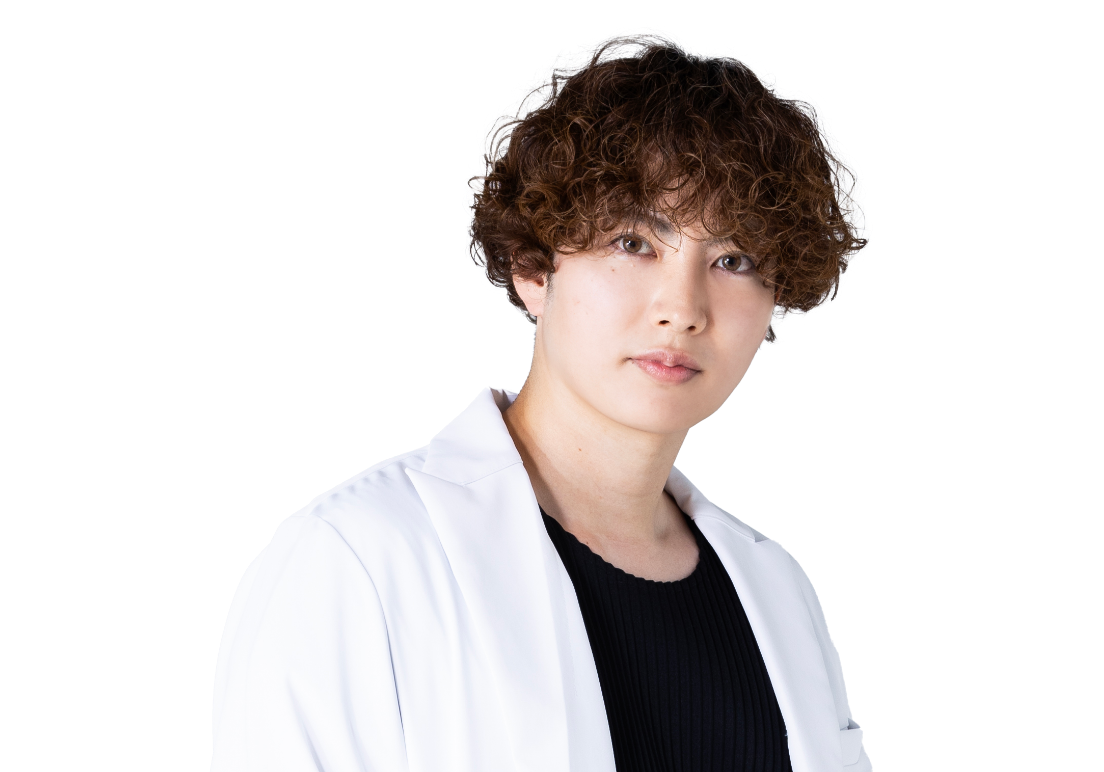
Driven by the belief of “bringing happiness to more people,” I pursued a career in aesthetic medicine after gaining experience in general internal medicine and emergency surgery, along with overseas training. As an internationally oriented doctor holding a UN English Proficiency Test Special Grade A, I treat a diverse range of patients. My goal is to become a true all-rounder, spanning cosmetic surgery, cosmetic medicine, and cosmetic dermatology. With a deep understanding of global beauty standards, I serve as a Key Opinion Leader (KOL) for TargetCool, NEAUVIA®, and CORETOX®. Known for my gentle manner, I provide accessible consultations in both Japanese and English. I pursue aesthetic medicine that transforms not just appearance, but also enhances overall happiness.
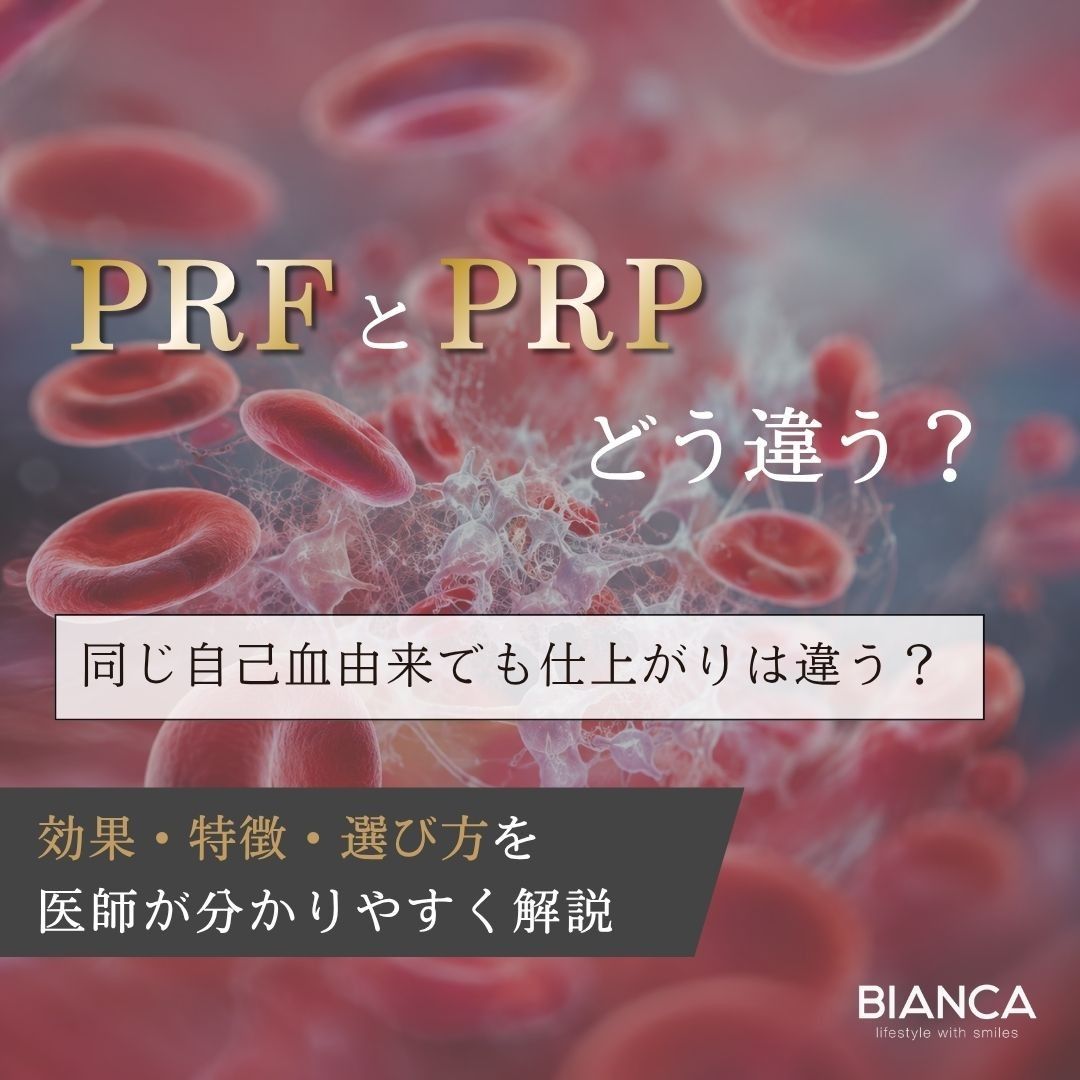
"Since both Easy Gel and PRP use your own blood, are they similar procedures?"
Some people might think this way.
While both share the common feature of utilizing autologous blood-derived components in aesthetic medicine, they actually differ in the nature of their formulations and the approaches they specialize in.
In this article, Dr. Yukitaro Ikeda of BIANCA CLINIC explains the differences between EasyGel (PRF) and PRP injections.
The Difference Between EasyGel (PRF) and PRP Injections
First, let's compare the main differences.
|
Comparison Items |
ezGEL (PRF/ezGEL) |
PRP Injection |
|---|---|---|
|
Raw materials |
The patient's own blood |
The patient's own blood |
|
Key Ingredients |
Autologous blood-derived products based on PRF |
PRP (Platelet-Rich Plasma) |
|
Physical Properties of the Formulation |
Gel-like |
Liquid |
|
Key Features |
Skin Care + Volume Restoration |
A Skincare Approach Utilizing Platelet-Derived Components |
|
Main Target Audience at Bianca Clinic |
Under the eyes, nasolabial folds, hollows in the cheeks, etc. |
Wrinkles, sagging skin, dark circles under the eyes, etc. |
The main differences lie in the properties of the formulation and what you want to achieve with the treatment.
Because EasyGel is gel-based, it can add volume to areas such as depressions while making the most of the components derived from PRF.
On the other hand, PRP is a procedure that involves injecting liquid plasma rich in platelets to bring about changes in the skin.
How are EasyGel and PRP made?
Both EasyGel (PRF) and PRP are prepared by centrifuging blood drawn from a patient.
However, while PRP involves extracting and using plasma rich in platelets after centrifugation, EasyGel involves a process of mixing PRF with plasma-derived components that have been heated to form a gel.
EasyGel | A gel-based formulation derived from PRF
With EasyGel, we first draw blood from the patient and use a specialized centrifuge to prepare PRF and plasma-derived components separately.
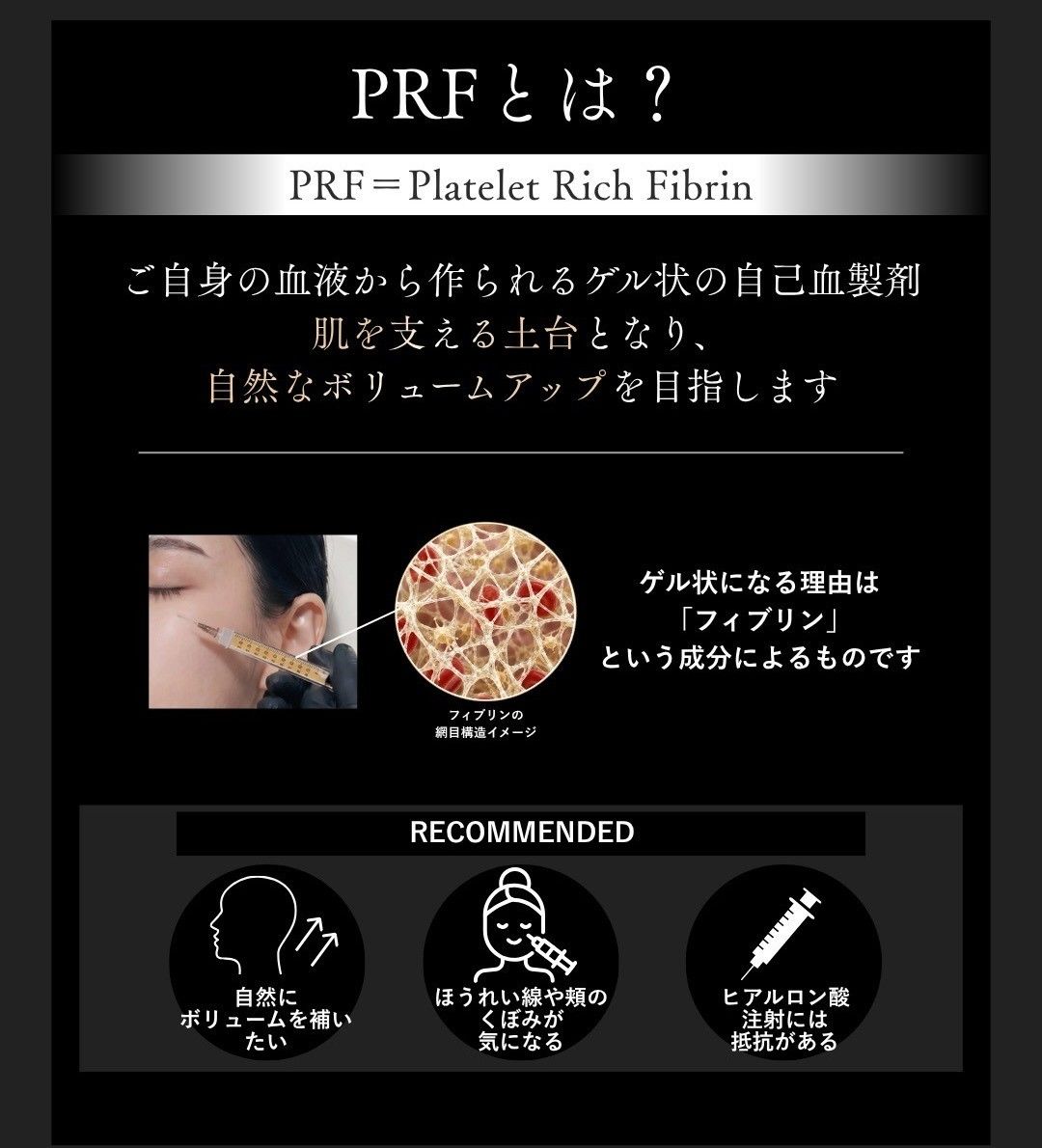
Centrifuge the sample for about 7 minutes to extract the plasma, which is rich in albumin, and then heat the plasma at 75°C for about 10 to 14 minutes to turn it into a gel.
At the same time, PRF is prepared by centrifugation for about 5 minutes, and finally, the gelled plasma is mixed with the PRF to complete the EasyGel.
The estimated time for PRF (ezGEL) formation is approximately 17 to 20 minutes.
At Bianca Clinic, we also prepare PRF (ezGEL) by centrifuging, heating, and mixing the blood sample with PRF using our in-house specialized equipment after drawing blood.
If you'd like to learn more about the manufacturing process and how Easy Gel works,"What Is ezGEL? BIANCA CLINIC Explains This Popular Filler Made from Your Own Blood"Please take a look at this as well.
PRP Injections | Using Plasma Rich in Platelets
For PRP injections as well, we first draw blood from the patient.
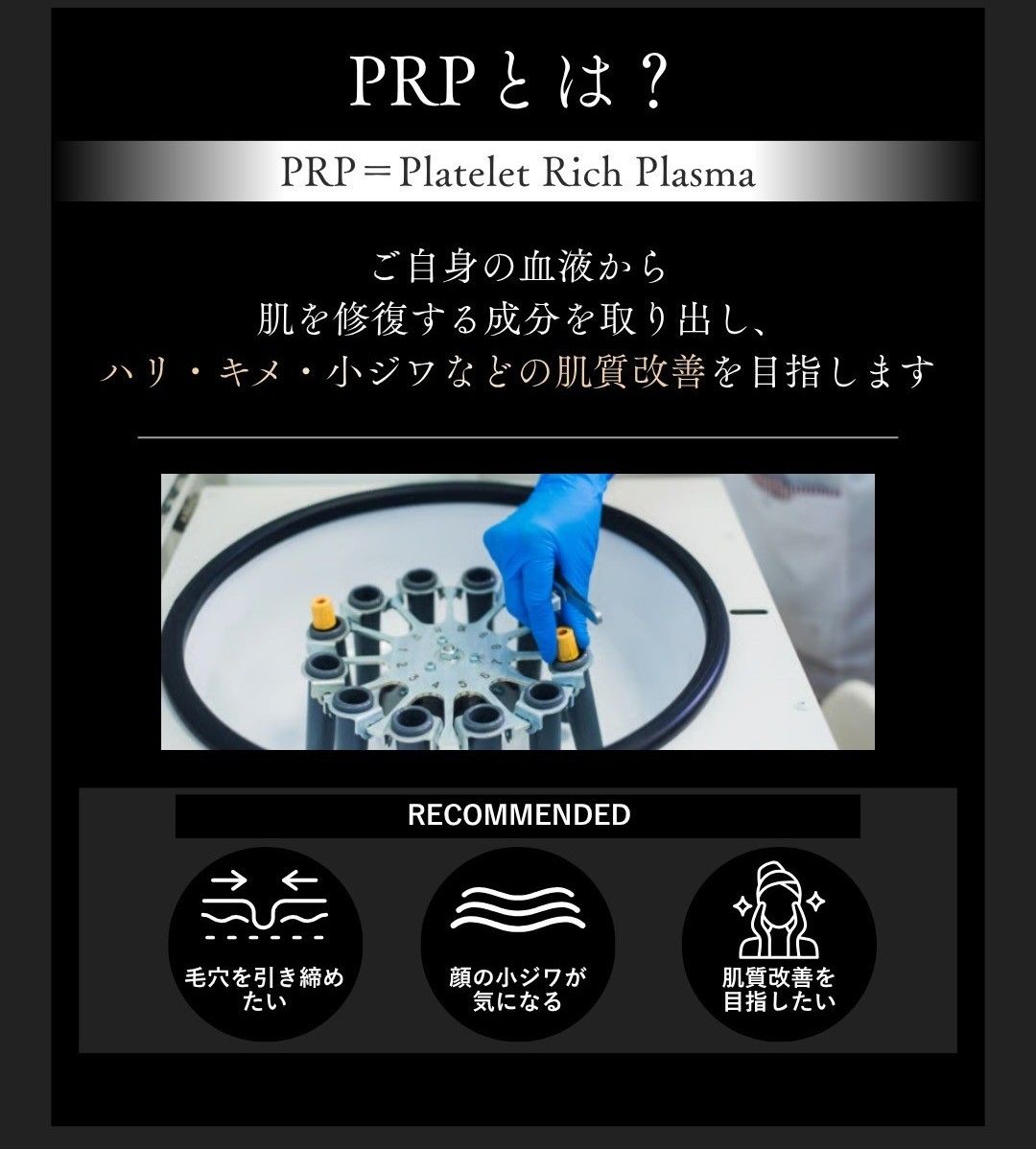
The blood is placed in a centrifuge to separate its components, and plasma rich in platelets (PRP) is extracted.
This extraction process takes about 15 to 20 minutes.
The prepared PRP is injected in small amounts into the areas determined during the consultation.
Unlike EasyGel, there is no step involving heating plasma to gel it and then mixing it with PRF.
This difference in the preparation methods also accounts for the difference in the properties of the formulations: EasyGel is gel-like, while PRP is liquid.
If you'd like to learn more about PRP injections,PRP Injection Treatment PagePlease see.
Is PRF More Effective Than PRP?
Some people might think, “Since PRF is newer, isn’t it more effective than PRP?”
However, it cannot be said that PRF is consistently more effective than PRP.
In 2025, a report was published that provided a comprehensive review of 14 studies on PRP and PRF in the field of aesthetic medicine for the eye area.
While some studies have shown that PRF is effective for improving skin texture and fine wrinkles, and that PRP is effective for treating hyperpigmentation, the preparation methods and evaluation criteria vary from study to study; therefore, it cannot be concluded at this time that one is superior to the other.
Furthermore, it is not yet fully understood how long the effects of PRF last. [1]
Regarding PRP, a 2025 report summarizing the research notes that while some studies have reported improvements in wrinkles and skin texture, there is variation in injection methods and dosage.[2]
Therefore, rather than assuming that “PRF is more effective than PRP,” it is important to consider the differences in the properties of each preparation and the intended purpose of the treatment.
How Do You Choose Between EasyGel and PRP Injections?
When making a choice, the question isn't "which one is better," but rather what you want to change.
If you also want to fill in hollow areas and add volume
EasyGel (PRF), a gel-based product, is an option for areas where a lack of volume affects appearance, such as under the eyes, on the cheeks, and around the nasolabial folds.
For example, under the eyes, shadows can be noticeable not only because of skin texture but also due to hollows and differences in height between the under-eye area and the cheeks.
In cases like this, in addition to addressing the skin itself, it’s also important to consider which areas need to be supplemented and to what extent.
PRF (ezGEL) Case Studies
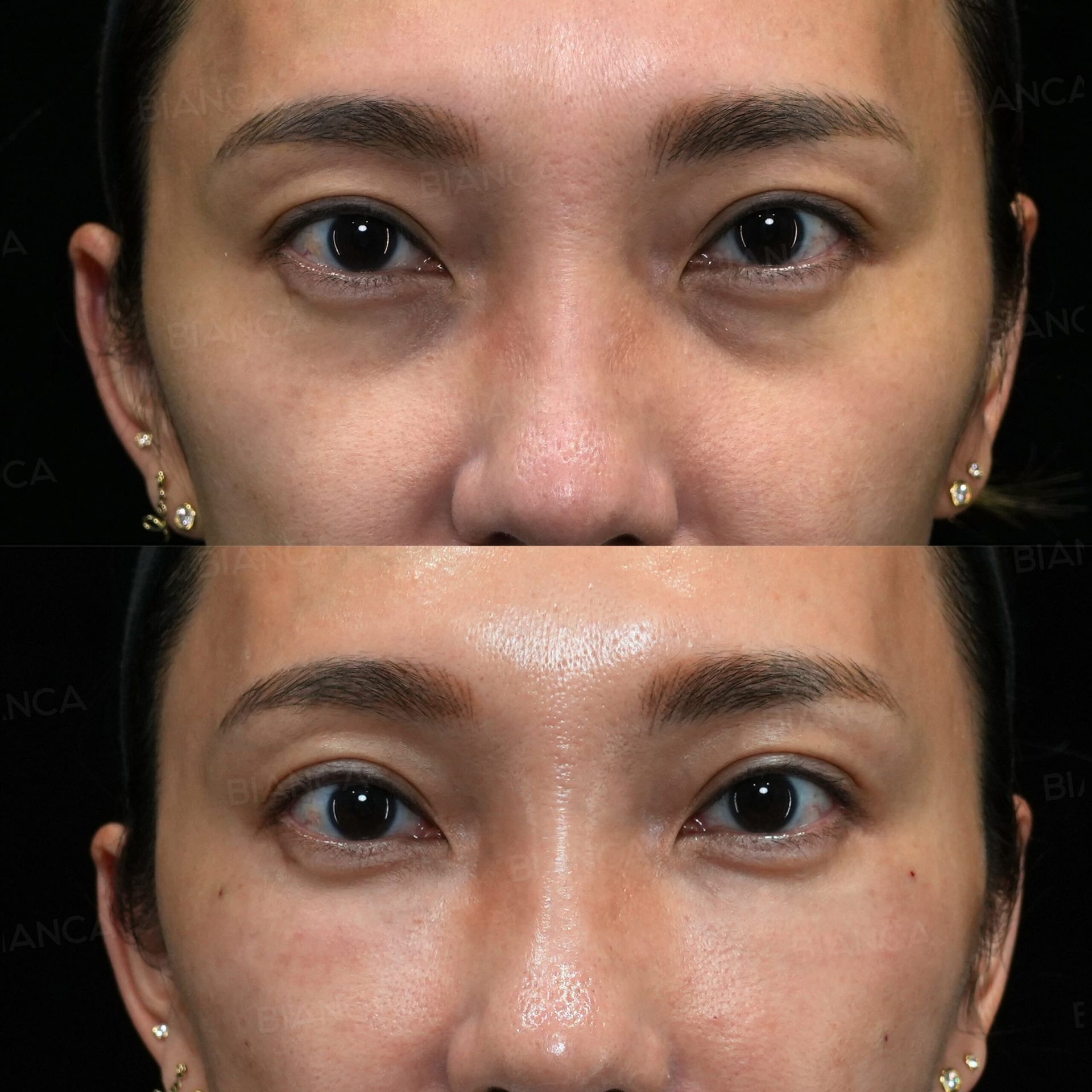
[Treatment Period and Number of Sessions] Top: Before treatment; Bottom: Immediately after treatment
[Side Effects and Risks] Pain, swelling, bruising, redness, infection, impaired blood flow, unevenness, etc.
[Cost] PRF (ezGEL): 198,000 yen; Procedure fee: 24,200 yen
This is a case study of a patient who was concerned about hollows under the eyes and received an injection of PRF (ezGEL).
Because EasyGel is gel-based, it can be used on areas where you want to add volume while taking advantage of the components derived from your own blood.
If you want to focus on a skincare-oriented approach
PRP injections are an option to consider when you want to focus on improving skin concerns such as firmness and fine lines.
Case Studies of PRP Injections
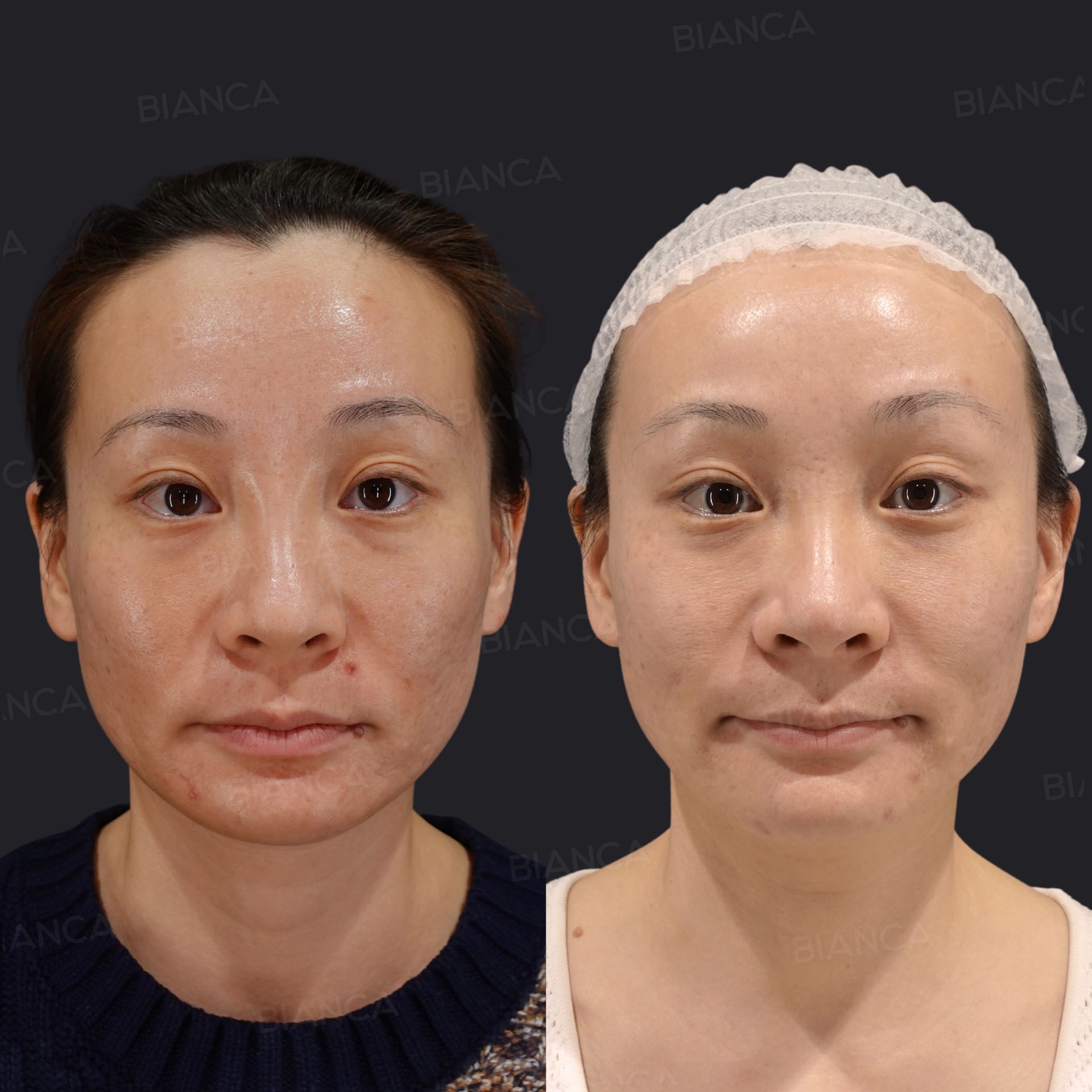
[Treatment Period and Number of Sessions] Left: Before treatment; Right: 2 weeks after treatment
[Side Effects and Risks] Temporary pain, swelling, redness, and bruising at the injection site, etc.
[Cost] Prestige PRP 1 ml (Face): 107,800 yen *Procedure fee: 25,500 yen per session (charged separately)
This is a case study in which PRP injections were used to improve skin firmness.
PRP is a treatment that involves injecting platelet-rich plasma extracted from the patient's own blood to address skin concerns such as wrinkles and sagging.
However, it’s not as simple as saying, “Use Easy Gel for under-eye areas” or “Use PRP for fine lines.”
Even for the same concern, the most appropriate method varies depending on factors such as skin thickness, indentations, and fat deposits.
At Bianca Clinic, rather than deciding on a treatment based solely on the product name, we first conduct an examination to determine what is affecting your vision and then make recommendations accordingly.
Frequently Asked Questions About EasyGel (PRF) and PRP Injections
In this section, we address frequently asked questions about EasyGel (PRF) and PRP injections—including the differences between the procedures, how to choose between them, and their suitability for use under the eyes—to answer the questions we most commonly receive from patients.
Q. Are EasyGel (PRF) and PRP injections the same procedure?
A. They are not the same. While both utilize the patient’s own blood, EasyGel is a gel-based preparation derived from PRF, whereas PRP is a liquid plasma rich in platelets. The physical properties and primary purposes of these preparations differ.
Q. Can Easy Gel add volume like hyaluronic acid?
A. Because Easy Gel is gel-based, it is also used to add volume to hollow areas such as under the eyes and on the cheeks.
However, its properties differ from those of hyaluronic acid, and the final results and adjustment methods are also different.
Q. Can PRP be used to treat hollows under the eyes?
A. At Bianca Clinic, we sometimes use PRP to treat dark circles under the eyes and facial hollows.
However, since PRP is liquid, it replenishes volume differently than EasyGel, which is gel-based.
Q. Are both PRF and PRP made solely from a person’s own blood?
A. Both are autologous procedures that use the patient's own blood.
However, because the components extracted from the blood and the manufacturing processes differ, the properties of the final product also vary.
Q. What should I do if I'm unsure whether to choose PRF (ezGEL) or PRP?
A. One factor to consider is whether you want to focus primarily on improving your skin texture or whether you also want to address issues such as hollows and volume. However, since the causes can vary even for the same concern, we will assess the condition of your skin and facial features during the consultation before determining the best course of action.
Choose Between PRF (ezGEL) and PRP Based on Your Goals
Although both PRF (EasyGel) and PRP injections are procedures that utilize the patient’s own blood, they are not the same.
ezGEL is a PRF-based gel formulation characterized by its ability to restore volume while also improving the skin's appearance.
On the other hand, PRP uses liquid platelet-rich plasma and aims to improve the skin by harnessing the benefits of platelet-derived components.
The important thing is not to ask, “Which is better, PRF or PRP?” but to consider which treatment’s characteristics are a better fit for your specific concerns.
At BIANCA CLINIC, we assess your skin condition, facial contours, and overall facial balance before recommending a treatment plan tailored to your individual needs. If you’re unsure whether to choose PRF (ezGEL) or PRP, please feel free to consult with us first.
▶PRF (ezGEL) Treatment Page
▶PRP Injection Treatment Page
▶Bianca Clinic Counseling Appointment Page
References