column (e.g. in newspaper)
2026.10.22
What Is V-Tone? How EMS Works and Its Effects on the Pelvic Floor Muscles When Stimulated from Inside the Vagina

After engaging in general obstetrics and gynecology practice, including infertility treatment, perinatal care, and other insured treatments, I decided to shift my career to free practice and gynecological aesthetics, with the hope of “supporting women to enjoy their life as a woman” after my own experience fighting against illness. Today, while still being involved in insured medical care as an obstetrician/gynecologist, I am facing women's health issues based on medical evidence through "real femtec" such as gynecologic plastic surgery, Vaginal Growth® injections, and vaginal hyaluronic acid injections, based on my deep anatomical knowledge and skills. We are a leading provider of gynecological services in Japan.
She is also committed to social activities related to the dissemination of sex education, HPV vaccine awareness, and the improvement of women's quality of life. He is also actively involved in educating the public about medical knowledge, such as writing Chapter 7, "Vaginal Hyaluronic Acid Injection," in his specialty book, "The Basics of Cosmetic Surgery," which is the first book he reads when he becomes a cosmetic surgeon.
Urine leakage when you sneeze, leakage after a bath, or a feeling of vaginal looseness. Even if you think, “Maybe it’s because of childbirth or my age,” it’s hard to talk to someone about it, isn’t it?
In some cases, these changes may be related to the pelvic floor muscles. In this article, we’ll explain V-Tone—a treatment offered at BIANCA CLINIC—including how it stimulates the muscles from inside the vagina, the expected benefits, and the results of related research.
What kind of treatment is V-Tone?
V-Tone (VTone) is an EMS treatment that uses a specialized intra-vaginal tip to deliver electrical stimulation, causing the pelvic floor muscles to contract.
A handpiece within the Empower RF system that targets muscles
EmpowerRF is a multi-functional medical device manufactured by InMode that allows users to select different handpieces depending on the treatment objective.
At Bianca Clinic, we offer three treatments: “Mofius 8V,” which uses microneedle RF to target the vaginal walls; “Forma V,” which uses RF (radiofrequency) to heat the vagina and vulva; and “V-Tone,” which uses EMS (electrical muscle stimulation) to contract the pelvic floor muscles.
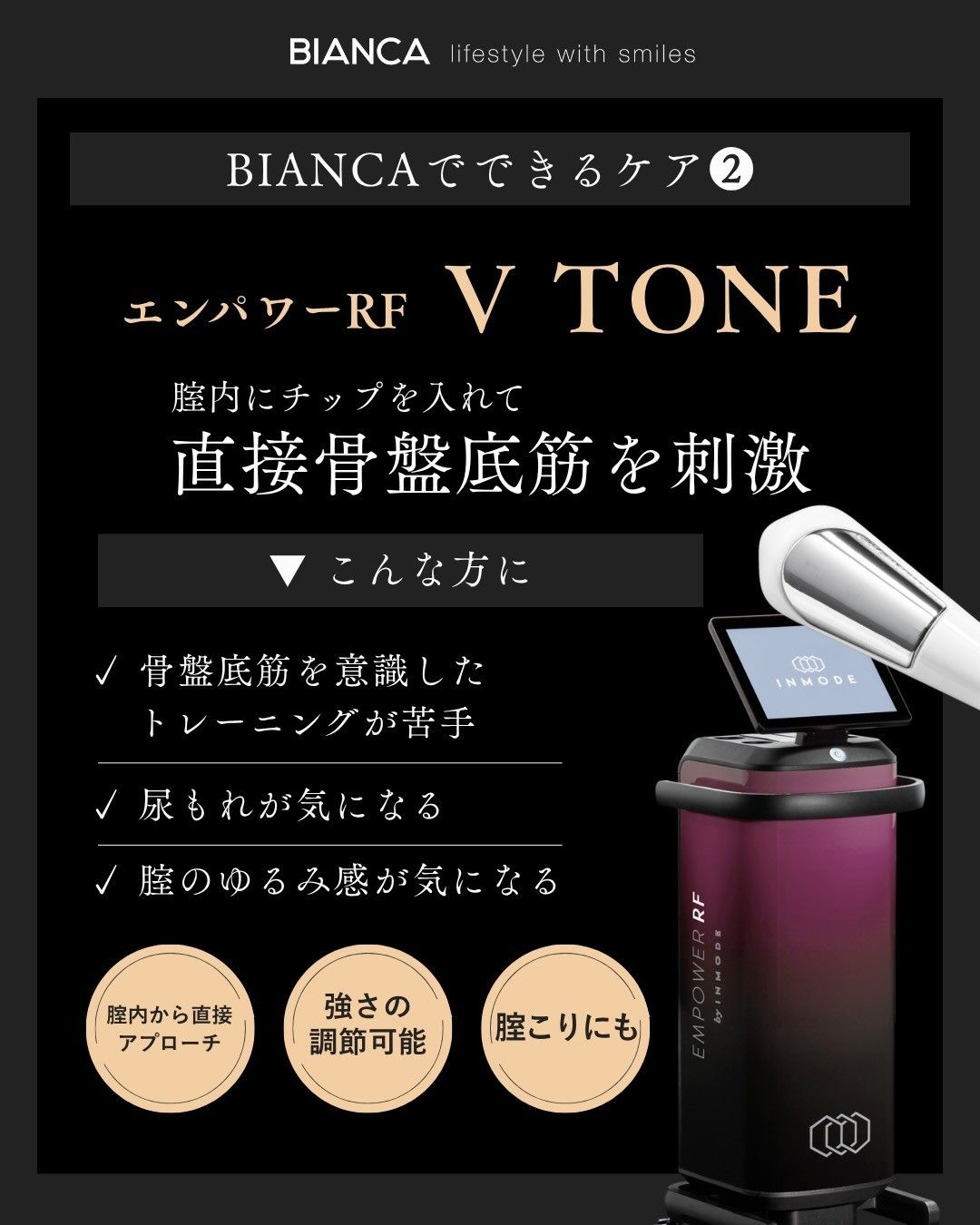
A key feature of V-Tone is that it works by targeting muscle function rather than using heat to tighten the vaginal walls.
For more information on the differences in how each works and the expected benefits, see “What is Empower RF?" explains this in detail.
By stimulating the area directly inside the vagina, you can get a feel for how the muscles move.
With V-Tone, electrical stimulation is delivered via a dedicated chip to cause the pelvic floor muscles to repeatedly contract and relax. The intensity of the stimulation is adjustable.
When doing pelvic floor exercises at home, some people tend to tense their abs or glutes. V-Tone helps you get a feel for the contraction and understand the correct way to train.
What benefits can I expect from strengthening my pelvic floor muscles with V-Tone?
V-Tone supports the function of the pelvic floor muscles and aims to improve urinary incontinence and a sensation of vaginal laxity.
Approaches to Urinary Incontinence Caused by Sneezing or Exercise
The pelvic floor muscles are located at the base of the pelvis, where they support the bladder, uterus, and rectum, and play a role in urination, defecation, and core stability.
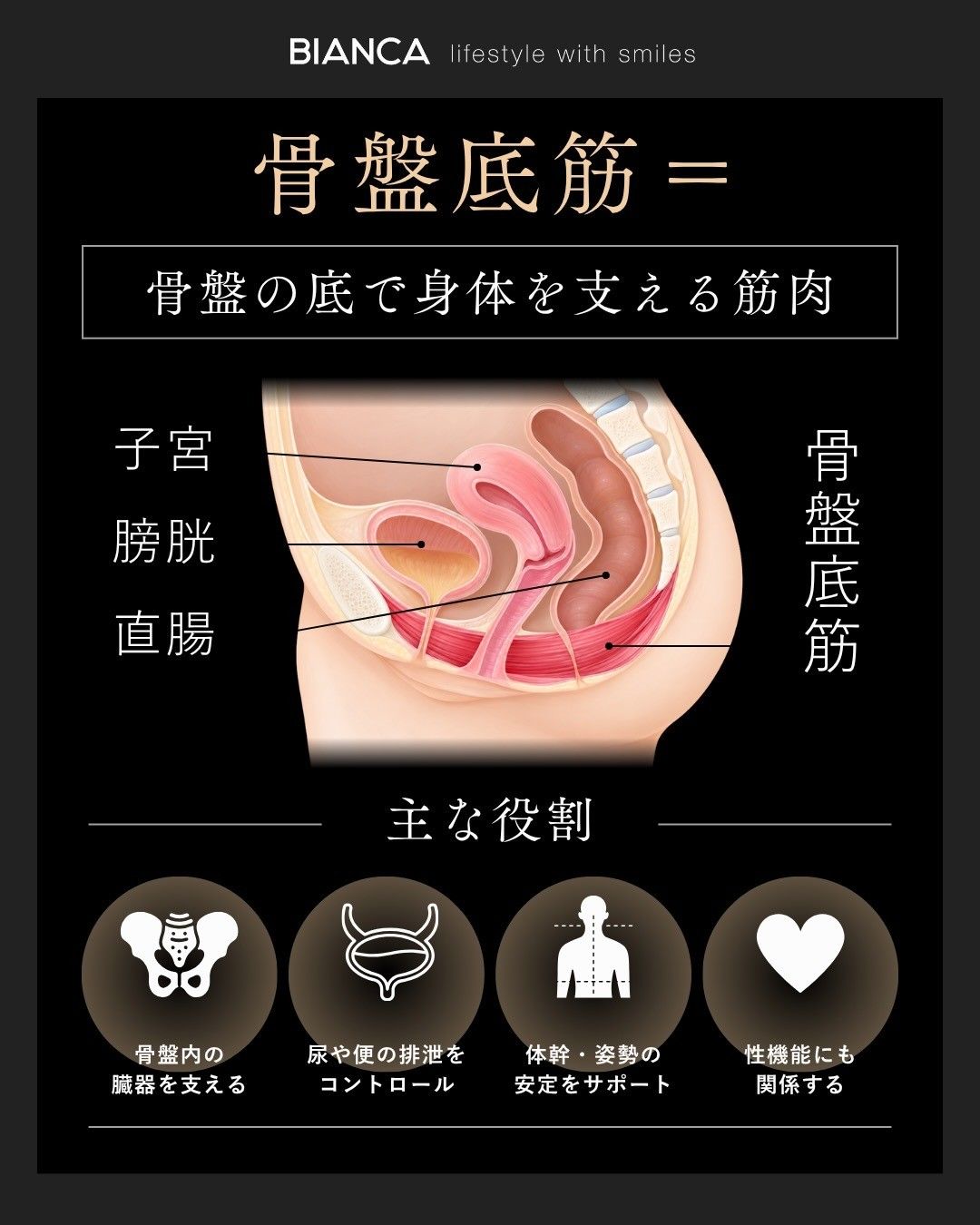
It is important for these muscles to function appropriately depending on the situation—for example, contracting when holding urine and relaxing when urinating. Problems can arise not only from weak muscles but also from excessive tension that prevents them from relaxing properly.
Stress urinary incontinence—in which urine leaks during activities such as sneezing or exercise—is associated with a decline in the function of the pelvic floor muscles and the tissues that support the urethra. According to a report summarizing Japanese studies, 14.0% of women aged around 40 to 60 experienced urinary incontinence several times a week or more [1].
V-Tone is a treatment that addresses not only stress urinary incontinence but also urge urinary incontinence—which involves leakage due to a sudden urge to urinate—as well as mixed urinary incontinence, which exhibits characteristics of both.
However, since the causes of urinary incontinence vary, we will determine the most appropriate treatment based on your symptoms and the condition of your pelvic floor muscles.
Approaches to Addressing a Feeling of Vaginal Looseness
The pelvic floor muscles support the area around the vagina and are involved in the action of tightening the vagina. When these muscles weaken due to childbirth or aging, you may feel that your vagina is less tight than it used to be.
V-Tone is a treatment that uses EMS to repeatedly stimulate contractions of the pelvic floor muscles, thereby supporting their function. It aims to improve the sensation of vaginal laxity associated with weakened pelvic floor muscles.
However, since this treatment does not directly address the loosening of the vaginal walls themselves or changes in the supporting tissues, a different approach may be necessary depending on the condition.
Is there any scientific evidence to support V-Tone's pelvic floor muscle training?
Electrical stimulation of the vagina is a method currently being studied for pelvic floor muscle rehabilitation.
A 2022 international study examined 64 women who were unable to successfully contract their pelvic floor muscles on their own. In the group that received 8 weeks of intravaginal electrical stimulation, 36% were able to contract the muscles on their own, compared to 12% in the group that did not receive stimulation. [2]
Although these results were obtained using a device other than V-Tone, they suggest that electrical stimulation inside the vagina may help individuals learn to voluntarily control their pelvic floor muscles.
In addition, an international study conducted in 2024 involving 31 women with urinary incontinence reported on a combination of V-Tone, Forma-V, and instruction on how to use the pelvic floor muscles.
After three treatment sessions, 82% of participants reported feeling an improvement in their urinary incontinence symptoms at the three-month mark. Furthermore, improvements were observed in metrics evaluating the amount of urine lost when coughing and the impact of urinary incontinence on daily life [3].
However, since this study combined multiple methods, the results do not demonstrate the effect of V-Tone alone.
What are the pros and cons of V-Tone?
The advantage of V-Tone is that it supports the training of the pelvic floor muscles—which are often difficult to engage—without the need for incisions or needles. On the other hand, ongoing treatments may be necessary, and the electrical stimulation may cause some discomfort.
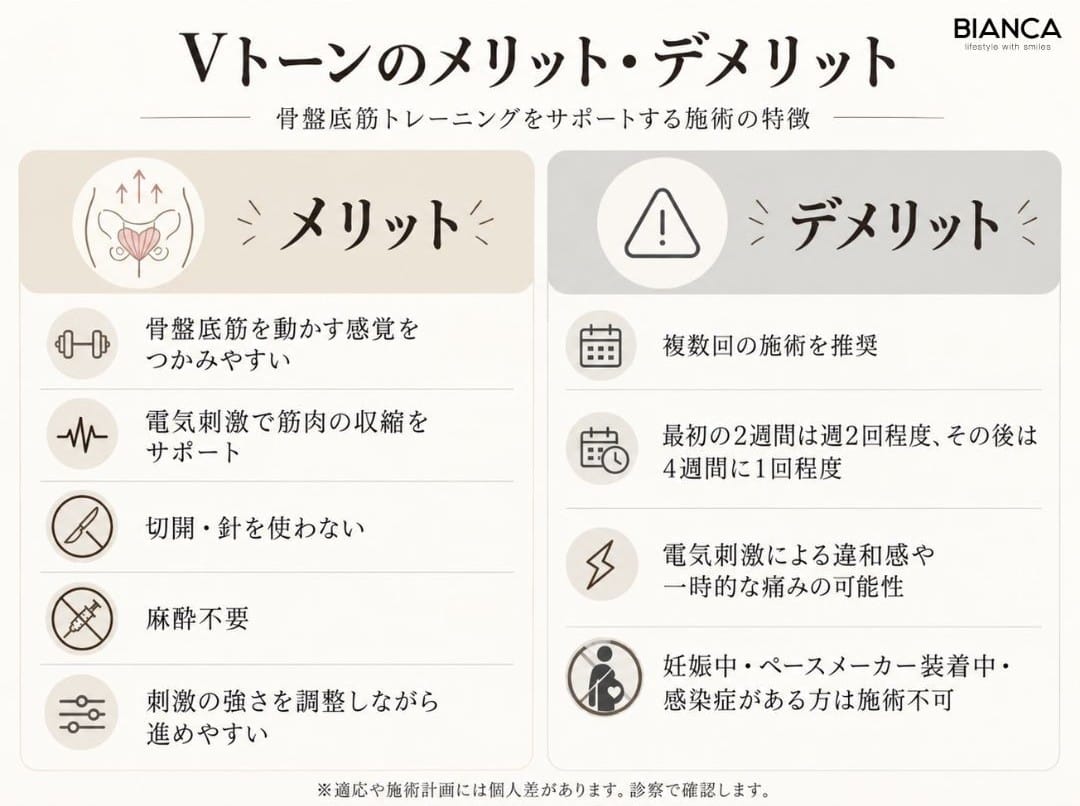
Benefits | It’s easy to get a feel for how to engage your pelvic floor muscles
The benefit of V-Tone is that it helps contract the pelvic floor muscles without you having to exert any effort yourself.
Since the pelvic floor muscles are invisible, many people who exercise at home aren’t sure if they’re engaging them correctly.
With V-Tone, electrical stimulation causes the muscles to contract, making it easier to get a feel for how to engage your pelvic floor muscles. Another benefit is that you can apply the sensation you experience during the treatment to your daily pelvic floor exercises.
In addition, the procedure does not involve incisions or needles and generally requires no anesthesia. Since the intensity of the stimulation can be adjusted during the treatment, we can proceed in consultation with patients who are concerned about pain or discomfort.
Disadvantages | Multiple treatment sessions and confirmation of suitability are required
Since V-Tone is designed to train the pelvic floor muscles, we recommend undergoing multiple sessions.
At Bianca Clinic, treatments are typically scheduled about twice a week for the first two weeks, and then about once every four weeks thereafter. Since regular visits are required, it’s important to plan your treatment schedule around your daily life.
In addition, electrical stimulation may cause discomfort or temporary pain. This treatment is not available for pregnant women, individuals with pacemakers, or those with infections.
Frequently Asked Questions About V-Tone
Here are answers to some common questions you may have before your appointment.
Q. Does V-Tone hurt? Is anesthesia necessary?
A. V-Tone is a procedure performed without anesthesia, so it generally does not cause significant pain.
During the treatment, you may feel your muscles contracting due to the electrical stimulation, but the intensity of the stimulation can be adjusted. If you experience any pain or discomfort, please let a staff member know and do not push yourself.
Q. Is it effective for water leaks after taking a bath?
A. If weakened pelvic floor muscles are contributing to urinary leakage, V-Tone may be an option to help improve the condition.
A hot water leak is a condition in which hot water that has entered the vagina leaks out later. Since this is related not only to the pelvic floor muscles but also to the shape of the vagina and the condition of the vaginal walls, we will determine the cause and then consider the appropriate treatment.
Q. Does it also help with dryness, itching, and odor in the intimate area?
A. V-Tone is a treatment for the pelvic floor muscles and is not intended to moisturize the area or eliminate odor. If you experience a stinging sensation, itching, or odor, we will determine the cause, such as dryness, a rash, or an infection.
Q. Can I receive treatment even if I experience pain during sexual intercourse or in the pelvic area?
A. Depending on the cause of muscle tension or pain, further contraction of the pelvic floor muscles may not be appropriate. We will first assess your condition during an examination and, if necessary, consider treatments such as muscle relaxation therapy.
Q. Can I receive treatment even while I'm on my period?
A. Bianca Clinic does not perform V-Tone treatments during your period. If your appointment is scheduled to coincide with your period, please contact us to reschedule.
Q. Does V-Tone hurt? Is anesthesia necessary?
A. V-Tone is a treatment performed without anesthesia, so it generally does not cause significant pain. During the treatment, you may feel your muscles contracting due to electrical stimulation, but the intensity of the stimulation can be adjusted. If you experience any pain or discomfort, please do not push yourself—let a staff member know.
Q. Is it effective for water leaks after taking a bath?
A. If weakened pelvic floor muscles are contributing to fluid leakage, V-Tone may be an option to help improve the condition. Fluid leakage refers to the phenomenon where fluid that has entered the vagina leaks out later. Since this condition is influenced not only by the pelvic floor muscles but also by the shape of the vagina and the condition of the vaginal walls, we will determine the cause and then consider the appropriate treatment.
Q. Does it also help with dryness, itching, and odor in the intimate area?
A. V-Tone is a treatment for the pelvic floor muscles and is not intended to moisturize the area or eliminate odor. If you experience a stinging sensation, itching, or odor, we will determine the cause, such as dryness, a rash, or an infection.
Q. Can I receive treatment even if I experience pain during sexual intercourse or in the pelvic area?
A. Depending on the cause of muscle tension or pain, further contraction of the pelvic floor muscles may not be appropriate. We will first assess your condition during an examination and, if necessary, consider treatments such as muscle relaxation therapy.
Q. Can I receive treatment even while I'm on my period?
A. Bianca Clinic does not perform V-Tone treatments during your period. If your appointment is scheduled to coincide with your period, please contact us to reschedule.
V-Tone is a treatment that addresses everyday concerns by targeting the pelvic floor muscles
Urinary incontinence, a feeling of vaginal laxity, and pain in the pelvic area may not all have a single cause.
At Bianca Clinic, we assess your condition through examinations and vaginal pressure measurements, and in addition to V-Tone, we also consider other options tailored to different goals, such as CORE ONE—which stimulates the pelvic floor muscles while you’re seated—and Alma Duo, which focuses on pain around the pelvic area.
Is it necessary to strengthen the muscles, or is it more important to relieve tension? Since the appropriate approach varies depending on the condition of the pelvic floor muscles, I make it a point not to base my judgment solely on symptoms.
At BIANCA CLINIC, our all-female team of doctors and staff is here to address any concerns you may have regarding your feminine health. If you notice any changes that concern you, please feel free to talk to us.
▷Check out the details on the V-Tone treatment
▷Try a consultation at BIANCA CLINIC
References