column (e.g. in newspaper)
2026.07.16
The Latest Treatments for Under-Eye Dark Circles: ezGEL, PRP/PRF, and the Smart Use of Hyaluronic Acid—Longevity’s Filler and Collagen Strategy for Rejuvenation Based on Skin Type
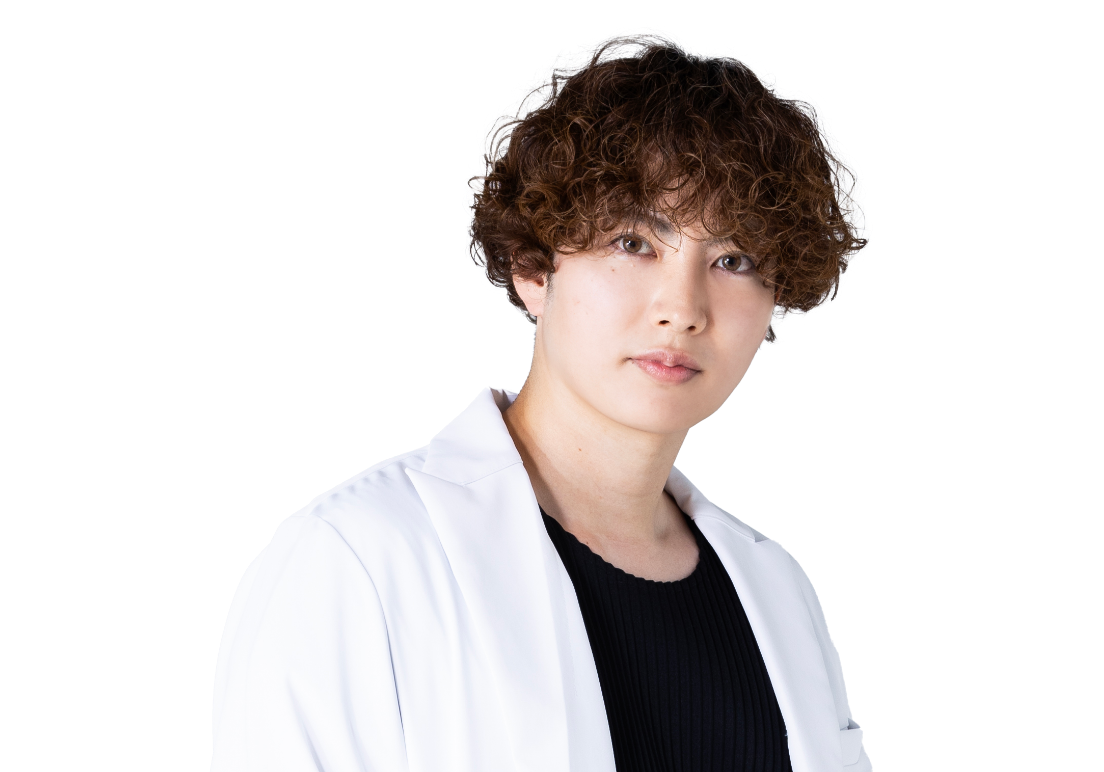
Driven by the belief of “bringing happiness to more people,” I pursued a career in aesthetic medicine after gaining experience in general internal medicine and emergency surgery, along with overseas training. As an internationally oriented doctor holding a UN English Proficiency Test Special Grade A, I treat a diverse range of patients. My goal is to become a true all-rounder, spanning cosmetic surgery, cosmetic medicine, and cosmetic dermatology. With a deep understanding of global beauty standards, I serve as a Key Opinion Leader (KOL) for TargetCool, NEAUVIA®, and CORETOX®. Known for my gentle manner, I provide accessible consultations in both Japanese and English. I pursue aesthetic medicine that transforms not just appearance, but also enhances overall happiness.
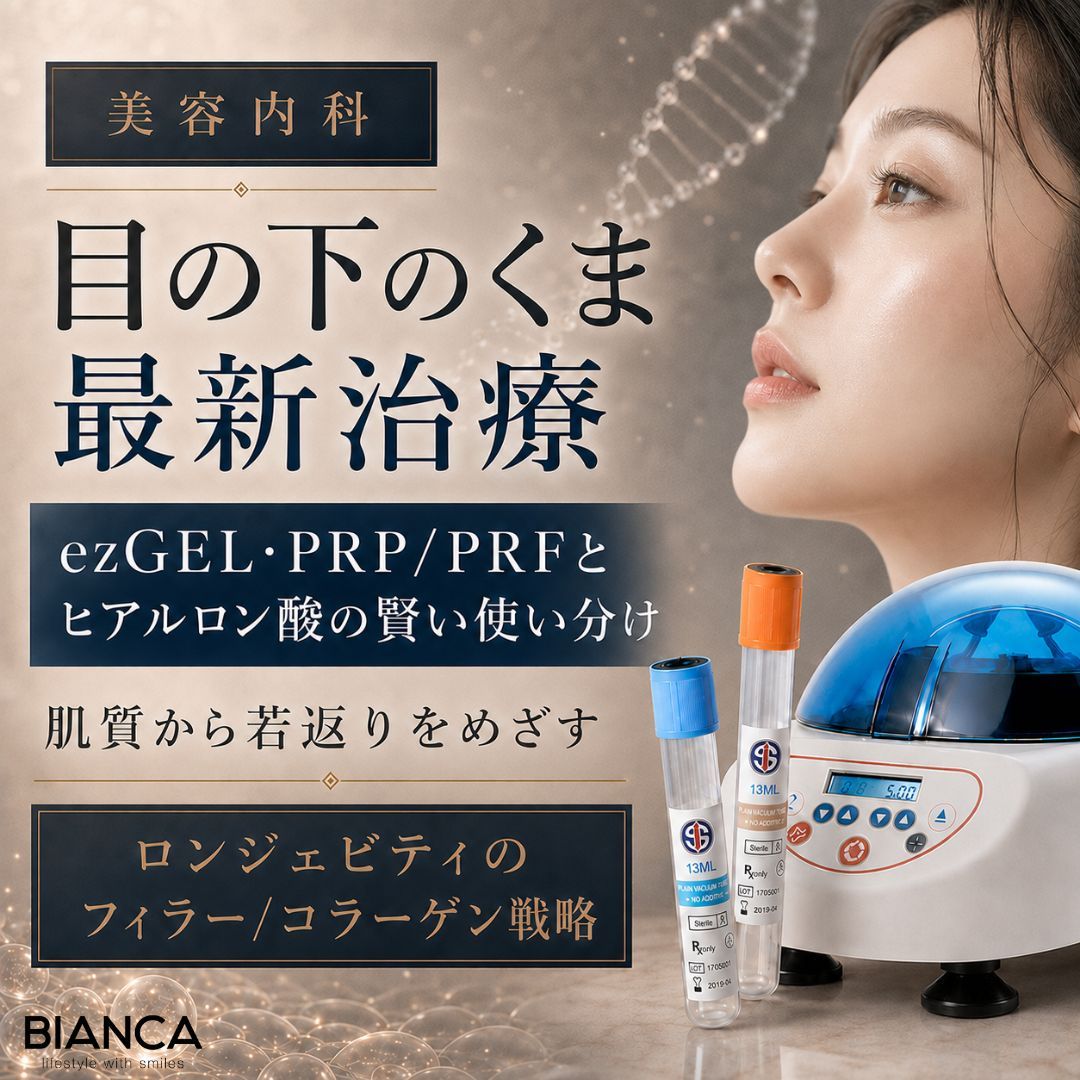
For Those Concerned About Dark Circles Under the Eyes—From a Longevity Perspective
Dark circles under the eyes that morning makeup can’t fully conceal, or shadows that appear deeper by evening. If you find yourself thinking, “Even if I layer on more concealer…,” the concept of “longevity”—which focuses on improving your skin’s fundamental condition—can be helpful. In recent years, options for “skin nurturing” (building a healthy skin foundation) have expanded beyond simply adjusting volume with hyaluronic acid fillers to include autologous approaches such as ezGEL and PRP/PRF. Even at cosmetic dermatology, plastic surgery, and cosmetic internal medicine clinics in Tokyo and Ginza, it’s becoming increasingly common to propose treatment plans that combine Botox—with special attention to expression lines around the eyes—and strategies aimed at stimulating collagen regeneration.
To jump straight to the conclusion, in many cases, it’s better to “blend and nurture” dark circles under the eyes rather than simply “covering them up.”
In particular, hyaluronic acid tends to cause the “Tyndall effect”—where it appears blue due to light transmission when injected into shallow layers—and some people have reported that this actually made their dark circles more noticeable. On the other hand, while baby collagen is an effective formulation, it is derived from others; ezGEL, however, is entirely autologous, integrates well with the skin, and is highly regarded for the growth factors it contains, which can help improve overall skin quality. Of course, results and downtime vary from person to person, so let’s start by working together to develop a plan that suits your specific type of dark circles and your lifestyle.
Main Text: Identify Your Skin Type and Choose the Right Skincare Treatment
Even when it comes to “dark circles,” there isn’t just one cause. From a longevity perspective, the top priority is to identify the underlying cause before using fillers to restore volume. Even millimeter-scale changes around the eyes can drastically alter your appearance. Start by performing the following self-check in front of a mirror to help you organize your thoughts for your consultation.
- Shine light from one side to determine whether it is a shadow (indentation) or a discoloration (pigmentation or blood flow).
- If the shadow fades when you gently lift your cheek, it indicates a strong shape (volume) component.
- Observe whether the lines deepen when the person squints or smiles (to assess the role of expression lines).
- Reflect on whether you have any chronic inflammatory conditions, such as hay fever that worsens when you rub your eyes.
Precautions for Hyaluronic Acid Fillers and the Tyndall Effect
Hyaluronic acid is an easy-to-use filler, but in the shallow layers under the eyes, it can appear bluish due to the Tyndall effect. This is less a result of the product’s inherent properties and more a function of the layer into which it is injected and how light passes through it. For those who have already experienced this “blue discoloration,” rather than forcing additional layers of hyaluronic acid, it may be more appropriate to focus on enhancing skin thickness and texture using autologous ezGEL or PRF/PRP.
If your facial expressions make the area appear deeper, we may consider using a small amount of Botox to relax the muscles and help blend the boundary between the dark circles and the filler. This decision should be made based on a consultation with a cosmetic dermatologist, plastic surgeon, or cosmetic physician. While treatment with a dissolving enzyme may be considered if necessary, be sure to discuss the risks and the possibility of a rebound effect in advance.
The Difference Between Baby Collagen and ezGEL—Autologous vs. Allogeneic
Baby collagen is particularly effective at smoothing out fine irregularities, making it ideal for refining the delicate texture around the eyes; however, it’s important to understand that it is derived from another person. In contrast, ezGEL is derived entirely from the patient’s own body and utilizes components from their blood and tissues, which is why many people find that it blends naturally with their skin. Furthermore, the growth factors contained in ezGEL help boost collagen and elastin production, which may lead to improved skin quality—in other words, “skin nurturing.”
If you’re aiming for a more youthful appearance, it’s important to focus not only on “adding” volume but also on unlocking your body’s “regenerative power.” Since this procedure involves blood draws and processing, be sure to consult with your doctor in advance regarding your physical condition on the day of the procedure, your schedule, and any medications you’re taking (such as anticoagulants).
Skin Care with PRP and PRF—Boosting Collagen Production
PRP (platelet-rich plasma) and PRF (platelet-rich fibrin) are approaches that use components derived from your own blood to deliver growth factors to the microenvironment. PRF’s fibrin network helps facilitate “slow-release,” making it a treatment option to consider when you want to gradually improve skin quality in the thin skin under the eyes.
You can use it on its own, or there are formulations designed to be used in combination with ezGEL to balance texture, firmness, and volume. Individual differences exist in terms of swelling, bruising, and when you begin to notice results; keeping in mind that evaluation typically takes several weeks to several months will make it easier to plan for long-term results. Lifestyle habits that nurture your skin—such as proper nutrition (iron, zinc, vitamin C, and protein), adequate sleep, sun protection, and gentle cleansing—also support collagen regeneration.
How Effective Is Botox? Treating Expression Lines Around the Eyes
If you have pronounced “laugh lines” around your eyes, the shadows under your eyes may appear deeper. In this case, Botox isn’t used to “freeze facial expressions,” but rather in small doses to relax overly tense muscles and even out the reflection of light.
Combining fillers, ezGEL, or PRP/PRF with minimal Botox injections between the eyebrows or at the outer corners of the eyes can sometimes make the results look more natural. Since the effects and duration of Botox, as well as how heavy your eyelids feel, vary from person to person, it’s best to have a cosmetic dermatologist, plastic surgeon, or cosmetic physician in Tokyo or Ginza carefully tailor the dosage and treatment area for you. Since the injection site and intensity can affect the position of your eyebrows and the appearance of your smile, it’s recommended that you discuss in advance any facial expressions you’d prefer to keep unchanged.
Before Consulting at a Cosmetic Surgery, Cosmetic Dermatology, or Cosmetic Medicine Clinic in Ginza, Tokyo
Before your first consultation, it’s a good idea to organize the following information: (1) the times of day you’re concerned about and your lifestyle, (2) your treatment history (such as whether you’ve had hyaluronic acid injections or Botox), (3) your tolerance for downtime, and (4) your desired outcome. At cosmetic surgery, dermatology, and internal medicine clinics in Tokyo and Ginza, even for the same “dark circles,” the treatment recommendations may vary.
"Before & After" photos can be helpful, but it’s important not to rely on them too heavily, as the overall impression can vary due to differences in lighting, facial expressions, and skin texture. Facilities that perform surgical procedures, such as liposuction and breast augmentation, often have well-established anesthesia and safety protocols in place, whereas those specializing in injectables and regenerative medicine approaches tend to offer treatments with minimal downtime. There is no right or wrong choice; please select the option that best aligns with your personal values and convenience in terms of access to the clinic.
The Structure of a Comprehensive Clinic Offering Liposuction and Breast Augmentation, and Treatments for Under-Eye Areas
Comprehensive cosmetic surgery, cosmetic dermatology, and cosmetic internal medicine clinics (such as large-scale facilities in Tokyo or Ginza) often offer a wide range of procedures, including liposuction and breast augmentation. Such facilities are expected to offer the advantage of well-established systems for operating room hygiene, anesthesia and emergency care, and clear division of roles among staff.
That said, treating dark circles under the eyes is a delicate procedure; it’s not something that can be “solved by volume” using the same approach as liposuction or breast augmentation. The key lies in a treatment plan that carefully layers small amounts of fillers, ezGEL, PRP/PRF, Botox, and other treatments, with a focus on long-term skin health. Regardless of the clinic’s size, be sure to verify that the physician explains the anatomy of the eye area and provides thorough post-operative follow-up care.
Estimated Downtime, Duration, and Risks
The basic approach to treatments around the eyes is to proceed “gradually, while monitoring the results.” While ezGEL and PRP/PRF are considered unlikely to cause allergic reactions in theory because they are derived from your own body, side effects such as swelling, bruising, puffiness, and a lump-like sensation may occur. Hyaluronic acid, while reversible, can cause a bluish tint due to the Tyndall effect, and its ability to attract moisture may lead to a sensation of puffiness.
The effectiveness and duration of Botox vary greatly from person to person, and some people may be particularly sensitive to changes in their facial expressions. Since both the onset of effects and their duration depend on individual skin type and lifestyle, it’s best to have a cosmetic dermatology clinic, cosmetic surgery clinic, or cosmetic internal medicine clinic in Ginza, Tokyo, monitor your progress at regular intervals (using photo records, for example) and make adjustments as needed for peace of mind. Since certain medications, pre-existing medical conditions, pregnancy, and breastfeeding may make you ineligible for treatment, be sure to disclose this information during your consultation.
Designing “Rejuvenation Through Nurturing” Based on the Concept of Longevity
“The more you rush to ”rejuvenate,” the higher the risk of temporarily adding too much volume with excessive fillers. From a longevity perspective, we combine the following three pillars as appropriate for each situation: (1) skin care that enhances skin thickness and translucency (ezGEL, PRP/PRF), (2) the minimum necessary amount of hyaluronic acid, and (3) subtle Botox treatments to balance facial expressions.
Although collagen regeneration takes time, the process is natural and causes little discomfort, and some people find that it makes applying makeup and dealing with light reflections much easier. At the same time, “daily habits”—such as protecting your skin from UV rays, getting quality sleep, consuming iron and vitamin C, and avoiding rubbing your eyes—lay the foundation for the treatment’s effectiveness.
Who This Is For / Who Should Consider It Carefully
This treatment is ideal for those whose primary concerns are dark circles around the eyes or rough skin texture, those who have experienced the Tyndall effect with hyaluronic acid in the past, and those who are willing to take the time to improve their skin quality.
On the other hand, if you are seeking significant changes in the short term, or if you have severe sagging that is a strong candidate for surgery, you may want to consider other options—such as surgical treatment of the lower eyelids—in consultation with a cosmetic surgery clinic. Since treatment may not be possible depending on your physical constitution or medical history, please be sure to receive a thorough consultation at a cosmetic dermatology, cosmetic surgery, or cosmetic internal medicine clinic in Tokyo or Ginza. Proceeding without clearly defining your goals with your doctor can easily lead to results that are either too much or too little, so it’s reassuring to agree on a point at which you’ll “wait and see how things go.”
FAQ: Frequently Asked Questions
Q1. My under-eye area turned blue after receiving hyaluronic acid injections. What should I do?
This may be the Tyndall effect. Assessing the condition is the top priority; adjustments or dissolution will be considered as needed. After that, please consult with a cosmetic dermatology, plastic surgery, or cosmetic medicine clinic in Ginza, Tokyo, regarding autologous options such as ezGEL or PRP/PRF, or the use of small doses of Botox in combination to treat expression lines. For home care, cooling the area, avoiding irritation, and reviewing your sleep and nutrition habits can also be helpful.
Q2. How do ezGEL and PRF/PRP differ?
Both are autologous treatments that utilize growth factors to promote the regeneration of collagen and other tissues. PRF is expected to provide a gradual release of growth factors, while ezGEL is considered when a natural texture is desired. Since the optimal solution varies depending on skin type, the condition of the eye area, and lifestyle, you should consult a cosmetic dermatology, cosmetic surgery, or cosmetic internal medicine clinic in Tokyo or Ginza to confirm suitability. You’ll be less likely to be disappointed if you view both treatments as a gradual “nurturing” process that takes several weeks to several months, rather than expecting immediate, dramatic results.
Q3. Is Botox absolutely necessary?
This is not mandatory. If the shadows cast by laugh lines accentuate dark circles, using a small amount of Botox in combination may help restore balance. Since results and the degree of discomfort vary from person to person, please work with a cosmetic dermatology, cosmetic surgery, or cosmetic internal medicine clinic in Ginza, Tokyo, to make fine adjustments while discussing your desired facial appearance. If you’re concerned about the treatment being too strong, you can consult with the clinic about starting with an extremely small dose.
Q4. I can't take time off. Which treatment is right for me?
The extent of swelling and bruising varies greatly from person to person, so it’s impossible to generalize. For those who don’t want the results to be noticeable in the short term, there are several options, such as splitting the treatment into smaller sessions, minimizing the area treated with Botox, or focusing on skin care to improve skin condition beforehand. Work with a cosmetic dermatology, plastic surgery, or cosmetic medicine clinic in Tokyo or Ginza to create a plan that fits your event or work schedule. After the procedure, self-care—such as applying cold compresses, using gentle skincare products, and avoiding alcohol—can make a significant difference in the final results.
Q5. What are some tips for choosing a clinic?
Be sure to confirm the doctor’s experience with eye area examinations, the clarity of their explanations, their step-by-step approach to treatment recommendations, and their post-operative follow-up policy. Among the cosmetic surgery, cosmetic dermatology, and cosmetic internal medicine clinics in Ginza, Tokyo, there are comprehensive clinics that offer procedures such as liposuction and breast augmentation, as well as clinics that focus primarily on injectable treatments. Neither option is inherently better or worse; it’s best to choose based on convenience and whether the clinic is a good fit for your specific needs. During your consultation, be sure to openly share any concerns you may have, and pay attention to whether you feel pressured—this is an important factor in making your decision.
About Consultations (General Information)
This article provides general medical information and does not include specific clinic data (results, procedure details, or “before and after” images) or pricing information. For the latest individual treatment plans, please consult directly with a cosmetic surgery, cosmetic dermatology, or cosmetic internal medicine clinic near you, including those in Tokyo and Ginza. Utilizing online consultations and second opinions can also help you make an informed decision.
How to Read Clinic Information: Treatment Menu and Areas of Expertise
On the website, be sure to check the page on under-eye treatments, as well as information on liposuction and breast augmentation, explanations of anesthesia and safety protocols, membership in professional societies, and the clinic’s policies regarding Botox and fillers.
Even at cosmetic surgery clinics that primarily focus on liposuction and breast augmentation, there may be doctors on staff who are skilled in injection techniques; likewise, at cosmetic dermatology or cosmetic internal medicine clinics that specialize in injections, there may be systems in place to collaborate with surgeons when necessary. Rather than being pressured into making an appointment, you’ll reduce the risk of a bad outcome by prioritizing clinics that take the time to carefully answer your questions. If you’re wondering whether a clinic is right for you, start by scheduling a consultation.
For dark circles under the eyes, it’s better to “nurture” them rather than “fill” them. Achieve a natural look with your own tissue and minimal injections.
For those who want to avoid the Tyndall effect associated with hyaluronic acid—or who have already experienced a bluish discoloration—it may make sense to first improve skin quality (collagen and elasticity) using autologous approaches such as ezGEL or PRP/PRF, and then use the absolute minimum amount of filler to correct depressions.
Baby collagen is a good option, but it’s important to understand that it comes from another source and to align your goals with your tolerance. If expression lines cast deep shadows, it can be effective to combine it with a modest dose of Botox to improve how light reflects off your skin. Since treatment suitability, effectiveness, pain, downtime, and duration of results vary from person to person, the best approach is to work with a cosmetic dermatology, plastic surgery, or cosmetic medicine clinic in Ginza, Tokyo, to develop a step-by-step plan focused on long-term results.
Take your time and be thorough. Let’s work together to create a rejuvenation plan that’s gentle on your skin.