Senhime Akashi
2026.11.09
What's the difference between age spots and freckles?

With deep medical insight cultivated as an internal medicine specialist, I bridge aesthetic surgery, dermatology, and internal medicine. Having spent my childhood in China, I communicate fluently in Japanese, Chinese, English, and Korean. Possessing an international perspective—evidenced by invitations to present at overseas conferences—I actively promote techniques as a Key Opinion Leader (KOL) for GOURI and REJURAN®. My specialty procedures include double eyelid surgery, skin-nurturing boosters, and body hyaluronic acid treatments. My approach leverages the holistic understanding of the body cultivated through internal medicine to guide patients toward natural, healthy beauty.
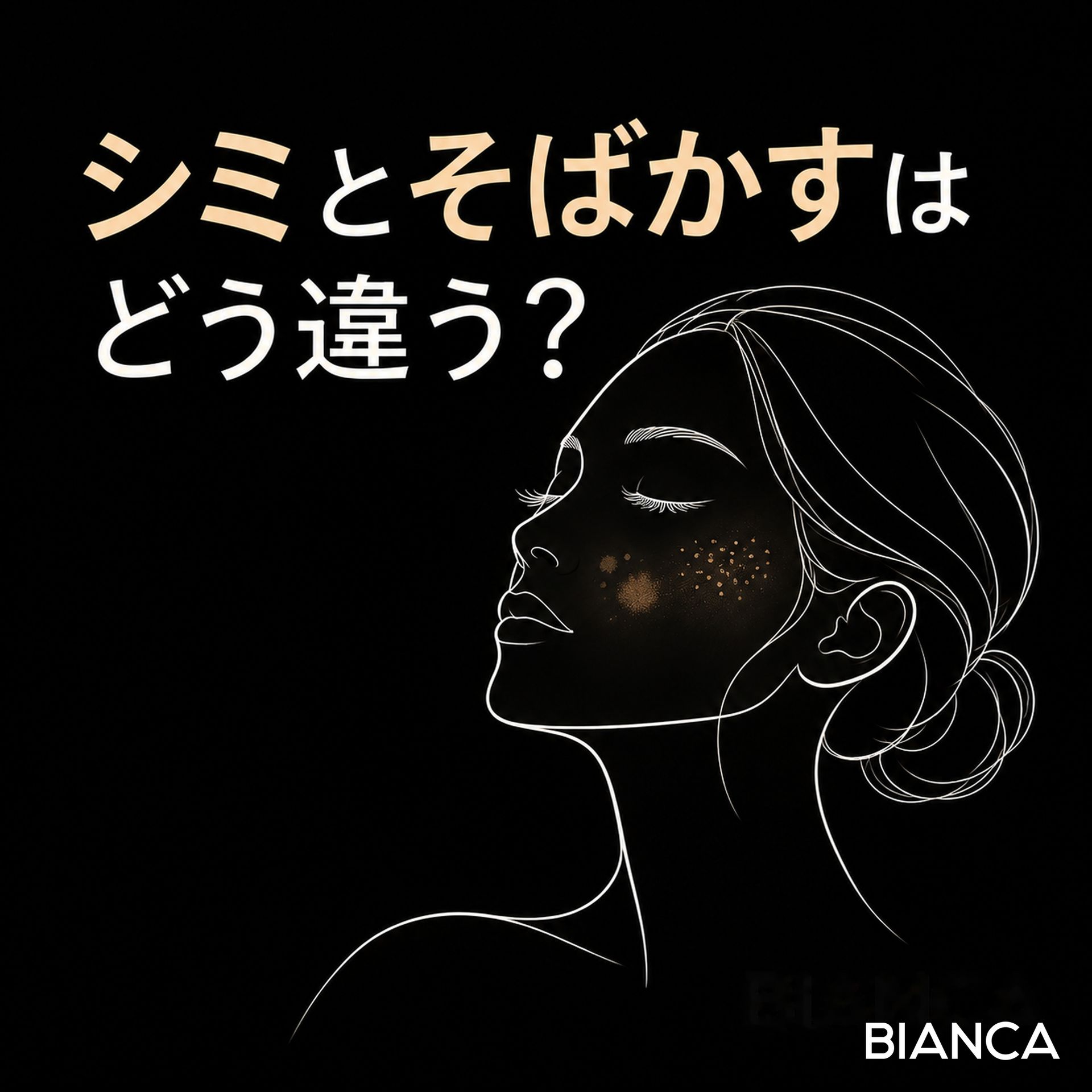
"Are those tiny brown spots on my cheeks age spots? Or are they freckles?" "Are the ones that have appeared since I became an adult also freckles?"
Since age spots and freckles look similar, some people may be confused about the difference between them. In reality, there are differences in their causes and the times of year they tend to appear, and it’s not uncommon for both to coexist on the same face.
This article explains the differences between age spots and freckles in terms of appearance, causes, and when they tend to appear. It also covers key points to keep in mind when considering treatment.
What's the Difference Between Age Spots and Freckles? A Comparison of Their Characteristics
Although freckles are a type of age spot in a broad sense, their characteristics differ from those of “senile lentigines,” which are a typical example of age spots.
The main difference is that while freckles are strongly influenced by genetic factors, senile lentigines are caused by factors such as long-term exposure to ultraviolet rays.
Comparison Chart of Age Spots (Senile Lentigines) and Freckles
The table below compares the main differences between age spots (senile lentigines) and freckles.
| Comparison Items | Age spots (senile lentigines) | Freckles (ephelides) |
|---|---|---|
| Main cause | Cumulative exposure to ultraviolet rays, aging, etc. | Genetic factors, ultraviolet rays |
| Times When It Is Likely to Occur | Tends to increase with age after reaching adulthood | Tends to be more noticeable from childhood through adolescence |
| Appearance | Brown spots with relatively distinct outlines | Scattered with numerous small brown spots |
| Places where it tends to happen | Cheeks, temples, backs of the hands, etc. | Nose, cheeks, etc. |
| The Relationship with Ultraviolet Rays | Exposed to UV rays over many years | The color may darken when exposed to sunlight. |
| Changes Due to Age | Tends to increase with age | In some cases, it may thin out after adulthood. |
*Please note that these are general trends. There are individual differences in color, size, and location, and a diagnosis cannot be made based on appearance alone.
Freckles are small spots that tend to spread across the nose and cheeks.
Freckles are pigmented spots medically known as “ephelides.” Small brown spots, about a few millimeters in size, appear scattered across the nose and both cheeks.
It often appears during childhood, and its color may darken during seasons with strong sunlight or lighten during periods with less UV exposure. It can appear not only on the face but also on the shoulders and arms.
Common age spots often have distinct outlines.
Senile lentigines are age spots that commonly appear on areas frequently exposed to ultraviolet rays, such as the cheeks, temples, and the backs of the hands. They range in color from light brown to dark brown and vary in size.
Compared to freckles, the outlines of each spot tend to be relatively distinct. However, since multiple small senile lentigines may appear, they cannot be distinguished based on spot size alone.
Do age spots and freckles differ in terms of their causes and the age at which they appear?
Both age spots and freckles are skin changes involving melanin. However, the underlying causes of the increase in melanin differ.
Freckles are strongly influenced by genetic factors.
Genetic factors play a major role in a person's tendency to develop freckles. They often appear during childhood, and other family members may also have freckles.
In addition, UV exposure can stimulate melanin production, causing freckles to become darker. Therefore, even if you’re prone to freckles, it’s important to take daily precautions against UV rays.
Senile lentigines are associated with cumulative exposure to ultraviolet rays and aging.
Senile lentigines are age spots caused by long-term exposure to ultraviolet rays and changes in the skin associated with aging.
While they tend to become more noticeable as we age, they can also appear in younger people. To prevent new age spots from forming, it’s important to make a habit of protecting your skin from UV rays on a daily basis.
Are the spots that appeared after I became an adult not freckles?
If brown spots begin to appear as you get older, they may not be freckles but could be age spots or similar conditions.
On the other hand, there are also cases where existing freckles become darker due to UV exposure and start to become a concern in adulthood. When distinguishing between the two, it’s important not to rely solely on age; you should also consider the history of the spots—whether they’ve been there for a while or have recently increased in number.
Can you tell the difference between age spots and freckles just by looking at them?
While age spots and freckles each have their own characteristics, it is difficult to distinguish them with certainty based on appearance alone. Even similar-looking brown spots may have different causes or types.
Age spots and freckles can sometimes appear in the same place.
In addition to freckles present since childhood, senile lentigines may also appear in adulthood. As a result, the fine brown spots that spread across the nose and cheeks may consist of a mixture of different types of spots.
It is also important to be aware of the possibility that conditions such as melasma or ADM may be present concurrently. Since melasma, in particular, may worsen due to the irritation caused by treatment, during the examination we assess not only the color and shape but also the distribution and the course of the condition to date.
▷Related Article: What’s the Difference Between Age Spots and Melasma? (No. 2 · Link to be added after publication)
What should I do if it suddenly gets bigger or changes shape?
If a pigmented spot suddenly grows larger, becomes irregular in shape, or bleeds, it may be a sign of a skin condition other than age spots or freckles. If you notice any of these changes, it is important to see a dermatologist as soon as possible to determine the cause.
Are the treatment methods different for age spots and freckles?
Laser and light therapy (IPL) are both treatment options for both age spots and freckles. However, the appropriate treatment method and treatment area vary depending on the type and extent of the pigmentation, as well as the condition of the skin.
Localized laser treatment is an option for senile lentigines
For senile lentigines with relatively well-defined borders, laser treatments such as PicoSpot are an option. However, since redness and post-inflammatory hyperpigmentation may occur after treatment, we will assess the condition of the spots before determining whether treatment is appropriate.
▷Related Article: What Types of Dark Spots Does PicoSpot Treat? (No. 18 · Link to be added after publication)
Learn more about PicoSpot treatments
Consider Treatment for Freckles Based on How They Spread
If you have fine freckles widely distributed across your nose and cheeks, light therapy (IPL), such as Lumecca, or laser treatment may be options.
However, even if the condition fades as a result of treatment, it may become noticeable again due to your skin type or exposure to UV rays. Therefore, it is important to continue taking measures to protect your skin from UV rays even after treatment.
▷Related Article: What's the Best Way to Get Rid of Freckles? (No. 6 · Link after publication)
Learn more about Lumecca treatments
If you'd like to consult with BIANCA CLINIC about the difference between age spots and freckles,
At BIANCA CLINIC, to distinguish between age spots and freckles, we examine not only their color, shape, and distribution, but also when they first appeared and how they have changed over time.
Since age spots, freckles, and melasma may sometimes appear together, it is important to first identify the type of pigmentation and assess the condition of your skin. Based on that assessment, we will recommend a treatment method tailored to your specific concerns from options such as PicoSpot and LumeCa.
If you’re wondering, “I don’t know what type of dark spot I have,” or “I thought these were just freckles, but they’ve been increasing lately,” please feel free to contact us for a consultation.
Frequently Asked Questions About the Difference Between Age Spots and Freckles
Q. Are the small brown spots on my cheeks and nose freckles?
A. If there are fine brown spots scattered across the nose and both cheeks, they may be freckles. However, since small senile lentigines and ADM (acquired dermal melanocytosis) can also have a similar appearance, it is difficult to make a determination based solely on their size and distribution.
Q. Are the brown spots that have appeared since I became an adult also freckles?
A. Brown spots that begin to appear in adulthood may be freckles, or they may be other types of spots, such as senile lentigines. Since existing freckles can sometimes darken due to exposure to ultraviolet rays, the time they first appeared and any changes in color can serve as clues for distinguishing between them.
Q. Can age spots and freckles appear together on the same face?
A. Yes. In addition to freckles that have been present since childhood, senile lentigines may also appear in adulthood. Since other types of pigmentation, such as melasma, may also be present, it is important to identify each type before treatment.
Q. Can I tell the difference between age spots and freckles on my own?
A. You can get a general idea of the characteristics of a pigmented lesion based on its size, shape, distribution, and when it first appeared. However, there are many pigmented lesions that look similar, and it may not be possible to distinguish them accurately on your own. If you are considering cosmetic medical treatment, you should first consult a doctor.
Q. What happens if you treat age spots and freckles without distinguishing between them?
A. If you undergo a treatment that is not appropriate for your specific type of pigmentation, you may not see sufficient improvement, or you may develop hyperpigmentation. In particular, if melasma is present, stimulation from treatments such as lasers can sometimes worsen the condition, so a proper diagnosis before treatment is essential.
Summary | Understand the Difference Between Age Spots and Freckles, and Choose the Right Treatment for Your Skin
Although both age spots and freckles appear as brown spots, they differ in their causes, the times of year they tend to appear, and their visual characteristics. Senile lentigines are associated with cumulative UV exposure and aging, while freckles are characterized by a strong genetic component.
However, since multiple types may coexist, it can be difficult to determine the type based on appearance alone. To choose the appropriate treatment, it is important to first consult a doctor to identify the type of pigmented lesion and assess the condition of your skin.
At BIANCA CLINIC, we offer treatments tailored to each individual’s skin condition and concerns. If you’re unsure about the difference between age spots and freckles, please feel free to consult with us.
▷Related Article: Which Treatment Is Best for Removing Facial Spots? (No. 1 · Link to be added after publication)
Learn more about treatments tailored to concerns such as dark spots and freckles