column (e.g. in newspaper)
2026.11.09
For Those Worried About Failed Nostril Reduction Surgery | A Plastic Surgeon Explains Common Regrets, Postoperative Progress, and Solutions

Specialist in rhinoplasty. He is a board certified plastic surgeon by the Japanese Society of Plastic and Reconstructive Surgery. Based on the principle of “maximum effect with minimum treatment,” I propose the best surgical techniques and plans for my patients from various angles. He specializes in designs that beautifully accentuate the "individuality" of the patient while taking into account the golden ratio of the face. In particular, we create full-custom-made prostheses by combining CT and Vectra data to create full-scale blueprints, which are then precisely finished based on clay prototypes handmade from scratch on a skull model. The shape of the prosthesis can be reproduced with high precision as per the presented simulation, so that even the most detailed wishes can be met and stable results can be achieved.
Cases where patients feel their alar reduction surgery was unsuccessful include asymmetry or changes in the shape or width of the nostrils. On the other hand, swelling and puffiness often persist around 3 to 5 days after surgery, so it may be too early to conclude that the procedure was unsuccessful.
Hello. I’m Yu Yagasugi from BIANCA CLINIC.
Many people feel anxious, wondering, “What if my alar reduction goes wrong?” “I don’t want my nose to look unnatural,” or “It’s been three days since the surgery, but there’s asymmetry. Is this a failure?”
In this article, from a plastic surgeon’s perspective, we’ll explain everything from cases where patients are likely to feel that their alar reduction (nose wing reduction) “went wrong,” to the progress at each stage—such as on the 3rd, 4th, and 5th days after surgery—and changes in the final results up to about three months post-op, as well as key points for preventing regret and what to do if you’re concerned about the final outcome.
What Is a Failed Nose Wing Reduction? 5 Cases Where You’re Likely to Feel It “Failed”
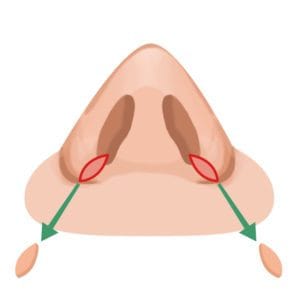
With alar reduction surgery, patients may feel that the results were “unsuccessful” due to discrepancies between the actual outcome and their ideal—such as the size of the nostrils, the shape of the nostril openings, or asymmetry between the left and right sides. Here, we’ll explain five common scenarios where patients tend to be concerned about the final results.
My nostrils have become so small that they look unnatural.
In alar reduction surgery, if too much tissue is removed, the natural roundness of the nostrils may be compromised, resulting in an unnatural appearance.
It’s not necessarily true that the smaller the nostrils, the better. It’s important to decide how much to alter them by considering not only their relationship to the tip and bridge of the nose but also their balance with the face as a whole.
Furthermore, it is not easy to restore tissue that has been removed to its original state. Therefore, it is important to discuss your desired outcome with your doctor before surgery to ensure that no more tissue is removed than necessary.
The shape of my nostrils looks unnatural.
Even if the width of the nose wings is reduced, the shape of the nostrils may differ from what you had in mind, which can make the final result feel a bit off.
For example, if the sides of the nose are pulled too far inward, the nostrils may appear elongated, or the nose’s natural shape may appear altered.
When designing a nasal wing reduction, it is essential to consider not only the width of the nasal wings as seen from the front, but also the shape of the nostrils and their balance with the tip and bridge of the nose.
I'm concerned about the difference between my left and right sides
Human faces are not naturally perfectly symmetrical, and there are differences between the left and right sides of the nostrils and nasal wings. Additionally, in the early postoperative period, swelling may differ between the left and right sides, which can temporarily make the asymmetry more noticeable. Do not judge the procedure as a failure based solely on your appearance during the recovery period; instead, monitor your progress.
I'm concerned about the redness and stiffness of my scars and incision sites
With the lateral approach to alar reduction, an incision is made near the base of the nostrils, so a scar will remain after surgery.
However, redness and stiffness in the early postoperative period do not necessarily persist; they will change over time. Since the healing process of scars varies from person to person, please consult your doctor if you have any concerns.
▷Learn More About Scars from Alar Reduction Surgery
I don't feel as much of a change as I expected.
Cases where patients say, “I had alar reduction surgery, but the results weren’t as dramatic as I’d expected,” can sometimes lead to regret. The desired results vary depending on the width and thickness of the nostrils, the surgical technique chosen, and the extent of tissue removal.
The key is to discuss your desired changes with your doctor before the procedure—such as “I want a natural-looking result” or “I want to make a more noticeable change to the width of my nostrils”—and to work out together what results are realistic.
▷View the BIANCA CLINIC page on alar reduction (nose wing reduction)
If You Think Your Nose Wing Reduction "Might Have Gone Wrong" | Progress from Day 3 to 3 Months Post-Surgery

After a nose tip reduction, swelling and puffiness may cause your nose to look different from its final appearance. Don’t judge the results as a failure based solely on how it looks immediately after surgery; first, check the typical recovery process.
Days 3–5 After Surgery | A Period When Swelling and Redness Tend to Persist
About 3 to 5 days after alar reduction surgery, you are still in the middle of the recovery period. Swelling, bruising, and redness around the incision may still be present, and you may be concerned about the shape of your nostrils or any asymmetry between them. It is often too early to judge the final results at this stage, so avoid pressing hard on or massaging your nostrils, and follow your doctor’s instructions.
1 Week to 1 Month After Surgery | The swelling subsides and the shape gradually becomes visible
About one week after the procedure, the significant swelling will gradually subside, making it easier to assess the condition of your nostrils. However, even after the stitches are removed, some swelling, redness, or stiffness around the incision may persist, so the final results will not be immediately apparent. If you have any concerns, please consult the clinic where you had the procedure.
3 Months Post-Surgery | The Time When the Final Results Begin to Show
After a nose tip reduction, swelling and scarring will gradually subside over the course of several months. Around three months after the procedure, it becomes easier to assess the final results compared to the first few days or weeks following surgery.
However, since the time it takes for redness and firmness in scars to subside varies from person to person, it is not possible to make a blanket statement that “the healing process is complete after three months.”
▷Learn More About Downtime After Alar Reduction (Nasal Wing Reduction)
How Can You Prevent Complications from Nostril Reduction Surgery? Three Things BIANCA CLINIC Prioritizes
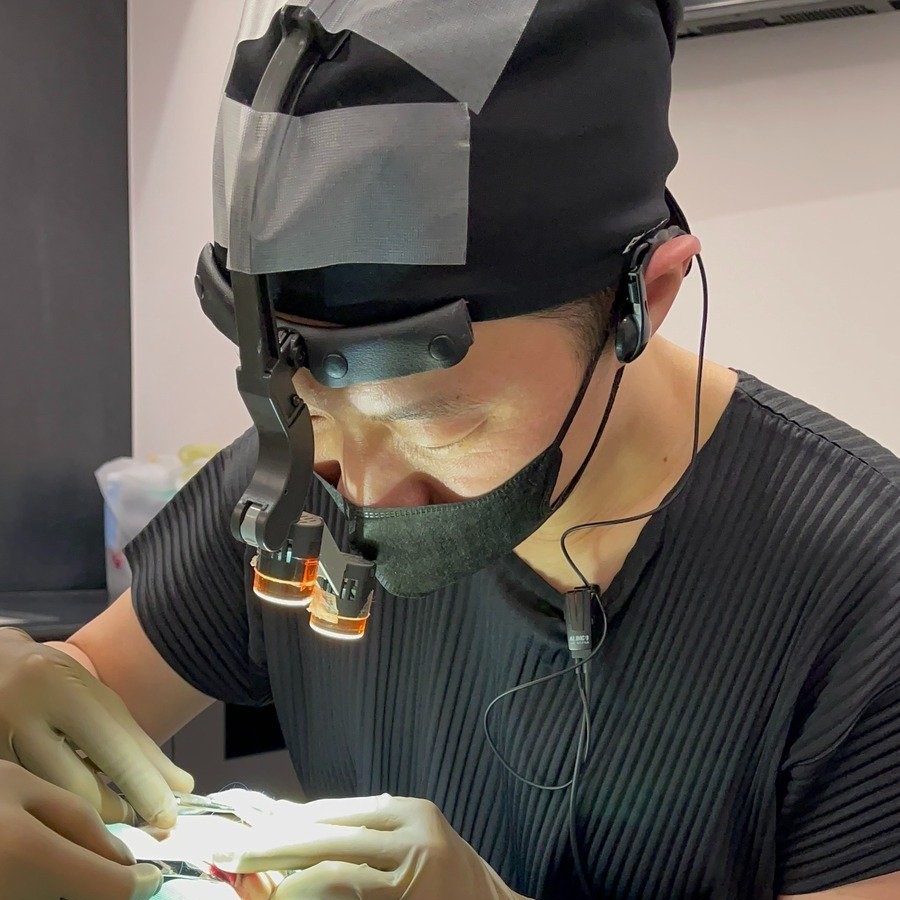
To minimize the risk of regret after a nose wing reduction, it’s important to consider the design and surgical approach based on the condition of your nose and the changes you’d like to achieve. Here, I’d like to share the three key points I prioritize at Bianca Clinic.
① Focus on the balance with the rest of the face rather than just “how small to make it”
When you're self-conscious about your nostrils, you inevitably tend to focus solely on them, thinking, "I want them to be narrower" or "I want them to be as small as possible."
However, the overall impression of the nose isn’t determined by the nostrils alone. Its appearance changes depending on the relative positions of the tip, bridge, columella, and nostrils. Furthermore, balance isn’t just important when viewed from the front, but also from angles and the side.
For this reason, I do not believe that “the smaller, the better.” Rather than focusing solely on the tip of the nose, I place great importance on designing a look that blends naturally with the entire nose—and indeed, the entire face.
② Choose the method—such as the internal or external approach—that best suits the condition of your nose.
There are several methods for alar reduction, including the medial approach, which involves making an incision primarily on the inside of the nose, and the lateral approach, which involves making an incision on the outside of the nostrils.
The most suitable method depends on factors such as the width and thickness of the nostrils and the shape of the nostrils.
The surgical procedure cannot be determined solely based on wishes such as “I want the scar to be as inconspicuous as possible” or “I want to see a significant change.”
During the consultation, we not only listen to the patient’s wishes but also assess the structure of the nose and how well it aligns with the desired changes before determining the appropriate treatment method. In some cases, alar reduction alone may not be sufficient to achieve the desired look; conversely, there are times when it is best to avoid performing unnecessary procedures.
③ Aiming for natural changes that reflect each person’s individuality through “minimal treatment”
What I prioritize in rhinoplasty is determining the procedure necessary to achieve the desired results.
During your consultation, please be sure to tell us not only “What kind of nose would you like?” but also “What you like about your current nose” and “What you don’t want to change.”
Rather than changing everything, we consider the parts you want to keep as we determine the necessary treatments, aiming for a result that brings out your unique personality.
BIANCA CLINIC Case Studies | A Design That Considers the Balance of the Entire Nose, Not Just the Nostrils
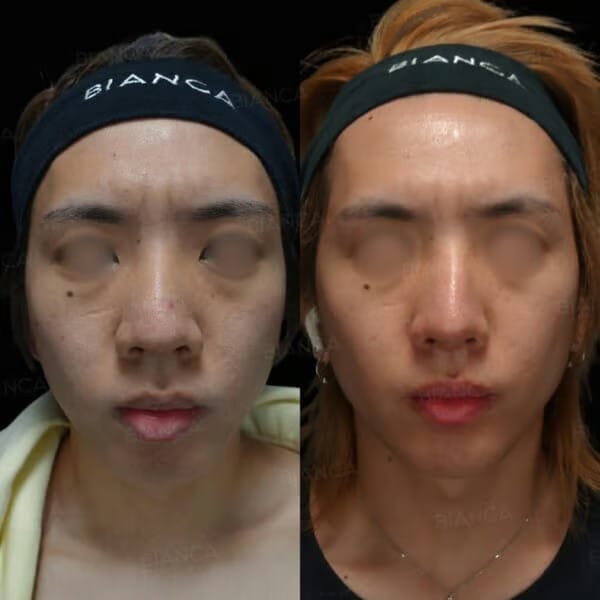
Image source URL:https://biancaclinic.jp/gallery/56200/
[Procedure Names] Rhinoplasty, Septum Extension (using septal cartilage, auricular cartilage, or autologous cartilage), Nasal Tip Reduction, Alar Reduction
[Photo Caption] Left: Before treatment; Right: 8 months after treatment
[Costs] Rhinoplasty: 385,000 yen; Septal Extension Surgery (using septal cartilage, auricular cartilage, or autologous cartilage): 770,000 yen; Nasal Tip Reduction (when performed concurrently with nasal septum extension) 165,000 yen, Nasal Wing Reduction 437,800 yen
[Side Effects, Risks, etc.] Crooked bridge or tip of the nose, scarring, relapse, infection, etc.
*The information provided reflects the menu and prices at the time of the treatment. As the current offerings and fees may have changed, please contact us for details.
This is a case that combines alar reduction, rhinoplasty, septal extension, and tip reduction. We perform the procedure while taking into account the overall balance of the nose—including not only the width of the nostrils but also the position of the tip and the bridge of the nose.
Whether alar reduction alone is appropriate or whether a combination with other procedures should be considered depends on the original shape of the nose and the desired outcome. Please note that since this is a case involving a combination of procedures, the changes shown in the images are not the result of alar reduction alone.
▷Learn More About Dr. Yagasugi's Rhinoplasty
What to Do and How to Approach Corrections When You Think Your Nose Wing Reduction Might Have Failed

Even if you're concerned about the results of your alar reduction surgery, that doesn't necessarily mean you need a revision right away. It's important to first consult with your doctor to assess your current condition.
If you're worried about the final results after a nose wing reduction, consult your doctor.
If you have concerns about the results of your alar reduction surgery, you should first consult the doctor who performed the procedure. Rather than making your own judgment based solely on case examples on social media, it’s important to have the doctor examine you to confirm the details of the procedure and your current condition.
If you experience any concerning symptoms, such as severe pain, swelling, or a sensation of heat, please consult the clinic as soon as possible rather than waiting to see how things develop.
The timing for revision rhinoplasty to reduce the size of the nostrils is determined based on the patient's condition.
The time when you consult with your doctor is not the same as the time when the revision surgery is actually performed. If you have any concerns, you can consult with your doctor even in the early postoperative period, but the timing of the revision will be determined after assessing the swelling, scars, and condition of the tissue.
If you are considering revision surgery for alar reduction performed at another clinic, please bring any materials you have that describe the procedure and surgical details to your consultation, as they will be helpful during your examination.
In revision surgery, it is important to accurately assess the condition following the initial surgery.
During a revision rhinoplasty to reduce the size of the nostrils, we assess which areas were treated during the initial surgery and what procedures were performed, as well as the condition of the scars, skin, and soft tissues.
In addition, the approach you take will vary depending on your specific concerns—such as “my nostrils are too small,” “I’m bothered by the shape of my nostrils,” or “I want to correct asymmetry.” Since it’s not always possible to achieve your desired shape, you should consult with your doctor to discuss what kind of results are realistic based on your current condition.
Frequently Asked Questions About Failed Nostril Reduction Procedures
Here are answers to frequently asked questions about complications from alar reduction surgery and the postoperative recovery process.
Q. If there's asymmetry three days after a nose wing reduction, does that mean the procedure failed?
On the third day after surgery, swelling and puffiness often persist, and there may be differences in the degree of swelling between the left and right sides. You cannot conclude that the procedure was a failure based solely on these asymmetries at this stage.
Q. Is it normal for my nose to still be swollen a few days after a nose tip reduction?
After a nose wing reduction, swelling and puffiness may still be present around the 4th or 5th day. However, if you experience symptoms such as severe pain or a sensation of heat, please consult your doctor rather than trying to diagnose the problem yourself.
Q. Does it take three months for the results of a nose wing reduction to be fully visible?
Around three months after surgery is one of the times when swelling and edema have subsided, making it easier to assess the final results. However, the time it takes for redness and stiffness in the scars to subside varies from person to person.
Q. If too much tissue is removed during a nose wing reduction, can it be restored to its original state?
It may be difficult to completely restore the excised tissue to its original state. Whether revision is possible and the method to be used will be determined after assessing the extent of the excision, the remaining tissue, and the condition of the scar.
Q. Can I consult with you about revision surgery for alar reduction performed at another clinic?
If you have previously undergone alar reduction surgery at another clinic, we will assess your current condition and discuss possible correction options. If you have any documentation detailing the details of your initial procedure, please bring it with you to your consultation.
If you're worried about a botched nose wing reduction, choose a design that takes the final result into account.
To avoid regrets after alar reduction surgery, it’s important to design the procedure with the final result in mind—considering the balance with the entire nose and face, rather than simply making the nostrils smaller. Since swelling and puffiness in the early postoperative period can make the nose look different from the final result, if you’re worried that “the surgery might have failed,” don’t make a judgment on your own—consult your doctor instead.
At Bianca Clinic, we assess each patient’s nasal condition and desired results to recommend the most suitable treatment method. Whether you’re considering alar reduction or have concerns about the final results, please feel free to consult with us.
▷Schedule a consultation at Bianca Clinic
▷Read other blog posts by Yu Yagasugi