column (e.g. in newspaper)
2026.08.25
Is a Face Band Necessary After Liposuction? How Long Should You Wear It? A Plastic Surgeon Explains the Purpose of Compression and How to Use It Properly

My journey into aesthetic medicine stems from a desire to help enrich and beautify lives beyond simply treating illness. My specialties include hyaluronic acid, Botox, and thread lifts. I provide treatments that enhance each individual's unique qualities and bring out an elegant, natural beauty. For concerns around the eyes that are difficult to improve with dermatology alone, I also perform surgical procedures. By integrating dermatology and surgery, I holistically balance the entire face. With three periods of overseas study, I am also able to provide consultations in English.
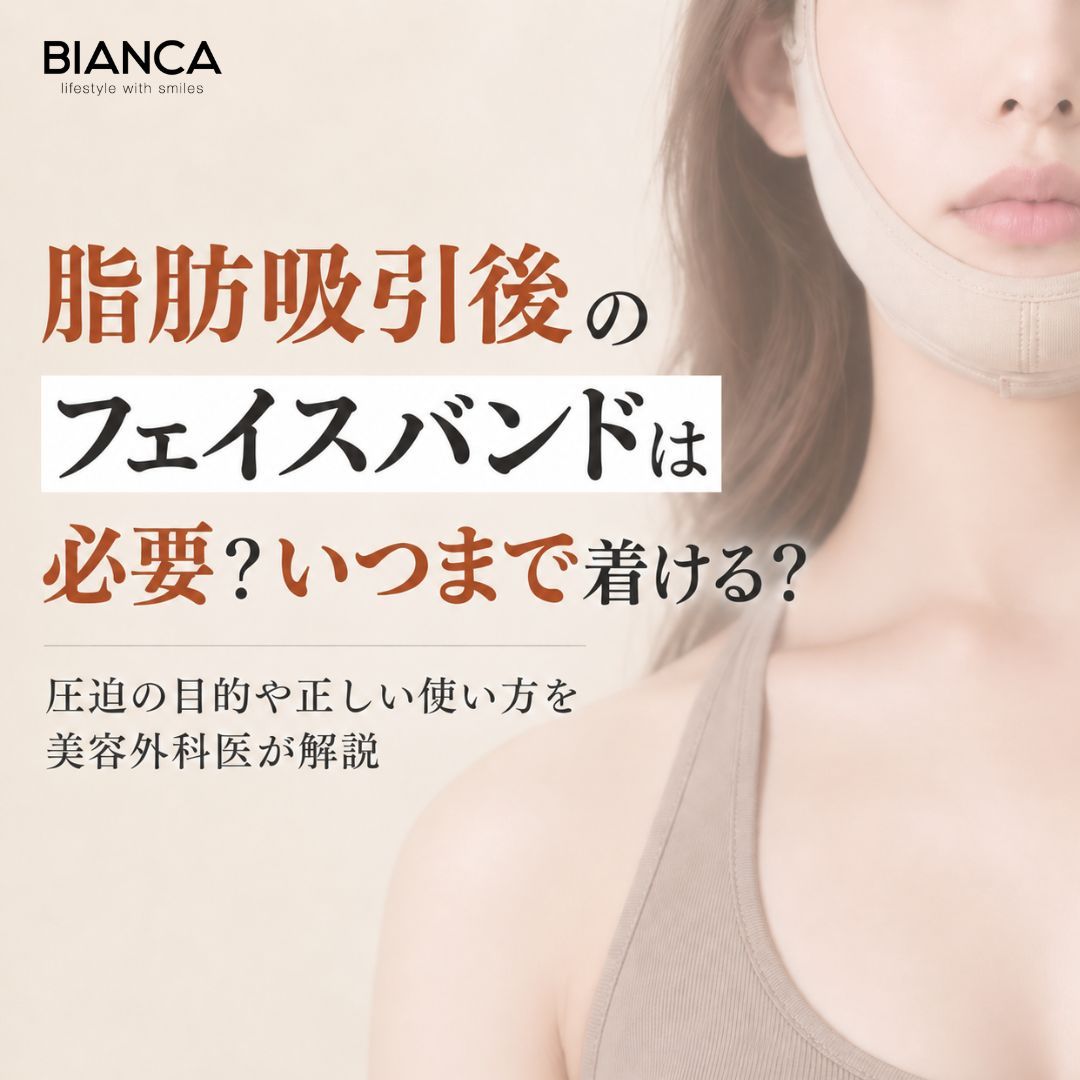
“Is a facial liposuction compression band really necessary?” “I can’t wear it while I’m at work—is that okay?”—We receive many inquiries like these from people in the Tokyo and Ginza areas who are considering facial liposuction.
In cosmetic surgery, the basic approach is to view face bands not as “tools for slimming the face,” but as “compression bandages designed to properly manage post-operative swelling and puffiness.”
Let’s work together to find ways to easily incorporate these practices into your daily life, taking into account perspectives from both cosmetic dermatology and cosmetic internal medicine.
In this article, we’ll explain—from a doctor’s perspective—the purpose of wearing a face band after liposuction, how long and how tightly to wear it, guidelines for tightness, and how to address common concerns. We’ll also touch on how to approach combining this procedure with other treatments, such as Botox and breast augmentation, which are popular at cosmetic surgery clinics in Ginza, Tokyo.
[Doctor’s Point]
-
A face band, used after liposuction of the face and under the chin, is a compression garment designed to reduce post-operative swelling and edema and stabilize the subcutaneous tissue.
-
Since swelling and bleeding are more likely to occur immediately after surgery, it is important to wear the device for the duration and at the times specified by the clinic.
-
It’s not true that “the tighter you fasten it, the smaller your face will look.” Excessive pressure can lead to pain or skin problems.
-
The duration of wear and the daily wear time vary depending on the suction area, the amount of suction, the surgical procedure, and the postoperative course. Do not make decisions on your own; always follow the instructions of the physician who performed the procedure.
-
Just because you don’t wear a face bandage doesn’t mean the fat will return to its original state. However, from the perspective of managing early postoperative swelling and edema, as well as ensuring tissue stability, proper compression management is important.
-
It’s not just the face band that determines the final result. It’s important to consider everything from the appropriate liposuction design to the surgical technique and postoperative care.
The Basics of the “Liposuction Face Band” as Explained by a Cosmetic Surgeon in Ginza, Tokyo
A face band is a compression band that wraps around the face from under the chin and is secured at the top of the head.
Since liposuction involves removing subcutaneous fat using a thin tube (cannula), swelling, bruising, fluid accumulation, and serous discharge are common immediately after the procedure due to the temporary space created and the inflammatory response.
Therefore, applying appropriate compression early after surgery helps control bleeding and stabilize the tissue.
In the field of cosmetic surgery, we emphasize that it is more important to “apply the device properly” and “keep it in place” than to tighten it too much.
Clinics in Tokyo and Ginza generally share the same approach, working with you to develop a realistic wear schedule that fits your daily routine.
The Purpose of Compression from the Perspectives of Cosmetic Surgery, Cosmetic Dermatology, and Cosmetic Internal Medicine
Cosmetic surgery focuses on ensuring the safety of the surgical procedures themselves, while cosmetic dermatology emphasizes skin management—including the prevention of skin problems, moisturizing care, and monitoring changes in skin tone.
From the perspective of aesthetic medicine, the focus is on supporting overall recovery through health management, sleep, nutrition, and adjustments to medication regimens. Even at medical facilities in Ginza, Tokyo, postoperative follow-up care that combines these three approaches is becoming increasingly common.
Can a face band make your face look smaller? Is it just a matter of tightening it?
Since the face band itself does not reduce fat cells, the belief that “the tighter you fasten it, the smaller your face will become” is incorrect. The contour changes resulting from liposuction are determined by the surgical design—specifically, where and how much fat is removed, and where it is intentionally left in place.
Face bands play a supportive role in the recovery process. Even at cosmetic surgery and cosmetic dermatology clinics in Tokyo, excessive pressure is not recommended, and if you experience pain, numbness, or changes in skin color, they suggest adjusting the tightness or repositioning the band.
How Long Should You Wear a Face Bandage After Liposuction? How to Plan Your Wearing Schedule
There is no one-size-fits-all answer. The appropriate duration depends on factors such as the area treated, the amount of fat removed, the surgical technique, and the extent of postoperative swelling.
Generally, you are asked to wear the device continuously immediately after the procedure, and then gradually reduce the wearing time, focusing on when you are at home or sleeping. Do not make your own decisions based on things like “I saw online that it’s X days”; always follow the instructions of the doctor who performed the procedure.
For example, postoperative care may differ between a case where only a small amount of fat was removed from the cheeks and a case where liposuction was performed over a wide area, from the jawline to under the chin. This individualized approach is also common at medical facilities in Ginza, Tokyo.
Do you need it 24 hours a day? What about when you sleep?
Immediately after surgery, you may be instructed to wear the device continuously. Depending on your progress, you may switch to wearing it mainly while sleeping or at home.
If it’s difficult to come in during the day due to work or other commitments, please consult with us in advance so we can arrange a schedule focused on evening appointments. If you experience shortness of breath, severe pain, abnormal skin color, or numbness, please don’t push yourself—contact the clinic immediately.
Cosmetic surgery, cosmetic dermatology, and cosmetic internal medicine clinics in Tokyo also offer practical recommendations tailored to your lifestyle.
What happens if I don't wear it? Is it a failure if I forget for just one day?
Even if you remove the face band, the fat that has been suctioned out will not return. It is also not necessarily the case that the results will change significantly just from not wearing it for a short time.
However, since swelling and edema are common in the early postoperative period, it is certainly advisable to follow your doctor’s instructions.
If you forget to do something, avoid trying to “make up for it” by tightening it excessively the next day.
The outcome of liposuction depends on many factors, including the amount of fat, the design, the areas treated and the volume removed, the surgical technique, skin contraction, inflammation, and individual constitution.
Proper Fitting Instructions and Guidelines for Tightness
The basic principle is to wrap around the area under the chin and along the jawline, ensuring minimal asymmetry and proper contact with the target area. Avoid any localized digging in or slippage away from the intended area.
Adjust the tightness based on what feels like “comfortable pressure”; do not tighten it to the point where it causes severe pain, numbness, or changes in skin color. Since the method of application varies depending on the product and the type of surgery, it’s a good idea to review it with a staff member before you are discharged.
Some cosmetic surgery clinics in Ginza, Tokyo, set aside time for patients to practice putting them on.
When there are marks or when your face looks puffy
Mild indentations are a common occurrence. However, if deep indentations persist for a long time, or if blisters, white or purple discoloration, or worsening severe pain or numbness occur, the pressure may be too strong.
The swelling that appears immediately after removing the face band is often primarily caused by early postoperative inflammation or fluid shifts, and its appearance can fluctuate throughout the day.
Since the final results of liposuction may take some time to fully develop, be sure to have your condition checked during your regular follow-up visits.
Can contractures be prevented? Is massage necessary?
It is not uncommon for the subcutaneous tissue to feel temporarily stiff—a condition known as “contracture”—during the healing process. While a face band does not completely prevent contracture, it can help stabilize the area in the early postoperative period.
Since the need for massage and the appropriate time to begin vary depending on the type of surgery, please follow your doctor’s instructions rather than massaging vigorously on your own.
We sometimes collaborate with cosmetic dermatology and internal medicine clinics in Tokyo to provide recommendations on moisturizing, oral medications, and alternating between hot and cold treatments.
Scheduling for People with Jobs or Other Commitments
We often hear from patients in Tokyo’s Ginza district—where many jobs involve frequent public appearances—that “it’s difficult to wear the device during the day.” Please let us know before surgery how many days off you’ll have, whether you can work from home, whether you can wear the device during the day, and the dates of any important events.
When it comes to liposuction, it’s important to plan not just for the day of the procedure, but for the entire recovery period.
If the conditions are challenging, we may reconsider the timing of the surgery or explore alternative options with shorter recovery times (such as non-surgical treatments like Botox, if necessary).
How to Interpret "Before & After" Images and Points to Note
In the early postoperative period, swelling, bruising, edema, and contractures will fluctuate. Since the appearance in published “Before & After” photos can vary depending on when they were taken, lighting conditions, and posture, it is important not to judge the final result based on a single image.
At cosmetic surgery and cosmetic dermatology clinics in Ginza, Tokyo, we carefully explain the typical timeline and possible fluctuations as part of our follow-up care.
Combining with Other Treatments: Interactions with Botox and Breast Augmentation
Facial liposuction and Botox have different purposes, so when they are performed together, the interval between procedures and any overlap in downtime must be taken into account.
For example, Botox injections around the jawline target tension in the masseter muscle, while liposuction targets subcutaneous fat. At cosmetic surgery and dermatology clinics in Tokyo, it is common to plan facial contouring in stages.
Please note that breast augmentation is a separate surgical procedure. If performed at the same time, we will take into account how to balance your overall health management, clinic visit schedule, and compression management (for the chest area). We will work in collaboration with a cosmetic internal medicine clinic in Ginza, Tokyo, to ensure your overall recovery is supported through comprehensive health management.
The Benefits of Collaboration Between Cosmetic Surgery, Cosmetic Dermatology, and Cosmetic Internal Medicine
・Cosmetic Surgery: Leads the planning and execution of liposuction procedures, as well as post-operative stabilization
・Cosmetic Dermatology: Prevention of skin problems, skin texture care, and assessment of skin tone
・Cosmetic Internal Medicine: Optimization of sleep, nutrition, and medication; overall management during the recovery period
This three-pronged approach is particularly emphasized in areas like Ginza, Tokyo, where a wide range of needs converge. Even when plans for Botox or breast augmentation are added to the mix, we consider both safety and quality of life while keeping the big picture in mind.
About Our Clinic (General Information)
While this article does not currently include specific clinic data (such as case numbers or equipment names), it is based on the assumption of a facility in the Ginza area of Tokyo that offers cosmetic surgery, cosmetic dermatology, and cosmetic internal medicine, and is equipped to handle consultations regarding liposuction, Botox, breast augmentation, and other procedures.
During the initial consultation, we’ll align our expectations, discuss risks and downtime, and propose a post-operative plan tailored to your daily routine. We do not engage in high-pressure sales tactics; instead, we work with you to determine whether this is the right choice for you.
FAQ (Frequently Asked Questions)
I can't wear it during the day. Is it still worth it if I only wear it at night?
Depending on the stage of your recovery, it is possible to maintain a certain level of control even if you primarily wear the device while sleeping. Please consult with your doctor regarding how to allocate your wearing time. This is a common practice at cosmetic surgery and cosmetic dermatology clinics in Tokyo.
How tight should I fasten the headband?
Aim for “comfortable pressure.” Avoid applying pressure so strong that it causes severe pain, numbness, or discoloration. If you’re unsure, please visit our clinic in Ginza, Tokyo, to have your device fitted.
I forgot my face band. Will the fat come back?
Fat does not typically return simply because you forgot to do something. Please do not try to make up for it by tightening the bandage excessively; instead, follow your doctor’s instructions for future care.
I plan to have this procedure at the same time as other treatments (such as Botox or breast augmentation). What should I be aware of?
We’ll organize the treatment goals and any overlapping downtime to adjust the order and intervals of procedures. Let’s create a realistic plan through collaboration among our cosmetic surgery, cosmetic dermatology, and cosmetic medicine departments.
For Those Considering a Consultation in Ginza, Tokyo
In the medical community of Ginza, Tokyo, a system is taking shape that allows patients to receive one-stop consultations on everything from liposuction and Botox to breast augmentation.
We’ll work with you to design a post-operative plan tailored to your lifestyle, drawing on our expertise across cosmetic surgery planning, cosmetic dermatology skincare, and cosmetic internal medicine health management.
We place great importance on dialogue that involves carefully discussing any concerns you may have, rather than aggressive sales tactics. It’s perfectly fine to start by simply asking, “I’d like to know if this is right for me.” Please feel free to contact us.
Summary
The primary purpose of a facial bandage for liposuction is to manage swelling and fluid retention in the early postoperative period and to stabilize the tissues. Tightening it too much will not make your face look smaller; it is important to wear it in the correct position and with moderate pressure, following your doctor’s instructions.
Since the duration of wear varies depending on the suction area, suction volume, surgical procedure, and postoperative progress, do not assume a standard duration; instead, follow the instructions of the physician who performed the procedure.
The key factors determining the final result are the surgical design and technique, while the face band plays a role in supporting the recovery process.
At our cosmetic surgery, dermatology, and internal medicine clinic in Ginza, Tokyo, we offer post-operative care plans that can be easily incorporated into your daily life, including those for procedures such as Botox and breast augmentation. If you’d like to find out if this is right for you, please feel free to contact us for a consultation.