column (e.g. in newspaper)
2026.09.15
What's the Difference Between a Methylene Blue IV and a High-Dose Vitamin C IV? A Doctor Explains Their Effects and Purposes

To maximize your beauty, care for both the inside and outside is essential. We aim to bring advanced anti-aging treatments, such as peptide therapy common overseas, to our Japanese patients. While aesthetic medical approaches may offer more gradual results, they are crucial for building the foundation that supports beauty and youth. We combine nutritional therapy and lifestyle improvements with hormone replacement, peptide therapy, and regenerative medicine to propose personalized treatment plans. We provide long-term support for health and beauty from within.

If you’re experiencing issues such as “feeling foggy-headed,” “having trouble staying focused,” or “struggling to shake off fatigue,” IV therapy may be an option at a cosmetic internal medicine clinic.
Both methylene blue IV therapy and high-dose vitamin C IV therapy are treatments used to improve overall health from the inside out. However, there are differences in the specific effects they target and the principles guiding their use.
At BIANCA CLINIC, we evaluate intravenous therapy options while taking into account your symptoms, physical condition, and treatment goals.
In this article, we will examine the differences between methylene blue and high-concentration vitamin C in terms of electron transfer, the blood-brain barrier, and their relationship to mitochondria.
The Difference Between Methylene Blue IV Infusions and High-Dose Vitamin C IV Infusions
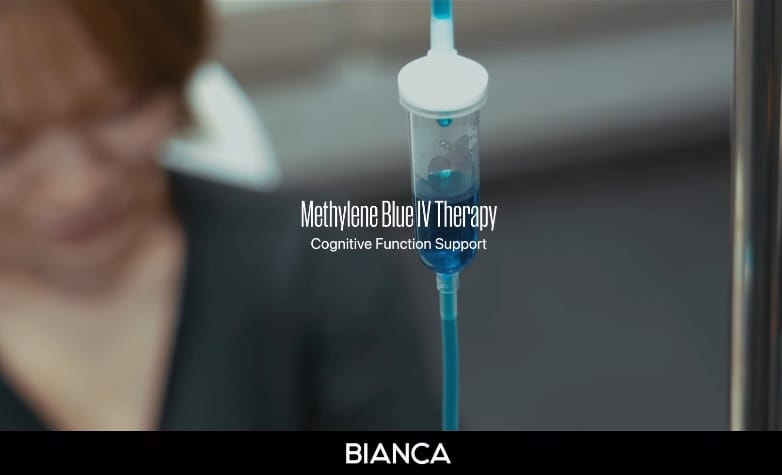
The methylene blue IV drip is a treatment that focuses on brain health, addressing issues such as brain fog, brain fatigue, and concentration.
On the other hand, high-concentration vitamin C IV drips are used to provide broad support for beauty and health, including improving skin condition and alleviating fatigue and stress.
|
Comparison Items |
Methylene Blue Infusion |
High-Concentration Vitamin C IV Drip |
|---|---|---|
|
Main Ingredients |
Methylene Blue |
Vitamin C |
|
Main Purpose |
Approaches to Brain Conditions Such as Brain Fog, Brain Fatigue, and Concentration |
Approaches to Beauty, Health, Fatigue, Stress, and More |
|
Relationship to Redox Reactions |
Possesses redox properties that allow it to accept electrons and transfer them to another location |
Has a reducing effect primarily by donating electrons |
|
The Relationship with the Brain |
has the ability to cross the blood-brain barrier |
It is not an ingredient whose primary characteristic is its ability to cross the blood-brain barrier. |
|
Relationship with Mitochondria |
Research is being conducted on alternative electron transfer mechanisms in the electron transport chain. |
Vitamin C also plays a role in processes such as carnitine synthesis, which is involved in energy metabolism. |
It's not a matter of which one is better; the options available depend on what your concerns are and why you want to receive an IV.
For information on how methylene blue intravenous therapy works, as well as its advantages and disadvantages,"What Is a Methylene Blue IV Drip? A Simple Explanation of Its Expected Effects, Benefits, and Drawbacks"Please see the following as well.
Three Unique Features of Methylene Blue Infusions
The distinctive features of methylene blue infusion include its redox properties—which allow it to act as both an electron acceptor and a donor—its ability to cross the blood-brain barrier, and the fact that its relationship with the mitochondrial electron transport chain is currently being studied.
You can be either the recipient or the sender of an electronic message
Within our bodies, electrons are transferred in various locations to sustain vital functions.
Because methylene blue can switch between its oxidized and reduced forms, it acts as an “electron carrier” that accepts electrons and transfers them to another location.
Although vitamin C is also involved in such redox reactions, it does not function in the same way.
While vitamin C is primarily a reducing agent that donates electrons, methylene blue can act as both an electron acceptor and a donor.
This flexible transfer of electrons is one of the reasons why methylene blue is being studied in mitochondria and neural tissues.
Capable of crossing the blood-brain barrier (BBB)
One of the key characteristics of methylene blue is its ability to cross the blood-brain barrier (BBB).
The blood-brain barrier serves to regulate the passage of substances from the bloodstream into the brain, preventing them from entering unchecked.
Because methylene blue is able to cross this barrier, it has been studied for its relationship to the brain, nerve cells, and cognitive function. [1] [2]
At Bianca Clinic, we offer methylene blue IV therapy as one of our aesthetic medicine options for treating conditions such as brain fog, brain fatigue, and difficulty maintaining concentration.
However, there are various causes for mental fogginess and difficulty concentrating, including lack of sleep, nutritional status, stress, and medical conditions.
Rather than determining the appropriate course of treatment based solely on symptoms, it is important to consider the underlying causes and your overall physical condition before deciding on a treatment plan.
Approaching the mitochondrial electron transport chain
Mitochondria are intracellular organelles that produce the energy necessary for cells to function.
The "electron transport chain," in which electrons are passed from one to the next, plays a key role in this energy production.
Research is being conducted on methylene blue as an alternative electron carrier that transfers electrons in a manner different from that of conventional electron transport pathways. [3]
The idea is that even if part of the electron transport chain is not functioning properly, methylene blue may assist in electron transfer through an alternative pathway.
Because of this characteristic, it has also attracted attention for its relationship to mitochondrial function and cellular energy metabolism.
However, this does not mean that “mitochondrial function will definitely improve” or that “fatigue will definitely be relieved” just by receiving a methylene blue infusion.
It is important to distinguish between the mechanisms of action currently being studied and the changes that people actually experience.
High-Concentration Vitamin C IV Therapy Addresses Beauty, Health, and Fatigue
High-dose vitamin C IV therapy is a treatment in which high concentrations of vitamin C are administered directly into a vein.
Vitamin C has antioxidant properties that allow it to donate electrons to reactive oxygen species.
It is also a nutrient involved in the synthesis of carnitine, which transports fatty acids into the mitochondria.
Because of these functions, vitamin C plays a role not only in beauty but also in various physiological functions, including energy metabolism.
At Bianca Clinic, we offer high-concentration vitamin C IV drips that address both beauty and health—taking into account not only skin condition but also fatigue, stress, and overall wellness.
How do methylene blue and high-dose vitamin C differ in their approach to fatigue?
The methylene blue IV focuses on fatigue associated with brain-related conditions, such as brain fog and difficulty concentrating.
On the other hand, high-dose vitamin C IV therapy primarily targets overall fatigue and stress, including those related to beauty and health.
Both approaches are considered with the goal of improving physical condition, but the difference becomes clearer when viewed from the perspective of “what kind of fatigue you’re concerned about.”
People for Whom Methylene Blue May Be Suitable
The methylene blue IV focuses not merely on general physical fatigue, but on issues related to the condition of the brain.
For example,
- My head feels foggy
- I have trouble staying focused
- I'm having trouble organizing my thoughts.
- Using my brain tires me out.
- I'm concerned about brain fog and brain fatigue
This is an example of such a case.
Methylene blue has the ability to cross the blood-brain barrier, and its relationship to electron transport in mitochondria is also being studied.
For this reason, it is one of the options to consider when developing an approach that takes the brain's condition into account.
For a more detailed explanation of the concept of adaptation, see"Who Is a Good Candidate for Methylene Blue Infusions? A Doctor Explains the Indications and Key Considerations When Deciding on Treatment"This is explained there.
p>Since a methylene blue infusion requires confirmation of conditions such as G6PD deficiency and current medication use, please do not make a self-diagnosis based solely on your symptoms; instead, consult a doctor.
For information on side effects and post-treatment precautions,"How Long Is the Downtime After a Methylene Blue IV? An Explanation of Side Effects and Risks"Please also refer to this.
People Who May Benefit from High-Dose Vitamin C
High-concentration vitamin C IV therapy is an option to consider when you want to improve your overall physical condition—not only to combat fatigue and stress, but also for beauty and health.
For example,
- I'm concerned about feeling tired
- High levels of stress
- I also want to improve my skin's condition
- I want to take care of both my beauty and health at the same time
- I’d like to incorporate IV drips as part of my health management routine.
This is an example of such a case.
In addition to its antioxidant properties, vitamin C plays a role in physiological functions related to energy metabolism, such as carnitine synthesis.
However, fatigue is not caused by a single factor. Since it can be related to factors such as lack of sleep, poor nutrition, hormonal imbalances, stress, and underlying medical conditions, it is important not to choose an IV treatment based solely on symptoms.
Frequently Asked Questions
For those who are unsure about which IV drip to choose, here are answers to some common questions.

Q. Which is better for treating fatigue: a methylene blue IV drip or a high-dose vitamin C IV drip?
A. It depends on the type of fatigue and the goal.
If you're concerned about your brain's condition—such as a foggy feeling or difficulty concentrating—you might want to consider methylene blue. If you're dealing with overall fatigue and want to improve both your beauty and health at the same time, high-concentration vitamin C is worth considering.
Q. Are methylene blue IV drips and high-dose vitamin C IV drips the same type of antioxidant IV treatment?
A. They are not the same.
While vitamin C primarily acts as a reducing agent by donating electrons, methylene blue has the property of accepting electrons and transferring them to another location. Their functions within the body and the key points to focus on also differ.
Q. Should I choose a methylene blue IV drip when I feel foggy-headed?
A. Brain fog and difficulty concentrating are among the reasons people consider a methylene blue IV drip, but the causes can vary widely, including lack of sleep, nutritional status, stress, and medical conditions.
We will make a decision after assessing your physical condition and medical history during your examination.
Q. Can high-dose vitamin C IV therapy help relieve fatigue?
A. High-dose vitamin C IV therapy is a treatment that focuses on the role of vitamin C in antioxidant activity and energy metabolism.
At Bianca Clinic, we also use this treatment for patients concerned about their overall physical condition, such as feelings of fatigue or stress.
Q. Are there any people who cannot receive a methylene blue infusion?
A. This treatment is not available for individuals with G6PD deficiency, those currently taking antidepressants such as SSRIs or SNRIs, pregnant or breastfeeding women, or those with severe kidney dysfunction.
During the initial visit, we'll perform a G6PD test to determine if you're a suitable candidate.
Use methylene blue IV drips and high-dose vitamin C IV drips appropriately depending on your specific concerns.
Both methylene blue IV therapy and high-dose vitamin C IV therapy are designed to improve your overall health from the inside out, but they focus on different aspects.
Methylene blue IV therapy is a treatment that focuses on brain health—including brain fog, brain fatigue, and concentration—due to its ability to cross the blood-brain barrier and its relationship to the mitochondrial electron transport chain.
On the other hand, high-concentration vitamin C IV drips harness the benefits of vitamin C—including its antioxidant properties—to address a wide range of concerns, such as skin condition, beauty, health, and fatigue.
"Are you concerned about mental fatigue or your ability to concentrate?" or "Do you want to improve your overall physical condition, including your skin and body?" These are also factors to consider when choosing an IV treatment.
At BIANCA CLINIC, we assess each patient’s current symptoms, physical condition, medical history, and medications before determining the aesthetic medicine treatment best suited to their individual needs.
If you're not sure which IV treatment is right for you, please feel free to contact us for a consultation.
References