Yukitaro Ikeda
2026.11.08
Why doesn't my skin have a healthy glow?
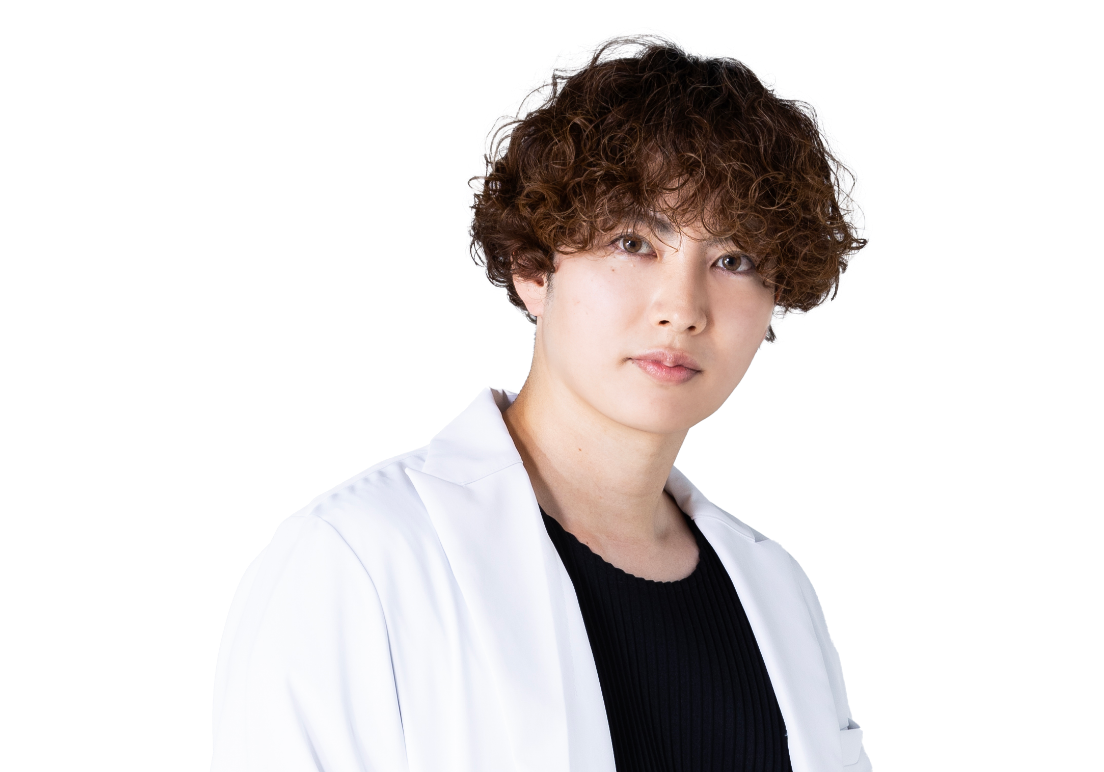
Driven by the belief of “bringing happiness to more people,” I pursued a career in aesthetic medicine after gaining experience in general internal medicine and emergency surgery, along with overseas training. As an internationally oriented doctor holding a UN English Proficiency Test Special Grade A, I treat a diverse range of patients. My goal is to become a true all-rounder, spanning cosmetic surgery, cosmetic medicine, and cosmetic dermatology. With a deep understanding of global beauty standards, I serve as a Key Opinion Leader (KOL) for TargetCool, NEAUVIA®, and CORETOX®. Known for my gentle manner, I provide accessible consultations in both Japanese and English. I pursue aesthetic medicine that transforms not just appearance, but also enhances overall happiness.

"I take care of my skin every day, but it still doesn't look radiant," "My skin looks duller than it used to," "Even when I moisturize, the radiance doesn't come back."
Perhaps some of you are facing this kind of problem.
In this article, we’ll focus on the causes of a lack of skin radiance, explain how it differs from dullness and loss of firmness, and discuss what you should keep in mind to maintain your skin’s radiance.
Why Doesn't My Skin Look Glowy? Here Are the 4 Main Reasons
A skin's radiance is related to the smoothness and moisture of its surface.
When the moisture in the stratum corneum is maintained and the skin’s surface texture is smooth, light tends to reflect more evenly. On the other hand, when the skin is dry or has noticeable unevenness, light is more likely to scatter, which can make the skin appear dull.
The four main causes of dull skin are as follows:
| Main cause | Changes in the Skin |
|---|---|
| Dryness and Lack of Moisture | The skin's surface becomes dry and loses its smoothness |
| Uneven Texture | Unevenness on the skin's surface makes it difficult for light to reflect evenly |
| Build-up of dead skin cells | The skin's surface becomes rough, and its smoothness is compromised |
| Changes in Skin Texture Due to Aging | Changes in the skin's moisture-retention function and structure affect how its radiance appears. |
These causes do not necessarily occur in isolation; sometimes, multiple factors are involved.
Reason 1: Dryness causes the skin's surface to lose its smoothness
One of the main causes of a lack of skin radiance is dryness.
The stratum corneum, the outermost layer of the skin, acts as a barrier that retains moisture and protects the skin from external irritants.
However, when the moisture in the stratum corneum is depleted due to dry air, over-cleansing, or UV exposure, dryness and fine lines on the skin’s surface become more noticeable, which can make the skin appear dull.
Reason 2: The skin's texture is uneven, so light isn't reflected uniformly
Skin texture refers to the pattern formed by the fine grooves on the skin's surface and the areas enclosed by those grooves.
When the skin's texture becomes uneven due to factors such as dryness or friction, light tends to scatter off the fine irregularities on the skin's surface, which can make the skin appear dull.
In addition, skin texture irregularities—such as enlarged pores and acne scars—can also affect how the skin’s radiance appears.
▷Related Article: How Can I Improve My Skin Texture? (No. 8 · Link to be added after publication)
Reason 3: The skin feels rough due to a buildup of dead skin cells
The skin has a natural process called "skin turnover," in which new cells are generated at regular intervals and old dead skin cells naturally shed.
However, when dead skin cells become difficult to shed due to factors such as dryness or aging, they can accumulate on the skin’s surface, leading to roughness and a lack of luster.
Reason 4: As we age, the skin’s ability to retain moisture and its structure change.
As we age, changes occur in the skin's ability to retain moisture, sebum secretion, and skin structure.
For example, changes such as a tendency for the stratum corneum to become dehydrated or alterations in collagen and elastin in the dermis can affect the skin’s smoothness and texture.
Changes in skin texture due to aging, combined with dryness and uneven skin texture, can lead to a lack of radiance.
▷Related Article: Why Does Skin Lose Its Firmness? (No. 5 · Link after publication)
What's the difference between a lack of skin radiance and dullness or a loss of firmness?
A lack of skin radiance is often seen alongside dullness and a loss of firmness, but the key factors to focus on differ for each condition.
| Skin Concerns | Key Factors |
|---|---|
| Lack of shine | Smoothness, moisture, and light reflection on the skin's surface |
| dullness | Pigmentation, complexion, dryness, skin texture, etc. |
| Lack of firmness | Skin elasticity and structures such as collagen and elastin |
For example, even if your skin tone is relatively even, dryness can make it look dull. Also, even if your skin has a healthy glow on the surface, if its elasticity has decreased, it may feel less firm.
As you can see, a lack of luster does not necessarily go hand in hand with dullness or a loss of firmness.
▷Related Article: Why Does My Whole Face Look Dull? (No. 1 · Link after publication)
Things to Keep in Mind to Maintain a Radiant Complexion
If you're concerned about a lack of radiance in your skin, the key is to minimize factors that affect the skin's surface, such as dryness and friction.
In your daily life, keep the following points in mind.
- Proper Moisturizing:Use a moisturizer suited to your skin type to maintain moisture in the stratum corneum.
- Gentle Facial Cleansing:Avoid rubbing your skin too hard and avoid over-washing.
- UV Protection:Use sunscreen and other products to protect your skin from UV damage
- Avoid excessive exfoliation:Don't scrub or exfoliate more often than necessary.
However, if factors such as uneven skin texture due to pores or age-related changes in skin condition are involved, you may not notice significant results from skincare alone.
▷Related Article: Why Does My Face Still Feel Dry Even After Moisturizing? (No. 7 · Link after publication)
Can I consult a cosmetic dermatologist about dull skin?
If you're concerned about a lack of radiance in your skin, one option is to have a cosmetic dermatologist assess your skin's condition and discuss care and treatment options tailored to the underlying cause.
For example, if the issue is related to a buildup of dead skin cells or roughness on the skin’s surface, treatments such as Lala Peel or HydraFacial—which combines cleansing and exfoliation—may be considered.
However, the treatment may not be suitable if your skin is extremely dry or inflamed. Since the treatment carries risks such as redness and irritation, a doctor must determine whether it is appropriate for you.
At Bianca Clinic, we assess your skin's dryness, texture, and pore condition, and develop a skin improvement plan tailored to your individual concerns.
▼Learn more about Lara Peel at BIANCA CLINIC
▼Learn more about the HydraFacial at BIANCA CLINIC
▷Related Article: Does Exfoliation Give Your Skin a Glow? (No. 20 · Link to be posted after publication)
Frequently Asked Questions About Dull Skin
Here are answers to some common questions about lack of skin radiance.
Q. Why doesn't my skin look radiant even though I'm moisturizing it?
A. If your skin doesn’t look radiant even when you’re moisturizing, it may be due to factors other than dryness, such as uneven skin texture, a buildup of dead skin cells, or uneven pores. It’s also possible that the type of moisturizer you’re using or how you’re applying it isn’t suited to your skin’s condition.
Q. Is a lack of skin radiance related to low sebum production?
A. Sebum protects the skin’s surface and helps prevent moisture loss. Therefore, low sebum levels can make the skin prone to dryness, which may result in a lack of radiance. However, it’s important to note that the shine caused by sebum is different from the radiance that comes from the skin’s smooth texture.
Q. Could a sudden loss of skin radiance be a sign of illness?
A. You cannot determine whether you have a medical condition based solely on a lack of skin radiance. However, if this is accompanied by sudden dryness, redness, itching, or flaking, it may be related to a condition such as dermatitis. If your symptoms persist or suddenly worsen, consult a dermatologist.
Let's learn the reasons why your skin lacks luster and figure out a skincare routine that suits your skin's condition.
Causes of a lack of radiance in the skin include dryness, uneven skin texture, the buildup of dead skin cells, and changes in skin condition due to aging.
If you're concerned about a lack of radiance, it's important to first check the condition of your skin and assess factors such as dryness and friction.
At Bianca Clinic, we assess your skin condition and concerns, and—if necessary—suggest treatment options, including cosmetic dermatology procedures.
If you find that “no matter how much skincare you do, your skin still doesn’t look radiant” or “you want to find out what skincare routine is right for your skin,” please feel free to consult with us during a consultation.
▼View BIANCA CLINIC's page on skin whitening, skin care, and firmness and radiance
▼Try a consultation at BIANCA CLINIC
Precautions Regarding Treatments (Private Medical Care)
The following treatments are self-pay (not covered by insurance). The prices listed are approximate and include tax; they may vary depending on the treatment details, treatment area, and any additional procedures. The number of sessions, progress, and results may vary from person to person.
Lala Peel: A treatment that uses a peeling agent to address dead skin cells and roughness on the skin’s surface. We generally recommend 5 to 10 sessions, spaced 2 weeks to 1 month apart. 18,900 yen per session for the entire face. Risks: Temporary redness, dryness, stinging, itching, and discomfort.
HydraFacial: A treatment that uses a water jet to cleanse and exfoliate, removing impurities and dead skin cells from the skin’s surface. We generally recommend 5 to 10 sessions every 2 to 4 weeks. 25,200 yen per full-face session. Risks: Redness, stinging, etc.
Unapproved Drugs, Medical Devices, and Other Products: The treatments listed above may involve the use of pharmaceuticals and medical devices that are not approved in Japan. For LalaPeel, we use products personally imported from MD Skin Solutions based on a physician’s judgment, and the HydraFacial device was also introduced through personal import procedures based on a physician’s judgment. There may be cases where no approved products with the same ingredients or performance are available in Japan.
Lala Peel has obtained European CE certification, while HydraFacial has received U.S. FDA approval and the European CE mark. However, approval or certification in other countries does not imply approval in Japan. There is a possibility that serious risks or side effects have not yet been identified, and side effects resulting from the use of unapproved products may not be covered by the Pharmaceutical Side Effect Victim Relief System or similar programs.