column (e.g. in newspaper)
2026.07.22
Are Re2O and Bunaju the Same Thing? A Cosmetic Surgeon Provides a Comprehensive Explanation of Their Names, Ingredients, and Effects

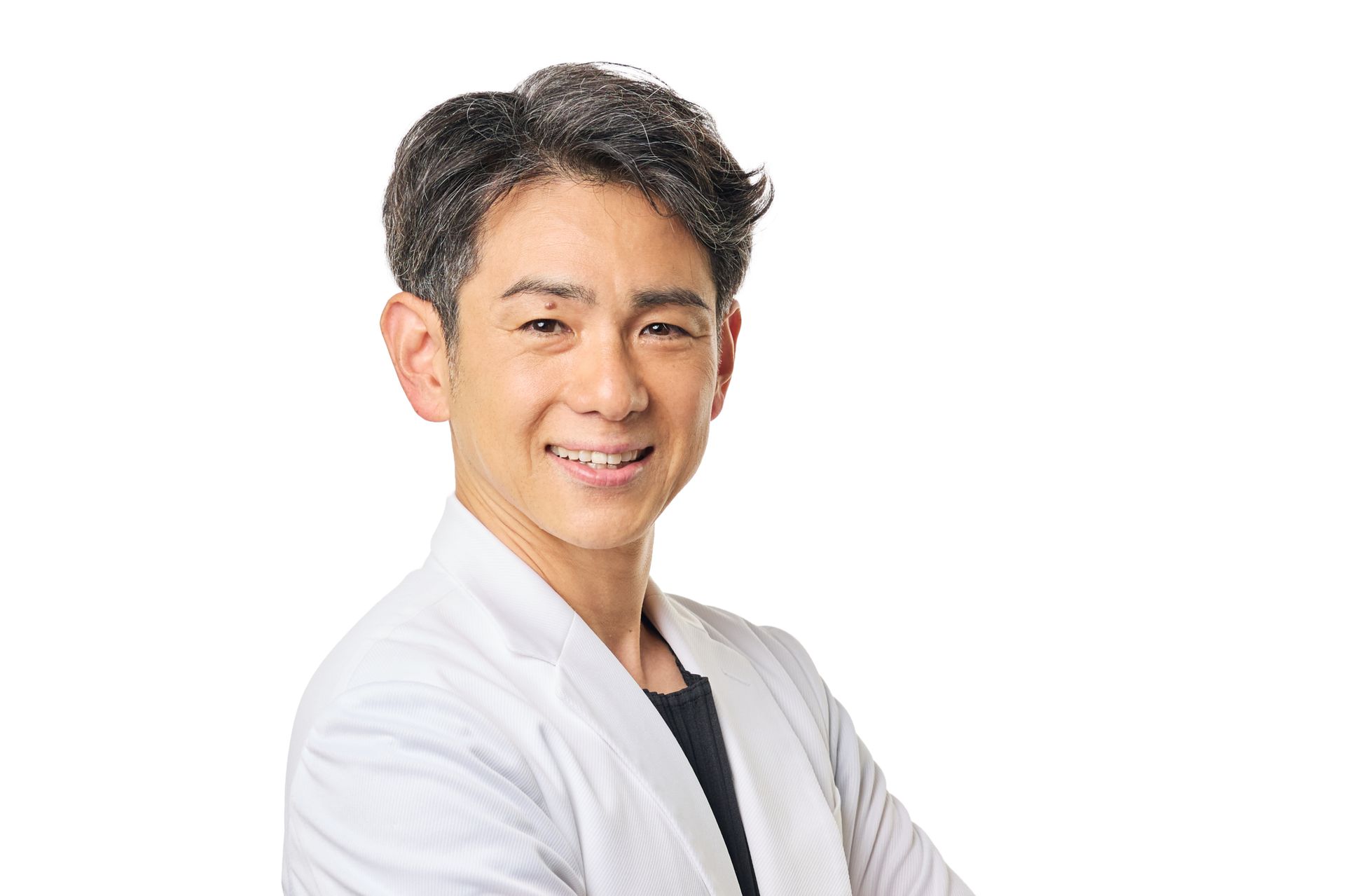
Engaged in both aspects of cosmetic dermatology and cosmetic surgery, he is an all-rounder doctor who pursues natural and elegant beauty with "the best interest of the patient" as his first priority. He is also a board-certified cosmetic surgeon by the Japanese Society of Aesthetic Plastic Surgery (JSAS). He specializes in hyaluronic acid injections, thread lifts, and facial surgery, and is a competent KOL (Key Opinion Leader) for ARTEMISLIFT and Hydro Rejuran. He is always sensitive to the latest trends and is always exploring knowledge and techniques.
 Doctors' Point
“Are Re2O and BNAJU the same product?” “Are the ingredients and effects of South Korea’s Re2O (Rituo) and Japan’s BNAJU different?”—These are the kinds of questions people tend to ask the more they research a wide range of information on cosmetic medicine.
To put it simply, Re2O and Bunaju are the same formulation; the only differences are their brand names and packaging. In this article, drawing on insights from the clinical practice of cosmetic surgery, I will provide a systematic explanation from a cosmetic surgeon’s perspective—covering everything from the reasons for the different names to the background of the ingredients, expected effects, treatment areas, number of sessions, downtime, and how it differs from other skin boosters such as Rejuran.
While touching on terms such as Re2O and Bunaju, this article covers everything from how to interpret “before and after” photos to key points for choosing a cosmetic surgery clinic. This article is a general overview intended for informational purposes only. Please consult a cosmetic surgeon in person to determine your individual suitability and the best treatment plan for you.
Re2O and Bunaju are the same drug—the only differences are the brand names and packaging.
The most important point is that Re2O (Korean name) and Bunaju/BNAJU (Japanese name) are formulations based on the same concept and containing the same ingredients. It is not uncommon in the field of aesthetic medicine for brand names and packaging designs to vary depending on the country or distribution channel.
Therefore, there is no need to rank them based on speculation such as “South Korea’s Re2O is more effective” or “Japan’s Bunaju has had its ingredients modified to suit Japanese consumers.”
In the field of cosmetic surgery, what should be evaluated is the design and implementation of the procedure—specifically, determining the appropriate area, layer, and dosage based on the patient’s condition—rather than the brand name of the product itself, which does not determine the outcome.
When gathering information, if you're looking for information on South Korea, search using the term "Re2O," and if you're considering cosmetic surgery in Japan, search using "BNAJU." This will make it easier to get a comprehensive overview of product information and before-and-after photos.
Why Are the Names Different in South Korea and Japan?
Because trademark, distribution, marketing strategies, and regulatory requirements vary by country and region, the brand name may differ even for the same formulation. The difference between Re2O and Bunaju stems from this framework and does not mean that the formulations’ concepts or core ingredients are different.
Don’t be misled by differences in terminology; during a consultation at a cosmetic surgery clinic, be sure to verify the essential details of the treatment, such as the procedure itself, who is a suitable candidate, the injection plan, downtime, and the risk of complications.
What Is Re2O·Bunaju?—An ECM-Inspired Skin Booster
Re2O/Bunaju is a skin booster that focuses on the skin’s “foundation”—the ECM (extracellular matrix). Rather than sculpting the face with volume, as in contouring, it carefully delivers a small amount to the superficial to mid-dermal layers of the skin to comprehensively improve skin quality—including firmness, elasticity, texture, fine lines, dryness, pores, and radiance.
This treatment can be viewed as part of the “skin care” approach that is gaining attention in the field of cosmetic surgery.
What Is ECM (Extracellular Matrix)?
The ECM is an extracellular supportive structure composed of collagen, elastin, laminin, fibronectin, proteoglycans, glycosaminoglycans, and other components; to use a building analogy, it is the foundation, columns, and scaffolding. When the ECM weakens or becomes disrupted due to aging, UV exposure, dryness, chronic inflammation, and other factors, signs such as loss of firmness, fine lines, enlarged pores, uneven skin texture, dryness, and loss of luster become apparent.
The ECM approach is a philosophy aimed at fundamentally improving the skin's "ability to function" at its core.
The hADM Concept
The key to understanding Re2O/Bunaju lies in the concept of hADM (Human Acellular Dermal Matrix).
This approach is based on insights that have been applied in the fields of wound treatment and reconstruction, focusing on the ECM structure—which removes cells and serves as a scaffold for the dermis. Its defining feature is that it goes beyond mere hydration to support the “environment” in which cells function.
Expected Effects and Indications
Re2O/Bunaju is expected to bring about the following changes in skin texture by regulating the dermal environment.
- Improved firmness and elasticity (restoration of a springy, resilient feel)
- Reduces the appearance of fine lines and shallow wrinkles
- Improvement in Pore Appearance (Visual Changes Resulting from Improved Skin Elasticity)
- Smoother Skin Texture and Better Makeup Application
- Reduces dryness and flakiness; provides a feeling of moisture from within
- Natural luster (a healthy glow, not greasiness)
Examples of suitable cases include fine lines around the eyes, enlarged pores on the cheeks, fine wrinkles on the neck, and concerns about thin or fragile-looking skin. For deep furrows or significant volume loss, we will consider combining treatments such as hyaluronic acid injections, fat grafting, thread lifts, and radiofrequency.
In cosmetic surgery, designing a combination of procedures tailored to the patient's goals is key.
Approach by Body Part: Eyes and Neck
skin round one's eyes
The skin under the eyes is thin, making it an area prone to unnatural swelling or puffiness when too much hyaluronic acid is injected. Re2O/Bunaju targets skin texture and elasticity, making it ideal for reducing the appearance of natural “fatigue.”
However, since dark circles are caused by multiple factors (thinning skin, pigmentation, vascular transparency, orbital fat, bone structure, and sagging), a plastic surgeon will evaluate each case individually to determine suitability. For protruding fat or deep hollows, alternative treatments may be prioritized.
首
The neck has few sebaceous glands, making it prone to dryness and horizontal wrinkles. We aim to improve firmness and skin texture through micro-dispersion. For deep-set, pronounced horizontal wrinkles and severe sagging, we combine treatments such as non-crosslinked hyaluronic acid, Botox, radiofrequency, and thread lifts.
In cosmetic surgery, we design procedures from multiple perspectives, taking into account the anatomy of the target area and the desired texture.
Differences from Other Skin Boosters and Injection Treatments
Differences from Rejuran
Rejuran is based on the concept of using PN (polynucleotides) to support the repair environment and cellular activity. Re2O/Bunaju is based on the concept of using hADM-derived ECM to prepare the “scaffold.” Stimulation and repair (Rejuran) and matrix reinforcement (Re2O/Bunaju) are complementary. In cosmetic surgery, using them in combination at different times is one strategy.
Differences from Hyaluronic Acid
While hyaluronic acid excels at shaping (nose, chin, reducing furrows, and adding volume), Re2O/Bunaju is primarily intended to refine texture. Understanding them not as substitutes but as treatments with distinct purposes makes the choice of treatment much clearer.
Differences from Jubeluck
Jubelook, which combines PDLLA and non-crosslinked HA, is primarily designed to stimulate collagen production and is used to improve the appearance of pores, acne scars, and skin firmness. Re2O/Bunaju focuses on reinforcing the extracellular matrix (ECM). It is particularly well-suited for concerns such as thin skin, loss of elasticity, and fine lines.
Treatment Plan: Number of Sessions, Intervals, and Timeline of Results
While some people notice a difference in moisture and radiance after just one session, treatments are generally designed with the recommendation of about three sessions at 3- to 4-week intervals to achieve consistent skin improvement. After that, consider maintenance treatments every few months.
Since the optimal solution varies depending on age, skin thickness, dryness, the depth of fine lines, the treatment area, prior treatments, and desired results, it is important to have a personalized treatment plan developed at a cosmetic surgery clinic.
You’ll begin to notice the results gradually over the course of a few days to a few weeks, once the temporary swelling immediately following the injection has subsided. Unlike treatments like hyaluronic acid, which produce a “final result” on the same day, this treatment aims for natural, gradual changes.
The Process, Pain, and Downtime of Cosmetic Surgery Procedures
The typical procedure at a cosmetic surgery clinic follows this sequence: consultation and suitability assessment → photography (to provide an objective “before and after” perspective) → anesthesia (cream, topical, or nerve block) → micro-injections → cooling → post-procedure instructions. While patients may experience a prickling sensation around the eyes and mouth, pain can be effectively managed using ultra-fine needles, cannulas, and appropriate anesthesia.
Expected downtime symptoms include redness, swelling, puffiness, needle marks, pinpoint bleeding, bruising, mild tenderness, and temporary unevenness. Because the skin is sculpted into fine contours, a slightly bumpy texture may appear immediately after the procedure, but this usually smooths out within a few hours to a few days. Since bruising may persist for 1 to 2 weeks, be sure to allow plenty of time when making plans.
On the day of your procedure, avoid vigorous rubbing, long baths, saunas, strenuous exercise, heavy drinking, and vigorous massage of the treated area. Be sure to use mild skincare products and take thorough precautions against UV exposure. These are standard guidelines common to all cosmetic surgery clinics.
Safety, Contraindications, and Precautions (From a Cosmetic Surgery Perspective)
Treatment is not permitted or requires careful consideration in cases such as pregnancy or breastfeeding; infection or severe inflammation at the treatment site; a history of severe allergies; immune system disorders; or current use of anticoagulants or antiplatelet medications.
Be sure to disclose any pre-existing conditions, medications you are taking, and allergy history during your cosmetic surgery consultation. Safety depends heavily on appropriate patient selection and the surgeon’s control over the layer, amount, and area of the procedure.
How to Choose a Cosmetic Surgery Clinic
The results are determined more by “who administers the injection, where, to which demographic, and with what distribution” than by the name of the formulation. Use the following guidelines as a reference when making your selection.
- It accurately explains that Re2O and Bunaju are the same drug formulation.
- Clearly outline the anatomical regions and the risks and benefits for each layer of the skin
- Clarify the treatment objective (shape or texture) and make a proposal that is neither excessive nor insufficient.
- Provide specific details on risks, downtime, and complications
- The presentation of the "Before & After" images is appropriate (the conditions regarding angle, lighting, and time period are fair).
- They do not push unnecessary treatments, and cost transparency is ensured.
Frequently Asked Questions (FAQ)
Q. Are Re2O and Bunaju really the same thing?
A. Yes. The contents are identical; only the brand name and packaging differ. The choice depends on the cosmetic surgeon’s assessment of suitability and the injection plan.
Q. Is the Re2O from South Korea more effective?
A. Since the formulations are identical, there is no difference in effectiveness. The final result varies depending on the injection volume, layer, distribution, number of sessions, the practitioner’s skill, and the patient’s skin condition.
Q. Will I see a difference even after just one session?
A. Some people notice initial improvements in moisture and radiance. To stabilize the skin’s texture, it is often recommended to use the product for about three consecutive applications.
Q. Does it plump up like hyaluronic acid?
A. The primary objective is to refine the texture, not to define contours. Any temporary swelling immediately after the procedure will subside, resulting in a natural-looking finish.
Q. Which is better, Rejuran or...?
A. Their purposes are different. Rejuran is designed to create a healing environment, while Re2O/Bunaju serves as an ECM scaffold. In cosmetic surgery, they are selected and used in combination depending on the condition of the skin.
Q. How do I view the "Before & After" section?
A. Check whether the lighting, angle, shooting distance, and number of days elapsed are consistent to ensure fairness and reproducibility. Evaluating cosmetic surgery requires a multifaceted comparison.
Summary
Re2O and BNAJU are the same formulation; the only difference is their names and packaging, which vary by country. Rather than the relative merits of the formulation itself, the outcome depends on whether the treatment can be tailored to address the patient’s concerns in terms of the appropriate site, depth, distribution, and number of sessions.
Re2O/Bunaju is a skin booster based on the ECM (extracellular matrix) concept that aims to naturally and gradually improve overall skin quality—including firmness, elasticity, fine lines, pores, skin texture, dryness, and radiance. Since other treatments are necessary for deep furrows and volume loss, it is essential in cosmetic surgery to layer treatments according to specific goals.
Don’t be misled by differences in names; choose a cosmetic surgery clinic that focuses on the essentials—assessment of suitability, injection design, understanding of downtime and risks, and the fair presentation of “before and after” results—and develop a treatment plan that you feel confident about.