column (e.g. in newspaper)
2026.07.21
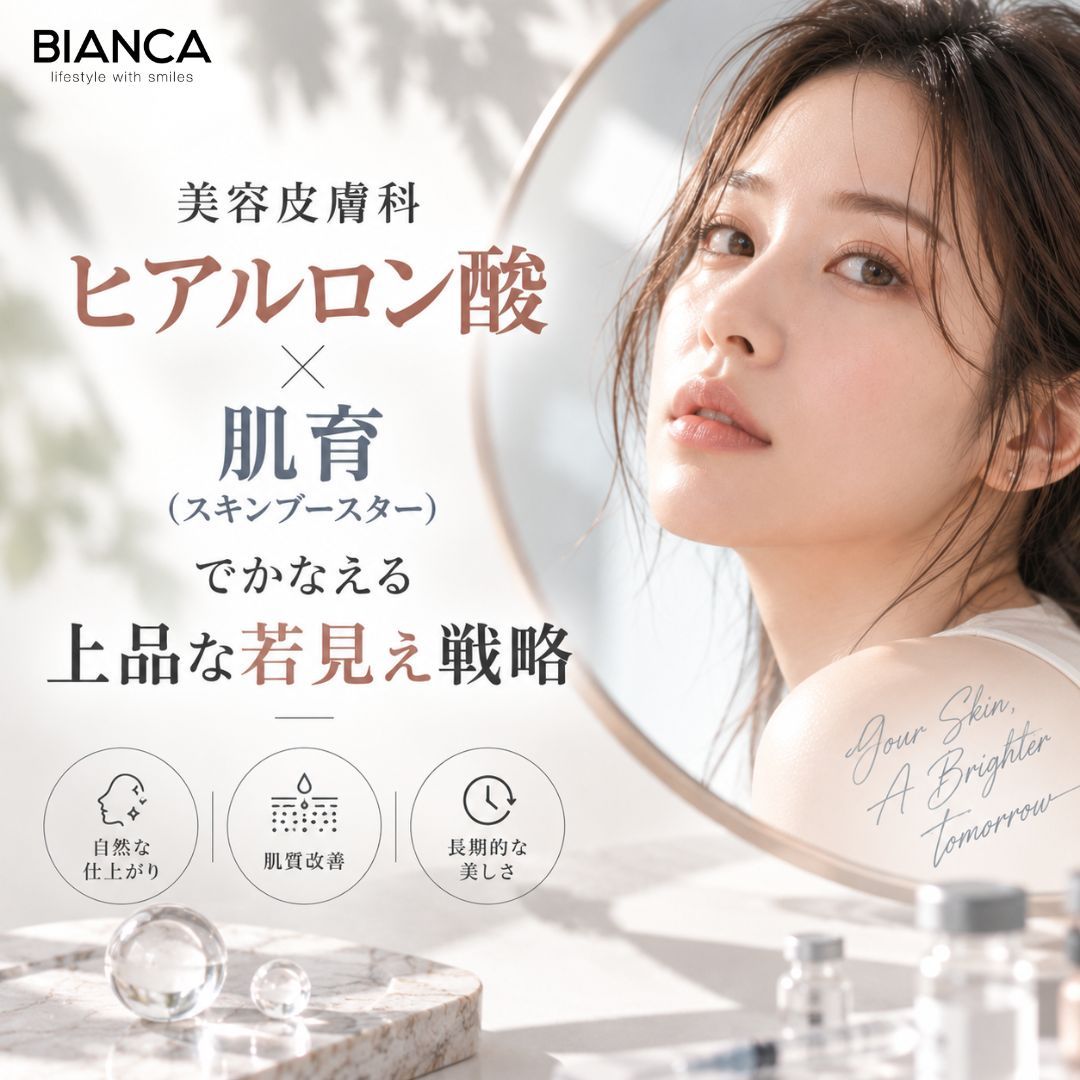
A Sophisticated Strategy for a Youthful Appearance Through Aesthetic Dermatology: Hyaluronic Acid × Skin Nurturing (Skin Booster)

As an Assistant Professor, Associate Ward Director, and Chief of Dermatopathology at the university hospital dermatology department, I deepened my expertise through academic presentations and paper publications both domestically and internationally. I have handled a wide range of treatments, from birthmark therapy in children to adult pigmentation concerns, utilizing various lasers and injection therapies, while also contributing to community healthcare. Through encountering numerous cases, I strongly felt the potential and necessity of aesthetic medicine, resolving to pursue further expertise. Building upon my solid dermatological knowledge and meticulous diagnostic skills, I value treatments that gently support each individual's skin while bringing out its inherent beauty.
 Doctors' Point
Every time you look in the mirror, you worry about sagging cheeks, nasolabial folds, and dry skin—many people face these concerns and aren’t sure where to start.
In cosmetic dermatology, the prevailing approach is to use hyaluronic acid to enhance facial contours while using skin boosters to improve skin texture and hydration. Rather than forcing a youthful appearance, balancing both facial contours and skin texture makes it easier to achieve a natural and elegant look.
It’s important to note that, depending on the intended purpose, hyaluronic acid comes in two types: cross-linked, which is suitable for volume restoration, and non-cross-linked, which promotes skin regeneration and moisture retention. In this article, we’ll clearly explain—from the perspective of cosmetic dermatology—the differences between hyaluronic acid and skin boosters, as well as how to choose and combine them (including how to distinguish between cross-linked and non-cross-linked types).
The Basics of Hyaluronic Acid and Skin Care (Skin Boosters)
Hyaluronic acid is used in injectable treatments to restore volume and refine facial contours. Cross-linked hyaluronic acid, in particular, leverages its gel-like elasticity to effectively address “volume loss, such as sunken areas and hollows,” and to redefine facial contours. By softening noticeable shadows (such as wrinkle lines and hollows) and adjusting how light hits the skin, we aim to create a more rested and natural-looking appearance.
In contrast, “skin booster” is a general term referring to treatments that involve the micro-injection or infusion of primarily non-crosslinked or low-crosslinked hyaluronic acid and various cosmetic ingredients to improve the skin’s own moisture retention, texture, and smoothness. In addition to improving the texture of the dermis, some treatments are designed to promote skin regeneration (remodeling) by combining injection techniques that enhance firmness around the supporting ligaments.
One of the key benefits is that it helps improve makeup application and enhance skin radiance. Since individual results—including effectiveness, duration, discomfort, and downtime—vary, we’ll work with you to understand your lifestyle and preferences, then adjust the formulation (cross-linked vs. non-cross-linked), injection depth, and volume to find the best solution for you.
How to Choose a Cosmetic Dermatology Clinic: Consider Your Concerns, Lifestyle, and Treatment Duration
During consultations at our cosmetic dermatology clinic, we focus not only on the extent of the visual changes but also on “which concerns to address, over what timeframe, with what level of discomfort, and using which formulation (cross-linked or non-cross-linked).” It’s not a matter of which is better or worse, but rather a matter of what works best for you.
- For those who want to see results early, before an event: Cross-linked hyaluronic acid, which excels at creating a three-dimensional contour, is a good option.
- For those who are taking off their masks more often and want to improve their skin’s appearance up close: A skin-nourishing treatment (skin booster) centered on non-crosslinked hyaluronic acid enhances skin texture, hydration, and radiance.
- For those who want to achieve an overall youthful appearance: It’s effective to use a combination of cross-linked hyaluronic acid to build a firm foundation for sagging and sunken areas, and non-cross-linked skin boosters to refine the skin’s texture.
- For those who want to minimize downtime: Keep the injection volume, treatment areas, and frequency to a minimum, and make minor adjustments—including the choice of injection depth and needles (cannulas or fine needles)—to fit your schedule.
In cosmetic dermatology, it is also common to make small, incremental adjustments while monitoring the patient’s progress. Rather than completing the treatment in the first session, the focus is on maintaining a natural look.
Approaches to Combination Therapy and How to Interpret "Before & After" Results
With a combination strategy, first correcting the foundation (the three-dimensional balance of the face) using cross-linked hyaluronic acid, and then layering non-cross-linked skin-nourishing treatments (skin boosters) on top, can easily change not only how the skin looks in photos but also how it appears up close. In particular, applying the treatments in distinct layers—aiming to support firmness around the supporting ligaments and improve the hydration and texture of the dermis—also enhances how the face appears when in motion.
When looking at "Before & After" photos, check not only the front view but also "shading from oblique and side angles," "how the face moves when smiling," and "changes in pores and skin radiance" to get a more realistic impression. Keep in mind that photos are affected by lighting and angles, so treat them as a general guide only.
The Process and Level of Discomfort Involved in Cosmetic Dermatology Procedures
Generally, the process follows this sequence: consultation, imaging, and treatment plan development → anesthesia as needed → procedure → cooling down → post-treatment instructions. The duration of the procedure varies depending on the treatment area, the volume, the type of product used (cross-linked or non-cross-linked), and the injection layer. While some patients experience no swelling or bruising, others may have these symptoms for a few days; with skin boosters, slight redness may be temporarily visible.
The effects of hyaluronic acid typically last from several months to over a year, and when it comes to skin care, you’ll often find that consistent treatment over a series of sessions leads to more stable results (results may vary from person to person). At our cosmetic dermatology clinic, we provide thorough guidance on pain management and aftercare.
Considerations Regarding Risk and Safety
Injection treatments may cause swelling, bruising, discomfort, asymmetry, or allergic reactions. Since there have been rare reports of serious complications, such as impaired blood flow, it is important to follow procedures that take anatomical considerations into account and to have a system in place for administering dissolving injections and contacting medical personnel when necessary.
Please be sure to share your medical history, current medications, and any allergies with us in advance. At our cosmetic dermatology clinic, we prioritize safety above all else, proceeding with treatments based on a flexible payment plan and regular follow-ups.
Who This Is For / Who Should Consider It Carefully
Suitable for
- For those who want to look naturally younger without drawing attention from others
- For those who want to soften the appearance of fatigue before an event
- For those who are being seen up close more often and want to improve their skin texture
- For those who want to follow a step-by-step plan at a cosmetic dermatology clinic to avoid drastic changes
People who want to consider this carefully
- People with a tendency to develop severe keloids or who have severe allergies (consult a doctor beforehand)
- Those who seek only significant changes in a short period of time (requires aligning expectations with the level of effort involved)
- People who have absolutely no flexibility in their schedule (and may have difficulty preparing for the possibility of bruising)
Frequently Asked Questions (Cosmetic Dermatology)
Q. Doesn't hyaluronic acid look stiff?
By appropriately balancing the characteristics of the formulation (cross-linking degree and elasticity) with the design of the injection site and volume, it is possible to achieve a natural-looking result where the firmness is not noticeable. Perception may vary from person to person.
Q. Can I take this course without taking time off from work?
Most people can return to their daily routines the same day, though redness and bruising may last for a few days. It’s best to schedule the procedure 1 to 2 weeks before any important events.
Q. Can I have this done on the same day as the Skin Booster treatment?
We determine whether treatments can be combined based on your skin condition and the treatment area. If treatments are scheduled for the same day, our cosmetic dermatology clinic will make recommendations tailored to your situation, such as treating different areas or layers separately, or planning the treatments in stages.
Q. How long does it last?
Hyaluronic acid lasts from several months to over a year (depending on the product and treatment area), and our skin care program aims to achieve consistent, lasting results through consistent, cumulative care. Results may vary depending on individual constitution and lifestyle habits.
Q. What is the cost range?
It depends on the treatment area, amount, and number of sessions. We’ll design a plan that strikes the right balance, and we’ll provide you with a clear estimate in advance.
About Our Consultation Services (Information on Cosmetic Dermatology)
For those who are unsure about which clinic to choose. While some of our publicly available materials are currently being updated, we have prepared a template listing key points to consider—such as “track record, technology, doctors’ expertise, our policy on displaying before-and-after photos, and aftercare”—and we will gladly provide detailed explanations during your consultation.
When it comes to cosmetic dermatology treatments, finding the right fit is essential. We’ll do our best to accommodate requests for preliminary online consultations and phased trial treatments, within the limits of what’s possible.
Summary
Hyaluronic acid focuses on three-dimensional volume (particularly through cross-linking for volume restoration), while skin boosters focus on texture (using non-cross-linked formulations to enhance hydration and skin regeneration). By understanding these two distinct characteristics and carefully combining them in a cosmetic dermatology setting, it becomes easier to achieve an elegant, youthful appearance that doesn’t look “tired,” without resorting to drastic changes.
Since results, discomfort, and downtime vary from person to person, the key is to create a plan that fits your lifestyle and schedule without putting undue strain on yourself. If you’d like to find the right balance for you, please feel free to contact us for a consultation.