column (e.g. in newspaper)
2026.09.06
What's the Difference Between Leterolide and Manjalo? An Explanation of Their Target Receptors, Clinical Trial Data, and How They Differ from Weight-Loss Treatments

To maximize your beauty, care for both the inside and outside is essential. We aim to bring advanced anti-aging treatments, such as peptide therapy common overseas, to our Japanese patients. While aesthetic medical approaches may offer more gradual results, they are crucial for building the foundation that supports beauty and youth. We combine nutritional therapy and lifestyle improvements with hormone replacement, peptide therapy, and regenerative medicine to propose personalized treatment plans. We provide long-term support for health and beauty from within.

Some of you may be wondering, “What’s the difference between Retortide and Manjaro?” or “Is a higher weight loss rate in clinical trials better?”
Medications such as Manjaro are sometimes used in a holistic approach to weight management, as they act on mechanisms related to appetite and other factors.
Meanwhile, retortide is another drug currently being studied for conditions such as obesity.
Furthermore, when it comes to the desire to lose weight, medications aren’t the only option available in cosmetic medicine.
At BIANCA CLINIC, we place great importance on considering not only your weight, but also your body fat distribution, muscle tone, skin laxity, and your desired body shape.
In this article, we’ll focus on the differences between Retortide and Manjaro, explaining clinical trial data, side effects, and how they differ from other medical weight-loss and slimming treatments.
What's the difference between Letatolchido and Manjaro?
Letarotide and Manjaro both act on the GIP receptor and the GLP-1 receptor.
The main difference is that retroltid also acts on glucagon receptors.
| Mangrove | Letatortide | |
|---|---|---|
| Generic Name | Tirzepatide | Retatrutide |
| Receptors on which it acts | GIP and GLP-1 | GIP, GLP-1, Glucagon |
| Characteristics of the Action | Acts on two receptors | Acts on three receptors |
Tirzepatide, the active ingredient in Manjaro, is a drug that acts on both the GIP receptor and the GLP-1 receptor.
In Japan, it is approved for the treatment of type 2 diabetes as a “long-acting GIP/GLP-1 receptor agonist.”
Meanwhile, retortide is being developed as a triple agonist that acts on three receptors: the GIP receptor, the GLP-1 receptor, and the glucagon receptor.
Clinical trials targeting conditions such as obesity are currently underway, and the results of the Phase 3 TRIUMPH-1 trial were announced in May 2026.
However, we cannot conclude that retortide is superior to Manjaro simply because it acts on three receptors.
Please note that as of September 2026, Letatoltide is a drug currently in development.
Are there any differences in the expected effects of Letatortide and Manjaro?
Both chirzepatide (the generic name for Manjaro) and letatortide have been reported to cause weight loss in clinical trials.
However, since these results were obtained from separate tests, it is not possible to determine which is better simply by looking at the numbers.
Chilzepatide | SURMOUNT-1 Trial
- Subjects: 2,539 obese or overweight adults without diabetes
- Dosage frequency: Once-weekly subcutaneous injection
- Evaluation Period: 72 weeks
- Dosage: 5 mg, 10 mg, 15 mg
- Average body weight change in the 15 mg group: –20.9%
In the Phase 3 clinical trial of chirzepatide, “SURMOUNT-1,” the average percentage change in body weight at Week 72 was reported to be −20.9% in the 15 mg group.
Letrozole | TRIUMPH-1 Trial
- Participants: 2,335 obese or overweight adults without type 2 diabetes
- Dosage frequency: Once-weekly subcutaneous injection
- Evaluation Period: 80 weeks
- Dosage: 4 mg, 9 mg, 12 mg
- Average body weight change in the 12 mg group: –28.3%
In the Phase 3 clinical trial of retortide, “TRIUMPH-1,” the mean percentage change in body weight at Week 80 was reported to be −28.3% in the 12 mg group.
Reference Materials
Eli Lilly and Company. TRIUMPH-1 Phase 3 Trial. 2026.
These are separate clinical trials that differ in terms of the study population, duration, dosage, and study design. It is not possible to directly compare the 20.9% and 28.3% figures to determine which is superior.
The rate of weight loss observed in clinical trials is an important reference point for understanding the characteristics of a drug.
However, when determining which method is actually appropriate, we consider not only weight and BMI but also body fat distribution, medical history, comorbidities, the risk of side effects, and the body shape you hope to achieve after losing weight.
Are there differences in the side effects of Letrozole and Manjaro?
Both Retortide and Manjaro may cause gastrointestinal symptoms.
However, it is not possible to simply compare the relative merits of different clinical trial results regarding side effects.
What has caught my attention is that, compared to Manjaro, Retortide may be less likely to cause nausea or hair loss. In the fields of anti-aging and cosmetic medicine, I continuously review overseas research and clinical data, and I believe these differences are an interesting point to consider when evaluating future treatment options.
However, Letortide is still in the development stage, and these results do not represent a direct comparison of the incidence of side effects with Manjaro under identical conditions. Since the manifestation of side effects varies from person to person, it is necessary to monitor the situation carefully, taking into account future clinical data as well.
How is Letatortide different from other medical weight-loss programs?
Even if you want to “lose weight,” the approach will vary depending on whether you want to lose weight in general, are concerned about fat in specific areas, or want to sculpt your body shape—including muscle.
For those who wish to lose weight, Bianca Clinic offers a range of treatments, including medications, medical devices, fat-dissolving injections, and liposuction. However, each of these treatments has different objectives and methods.
Methods Using Chemicals Such as Manjaro
With medication-based approaches, we consider systemic weight management while targeting mechanisms related to appetite and metabolism.
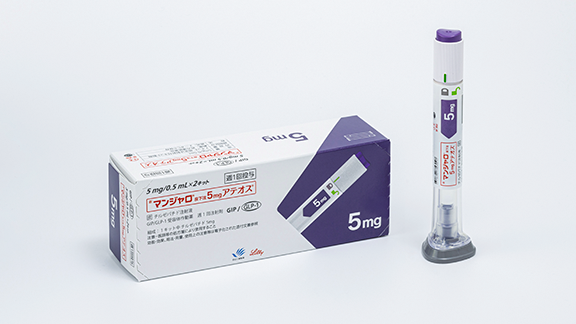
On the other hand, if you’re not particularly concerned about your overall weight and simply want to reduce fat in specific areas—such as “just the upper arms” or “just under the chin”—methods other than weight management with medication may be more suitable.
▶Learn more about Manjaro (GIP/GLP-1 receptor agonist)
Body Sculpting Using Devices Such as EmSculpt
EmSculpt is a body contouring treatment that uses High-Intensity Focused Electromagnetic (HIFEM) technology to contract muscles and target both muscle and fat.
Unlike systemic weight management using medication, this approach is considered when you want to sculpt your body contours—such as your waist and hips—while incorporating exercises that target muscle tone.
This is a treatment that focuses not on “how many kilograms to lose,” but rather on “what kind of body shape or silhouette you want to achieve.”
Fat-dissolving injections such as Caberline (Cabelin) target localized fat deposits
Cabeline (Cabelin) is an injectable treatment that contains deoxycholic acid, a fat-dissolving ingredient.
It targets fat in specific areas of concern, such as the face, upper arms, and abdomen.
Unlike systemic weight management using medication, this method is considered for cases where the goal is not so much to achieve significant weight loss as it is to address fat in specific areas, such as under the chin or on the upper arms.
Liposuction is a cosmetic surgery procedure that removes fat to sculpt the body.
Liposuction is a cosmetic surgical procedure that involves suctioning and removing subcutaneous fat from specific areas to sculpt the facial and body contours.
At Bianca Clinic, we use a device called “VASER Lipo” to offer treatments such as “VASER Body Liposuction” and “VASER Facial Contouring Liposuction.”
Unlike medications, which work through a very different mechanism of action, this treatment is designed to target localized fat deposits and improve body contours.
Since this is a surgical procedure, you should consider it only after fully understanding the associated risks, as well as the downtime—such as postoperative swelling and bruising—that may result from the surgery.
You may also want to consider a different approach to sagging skin after weight loss.
After losing weight, you may become concerned about sagging skin on your face and body, as well as a loss of definition in your facial and body contours.
In cases like this, losing more weight isn't necessarily the only solution.
Depending on the condition and area of the skin, you may want to consider treatments aimed at skin tightening and lifting, such as HIFU, radiofrequency tightening, or thread lifts.
Your options will vary depending on whether you want to lose weight, reduce fat in specific areas, tone your body—including your muscles—or firm up sagging skin after weight loss.
Frequently Asked Questions
For those wondering, “How is Letatortide different from other medical weight-loss programs?”—here are the answers to your questions.

Q. Does Retortido help you lose more weight than Mangalo?
A. It depends.
Although clinical trials have reported varying rates of weight loss, direct comparisons are not possible due to differences in trial conditions, and it cannot be concluded based solely on the numbers that letroctide is superior.
Based on the results of your consultation, our clinic will recommend a medical weight-loss plan tailored to your weight, health condition, and goals.
Q. Are Letatortide and Manjaro the same medication?
A. They are not the same medication.
The active ingredient in Manjaro is tirzepatide, which acts on the GIP and GLP-1 receptors.
Letrortide also acts on the glucagon receptor.
Q. Can Manjaro be used for weight loss?
A. In Japan, Manjaro is approved for the treatment of type 2 diabetes.
Since use for cosmetic or weight-loss purposes differs from the approved indications, a medical consultation and explanation by a doctor are required.
Q. If I want to lose weight, should I choose Manjaro or Letrortide?
A. The best approach depends on whether you need to manage your weight or are concerned about localized fat or your body shape.
It is important to consider the method that best suits your goals and physical condition from among the various options available, such as device-based treatments, fat-dissolving injections, liposuction, and treatments for sagging skin.
What are the key points to consider when comparing Letatolchid and Manjaro?
Letrozole and Manjalo differ in terms of the receptors they target and the changes in body weight reported in clinical trials.
Manjaro acts on the GIP and GLP-1 receptors, while Retortide acts on three receptors: GIP, GLP-1, and glucagon.
In clinical trials, an average weight loss of 20.9% over 72 weeks was reported in the 15 mg chirzepatide group, and an average weight loss of 28.3% over 80 weeks was reported in the 12 mg retatolide group.
However, since these were separate tests conducted under different conditions, it is not possible to determine which is superior based on these figures alone.
Furthermore, even if someone wants to lose weight, everyone has different concerns—such as weight management, localized fat, body contours, and sagging skin after weight loss.
At BIANCA CLINIC, we consider not only your weight but also your body fat distribution, skin condition, and desired results as we determine the most suitable treatment plan for you.