column (e.g. in newspaper)
2026.07.30
You Can Build a Body That Doesn't Gain Weight Easily! The Latest Peptide Technique Focused on Growth Hormone
To maximize your beauty, care for both the inside and outside is essential. We aim to bring advanced anti-aging treatments, such as peptide therapy common overseas, to our Japanese patients. While aesthetic medical approaches may offer more gradual results, they are crucial for building the foundation that supports beauty and youth. We combine nutritional therapy and lifestyle improvements with hormone replacement, peptide therapy, and regenerative medicine to propose personalized treatment plans. We provide long-term support for health and beauty from within.

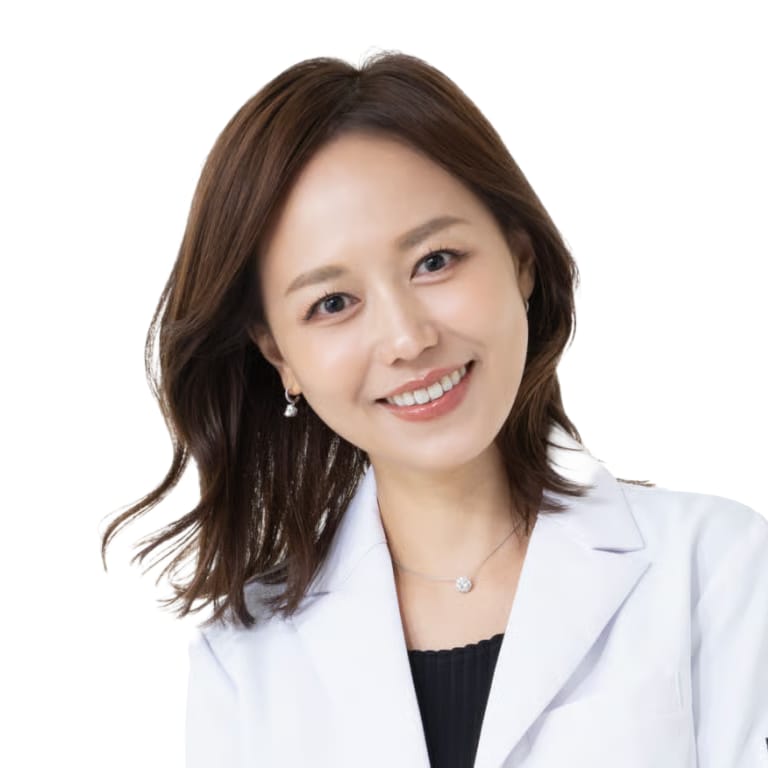
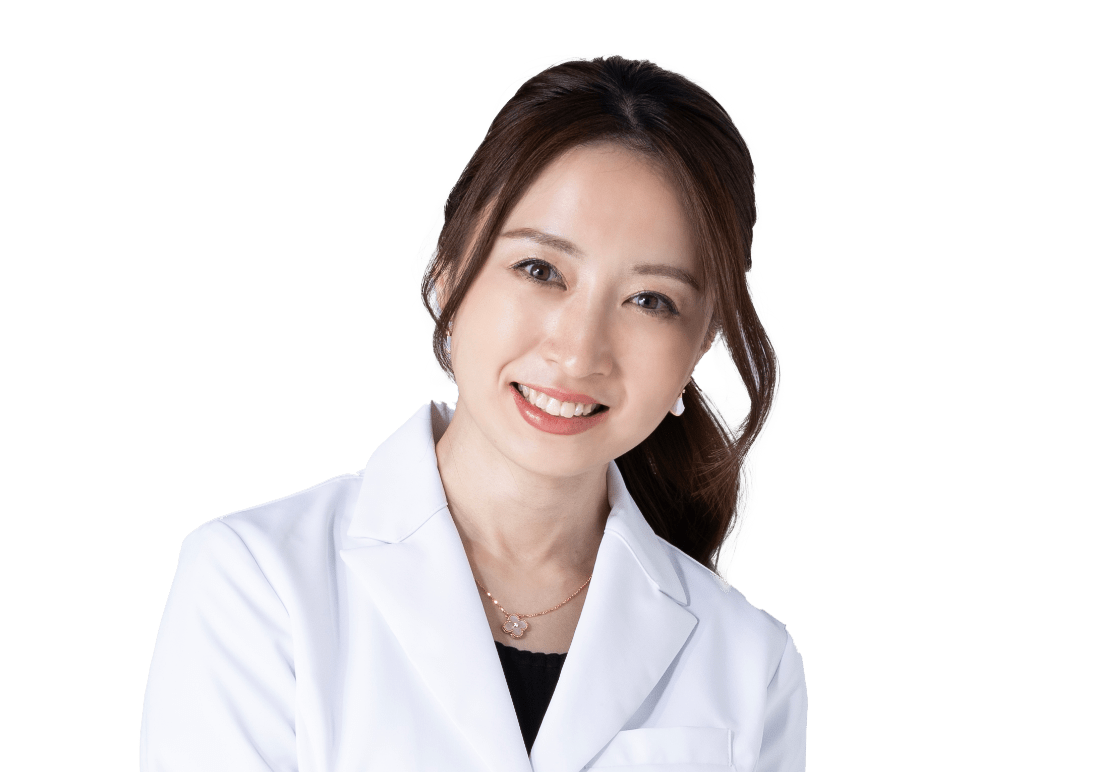
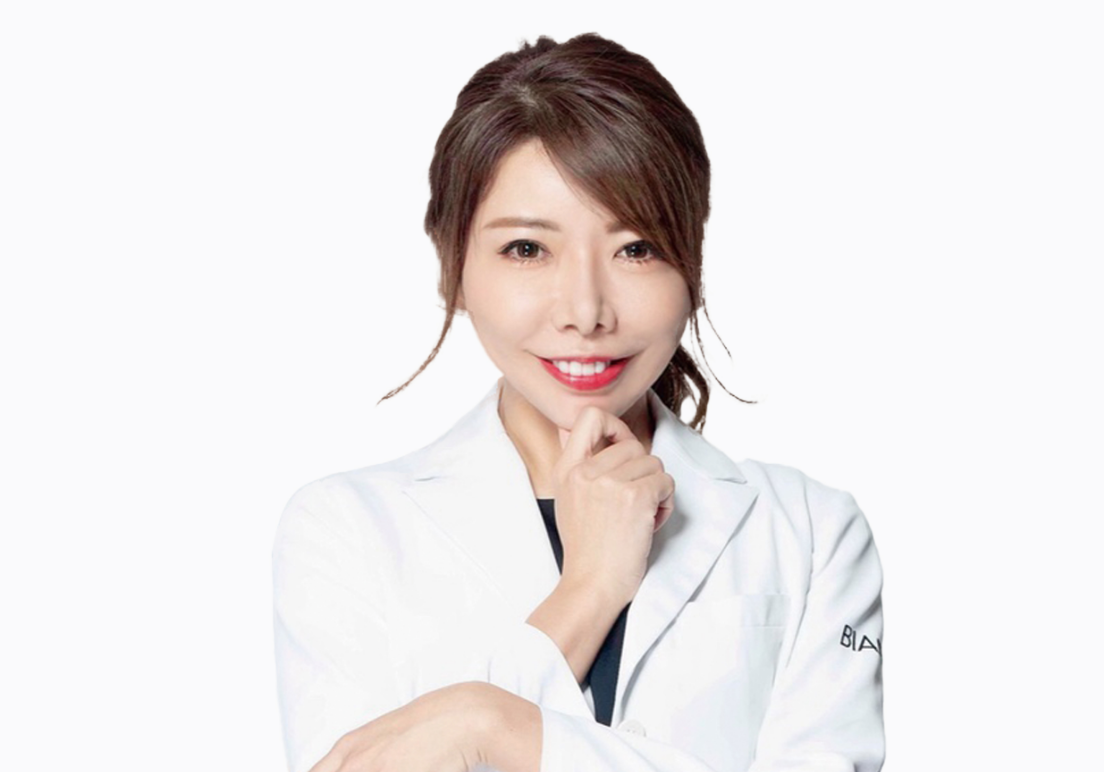
Hello. I am Yoko Maeda, the Director of Aesthetic Medicine at BIANCA CLINIC.
I am a board-certified specialist with the American Academy of Anti-Aging Medicine (A4M), and I currently provide medical care in the field of aesthetic medicine while incorporating insights from longevity medicine.
Some of you may have noticed a change—that even though you’re eating and exercising the same way you did when you were younger, it’s become harder to lose weight.
It is well known that basal metabolic rate and muscle mass decline as we age, but that is not the only factor. Changes in hormonal balance associated with aging are also believed to play a significant role in body composition and metabolism.
In this post, based on the content of the “BIANCA ACADEMY” webinar titled “You Can Build a Body That Doesn’t Gain Weight Easily! The Latest Peptide Techniques to Stimulate Growth Hormone,” I’ll introduce a new approach to weight loss for people in their 40s and older from a hormonal perspective.
Why Do People Say It Gets Harder to Lose Weight in Your 40s? Physical Changes That Go Beyond Just Age

It’s not uncommon for people in their 40s and older to feel that “even though I’m living the same lifestyle as before, it’s become harder to lose weight.” First, let’s take a look at the underlying physical changes and how they relate to hormones.
Why Diet and Exercise Alone Aren't Enough
"I'm gaining weight even though I'm eating the same amount," "I'm working hard at exercise but not seeing results"—these are common concerns among people in their 40s and older.
Of course, the age-related decline in muscle mass and basal metabolic rate also plays a role. However, there are some aspects that cannot be explained by those factors alone.
In my daily practice, I believe it is important to focus on the role of hormones.
In our bodies, various hormones work in balance with one another to regulate fat burning, muscle maintenance, appetite, sleep, and other functions. As this balance shifts, our bodies respond differently—even if we maintain the same lifestyle as we did when we were younger.
A Hormonal Perspective Closely Tied to Weight Loss
In addition to growth hormone, other hormones involved in regulating body weight and energy metabolism include insulin, cortisol, leptin and ghrelin, thyroid hormones, and estrogen.
For example, insulin is an important hormone that regulates blood sugar levels, but when it is secreted in excess, it can make the body more prone to storing fat. In addition, chronic stress and lack of sleep can affect the balance of cortisol and hormones related to appetite.
In other words, a tendency to gain weight isn't determined solely by the amount of food you eat; it's also related to your body's hormonal balance.
The Role of Growth Hormone in Building a Body Resistant to Weight Gain
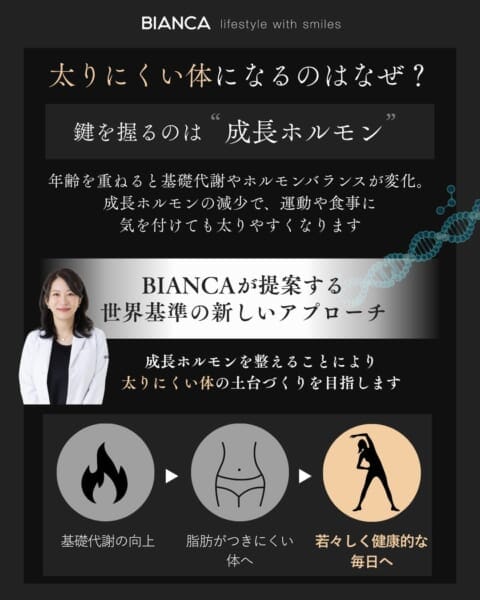
Of all the hormones, I believe growth hormone is particularly important. I’d like to introduce its diverse functions, which go beyond just fat burning.
The Role of Growth Hormone: It's Not Just About Burning Fat
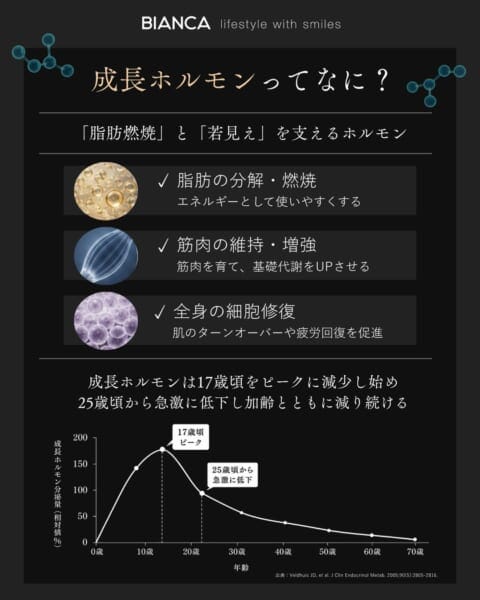
Given its name, many people may think of growth hormone simply as a “hormone related to growth.” However, even in adulthood, it plays a crucial role in supporting the development of a healthy body.
Specifically, these include fat-burning effects that make it easier to use stored fat as energy, functions that help maintain muscle mass and basal metabolic rate, and functions that support the repair of skin and cells throughout the body.
In other words, it’s a hormone that’s important not only for body shape but also for maintaining youthfulness and good health.
Why Does the Amount Secreted Decrease with Age?
Growth hormone secretion peaks in the late teens to early 20s and gradually declines thereafter.
As a result, your body's ability to burn fat and maintain muscle weakens, making you more likely to feel that "it's harder to lose weight than before" or that "you can't shake off fatigue as easily."
It is believed that these hormonal changes also play a role in what is commonly referred to as “middle-age spread.”
BIANCA CLINIC's New Approach: Peptide Therapy
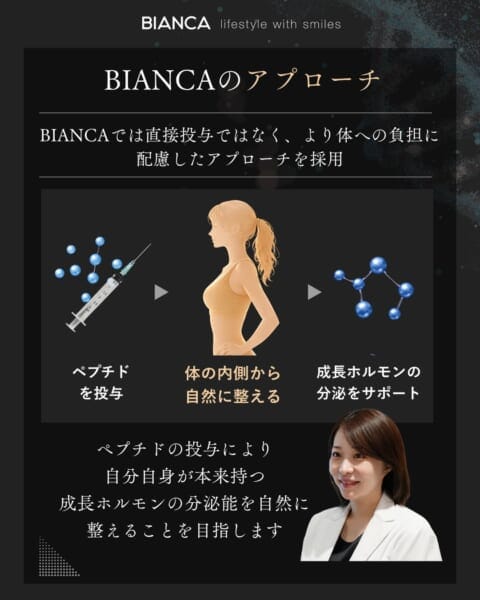
Just because growth hormone is important doesn’t mean you should simply supplement it from an external source. That’s why Bianca Clinic has adopted the concept of peptide therapy, which helps you tap into your body’s own natural potential.
What Is Peptide Therapy?
Peptide therapy is an approach designed to stimulate the pituitary gland and support the body’s own secretion of growth hormone. Its key feature is that, rather than directly supplementing deficient hormones from an external source, it aims to draw out the body’s inherent “ability to secrete” hormones.
In recent years, the concept of “Longevity Medicine” has been gaining traction around the world. At Bianca Clinic, we value the philosophy of “longevity”—living a long, healthy, and beautiful life—and provide medical care that goes beyond mere aesthetics to focus on improving healthy life expectancy and quality of life (QOL).
Ipamorelin and Tesamorelin: Two Prominent Peptides That Are Drawing Attention

Examples of such peptides include ipamorelin and tesamorelin.
Ipamorelin is a peptide that gently stimulates growth hormone secretion; it is an approach designed to support the body’s own growth hormone secretion. It is believed to be involved in various physiological functions, such as improving sleep quality and supporting fat burning.
On the other hand, tesamorelin is also a peptide that stimulates the secretion of growth hormone, and research has focused particularly on its relationship to visceral fat.
Since the choice depends on your goals and physical condition, it is important to make a decision tailored to each individual.
Reasons for Not Directly Supplementing Growth Hormone
Some people might think, “If growth hormone levels are decreasing, why not just supplement it from an external source?”
However, regarding methods of direct growth hormone replacement, concerns have been raised about their impact on glucose metabolism and, in some cases, cell proliferation, so careful consideration is necessary.
As a result, the concept of supporting one’s own growth hormone secretion has been gaining attention in recent years. At Bianca Clinic, after carefully evaluating each patient’s condition, we offer peptide therapy as one of the treatment options.
▽ Learn more about Bianca Clinic’s peptide therapy (anti-aging medicine)
https://biancaclinic.jp/peptide-therapy/
It’s not just peptides. Everyday life also affects growth hormone levels.
Peptides alone won’t transform your body. Maintaining a healthy daily routine is also essential for creating an internal environment that supports the proper functioning of growth hormone.
Sleep is especially important. Since growth hormone is secreted in large amounts during the deep non-REM sleep that occurs at the beginning of the sleep cycle, we recommend taking a bath about 90 minutes before bedtime to ensure a good night's sleep.
In addition, eating right before bed can stimulate insulin secretion and may affect the action of growth hormone. It’s also important to be mindful of when you eat dinner and to choose meals that don’t cause a sudden spike in blood sugar levels.
When it comes to exercise, it is believed that incorporating resistance training—which provides moderate stimulation to the muscles—in addition to prolonged aerobic exercise can help promote the secretion of growth hormone.
Answers to Questions Asked at the Seminar
During the seminar, we received questions about growth hormone and peptide therapy. Here, we’ll share the details.
Q: Can you increase growth hormone levels through diet?
You cannot increase growth hormone levels directly through diet. However, it is possible to create a bodily environment that is conducive to the proper functioning of growth hormone.
When it comes to diet, it is generally considered especially important to avoid causing a rapid spike in blood sugar levels. This is because growth hormone secretion may be suppressed while insulin is being secreted in large amounts.
Therefore, it is important to be mindful of your eating habits—specifically, how you consume carbohydrates and the order in which you eat them—to help stabilize your blood sugar levels.
Q: Should I visit a clinic to receive Q-peptide therapy?
Yes. Since peptide therapy is administered under a doctor's supervision, it is important to first make an appointment and discuss your current physical condition and any concerns you may have.
At Bianca Clinic, we use test results to determine which hormones are deficient and whether treatment is necessary, and then propose a treatment plan tailored to each individual.
It’s not the case that taking more hormones is always better. It’s important to take only the necessary hormones in the necessary amounts. For this reason, we recommend that you visit our clinic to have your hormone balance checked before deciding on a treatment plan, rather than taking hormones based on your own judgment.
Q: Is there anything I can do in my daily life to increase my growth hormone levels?
Yes. It is believed that you can support the secretion of growth hormone by making certain adjustments to your daily routine.
It is especially important to ensure you get a solid 90 minutes of deep non-REM sleep at the beginning of your sleep cycle. In addition, resistance training—which provides moderate stimulation to your muscles—and a diet that avoids sharp spikes in blood sugar levels also help create a body that is more conducive to growth hormone activity.
First and foremost, establishing a healthy daily routine is the first step toward building a body that doesn’t gain weight easily.
From Dieting to Longevity—The Concept of Investing in Your Future Self
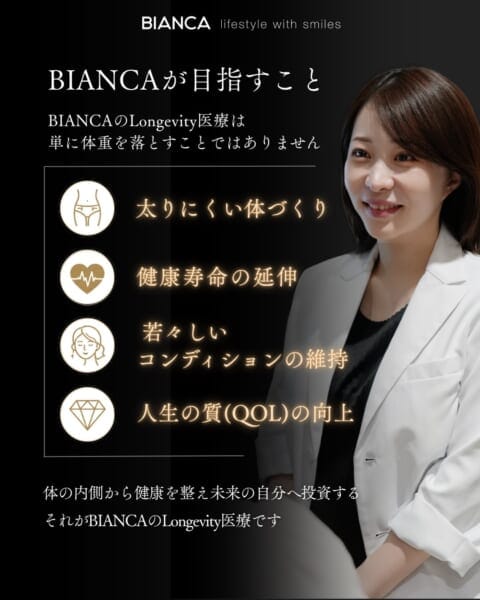
What I value most in the field of aesthetic medicine is not focusing solely on “losing weight.”
The goal isn’t simply to lose weight temporarily; rather, it’s important to build a body that resists weight gain, which in turn leads to a longer healthy life and improved quality of life (QOL).
I trained at the American Academy of Anti-Aging Medicine, and I continue to incorporate the latest findings in longevity into my daily practice through participation in international conferences and collaboration with physicians and researchers abroad. Overseas, approaches that utilize hormones and peptides are becoming increasingly widespread as a form of medical care designed to help people age healthily.
At Bianca Clinic, we also place great importance on carefully assessing each patient’s physical condition and hormonal balance to recommend the treatment that is truly best for them.
The goal of dieting isn't simply to lose weight. What's truly important is unlocking your body's natural potential and building a life filled with healthy, youthful days.
The concept of "longevity" that I pursue is "living a long, healthy, and beautiful life." I aim to support the realization of this goal through the power of cutting-edge medical technology.
When it comes to body sculpting, why not think of it not just as a way to lose weight, but as an “investment in the future”—one that focuses on your health and beauty 10 or 20 years down the road?
▽ View Bianca Clinic's Longevity Special Feature Page
https://biancaclinic.jp/lp/longevity/
▽ Schedule a consultation at Bianca Clinic
https://biancaclinic.jp/contact/